 Know
Know
General
Women’s Underwear Types – The Ultimate Guide to Styles and Comfort
Though women’s underwear belongs to the sphere of comfort and fashion, it also shows more profound causes related to body confiden…
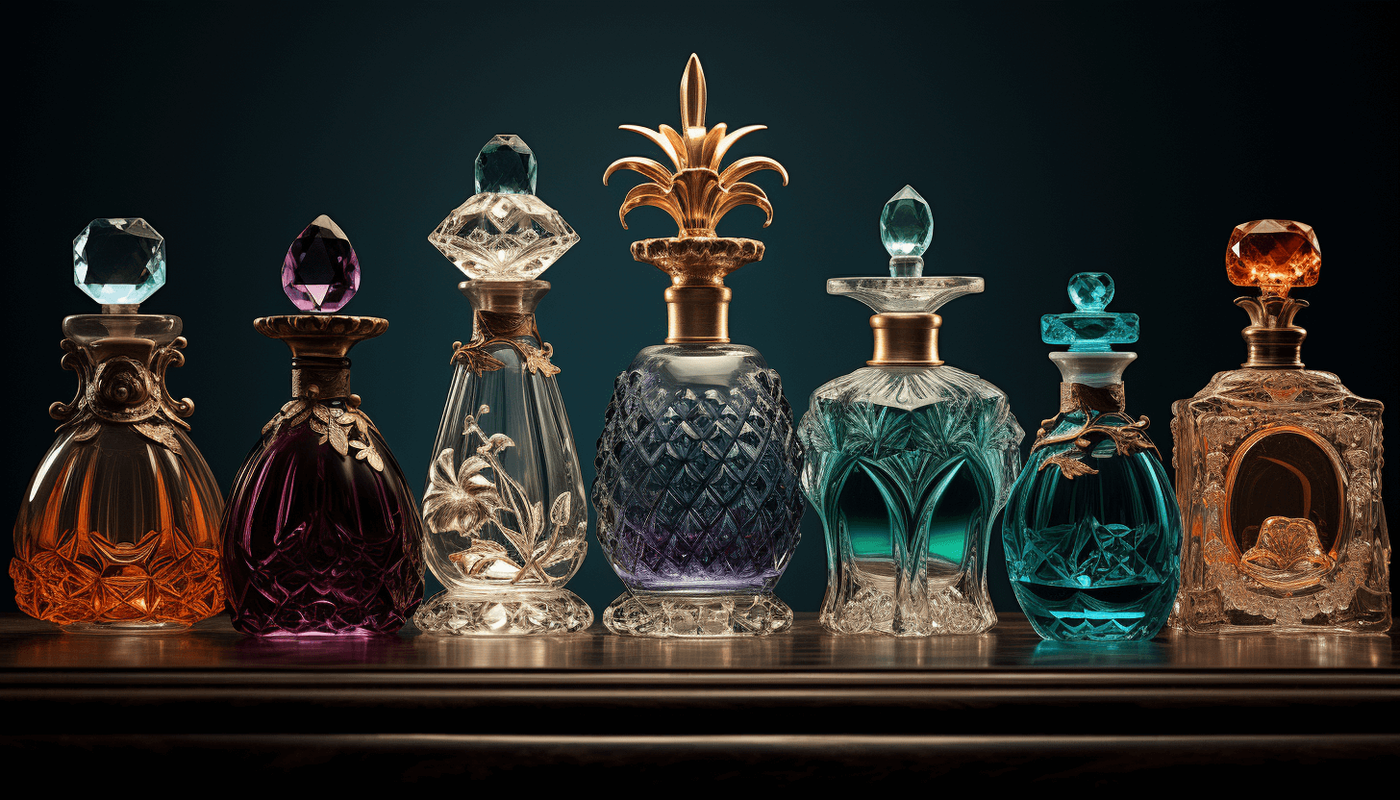
As a general guideline, EdP is typically around 15-20% fragrance oil and lasts roughly 4-8 hours or more, while EdT is typically around 5-15% and lasts about 2-4 hours, though exact percentages and wear times vary by brand and source. The gap comes down to how much pure perfume oil is blended into the alcohol-and-water base: more oil means a richer, deeper scent that lingers on your skin, while less oil creates a fresher, more transparent fragrance suited to daytime wear. Beyond the chemistry, this choice mirrors something deeply human — how much of ourselves we want to project into a room, and for how long.
Jump to:
The allure of fragrance is timeless. According to Plutarch's famous account, Cleopatra arrived to meet Mark Antony on a barge whose perfumes scented the air for those on shore, reflecting the broader importance the ancient Egyptians placed on fragrance and cosmetics. Yet with the plethora of terms in the perfume industry — parfum, toilette, cologne, fragrance, aftershave — choosing the right one can feel like navigating a beautiful but intricate labyrinth.
Every spritz or dab carries a story, an identity, a signature. This guide untangles the terminology so you can make informed choices for your olfactory wardrobe — starting with the comparison people search for most: Eau de Parfum versus Eau de Toilette.
"A perfume is like a piece of clothing, a message, a way of presenting oneself … a costume … that differs according to the woman who wears it." — Paloma Picasso
While both Eau de Parfum (EdP) and Eau de Toilette (EdT) belong to the same family of fragrances, they differ in several key areas. Understanding these disparities can be a game-changer when deciding on your next signature scent or a gift for someone special.
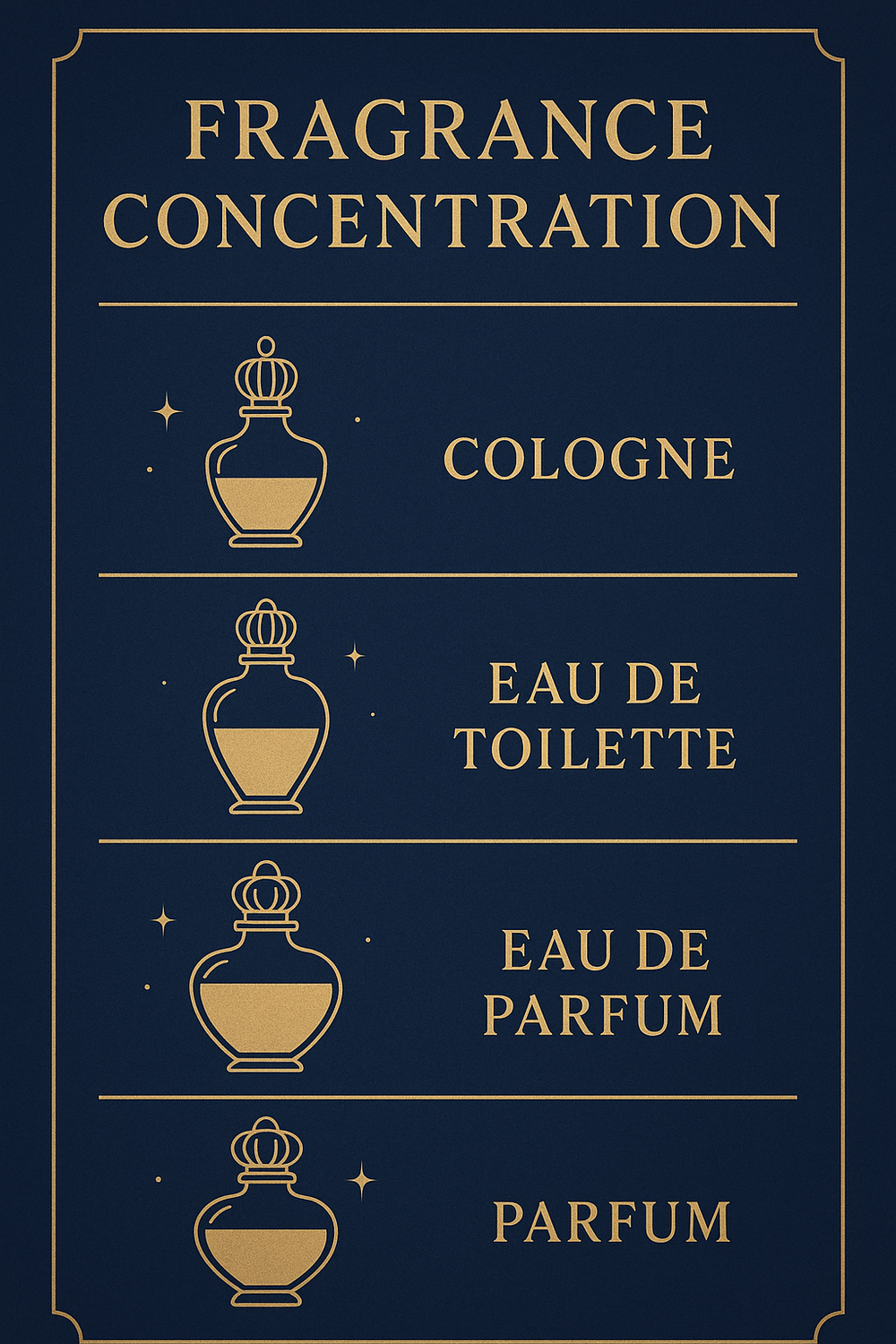
The primary difference between EdP and EdT lies in their perfume oil concentration — the essence that gives a fragrance its scent.
Given the difference in concentration, it's natural that longevity varies as well.
The choice between EdP and EdT can also hinge on the occasion, time of day, or season.
Given the disparities in concentration and longevity, there's often a noticeable difference in pricing.
Eau de Parfum: Generally priced higher. The rationale: more perfume oil and extended longevity mean you use less product each time.
Eau de Toilette: Usually more pocket-friendly, but factor in the potential need for more frequent reapplication.
"Perfume puts the finishing touch to elegance — a detail that subtly underscores the look, an invisible extra that completes a man and a woman's personality. Without it, there is something missing." — Gianni Versace
| Criteria | Eau de Parfum (EdP) | Eau de Toilette (EdT) |
|---|---|---|
| Concentration of Perfume Oil | 15% to 20% | 5% to 15% |
| Longevity | 4-6 hours (up to 8+ for some) | 2-4 hours |
| Best Uses | Evening wear, special occasions, colder months | Daytime, office, warmer months |
| Price Point | Generally higher due to increased concentration and longevity | More affordable but may require frequent reapplication |
The world of fragrances doesn't just revolve around concentration levels like EdP and EdT. Another intriguing comparison is the delivery method: perfume oils versus sprays. Each has unique characteristics that influence longevity, intensity, and the overall wearing experience.
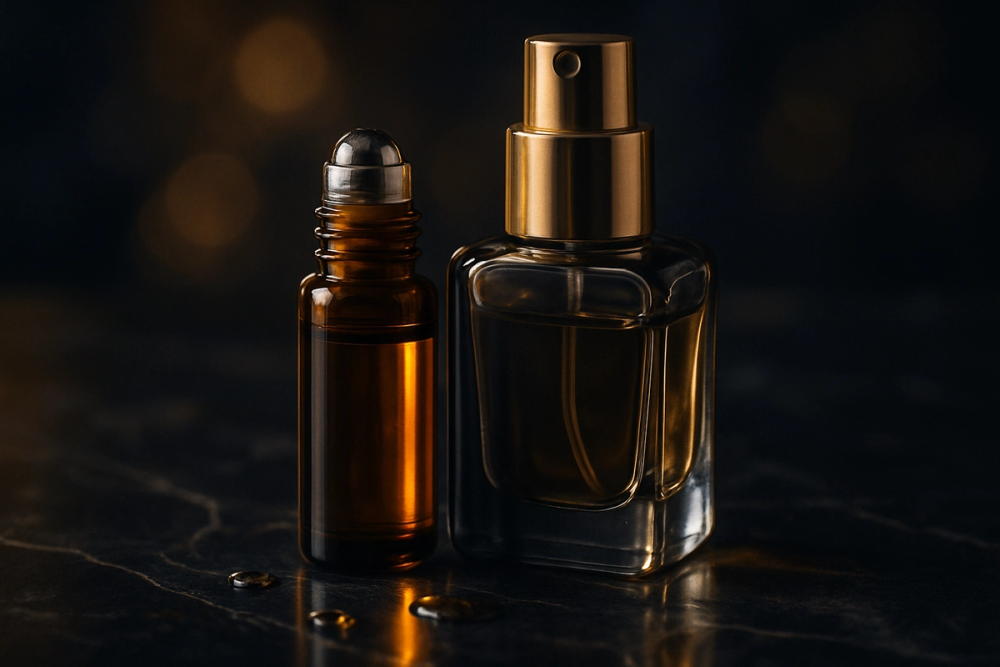
Perfume oils are essentially the concentrated essence of a fragrance, devoid of the alcohol or fillers typically found in sprays. This purity means:
Conventional sprays — which include Eau de Parfum, Eau de Toilette, and others — are diluted with alcohol and sometimes water, which affects their characteristics:
| Criteria | Perfume Oil | Spray |
|---|---|---|
| Concentration | Highly concentrated, no alcohol or fillers | Diluted with alcohol and/or water |
| Longevity | Longer-lasting due to concentration | Typically requires reapplication |
| Application Method | Direct, often with a rollerball or dabbed | Quick spray, covers a larger area |
| Sensitivity | Less likely to irritate sensitive skin | Alcohol content can be drying or irritating for some |
| Intensity Control | More control over scent intensity | Diffuses in the environment; less control |
Both perfume oils and sprays have their merits. The choice comes down to personal preference — convenience, skin sensitivity, and desired longevity all play a role.
While both aftershave and perfume belong to the fragrance family, they serve distinct purposes and come with very different compositions. Choosing between them isn't just about the scent — it's about understanding the benefits each offers.
Aftershave is primarily applied to the face after shaving. Its main characteristics include:
Perfume is designed primarily for its aroma. Its characteristics include:
| Criteria | Aftershave | Perfume |
|---|---|---|
| Purpose | Primarily for post-shave skin care | Fragrance enhancement |
| Antiseptic Properties | Often contains antiseptics to prevent infections | Lacks antiseptic properties |
| Scent Longevity | Typically has a milder, shorter-lasting scent | Long-lasting due to higher fragrance concentration |
| Additional Benefits | Moisturizes and soothes skin; can have a tightening effect | Offers a multi-layered scent experience with evolving notes |
In short, aftershave and perfume serve different roles in a grooming routine. While aftershave focuses on post-shave skin benefits and mild fragrancing, perfume is about creating a lasting impression.
The world of scents has its own jargon, and two terms that often cause confusion are "fragrance" and "perfume." While they seem interchangeable to the untrained nose, understanding the nuance can sharpen your sense of the olfactory arts.
At its core, "fragrance" is a general term for any smell, natural or synthetic. In personal care and cosmetics:
"Perfume" is sometimes used generally, but its specific definition in personal scents is narrower:
| Criteria | Fragrance | Perfume |
|---|---|---|
| Scope | General term for any scent, used in a variety of products | Specifically refers to a type of personal scent with high aromatic concentration |
| On Product Labels | Often a catch-all term for various scent ingredients | Indicates a specific product type with a high concentration of scent |
| Origin | Can be natural or synthetic | Blend of natural and/or synthetic aromatic compounds |
| Complexity | Varies; can be single-note or multi-note | Typically multi-note with evolving scent layers |
Although "fragrance" and "perfume" are sometimes used interchangeably, recognizing their distinct meanings helps you make informed choices and appreciate the craft behind scent creation.
Two terms that often puzzle shoppers are "toilette" and "cologne." Let's dig into what actually separates these two.
The word 'toilette' traces back to the French 'toile' (cloth), originally referring to a cloth wrapping or covering for a dressing table, a sense that later extended to mean the dressing table itself and eventually the grooming ritual performed there. In fragrance, it appears in "eau de toilette" (EDT), a lighter-scented formula:
"Cologne" originates from the city of Cologne, Germany, where "Eau de Cologne" was first created. In modern usage:
| Criteria | Toilette | Cologne |
|---|---|---|
| Origins | Derived from French dressing practices | Named after the city of Cologne, Germany |
| Fragrance Concentration | 5-15% | 2-5% |
| Longevity | Approximately 3-4 hours | Up to 2 hours |
| Typical Usage | Daytime, casual events | Warm climates, post-exercise refreshment |
Both toilette and cologne offer delightful aromatic experiences. Understanding their distinctions helps you choose the right scent for the right moment.
Both "parfum" and "cologne" resonate with fragrance lovers, but at the core of their difference is intensity and longevity. Let's look at what sets these two apart.
Also called "pure perfume" or "perfume extract," parfum sits atop the concentration hierarchy:
Cologne is the lightest form of fragrance in terms of concentration:
| Criteria | Parfum | Cologne |
|---|---|---|
| Concentration | 20-40% | 2-5% |
| Longevity | 6-24 hours | Up to 2 hours |
| Typical Usage | Special occasions, evenings | Daytime, quick refresh |
Understanding the disparity between parfum and cologne is pivotal in your fragrance journey. Recognizing their unique qualities helps you tailor the right scent experience for every occasion.
Beyond the chemistry, fragrance has always carried symbolic weight. A heavier Eau de Parfum worn in the evening can signal confidence, mystery, or occasion — a scent meant to be remembered. A lighter Eau de Toilette worn during the day can express approachability and ease, a quieter form of self-presentation. Just as an outfit or a hairstyle communicates identity before a word is spoken, scent operates as an invisible layer of personal storytelling — one that lingers in a room long after you've left it.
This symbolic dimension is part of why fragrance choice feels so personal. It isn't only about longevity or concentration percentages; it's about which version of yourself you want to project, and when. For more on how this tradition developed, explore the history of perfume and how ancient cultures first used scent as a marker of status and ritual.
Finding a signature fragrance that blends with your essence is a thrilling journey. We've sailed through the spectrum of fragrances, from the intense allure of parfum to the refreshing whisper of cologne. But this isn't just about distinguishing one type from another — it's about finding the one that feels right and speaks to who you are.
Choosing the perfect fragrance goes beyond concentration and longevity metrics. It's about aligning scent with your personality, lifestyle, and mood. Whether you lean toward floral notes, woody undertones, or zesty citrus, there's something out there that's uniquely you — much like choosing the right wardrobe pieces or a new haircut to match your personal style.
The art of selecting a fragrance is deeply personal. Let the scents transport you, tell a story, and become an extension of who you are — there's no wrong choice, just the one that makes you feel undeniably you.
The primary difference lies in fragrance oil concentration. EdP typically contains 15-20% oil, making it richer and longer-lasting, while EdT contains 5-15%, resulting in a lighter scent that fades faster.
EDP stands for Eau de Parfum, French for "perfume water," and EDT stands for Eau de Toilette, French for "toilette water." Both terms describe alcohol-diluted fragrances that differ mainly in their concentration of perfume oil — EDP being stronger and EDT being lighter.
Not exactly. "Perfume" (or "parfum") technically refers to the strongest, purest concentration of fragrance oil, usually 20-40%, while Eau de Parfum sits just below that at 15-20%. In everyday speech people often use "perfume" loosely to mean any fine fragrance, including Eau de Parfum, but in strict industry terms parfum is the more concentrated, longer-lasting category.
Perfume oils generally outlast sprays because they contain no alcohol, which is what causes fragrance to evaporate quickly. A spray might last 3-5 hours depending on concentration and skin chemistry, while a perfume oil can last 6-15 hours.
Yes, though its primary purpose is to soothe and disinfect skin after shaving rather than project scent all day. Aftershave has a lighter concentration than perfume or cologne, so while it offers a fresh, clean smell immediately after application, it won't last as long — making it a fine choice for those who prefer a subtle everyday scent.
"Better" is subjective, but parfum has a higher concentration of fragrance oil than eau de toilette, so it's richer and lasts longer on skin. If you want longevity and a pronounced scent, parfum is the stronger choice; if you prefer something lighter and more fleeting, eau de toilette is better suited.
Eau de Toilette typically lasts 3-5 hours on skin, though this varies with the fragrance's composition, your skin type and pH, and external factors like heat and humidity. Applying it to moisturized pulse points — wrists, neck, behind the ears — can help extend its life.
Both are fine choices — the difference is really about concentration, not gender. Cologne has traditionally been marketed to men and carries a lighter scent, while perfume or Eau de Parfum is richer and longer-lasting; today, many fragrances are unisex, so the decision should come down to personal preference and desired longevity rather than tradition.
Generally yes — Eau de Parfum tends to be priced higher than Eau de Toilette because of its greater concentration of fragrance oils. Brand reputation, packaging, and ingredient quality also influence price, so it's worth comparing individual products rather than assuming the rule always holds.
Cost is driven by factors like rare or premium ingredients, complex extraction processes, brand reputation, limited-edition releases, and marketing. Niche or luxury houses often price higher due to exclusivity and artisanal production methods, meaning the price reflects the overall brand experience as much as the scent itself.
Though women’s underwear belongs to the sphere of comfort and fashion, it also shows more profound causes related to body confiden…

Discover what anklets symbolize—from ancient Egyptian and Indian traditions to modern spirituality, dream meanings, and styling ti…

Discover 50 braid styles from classic to exotic — origins, cultural meaning, difficulty level, and which braid suits your hair, in…