 Know
Know
Crystal & Stones
Selenite Meaning: Healing Properties, Uses & Benefits
What selenite crystal really means, its spiritual powers, ancient origins, and simple rituals to cleanse your space and calm your …
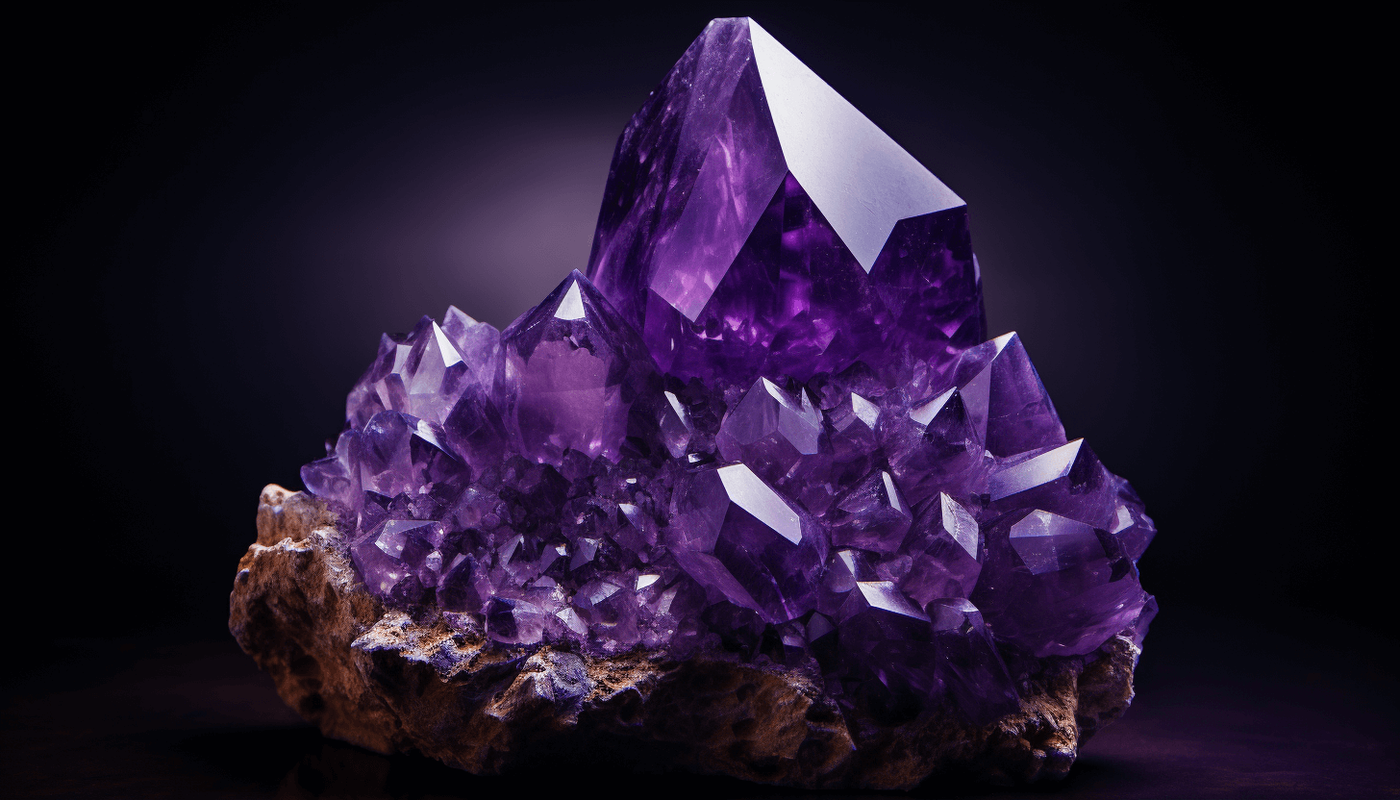
The world of crystals is vast and varied, yet no other gemstone tugs on our imagination quite like the tantalising amethyst. Famous for its stunning violet hue, the beguiling amethyst has held humanity in its thrall for centuries, and still remains one of the most treasured gemstones in the world today.
Amethyst is actually a species of quartz, another mineral species that features other popular gemstones such as citrine and rose quartz. Amethyst is notable for its magic purple coloring, ranging from a delicate lilac to deep, bright violet, and plum. In fact, this fascinating color palette is often seen in a gradient within one specimen and color zoning occurs in various shades ranging from light to dark purple.
Amethyst is found commonly allover but all over the world. The largest deposits are in Brazil and Uruguay, in the quartz geodes within volcanic rocks. Other important sources are in the United States (Arizona), Canada, India, Sri Lanka and Russia. Each source contributes to the global appeal of the gem because it produces its delicate and shades of purple as amethyst, each differed with certain qualities.
With a basic knowledge of amethyst crystals under your belt, we can now go further and learn more about the exciting features surrounding these purple jewels, including their historical importance, birthstone label, geology, and much more. As you journey through these pages, hopefully by the conclusion of your time together here, as well as all that lies beyond this point, you may discover, or at the very least, rediscover, a newfound appreciation for the beauty and the depth each amethyst crystal holds.
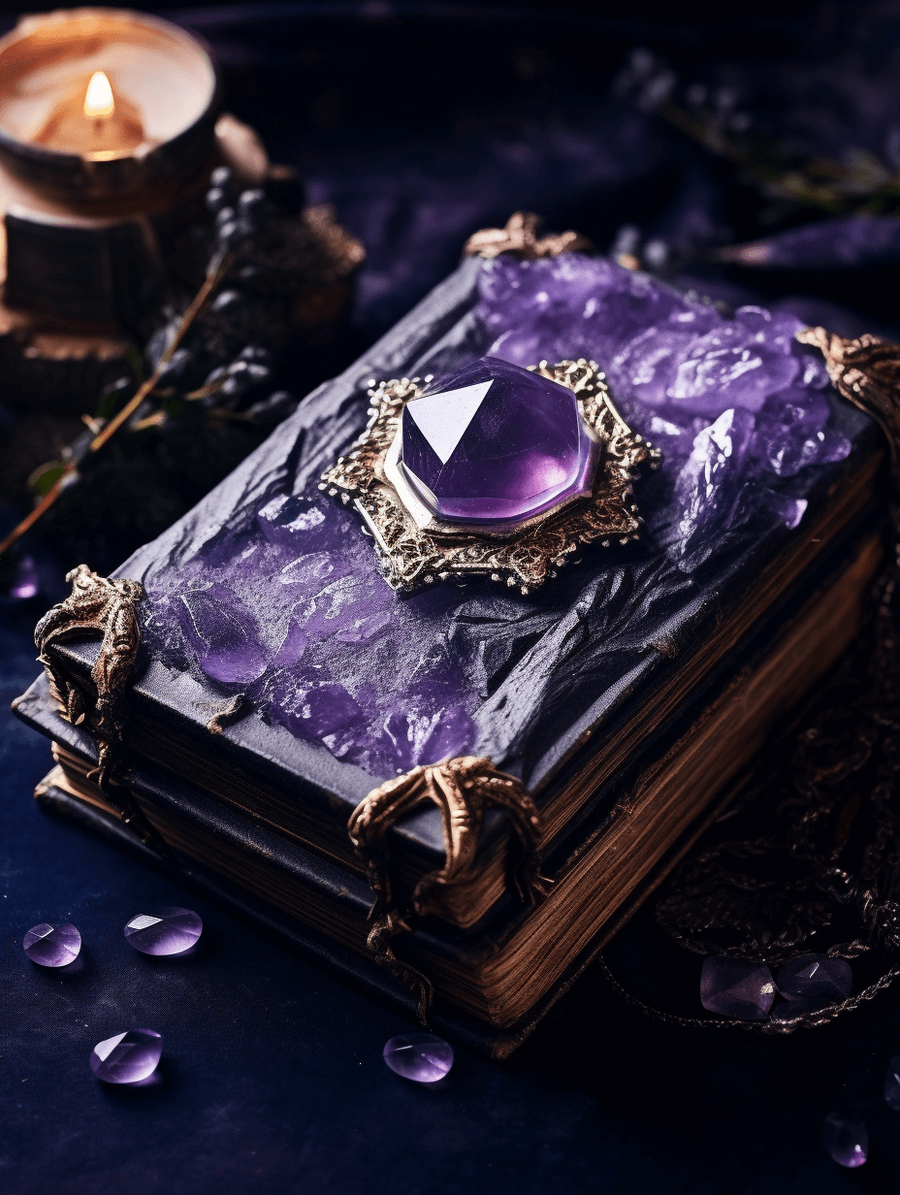
Going back in time, the charm of amethyst has been constant throughout cultures and continents. Its lovely color and properties supposed of spiritual amongst others has trespassed most civilizations.
The word amethyst is derived from the Greek “amethystos,” meaning “not drunken.” The Greeks believed that wearing the gem would save them from being drunk at large. For this reason, wine goblets were engraved out of them and amulets were used to safeguard against the detrimental side effects of alcohol consumption. Amethyst was also associated with the god Dionysus, the deity of wine, revelry, and shear in ecstasy. In one myth, Dionysus, the god of wine, cried red wine over a maiden turned to quartz by the angry goddess Eilithya as she saw how Dionysus was attempting to pursue this lovely girl. Dionysus’ tears then stained the quartz purple creating the first amethyst.
Among the ranks of royalty and religion, the amethyst held fort as a gem of consequence. In Ancient Egypt used in person adornments and carried as a protective talisman. The rich purple colour of the amethyst stone became associated with power and wealth and was found often among the jewels of European royalty.
In Christianity, amethyst relates to piety and purity in deep lengths. Back in the days, a ring made of amethyst would be worn by Bishops and it has carried on till today. The purple color was believed to symbolize Christ and hence it’s believed that wearing amethyst would raise one’s levels of consciousness and spiritual insight.
Across the ocean in Central and South America, Pre-Columbian cultures also treasured the amethyst by using the stone in ceremonia l and decorative contexts. The indigenous peoples crafted beautiful art if acts and used the amethyst in healing and spiritual ceremonies.
Even in Eastern philosophy amethyst found a place. it was one of the nine gems in Navaratna, supposed to be a talisman of ancient India. Chinese Feng Shui associates amethyst with wealth and abundance, recommending its use in the wealth corner of the home.
The fascinating tapestry that the history of the amethyst weaves together will expose the reason of its worldwide appeal. It is a twine into our past, a magical touch of nature that has continued to astound, protect and adorn humans for centuries. Now let us see how these historical links helped to establish amethyst for its reputed spiritual, metaphysical and healing properties.
The amethyst is not only a stone steeped in history and lore but one in which holds special meaning for those people born in February. It is the prescribed birth stone of this monthsignifying a royal emblem of characteristics and qualities most often assumed common to those bearing birth during signs Aquarius and Pisces.
Amethyst is highly coveted for use as a symbol of serenity, balance, temperance—ideals mirrored in its calming violet hue. It’s said to foster a balanced perspective, where logic blends with creativity, and passion aligns with tranquility. No wonder then that it perfectly complements those born in February who are often deemed as imaginative, intuitive and introspective.
Protection: In a conventional context, Amethyst is believed to provide protection- in both physical, as well as mental plus emotional ways. It’s considered nothing but only kind of an armor from negative energies and harmful influences, which is the shelter for calmness and purity.
Calmness and Clarity: All this while, Amethyst most of the time tends to become synonymous and is considered a gemstone for calmness and clarity alike. Its harmonizing purple tones are supposed to help reduce stress and anxiety, helping with clarity and peace of mind. That theme of amethyst speaks to those born in February as they are often known for their calmness and collective attitude amidst the chaos.
Spiritual Growth: The deeply rooted spiritual significance aligned with Amethyst portrays the reflective and intuitive nature of someone born in February as stated above. This crystal is associated with meditation and other religious rites which are believed to help a person establish connections between oneself and one’s higher self.
Celebrating its birth with the amethyst means embracing these qualities and the journey of self-growth they suggest. Beyond that, we will explore the properties of amethyst moving into a geographical exploration of what makes this gem as remarkable beneath the surface as it is beautiful to the eye.
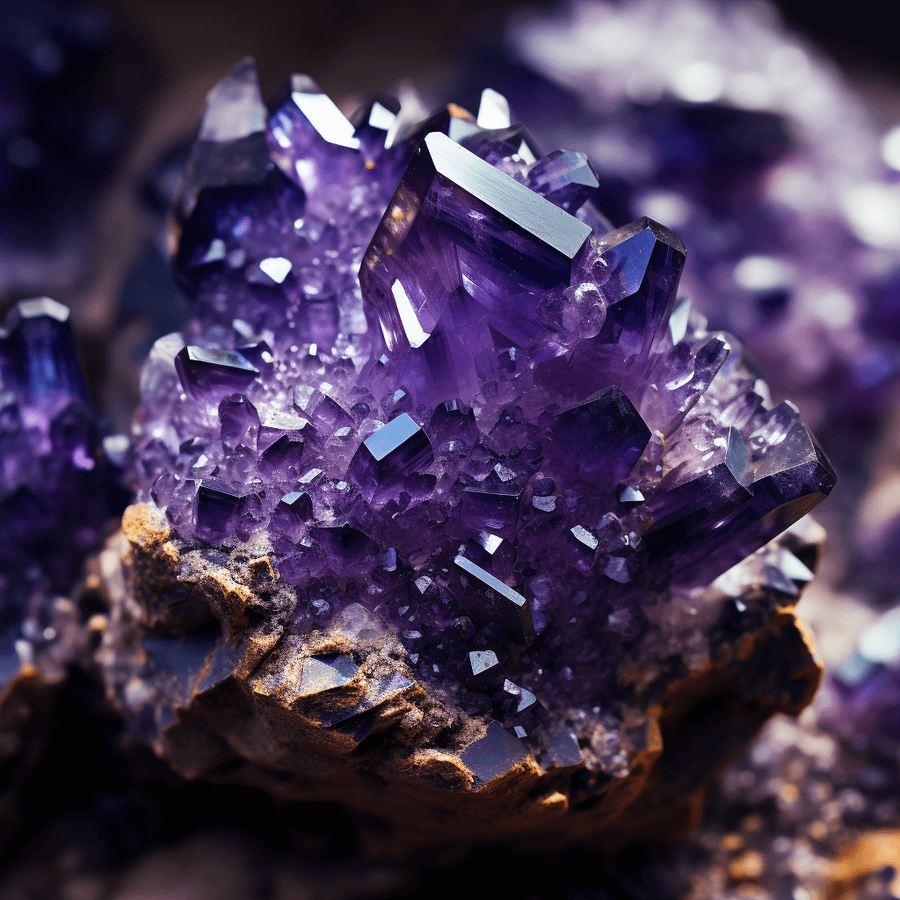
Understanding the geological features of amethyst gemstones takes one down on a journey into the heart of the earth. This quartz variety owes the wonderful existence to the extremes and complexities that define much of the earth’s crust formation.
The formation of Amethyst is a fascinating story of time, pressure and a touch of natural radioactivity. Usually such crystals are found in hollow rocks lined with a variety of minerals referred to as geodes. The process begins when silica-rich solutions happen to find their way into cavities and cracks formed within volcanic rock or limestone.
During millions of years, the solution very slowly cools and crystallizes, forming a bed of quartz. After iron comes to the substance in small quantities the essential purple pigment of amethyst comes into activity. This natural radiation over the millions of years, when the geode was exposed to these iron impurities, has charged this, thus allowing for formation of beautiful amethyst crystals later found.
A special quartz is amethyst, which belongs to one of the most common minerals on this planet. Amethyst is primarily chemically composed of Silicon Dioxide (SiO2). Though traces of iron and other elements define the Amethyst violet to purple color distinctly among different quartz varieties.
One of the typical features of amethyst is the presence of inclusions, tiny ‘imperfections’ which very often add character and authenticity to the crystal. They might take the form of ‘fingerprints,’ healed fractures or even veils within the crystal itself.
Following is a summary of some of the major geological aspects of amethyst:
| Property | Remarks |
|---|---|
| Chemical Category | The chemical category for amethyst is a mineral. |
| Chemical Formula | Amethyst’s main compound is Silicon Dioxide (SiO2). |
| Crystal System | Occurring in the Trigonal crystal system, Amethyst’s crystals are hexagonal prismatic. |
| Color | The color defining amethyst ranges from pale violet to the deep blue that is purple. |
| Transparency | Amethyst varies from transparent to translucent, with the finest stones being of extreme transparency. |
| Hardness (Moh Scale) | Amethyst has a rate of hardness at 7 on the Mohs scale, with that then it is a gemstone hard enough for most types of jewelry. |
| Specific Gravity | The specific gravity of amethyst is about 2.65, and this figure lies in the average of most minerals. |
| Refractive Index | Amethyst has the refractive index of 1.544 to 1.553 which similar to other gems provides its lustrous appearance. |
The distinguished interaction of these geological properties does lend to the continued appeal of amethyst. Not only in that it possess a mesmerizing aesthetic, but the fascinating history and story of formation truly makes it as valuable of a gem as it is at the heart of our Earth.
From ancient civilizations to contemporary alternative healing practices, the amethyst has been honored for centuries given its supposed spiritual and metaphysical characteristics. The mystic hue of it is said to be the color of a higher state of consciousness and spiritual awareness, therefore occupies a very special place amongst the healing crystals.
In the spiritual energy domain, amethyst is strongly connected to Crown Chakra – that is seventh chakra and is situated on top of the head. This is that gateway chakra to the universe beyond body limits, which controls the way we think and respond to the world outside. This is associated with enlightenment, spirituality and the path towards a higher state of consciousness.
When using amethyst, the violet-to-purple color can promote balance by natural resonance with the Crown Chakra. It therefore is used in the balancing of this energy center and encourages spiritual connection, introspection, and self-realization. Some opine that using an amethyst crystal at the Crown Chakra while meditating enhances the flow of positive energy there and arouses a stronger sense of self and the surrounding world.
The soothing amethyst energy holds a cherished place in the schools of philosophy of meditation. This stone is said to enhance serenity and clarity of the mind facilitating the entrance to a state of meditation supporting keeping thoughts well-ordered. Some practitioners prefer to hold an amethyst in the hand or keep it close by in order to experience such relaxing effect during the meditation time.
Additionally, amethyst’s energy is linked to the Crown Chakra connection, as such making it an effective meditational instrument for one who desires to follow spiritual meditation practices that would encourage an individual to extend one’s self to connect properly to his or her source of spirituality and become even more enlightened.
Amethyst is also widely revered for the calming influence it has throughout an individual’s life, which is why it is often coined the “Stone of Tranquility”. Its gentle vibrational energies disperse negativity, stress and anxiety replacing these with more positive energy, balance, and peace.
Additionally, amethyst has been connected to a long line of usage for emotional health. It has been thought to aid relationships in the grieving process and coping with loss while sadness and anger are eased while still installing patience and understanding. Some also find it beneficial in the promotion of restful sleep and warding nightmares hence lending a feel of clear-headedness and emotional balanced.
While these metaphysical properties of amethyst will not hold up under scientific testing, a goodly number of people around the world are still drawn to the crystal’s gorgeous aesthetics and tranquil aura. Whether one subscribes to these beliefs or not, there is simply no denying the sense of peace and wonder that this gemstone can inspire – making it a precious companion indeed in the great quest for spiritual growth and inner peace.
Through centuries, amethyst has and still forms the cornerstone in ever-evolving alternative therapeutic modalities in whose healing properties extend beyond emotional to those of physical issues. However, it should be noted that despite being firmly held in the respective cultures and practices, there is no scientific evidence to date that supports these claims. Consequently, amethyst should not replace conventional medicine but rather serve as a calming complementary cure to it.
As stated in the previous section about spiritual properties, amethyst is considered to be highly effective when it comes to spiritual healing. The stone is believed to help in getting rid of negative emotions such as fear, anger, and anxiety and promoting a feeling of serenity and harmony. For this reason, many proponents turn to amethyst in times of emotional stress, heartache or grief, looking to draw out its tranquil energy as a source of comfort and strength.
In addition, amethyst is often recommended to aid the improvement of release in addiction issues because it calls for sobriety and self-control. This theory comes from Greek mythology of it preventing drunkenness.
Amethyst has been ascribed to a myriad of physical healing properties in addition to emotional health. There is none of scientific proof thereof but it echoes human folklore and traditional beliefs in this crystal diverse range.
– Sleep and Insomnia: Promote restful sleep is among the most common uses that amethyst is said to do. It is often placed underneath pillow or used in sleep meditations to fend off insomnia and foster peaceful dreams.
– Pain Relief: Amethyst is reported to provide relief from physical pain that many of its users believe incorporates headache pain and tension within the neck and shoulders. There might well be some sense to this association given its continued reputation as a calming stone and those specific consequences toward an overarching objective of peace in stress reduction.
– Hormonal Balance: One of the things that it is said that amethyst does is to contribute to the hormone production balancing as well as supporting the endocrine system. People may use it in managing symptoms of hormonal conditions but this is not to be treated as a worthy substitute for a specific medical treatment plan.
– Improves Immunity: A more ‘esoteric’ belief is that amethyst can strengthen the immune and also the detoxification system in a body of a person.
While the information about the benefits of amethyst as healing properties is interesting, it’s important to remember that these are folk beliefs devoid of any scientific research to back them up. In case of seeking medical advice or treatment, always consult your healthcare professional. However, if any of these characteristics resonate with you, amethyst can make a meaningful addition to your holistic well-being practices and serve as a symbolic tool for supporting personal growth and self-care.
Amethyst is a wonderful gem to incorporate into your daily life due to its flexibility, beauty, and its claimed benefits. The beautiful hues of color can add sophistication and tranquility in your wardrobe or within your home décor, while the stone’s calming energy may further enhance your own personal well-being. Amethyst’s benefits make it an excellent stone for cleansing other stones or perhaps use it as part of a meditation.
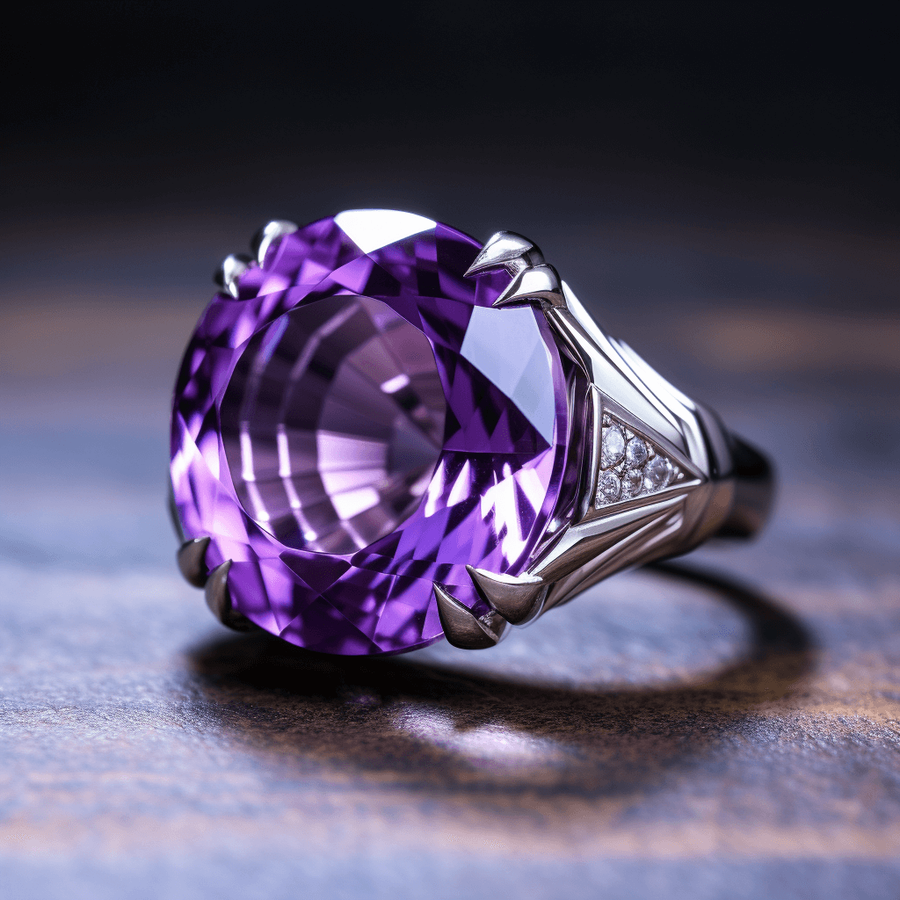
The best way to carry the charm of amethyst with you every day is through jewelry. With only 7 on the Mohs scale, amethyst is not considered to be very hard, yet it is sturdy enough for a variety of jewelry purposes, including rings, bracelets, necklaces, and earrings. That is why it has great popularity not only for jewelers but also from consumers because its rich, regal color evidently adds a striking appeal to any piece.
Moreover, it is believed that wearing an amethyst keeps calm and balancing property close to you in order to help you to receive benefits of this tranquil gemstone throughout the day. Whether you opt for a statement amethyst pendant or a subtle ring, this gemstone can add glimmer and sparkle to your jewellery box while staying true to your goals.
The attraction of amethyst is not confined to personal adornment only. It can also be an attractive addition to your home decoration. Raw clusters of amethyst add earthly art to the living rooms, make eye-catching decorative pieces emanating soothing aura in your space. They are often placed in the living room, home office, or bedroom to promote a calming and creative atmosphere.
Feng Shui practitioners believe that amethyst is a powerful crystal used to purify energy, calm one’s mind, and make one’s intuitive developments be more meaningful. It also suggests that by placing an amethyst in the northeastern corner of your home, it enhances those aspects related to personal growth and self-cultivation.
Further, as indicated in the foregoing sections, amethyst is one of the most popularly used stones for meditation as well as other wellness practices. It is said to deepen and make meditation more meaningful when incorporated into daily mindfulness routine and even held during acts of meditating. Some also place amethyst in their yoga space to promote a tranquil and centered practice.
Incorporating amethyst into your every day life sees you not only harness its beauty but the sense of peace that it is known to foster as well. From adorning your person and your home to enhancing your wellness routines, there are countless ways of enjoying the elegance and serenity this gemstone brings.
Amethyst being versatile in its hypnotizing tints and symbolism is a beautiful choice of jewelry. Its charm glows as breathtaking statement sets to subdue the daily wear, and hence amethyst fascinates all who appreciate a lot in the art of jewelry designing.
Amethyst is durable and versatile, making it an excellent stone to be worn virtually every day and to involve in any type of jewelry. It has a rating of 7 on the Mohs scale, so it’s hard enough to withstand many of the rigors that pieces go through during daily wear but soft enough for jewelers to cut and shape into creative designs.
The beautiful color of amethyst is the number one reason it has always been so popular worn as a piece of jewelry. As light as soft lavender and deep as certain purples will only get to, amethyst has been forever linked with royalty, mystery, and spirituality. This rich hue complements a wide variety of skin tones and works well with other gemstones, making it a versatile choice for jewelry.
In addition to being beautiful, the amethyst is a really inexpensive gemstone compared to many others. Some very bright and highly accurately hued pieces will be expensive, but due to the enormous availability of this stone, it screams that there is something to fit just about every wallet size.
Whether you’re drawn to the gemstone for its color, symbolism or affordability — there’s no denying the allure amethyst holds within the world of jewelry. Its enduring appeal speaks volumes towards’ its charm and right for a beautiful place within anyone’s collection.
Embarking on a journey into the field of gemology, we take a look at the scientific aspects that make amethyst so unique and interesting as a crystal. The majesty and lustre of amethyst may not only be attributed to its beautiful violet colour or other claimed metaphysical attributes, but also to the very uncomplicated mineral composition and physical arrangement.
Amethyst is a form of quartz, which happens to be amongst the most occurring minerals on earth. Its chemical formula is SiO2, abbreviation for silicon dioxide. What sets amethyst apart from the other varieties of quartz is the presence in trace amounts of natural irradiation and iron, along with the various others of the trace elements. All these are what are responsible for giving amethyst its purple hue.
Amethyst belongs to the trigonal crystal system where there exists a three-fold rotational axis. The atoms within violet crystal of amethyst are arranged in an unbroken pattern of SiO4 silicon–oxygen tetrahedra, so that each oxygen is shared between two tetrahedra, hence an overall chemical formula of SiO2.
When viewed under polarizing microscope the amethyst will then show a characteristic hexagonal symmetry. The crystal forms in several habits or shape of crystallization but mostly found as small stubby prismatic crystals in clusters.The color of Amethyst can be from a light lavender hue to the deepest, richest purple sometime with flashes of red or blue. The variance of color is due the iron content and degrree of natural irradiation it has come in contact with.
Inclusions, or materials that were trapped within the gemstone during its formation, are not something rare for amethyst. These might be goethite, hematite, or of other types. Amethyst with inclusions can be very interesting because exactly the inclusions make each stone unique ‘fingerprint’.
Knowing the science behind amethyst adds another layer of complexity in one’s appreciation of this striking gemstone. The uniqueness of its properties along with how it is formed put on a showcase the wonder and complexity of the natural world.
Buying this gemstone is a delightful experience either you are drawn towards the spiritual attrs and captivated by the stunning colours of amethyst. But certain factors make it aware that they get the best quality for your investment. Besides, knowing how to take care of your amethyst can make it shine for generations.
Here are important things to consider when choosing an amethyst:
Amethyst may be a hard and durable gemstone, but it still requires care to maintain its sparkle:
Buying an amethyst is not necessarily about attaining a gemstone; rather, it’s the purchase of a piece that will last in your collection years to come. With keen selection and maintenance, the amethyst will keep stealing disappointed looks with its timeless charm.
Maintaining your amethyst items be it in crystal form or jewelry set is important so as they last longer and continue to look beautiful. Cleaning amethyst is not too complicated, but it takes a little knowledge of the stone and some soft handling. Here are steps on how to go about cleaning and taking care of your amethyst.
Remember, while amethyst is relatively hard and durable, it’s not indestructible. Refrain from subjecting your amethyst to harsh chemicals, heat or direct sunlight. With gentle regular cleaning and proper storage, your amethyst will hold its beautiful color and shine for years to come.
Amethyst’s enchanting purple hue and alleged spiritual properties have cemented its place in the annals of history, gracing the collections of royals, celebrities, and renowned institutions. Let’s explore some of the most famous amethysts in history and their fascinating stories.
During the 18th and 19th centuries, Russia’s Ural Mountains yielded some of the finest amethysts ever found causing a sensation amongst European nobles and leading to owners of mines from several other countries to travel there to explore for more.
However, these “Siberian,” regardless of in the misnomer its name—since Siberia has no known production of amethysts—, still establishes the benchmark for high-quality amethysts.Russian Empress Catherine the Great again loved amethysts that she kept a wealthy collection of jewelry encrusted with this magnificent gemstone. A huge amethyst brooch in diamonds is one of her most eminent jewels that emphasizes her rich and vivid statement.
The Kent Amethyst Notably, The Kent Amethyst amounts to part of the British Crown Jewels described by a necklace, a pair of earrings, two brooches, and a bandeau. It contained deep purple amethysts set among diamonds and once belonged to Queen Victoria’s mother, the Duchess of Kent. The jewels now almost exclusively adorn the neck of the Duchess of Cornwall, Camilla Parker Bowles.The Smithsonian Institution based in Washington D.C. has among the world’s largest and most spectacular collections of pieces of amethyst gemstones and jewelry. The collection also features a 96 carat faceted amethyst and a 56 carat carved amethyst brooch.
This beautiful piece is displayed in the Natural History Museum in London where it shows a large, oval 169-carat amethyst pendant at its center surrounded 20 cushion cut amethysts, 21 oval amethysts, 110 round amethysts and a string of 61 golden topaz gems. It is these extraordinary designs which will always grab attention showing the regalia and charm of the violet gem.
These legendary amethysts and beautiful pieces of jewelry light the enduring appeal and timeless beauty of this particular gemstone throughout time whether possessed by royal members, displayed in distinguished museums or worn as personal talismans.
Through the centuries, amethyst has been the topic of many myths, legends, and folklore that entrench its reputation as a spiritual and healing stone as well as make it even more appealing. Let’s highlight some of them.
Story of origin of amethyst belongs to Ancient Greece. As per myth, Dionysius god of wine and revelry got angry on mortals and vowed revenge on next human being where he was to find. This happened to be a beautiful maiden named Amethystos, who was on her way to pray at the temple of Diana.
Diana, in order to save Amethystos from the wrath of Dionysius, transformed her into a statue made of pure quartz. Moved by the purity of the maiden and Diana’s action, Dionysius wept tears of wine, which stained the quartz purple, giving rise to the gemstone amethyst. In this way came into being the legend behind the stone possessing the power to keep away drunkenness and over indulgence.
In Ancient Egypt, amethyst was protective and thus carved into heart-shaped amulets, which they placed with the dead to assist them in traversing the afterlife as they believed it would help guide them.
Philosophy of the East
In Philosophy of the East, amethyst associates with the crown chakra, an energy center that links beings to a plane beyond consciousness and the centre of access to higher states of consciousness, spiritual insight, enlightenment.
All these myths and legends belonging to every corner of the world make amethyst appealing that mystical. They have, in fact, humanized this gemstone compelling a feeling of respect that transcends both civilizations and times.
Today, amidst modern culture, the timeless appeal of amethyst still holds attention from both literate and less book-lovers through various media, lifestyle trends, and arts. The color brilliance of the gemstone coupled with alleged healing and spiritual powers have kept the amethyst in the limelight.
For centuries amethyst has been used by man as a symbol of luxury, mystery and supernatural power in various media including film and television. For instance, in one of episodes of animated serial kind of magical ‘gem’ being called “Steven Universe” is named exactly Amethyst – the main character.
The Amethyst is also a favorite theme in literature, commonly used for a plot and to symbolize something precious or other-natural. From fantasy novels to mysteries and so many other genres, amethyst gemstone finds favor with authors for its rich symbolism.
Amethyst continues to be as popular in the fashion frontier. The lively and vivacious purple comes in all sunny and warm tints, elegant and mysterious in all snowy and cold shades. According to shades, it matches up perfectly to all modern, innovative as well as antique and vintage assortments of style and mode of jewelry. Anyhow, you’ll often find amethyst gracing the runway and the pages of fashion magazines, beautifully adorning celebrities at red carpet events.
Amethyst is experiencing a resurgence in popularity between lifestyle trends as wellness and spirituality practices gained favor. Nowadays, it’s often used in meditation, reiki, and yoga practices or may be placed on the personal altar or healing space at home.The gemstone has also found its way in interior designs. Amethyst geodes and crystals have become popular type of decorations bringing a sense of sophistication and serenity into living as well working habitats. You can hardly fail to find amethyst in luxury hotels, chic urban lofts, and fashionable minimalist apartments where it creates a sense of space that is appealing for everyone here.
Conclusion From ancient lore to modern interpretations, the amethyst has had a rich and varied journey thanks to multiple views. The enchanting color, fabled lore, and its versatility have ranked the amethyst among the greatest gemstones in the world. Whether worn as jewelry, incorporated into spiritual practices, admired in a museum or presented in the living space, the amethyst offers a touch of beauty, intrigue and connection to the ages. More so, now that you know, there is definitely so much more to this purple gemstone than meets the eye. Lean into the amethyst’s allure and allow its ancient wisdom and contemporary charm to revitalize your being. What selenite crystal really means, its spiritual powers, ancient origins, and simple rituals to cleanse your space and calm your …
Uncover citrine's true meaning, spiritual power, and healing uses — the golden crystal for abundance, confidence, and joy.
Discover labradorite's meaning, Inuit legend, healing properties, chakra uses, dream symbolism, and how to work with this shimmeri…