 Know
Know
Symbols
Key Symbolism: Meaning of Secrets, Opportunity & New Beginnings
Discover what keys symbolize across cultures—unlocking secrets, opportunity, and new beginnings—plus dream meanings and how to use…
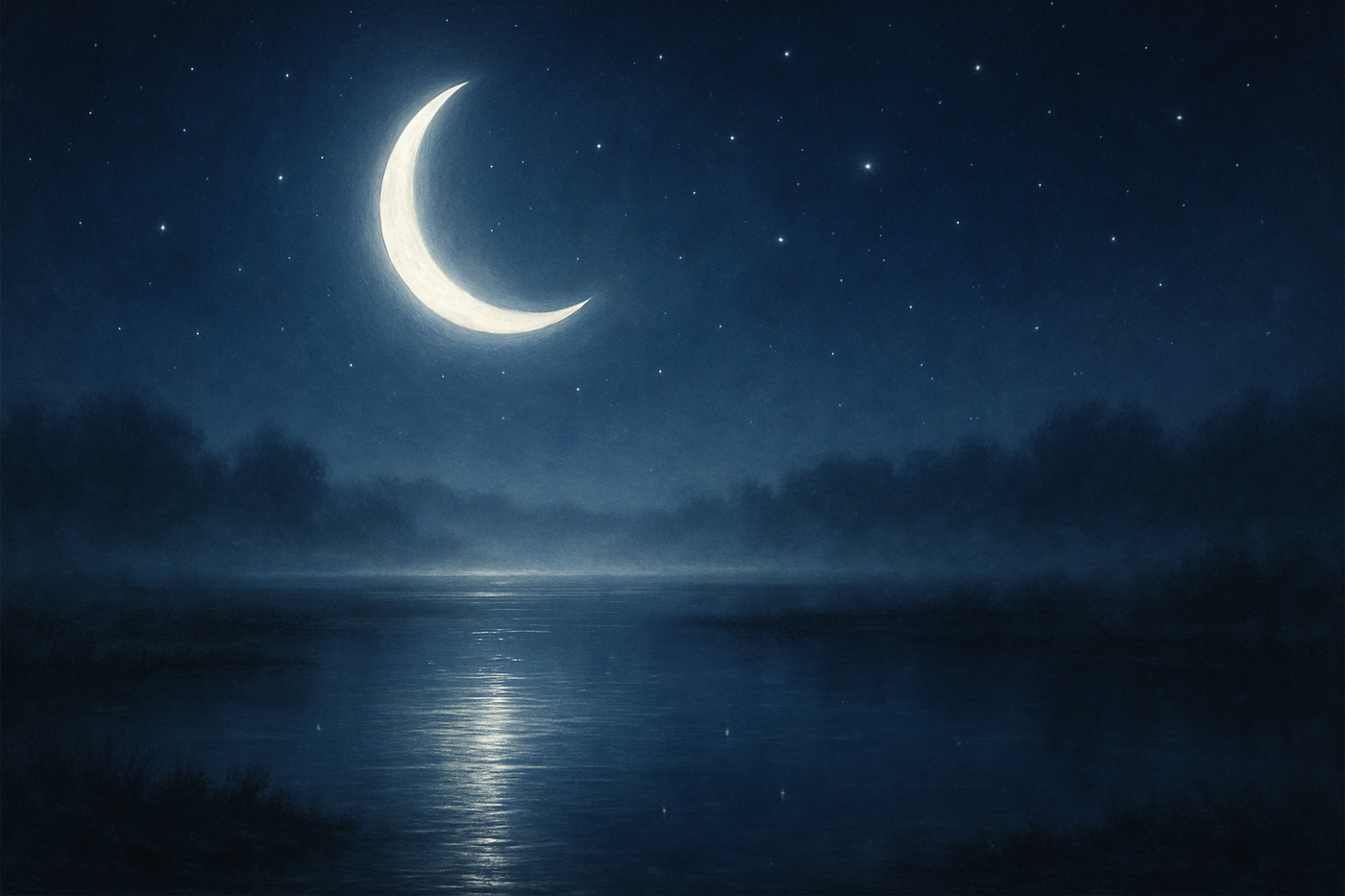
The crescent moon meaning centers on intuition, renewal, and new beginnings — it's the thin sliver of light that appears just after the new moon, marking the threshold where darkness starts giving way to growth. Across cultures, from ancient Mesopotamia to Islamic tradition to Wiccan practice, the crescent moon represents feminine energy, patience, gentle transformation, and the inner voice that senses truth before the mind fully understands it. Whether you're drawn to its spiritual symbolism, its dream meaning, or simply the way it glows low on the horizon, the crescent moon asks the same quiet question every time: what is beginning in you right now?
There is something achingly tender about the first glimpse of a crescent moon low on the horizon. It doesn't announce itself the way a full moon does. It arrives shy, curved like a held breath, as if the sky itself is just waking up to a new idea.
Maybe that's why so many of us pause when we see it. We remember the nights we stood outside, uncertain about a choice we hadn't yet made, and looked up to find that same fragile sliver of light — patient, unfinished, quietly certain that it would grow.
The crescent moon is one of humanity's oldest symbols, predating written language. Carved into cave walls, painted on temple ceilings, and stitched into flags, it has always represented the same core idea: a beginning that hasn't fully revealed itself yet. Long before telescopes or calendars, ancient peoples used its changing shape to track time itself — a habit that shaped early agriculture, religious ritual, and myth alike.
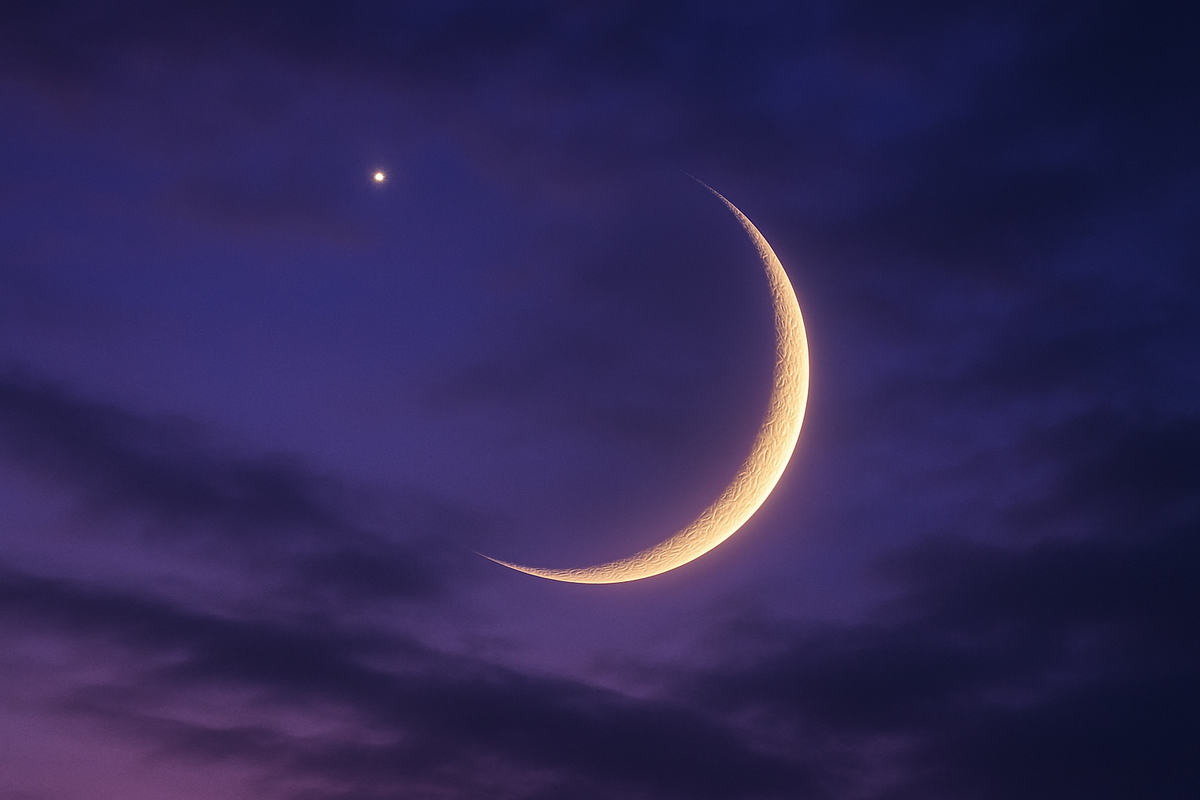
Spiritually, the crescent moon is a symbol of becoming rather than arriving. Unlike the full moon, which represents culmination, the crescent honors the in-between — the space where intention meets uncertainty. It teaches patience with unfinished things, including ourselves.
In many spiritual practices, the waxing crescent phase is considered ideal for setting intentions, planting metaphorical (or literal) seeds, and trusting instinct over logic. It's often associated with the third eye and inner vision, making it a natural companion symbol to other intuitive tools like the dream catcher, which similarly filters wisdom from the unseen.
Because the crescent moon is only partially lit, it has long been read as a metaphor for partial knowledge — the sense that something true is forming just beyond the edge of understanding. This is why intuitive practitioners, tarot readers, and astrologers frequently associate it with gut feelings, dreams, and premonitions that arrive before facts do. This liminal quality is part of why many people feel a subtle pull toward reflection under a crescent sky, even without consciously registering the moon's phase.
The moon's phases mirror emotional and creative cycles: rest, growth, fullness, release. The crescent moon marks the gentle upswing after darkness, much like the balance depicted in the yin yang symbol, where light always emerges from shadow rather than replacing it entirely.
The crescent moon's meaning shifts fascinatingly depending on where — and when — you look.
In ancient Mesopotamia, the crescent moon was the emblem of Sin (also called Nanna), the moon god of Ur, worshipped as early as 2100 BCE. Depicted as a horned crescent resting like a boat in the night sky, this symbol represented divine timekeeping, agricultural cycles, and cosmic order — the moon god was believed to measure months and guide the calendar itself. The Great Ziggurat of Ur, built to honor Sin, still stands today as one of the oldest surviving religious structures in the world, a testament to how central lunar worship was to early Mesopotamian society.
The Greek goddess Artemis and her Roman counterpart Diana were frequently depicted wearing a crescent moon crown, tying the symbol to hunting, wilderness, virginity, and protection of women in childbirth. Later, the goddess Selene was portrayed driving a chariot across the night sky with a crescent resting on her brow, reinforcing the moon's association with divine femininity and quiet authority. Artemis's twin brother Apollo represented the sun, and together the siblings framed an ancient cosmology in which day and night, masculine and feminine, existed in constant balance.
The crescent moon (hilal) holds deep significance in Islamic culture, marking the beginning of each lunar month in the Islamic calendar, including the sighting that begins Ramadan. This is why the sighting of the hilal is still celebrated communally in many Muslim countries today, with moon-sighting committees confirming the start of holy months each year. While the star-and-crescent is a widely recognized emblem on national flags, it is primarily a cultural and historical symbol rather than a religious one, adopted by various empires including the Ottoman Empire.
In Wiccan tradition, the waxing crescent, full moon, and waning crescent together form the Triple Goddess symbol, representing the Maiden, Mother, and Crone. The waxing crescent specifically embodies the Maiden — youth, curiosity, and the excitement of a life not yet written. This structure, popularized by British Wiccan Gerald Gardner in the mid-20th century and later expanded by feminist spirituality movements, frames the moon's phases as a mirror for a woman's entire lifespan.
Dreaming of a crescent moon is often interpreted as a sign that you're standing at a personal threshold. Dream analysts suggest it can point to:
If the crescent appeared waxing (growing) in your dream, it typically signals expansion and hope. A waning crescent, by contrast, often reflects release, letting go, or closing a chapter with grace. Psychologist Carl Jung classified the moon as an archetypal symbol of the unconscious mind, and its partial illumination in dreams often mirrors a truth that's surfacing but not yet fully conscious — which is why crescent moon dreams so often arrive right before a major decision or realization.
| Context | Primary Meaning | Associated Tradition |
|---|---|---|
| Waxing Crescent | New beginnings, growth, intention-setting | Wiccan Maiden phase |
| Waning Crescent | Release, reflection, closure | Wiccan Crone phase |
| Star and Crescent | Cultural identity, timekeeping | Ottoman Empire, various flags |
| Crescent on goddess crown | Feminine power, protection | Greco-Roman mythology (Artemis, Diana, Selene) |
| Horned crescent | Divine order, cosmic calendar | Mesopotamian god Sin/Nanna |
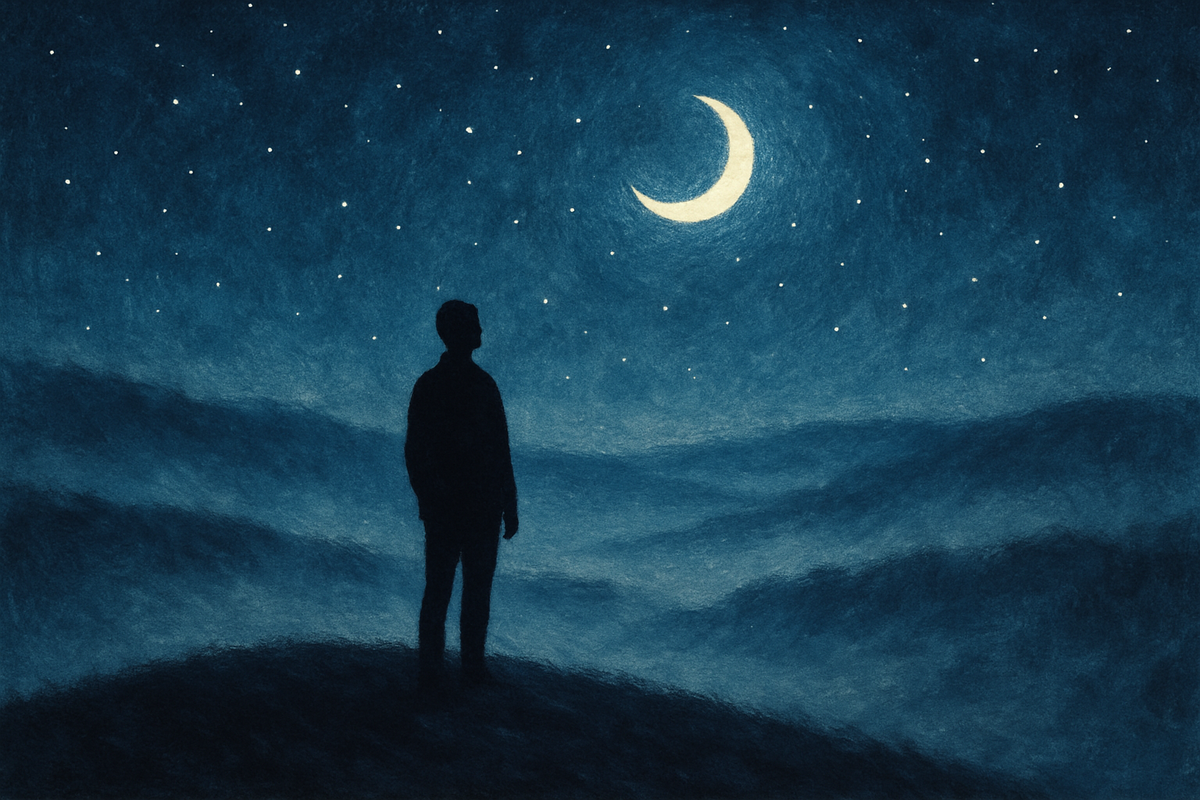
You don't need to be a practicing witch or astrologer to use the crescent moon as a personal anchor point. Its symbolism translates easily into small, grounding rituals you can return to each month.
Many people wear crescent moon jewelry as a quiet reminder that they are always in progress — never finished, never behind, simply becoming. It pairs meaningfully with other symbolic jewelry, such as a Claddagh ring, which represents loyalty and love, each piece serving as a small emotional anchor rather than a flashy statement.
Try visualizing the crescent moon as a metaphor for whatever is unfinished in your life right now — a relationship, a skill, a healing process. Ask yourself: what would it look like to trust this is still forming, rather than failing?
It helps to understand how the crescent differs from other lunar symbols you may encounter in spiritual or numerological contexts. While the full moon represents culmination and the new moon represents a blank slate, the crescent occupies the emotionally rich middle ground — much like how numerology assigns different meanings to numbers depending on their stage in a cycle, rather than treating them as fixed, isolated symbols.
Similarly, symbols like the Tree of Life and the crescent moon both represent organic, ongoing growth rather than a single fixed state — reminding us that meaning often lives in process, not completion.
A crescent moon tattoo typically symbolizes new beginnings, intuition, and feminine energy. Many people choose it to represent personal growth, a fresh start after a difficult period, or a spiritual connection to lunar cycles.
The crescent moon is primarily a cultural and historical symbol rather than an exclusively religious one. It appears in Islamic timekeeping traditions, ancient Mesopotamian religion, Greco-Roman mythology, and modern Wiccan practice, each with its own distinct meaning.
Seeing a crescent moon in a dream often points to a new beginning, an unfinished decision, or a call to trust your intuition. A waxing crescent suggests growth ahead, while a waning crescent often reflects letting go or closure.
A new moon is fully dark and invisible in the sky, symbolizing a blank slate, while a crescent moon is the thin sliver of light that appears just after, symbolizing the first visible sign of growth and momentum.
Discover what keys symbolize across cultures—unlocking secrets, opportunity, and new beginnings—plus dream meanings and how to use…
Discover what arrow symbolism really means—direction, ambition, protection, and spiritual guidance across cultures, dreams, and ta…
Discover what a rainbow truly symbolizes—hope, divine promise, and spiritual transformation—across mythology, dreams, and modern c…