 Know
Know
Symbols
Spiral Symbolism: Meaning, Growth & the Journey Inward
Discover what the spiral symbolizes across cultures — growth, evolution, and the inward spiritual journey — plus dream meanings an…
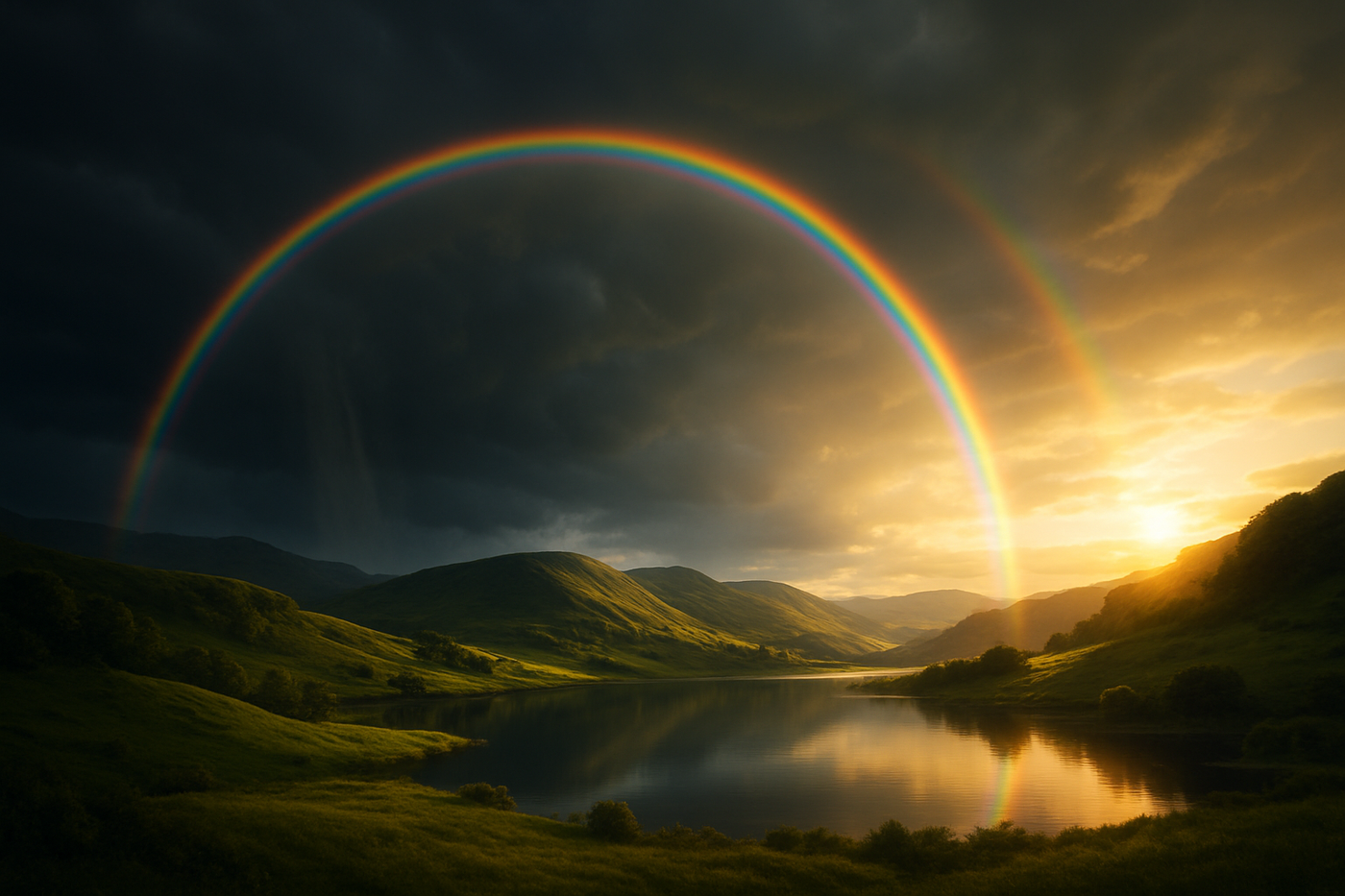
A rainbow symbolizes hope, promise, and transformation - a visible sign that light can emerge even after a storm. Because it can only form when sunlight and rain exist at the same moment, it has become the universal image of a covenant between hardship and relief. Across nearly every culture on Earth, this fleeting arc of color is read as a bridge between the human and divine, a guarantee of protection, and proof that difficulty is temporary. Whether seen after a thunderstorm or in a dream, its core message stays the same: something beautiful follows hardship.
There is a reason we stop whatever we're doing to look up when a rainbow appears. It arrives uninvited, painted across a sky that was, moments before, grey and heavy with rain. Children point. Strangers smile at each other. For a few minutes, the world feels softer.
That instinctive wonder is not accidental. Long before science explained refracted light, our ancestors saw the rainbow as a message - from gods, ancestors, or the universe itself - that the worst had passed. This article explores what that message has meant throughout history, what it means spiritually today, and what to do the next time one arcs across your sky.
At its core, the rainbow represents the meeting point of opposites: rain and sun, darkness and light, sorrow and joy. It only appears when both conditions exist at once, which is why it has become the universal shorthand for hope born from adversity. Beyond hope, rainbows are consistently linked to three other themes:
Few natural phenomena have been interpreted so consistently, yet so differently, across the globe. Here are some of the most well-documented cultural readings of the rainbow.
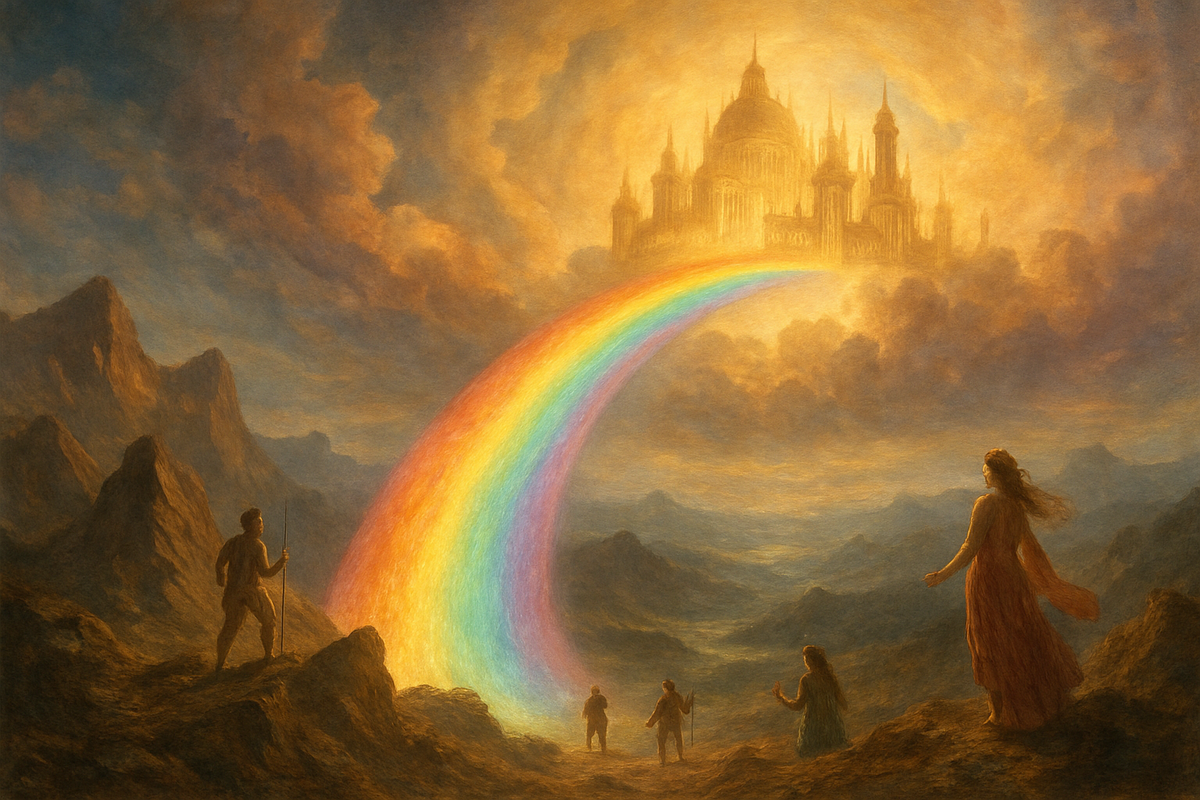
In Norse cosmology, the rainbow was Bifrost, a burning, trembling bridge connecting Midgard (the human world) to Asgard, home of the gods. Guarded by the watchman god Heimdall, Bifrost was both a passage and a protection - only the worthy could cross it. This idea of the rainbow as a literal path between realms recurs in cultures thousands of miles apart, suggesting a shared human intuition that this colorful arc must lead somewhere sacred.
In Genesis 9:13, after the great flood recedes, God sets a rainbow in the sky as a covenant with Noah - a promise that the earth will never again be destroyed by flood. This is arguably the most influential rainbow story in Western culture, cementing the rainbow permanently as a symbol of divine promise, mercy, and the end of suffering. It's a theme echoed in the way sacred emblems function within Catholic symbols, where visual signs are often used to represent unbreakable spiritual agreements.
Irish legend places a pot of gold at the end of every rainbow, guarded fiercely by a leprechaun. While often treated as whimsical folklore today, the story carries an old truth: the rainbow represents a reward that is always visible but never quite reachable, since the arc moves as you approach it. It's a poetic metaphor for hope itself - always on the horizon, pulling us forward.
Among many Aboriginal Australian peoples, the Rainbow Serpent is a powerful creator being associated with water, fertility, and the shaping of the land itself. It is one of the oldest continuously told religious narratives in the world, with roots stretching back tens of thousands of years. In much the same way the dream catcher holds deep protective meaning in Native American tradition, the Rainbow Serpent reflects how Indigenous cultures embed profound spiritual truth into natural imagery.
In Tibetan Buddhism, achieving "rainbow body" is considered one of the highest spiritual attainments - a state in which an enlightened practitioner's physical body is said to dissolve into light at death, leaving only hair and nails behind. In Hindu tradition, the rainbow is sometimes associated with Indra's bow, the weapon of the storm god Indra, linking the rainbow once again to the aftermath of a tempest. Further east, some Chinese folk traditions describe the rainbow as a slit in the sky mended by the goddess Nüwa using five colored stones, while in Japanese Shinto belief it has been described as ama-no-hashidate, a floating bridge used by descending kami, or spirits.
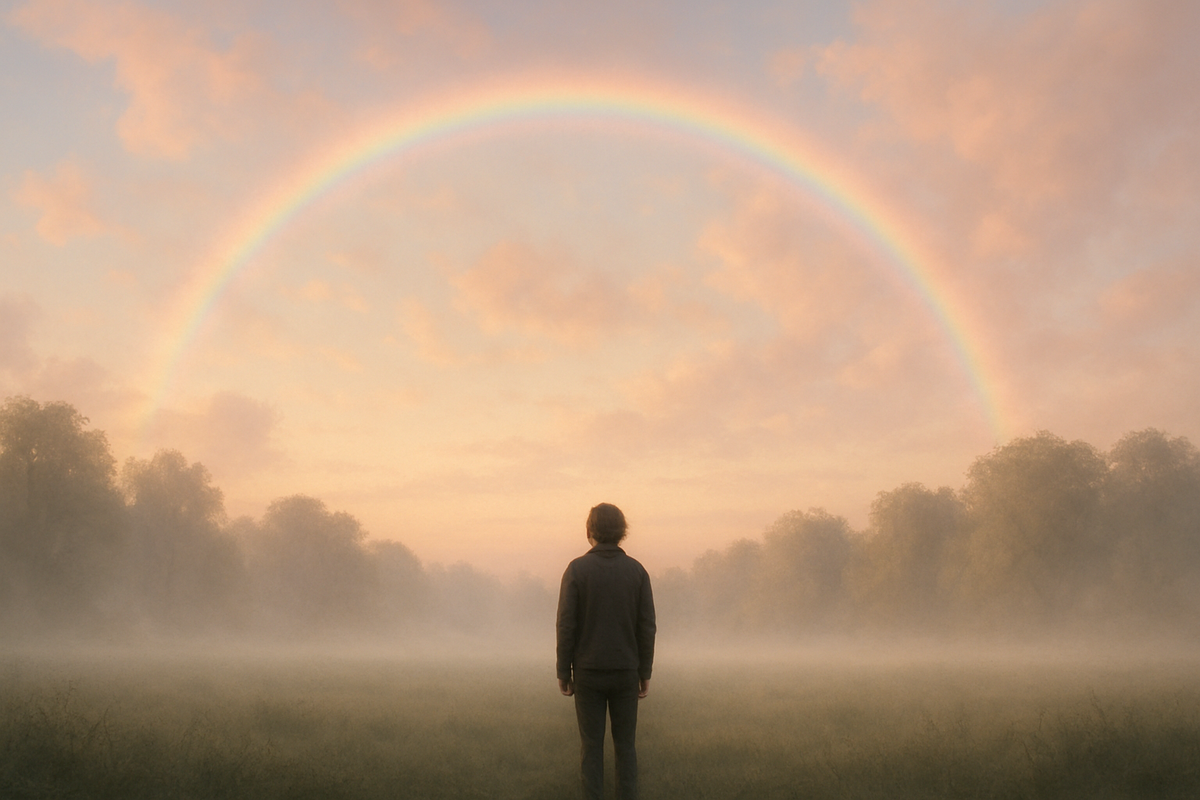
In modern spiritual practice, seeing a rainbow is often interpreted as a sign from a loved one who has passed, an angel, or the universe confirming you're on the right path. Many people treat an unexpected rainbow the way they would treat a repeating angel number - as a gentle nudge of reassurance during a difficult season.
The rainbow's spiritual power also comes from its structure: it can only exist where light and moisture meet, mirroring the balance between opposing forces found in yin yang symbolism. This union of contrast - dark clouds and bright sun - is precisely what produces something luminous, which is why the rainbow is so often used as a symbol of personal transformation, similar to the growth and renewal represented in the Tree of Life.
Each of the seven colors carries its own symbolic weight, largely inherited from chakra systems and color psychology:
| Color | Position | Symbolic Meaning |
|---|---|---|
| Red | Outer band | Vitality, passion, survival, courage |
| Orange | 2nd band | Creativity, warmth, joy |
| Yellow | 3rd band | Confidence, intellect, optimism |
| Green | Middle band | Growth, healing, balance |
| Blue | 5th band | Peace, truth, communication |
| Indigo | 6th band | Intuition, wisdom, insight |
| Violet | Inner band | Spirituality, transcendence, mystery |
Dreaming of a rainbow is widely considered one of the most positive dream symbols in dream interpretation traditions. Common readings include:
Beyond mythology and dreams, the rainbow carries powerful contemporary meaning. It has become the internationally recognized symbol of the LGBTQ+ pride movement, first designed by artist Gilbert Baker in 1978 to represent diversity, unity, and hope within the community. During the COVID-19 pandemic, children across the world drew rainbows and placed them in windows as a message of collective hope to essential workers and neighbors - a spontaneous, global revival of the symbol's oldest meaning: better days are coming. In both cases, an ancient sky-sign was repurposed as a steady, unmistakable signal of solidarity during genuinely difficult times.
Whether you view it as coincidence or a spiritual sign, a rainbow sighting is a natural invitation to pause. Consider these practices:
Spiritually, an unexpected rainbow is often interpreted as a sign of hope, encouragement, or reassurance that a difficult situation is resolving. Many people also read it as a comforting message from a deceased loved one or a confirmation that they're moving in the right direction.
In Genesis, the rainbow represents God's covenant with Noah after the flood - a promise that the earth would never again be destroyed by water. It has since become a broader Christian symbol of divine mercy, faithfulness, and peace after judgment.
Yes, in most spiritual and folk traditions a double rainbow is considered an amplified version of the single rainbow's meaning - doubled luck, doubled hope, or a significant message that shouldn't be ignored. Some traditions also interpret it as a sign of balance between two important areas of life, such as work and relationships.
Interpretations vary widely: Norse mythology saw it as Bifrost, a bridge to the gods; Irish folklore linked it to hidden treasure guarded by leprechauns; Aboriginal Australian tradition tells of the powerful Rainbow Serpent; and Tibetan Buddhism associates it with the "rainbow body" achieved through enlightenment. Chinese and Japanese folk traditions add further layers, describing it respectively as a sky mended by the goddess Nüwa and a floating bridge used by descending spirits.
Discover what the spiral symbolizes across cultures — growth, evolution, and the inward spiritual journey — plus dream meanings an…
Discover what mandalas truly symbolize, their spiritual roots, and how to use these sacred circles for meditation, healing, and ba…
Discover the caduceus meaning: Hermes' winged staff of two serpents, its Greek origins, medical mix-up with Asclepius, and spiritu…