 Know
Know
Symbols
Caduceus Meaning: History of the Winged Staff Symbol
Discover the caduceus meaning: Hermes' winged staff of two serpents, its Greek origins, medical mix-up with Asclepius, and spiritu…
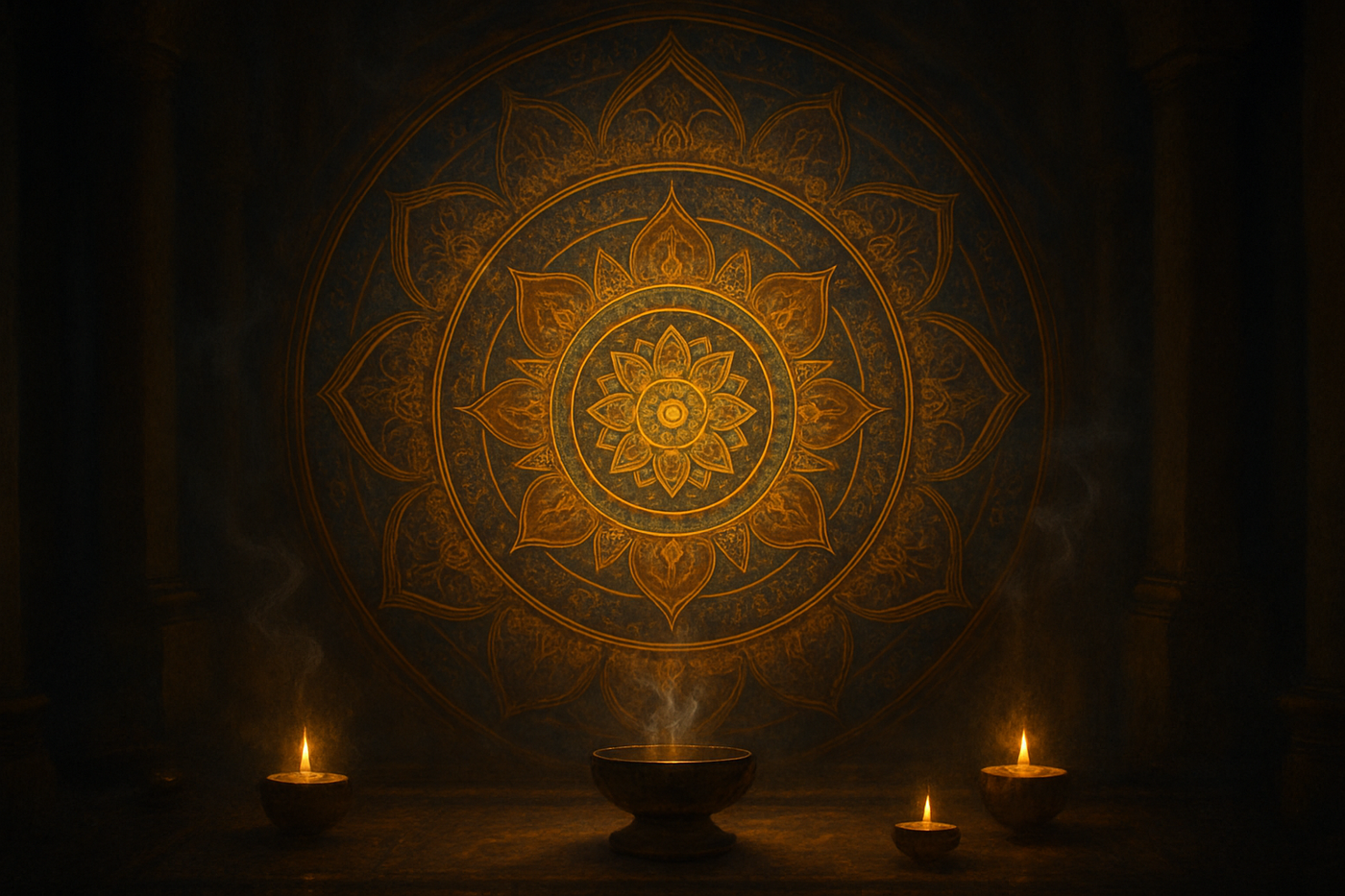
A mandala is a circular geometric design that represents wholeness, the cosmos, and the interconnected structure of existence. The word comes from the Sanskrit term for "circle," and mandalas are central to Hindu and Buddhist meditation practice, where they function as visual maps of both the universe and the mind. At the simplest level, a mandala symbolizes the journey from the outer world of chaos and multiplicity toward a single, unifying center - a visual representation of the self, the sacred, or ultimate unity.
There is something almost involuntary about the way humans respond to a mandala. Stare into one long enough and the eye stops wandering; the mind slows; the breath deepens. Long before psychologists had language for "flow states," monks in the Himalayas and stonemasons carving rose windows in medieval Europe understood that a circle divided into perfect symmetry could quiet a restless heart.
Maybe you've doodled one absentmindedly during a stressful meeting, tracing loops and petals radiating from a single point. Maybe you've seen one tattooed on a stranger's forearm, or hanging as a tapestry above a friend's meditation cushion. That pull you feel toward the pattern isn't decoration - it's recognition. The mandala mirrors something you already carry inside you: a center, surrounded by layers, reaching toward a single unifying point.
A mandala symbolizes the universe in miniature - a microcosm of the cosmos mapped onto a single image. The outer circle represents the boundary of existence, the intricate patterns inside represent the layers of consciousness or reality, and the center point represents the divine, the self, or ultimate unity. In essence, a mandala is a visual meditation on the idea that everything - stars, cells, seasons, souls - moves in cycles around a still center.
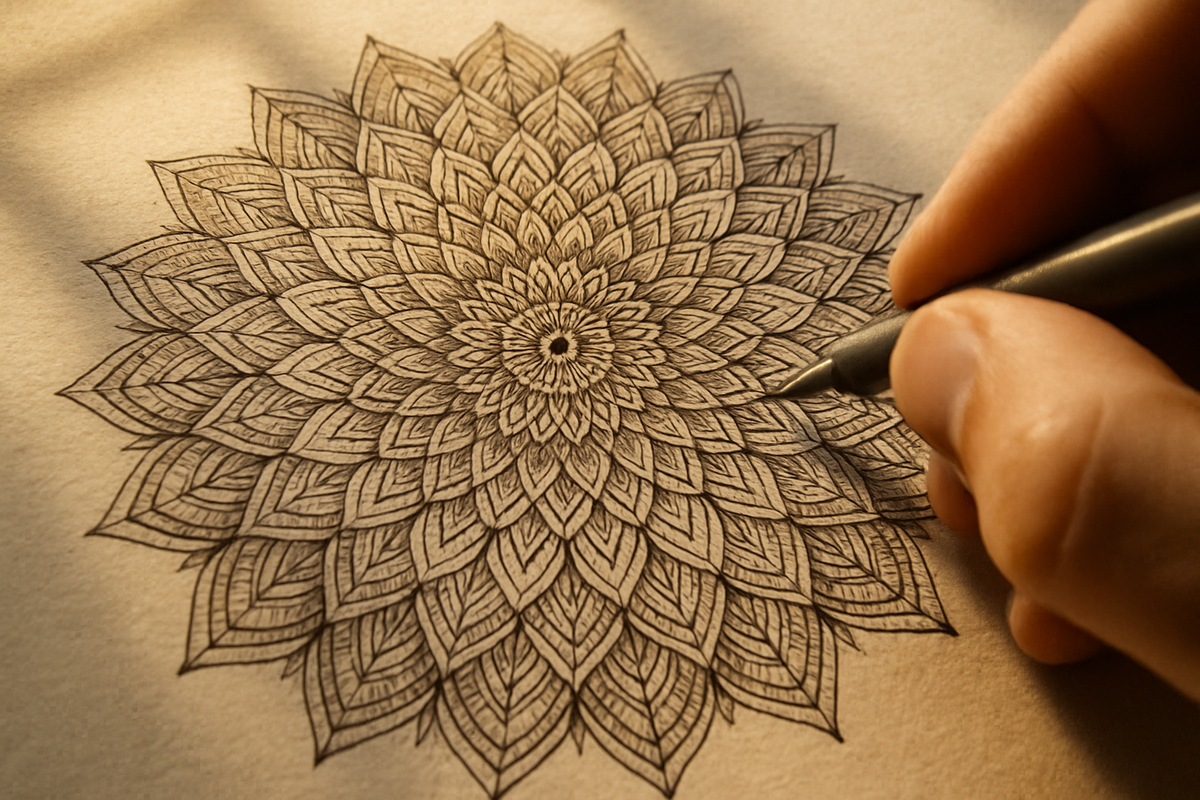
In spiritual traditions, the mandala is rarely just art - it is a map for the soul. Meditating on a mandala is thought to guide the practitioner inward, layer by layer, until they reach the still center that represents enlightenment or oneness with the divine. This mirrors the way other sacred symbols function: much like the balance depicted in Yin Yang Explained: The Balance of Life's Forces, the mandala teaches that harmony arises when opposing or multiplying forces are held together within a single unified form.
Carl Jung, the Swiss psychiatrist, famously began drawing mandalas daily during a period of personal crisis in the 1920s and later declared them a representation of the "Self" - the psychological center of the personality, distinct from the ego. He believed that the spontaneous appearance of mandala imagery in dreams and art signaled the psyche's attempt to restore order after fragmentation, a process he called individuation. Jung went so far as to compile his own mandala paintings in what became known as the "Red Book," treating each one as a diagnostic snapshot of his inner state at the time it was made.
Mandalas often rely on sacred numbers - four gates, eight petals, or a thousand-petaled lotus - each carrying its own resonance. This numerical layering is closely related to the symbolic weight of numbers explored in Numerology Explained: Meaning of Numbers & Life Path Guide, where specific digits are believed to carry vibrational or spiritual significance. In a mandala, the number of divisions is never arbitrary; it encodes cosmology, deity, or stage of spiritual attainment. A mandala with four gates, for instance, typically maps to the four cardinal directions and four guardian deities in Buddhist cosmology, while eight-petaled lotus forms often reference the Eightfold Path.
In Hinduism, mandalas often take the form of yantras - geometric diagrams used in tantric worship to represent specific deities. The Sri Yantra, composed of nine interlocking triangles radiating from a central point, is considered one of the most powerful yantras, symbolizing the union of masculine and feminine cosmic energies (Shiva and Shakti). Hindu temple architecture itself is frequently built on a mandala floor plan called the Vastu Purusha Mandala, aligning sacred buildings with cosmic and cardinal order so that the physical structure becomes, in effect, a mandala you can walk through.
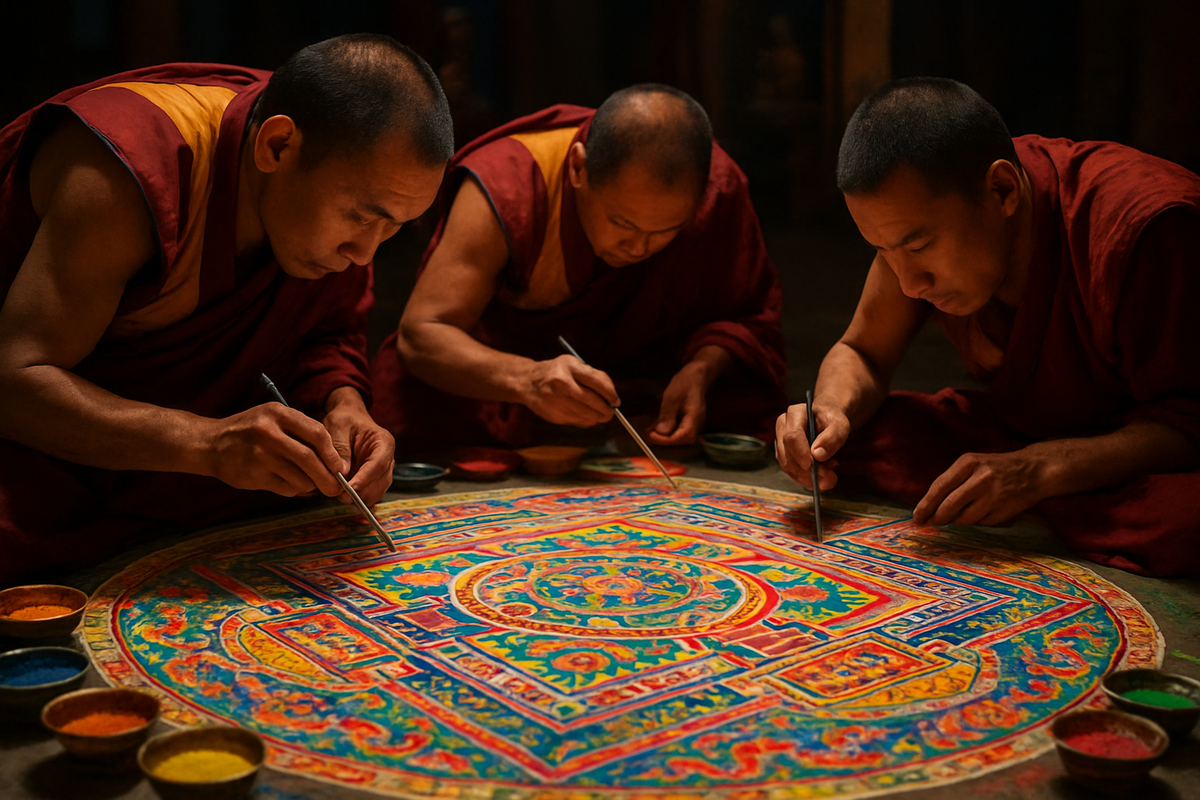
Tibetan Buddhist monks create elaborate sand mandalas over days or weeks, using millions of grains of colored sand to depict palaces of specific deities such as Avalokiteshvara or Kalachakra. Once completed, the mandala is ritually swept away and the sand poured into a river - a deliberate act embodying the Buddhist teaching of impermanence (anicca). The Kalachakra sand mandala, in particular, is used in initiation ceremonies believed to plant seeds of enlightenment in participants simply by their presence, regardless of whether they understand the philosophy behind it.
Circular sacred geometry is not confined to South and Central Asia. Navajo sandpaintings in the American Southwest use radial, symmetrical designs in healing ceremonies remarkably similar in structure and intent to Buddhist sand mandalas, created and destroyed within a single ritual to draw a patient back into harmony, or hózhó. Gothic cathedrals across medieval Europe, such as Chartres and Notre-Dame, feature rose windows - stained-glass mandalas that channel colored light into a symbolic representation of divine order. Even the Aztec Sun Stone, though a calendar rather than a meditation tool, organizes cosmological time in concentric mandala-like rings radiating outward from the face of the sun deity Tonatiuh.
| Tradition | Common Form | Primary Meaning |
|---|---|---|
| Tibetan Buddhism | Sand mandala | Impermanence, enlightenment, deity palaces |
| Hinduism | Yantra | Cosmic order, deity worship, divine union |
| Navajo (Diné) | Sandpainting | Healing, restoration of harmony |
| Medieval Christianity | Rose window | Divine light, cosmic order |
| Jungian Psychology | Drawn/painted mandala | Psychological wholeness, the Self |
Color plays a central role in how a mandala's energy is interpreted, particularly in Buddhist and Hindu traditions where each hue corresponds to an emotional or elemental quality.
Dreaming of a mandala - or any perfectly circular, symmetrical pattern - is often interpreted as a signal from the subconscious that you are seeking or moving toward psychological balance. Jung noted that mandala dreams frequently emerge during times of stress, transition, or grief, as though the mind is constructing an internal architecture to hold chaotic feelings together. If the mandala in your dream is broken, incomplete, or unraveling, it may point to a part of your life that feels fragmented and asking for integration. A vivid, glowing, or complete mandala dream, by contrast, is often read as reassurance that inner harmony is within reach. Some dream analysts also note that recurring mandala dreams tend to cluster around major life transitions - divorce, career change, grief - the same periods Jung described as the psyche actively reorganizing itself.
You don't need to be a monk or a mystic to bring mandala practice into daily life. These sacred circles are accessible tools for calming an overstimulated mind and reconnecting with a sense of center.
Mandala tattoos have become one of the most popular sacred-symbol tattoo choices worldwide, prized as much for their visual elegance as their meaning. Unlike symbols tied tightly to a single religious tradition, mandala tattoos are often personalized - incorporating lotus petals for spiritual awakening, trees for the interconnected symbolism found in the Tree of Life, or animals meaningful to the wearer. Placement matters too: a mandala over the sternum or spine is often chosen to represent the body's own central axis, reinforcing the idea of personal balance made visible.
Spiritually, a mandala symbolizes the unity of the self with the cosmos, representing balance, wholeness, and the journey inward toward enlightenment or self-realization. Its circular form suggests there is no beginning or end, only continuous cycles of growth and return to center.
Monks destroy sand mandalas to embody the Buddhist teaching of impermanence, reminding practitioners that all material things, however beautiful, are temporary. The sand is typically poured into a river or body of water as a blessing, symbolically spreading the mandala's positive energy outward.
Dreaming of a mandala often reflects a subconscious search for balance, order, or healing during a period of stress or transition. A complete, glowing mandala can suggest inner peace is emerging, while a broken or incomplete one may point to unresolved fragmentation needing attention.
Many people outside these traditions get mandala tattoos to represent personal balance, healing, or spiritual growth, and this is generally considered acceptable when done with genuine respect for the symbol's origins. It's still wise to research the specific pattern's meaning and, where possible, choose or design one that reflects your own intention rather than copying a sacred religious diagram used in specific rituals.
Discover the caduceus meaning: Hermes' winged staff of two serpents, its Greek origins, medical mix-up with Asclepius, and spiritu…
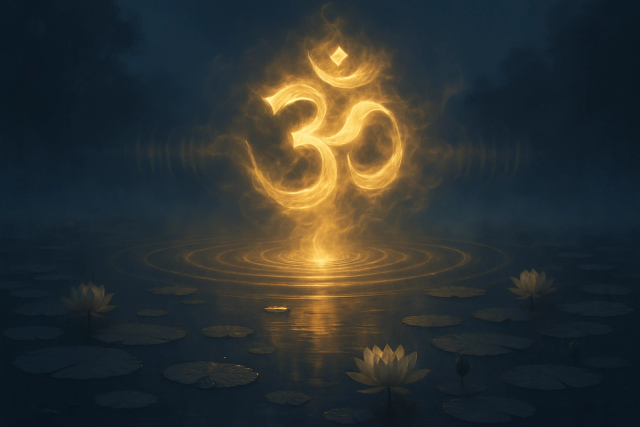
Discover what the Om symbol truly means—its Hindu, Buddhist, and Jain roots, dream symbolism, and how to use it in daily life.

Discover what the compass symbolizes across cultures — from spiritual guidance and moral direction to finding your true life purpo…