 Know
Know
Animal Symbolism
Fox Symbolism: Spiritual Meaning & Significance Explained
Discover what the fox symbolizes spiritually—cunning, adaptability, and hidden wisdom—across cultures, dreams, and everyday encoun…
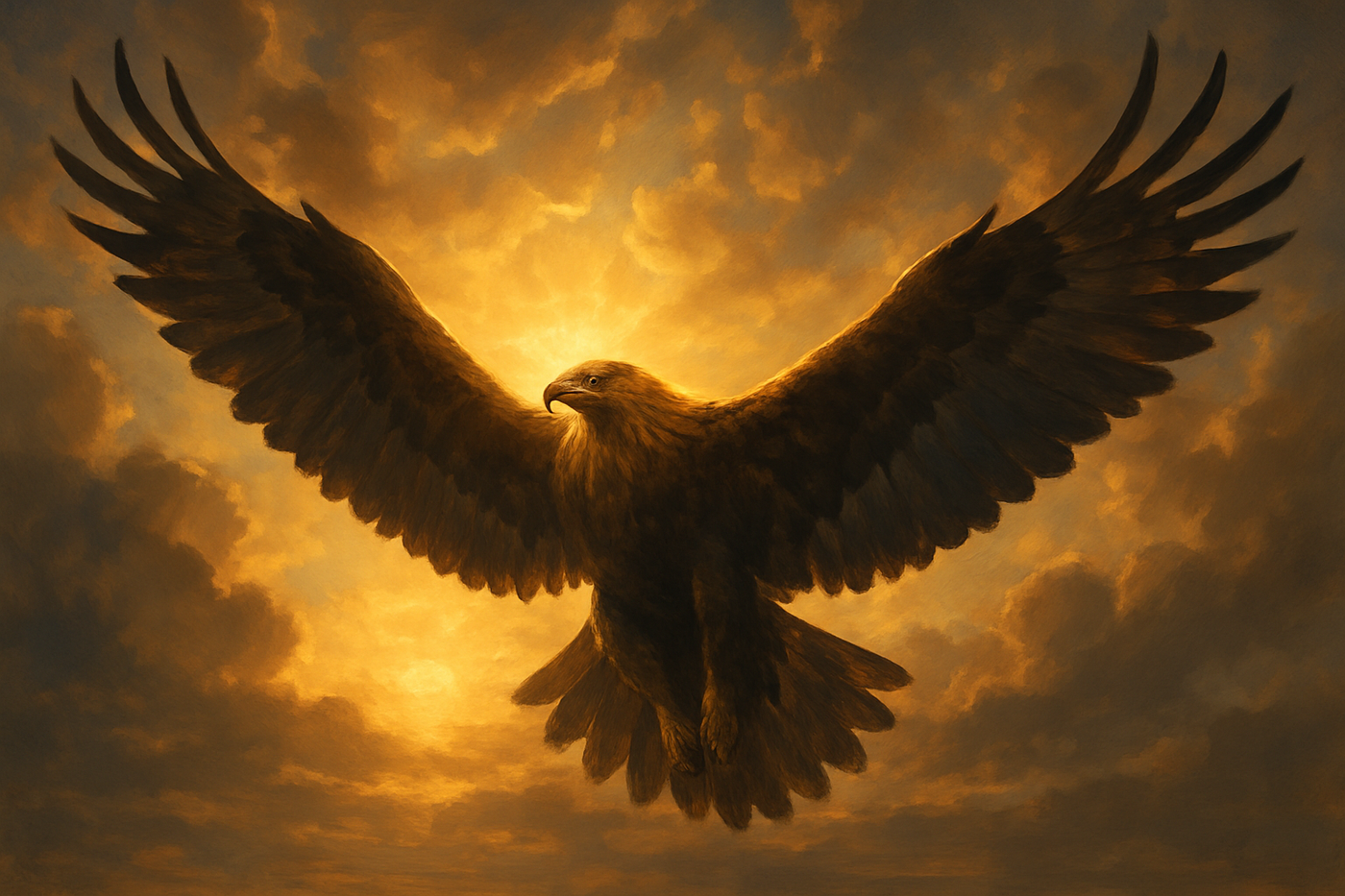
The eagle symbolizes freedom, vision, courage, and divine authority, appearing across nearly every culture as a spiritual messenger between the earthly and divine realms. Because it flies higher and sees farther than almost any other creature, the eagle has come to represent elevated perspective — the ability to rise above fear, confusion, and small thinking to see your life's terrain with total clarity. When an eagle appears in your life or in a dream, it typically signals a call to trust your own power and take the bolder path.
There is a reason your breath catches when you see one — that sudden shadow crossing the sun, wings spread wide and unmoving, riding currents invisible to everyone else. It feels less like watching an animal and more like witnessing something ancient remembering itself through you.
People who encounter eagles at pivotal moments often describe an overwhelming sense of being seen. Not judged. Seen. As if something vast and old had paused mid-flight just long enough to say: look up, you are meant for more than this.
At its heart, eagle symbolism is about elevated perspective. Eagle eyesight is estimated to be four to eight times sharper than human vision, and eagles are said to be able to spot prey such as a rabbit from as far as two miles away. Spiritually, this translates into an invitation to rise above petty concerns, fear, and confusion in order to see your life's terrain clearly — where the danger is, where the opportunity is, and where you actually need to go.
Unlike smaller totem creatures tied to subtler messages — like the quiet patience woven through spider symbolism — the eagle's meaning is bold and unmistakable. It rarely whispers. It announces.

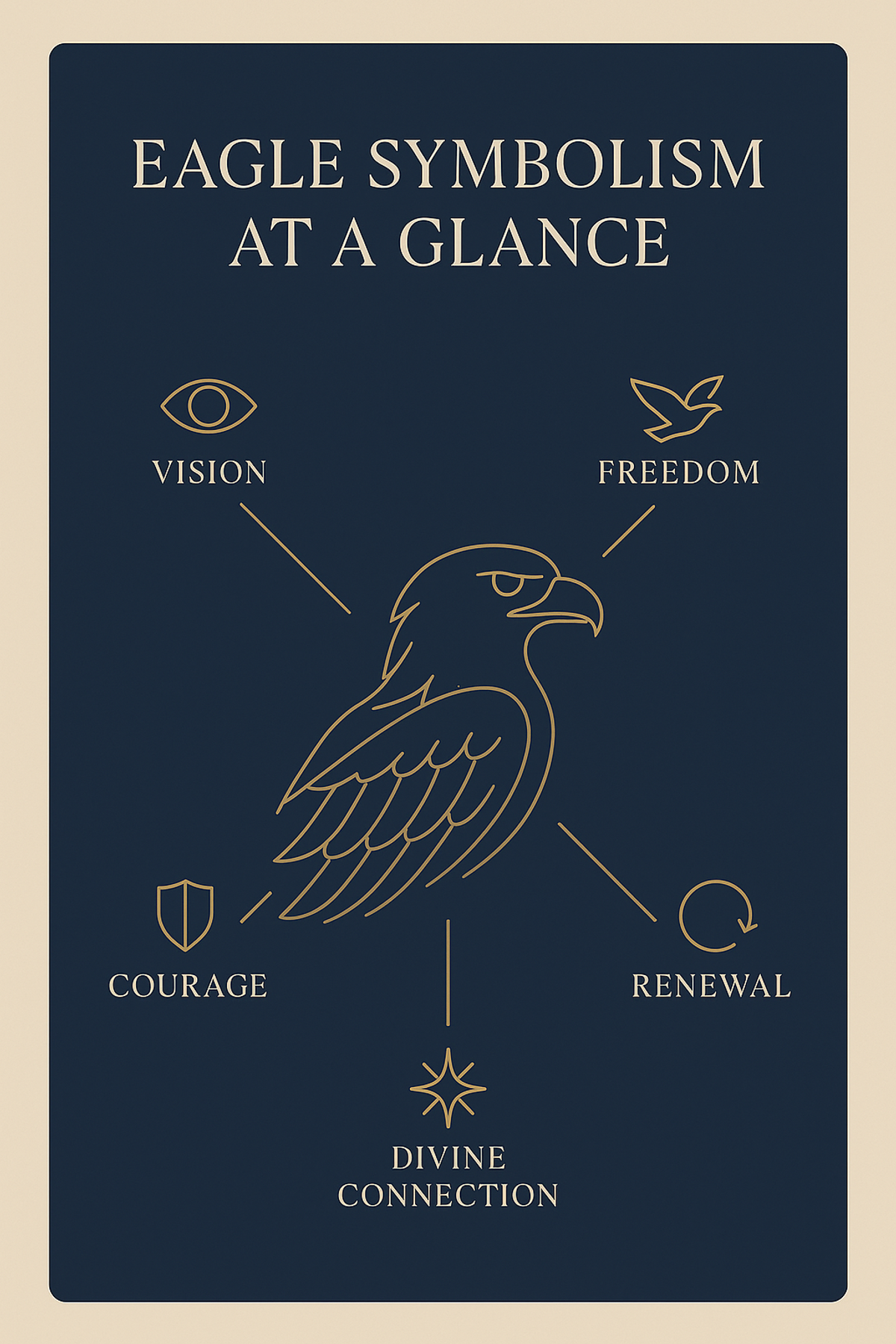
The eagle's symbolic power is remarkably consistent across civilizations that never had contact with one another, which is part of what makes its meaning feel almost archetypal rather than invented.
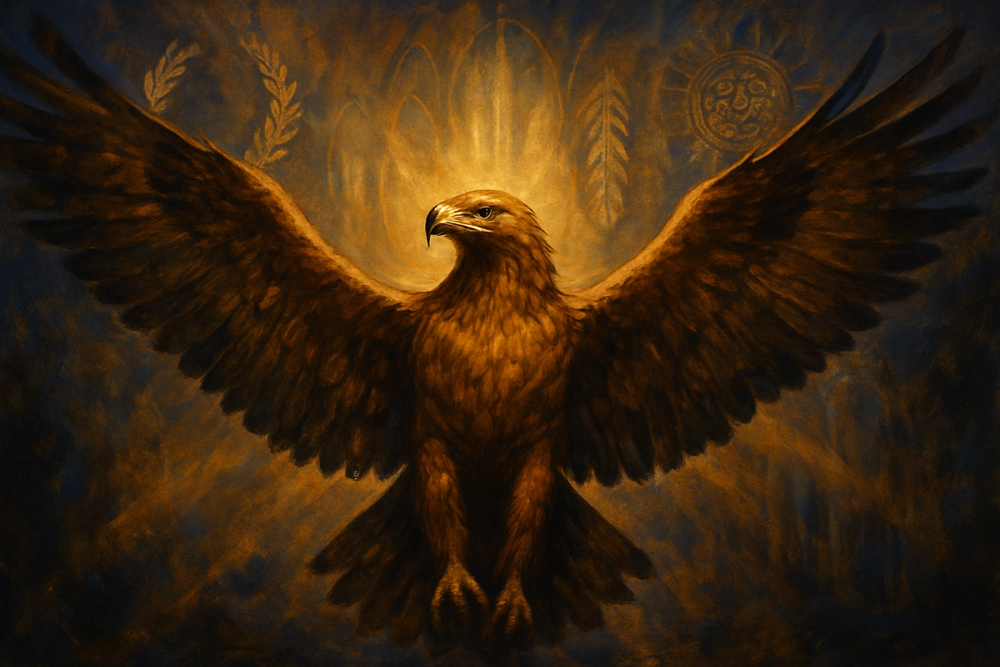
Among many Plains nations, including the Lakota and Pawnee, the eagle is considered the closest creature to the Creator because it flies nearest the sun. Eagle feathers are sacred regalia, earned rather than bought, awarded for acts of bravery, honor, or spiritual achievement. In Lakota tradition, the eagle carries prayers directly to Wakan Tanka, the Great Spirit — its flight acting as a literal conduit between human intention and divine reception.
In Roman mythology, the eagle (aquila) was the sacred bird of Jupiter, king of the gods, and served as the empire's official military standard — the loss of a legion's eagle standard in battle was considered a catastrophic dishonor. The Greeks associated the eagle with Zeus, believing it was the only creature capable of staring directly into the sun without blinking, a trait interpreted as proof of divine favor and unmatched inner strength.
While Egyptian mythology more often elevated the falcon (Horus) as the celestial hunter, eagle-like solar birds appear throughout Mesoamerican cosmology. The Aztec founding myth of Tenochtitlan centers on a vision of an eagle perched on a cactus devouring a serpent — a sign from the god Huitzilopochtli marking the exact spot where the Aztec capital should rise. That image remains on the Mexican flag today, one of the most enduring eagle symbols in the modern world.
In Christian iconography, the eagle represents the Gospel of John and, more broadly, resurrection and renewed faith. Isaiah 40:31 offers one of the Bible's most quoted lines on the subject: those who trust in the Lord "shall mount up with wings as eagles." Medieval bestiaries also perpetuated the legend that an aging eagle could fly toward the sun to burn off its old feathers and beak, then plunge into water to emerge reborn — a powerful metaphor for spiritual renewal still referenced in sermons today.
| Culture/Tradition | Eagle Association | Core Meaning |
|---|---|---|
| Lakota & Pawnee (Native American) | Messenger to the Creator | Prayer, honor, sacred bravery |
| Ancient Rome | Sacred bird of Jupiter | Imperial power, military honor |
| Ancient Greece | Bird of Zeus | Divine favor, strength, kingship |
| Aztec (Mesoamerica) | Founding omen of Tenochtitlan | Destiny, divine guidance |
| Christianity | Symbol of Gospel of John | Renewal, resurrection, faith |
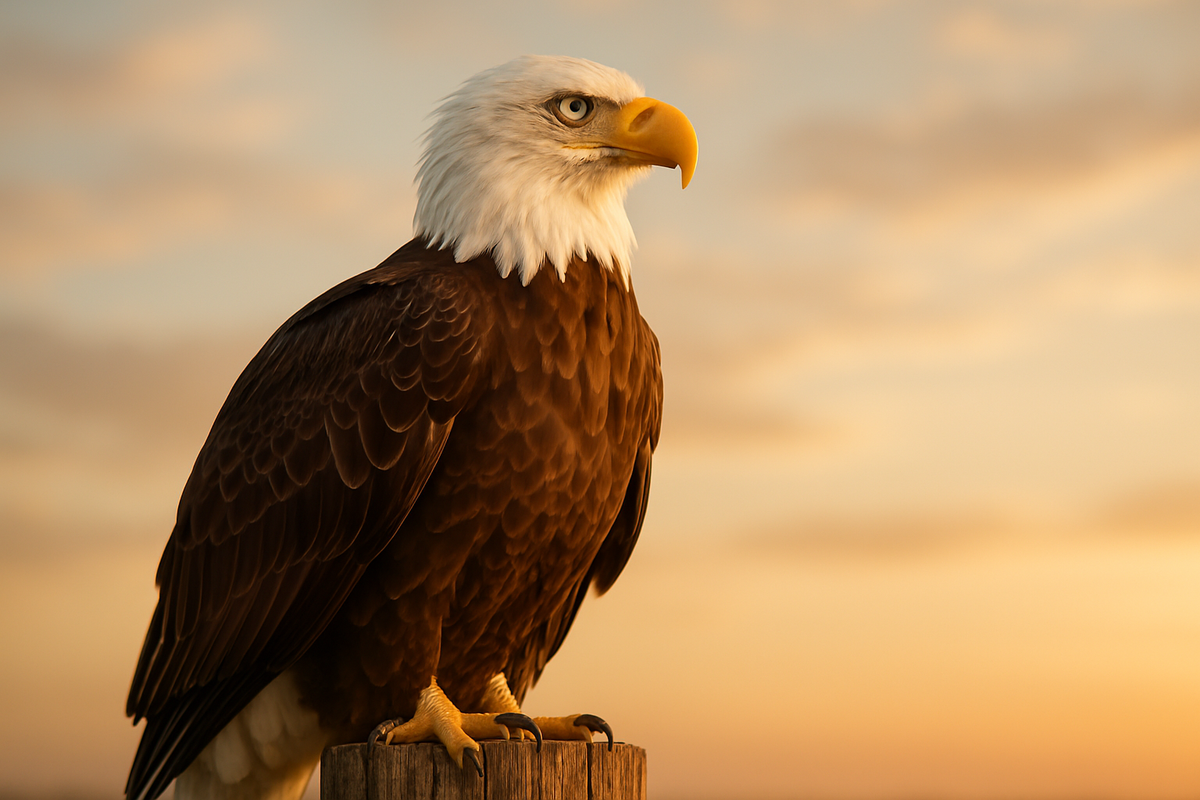
Ask most people what an eagle symbolizes and they picture one specific bird: the bald eagle, wings outstretched over a shield, clutching arrows and an olive branch. This particular species carries its own layer of meaning on top of the broader spiritual archetype — one rooted in national identity, sovereignty, and hard-won freedom.
The bald eagle was formally adopted as the national emblem of the United States in 1782, chosen for its independence, long lifespan, and majestic appearance. Despite Benjamin Franklin's famous private reservations about its scavenging habits, the bald eagle won out as a representation of strength, vigilance, and the fierce, uncompromising pursuit of liberty that the young country wanted to project to the world.
Spiritually and culturally, the bald eagle now stands for far more than politics — it has become a broader symbol of resilience and recovery. Bald eagles were nearly driven to extinction by DDT and other pesticide use, along with illegal shooting, habitat loss, and lead poisoning, and rebounded thanks to conservation efforts such as the 1972 DDT ban and Endangered Species Act protections. Seeing one today is often read as a sign of hard-earned freedom, protection over one's home or family, and the reward that comes from persistence through near-collapse.
If the eagle has chosen you as a spirit guide, you likely already sense a restlessness with small thinking. People with eagle energy tend to be natural leaders who feel suffocated by micromanagement or petty drama. They crave altitude — literal and metaphorical — and often find their greatest growth happens after being forced to release something they were clinging to too tightly.
Where a hawk's appearance often signals a focused, immediate message worth paying attention to right now, the eagle's totem energy tends to operate on a grander timescale — pointing toward long-term destiny rather than a single situational nudge. Both birds share the sky, but the eagle's symbolism carries more weight of legacy and divine mandate.
Many people notice eagle encounters clustering around other synchronicities — glancing at the clock during a sighting and catching 11:11, or spotting the same eagle three days in a row while 777 keeps surfacing on receipts and license plates. In numerology and angel-number traditions, repeating sequences like these are thought to amplify a message rather than compete with it: the eagle supplies the "what" (rise up, trust your vision, embrace freedom) while the number supplies the "when" or the emotional undertone. This same layering of meaning shows up with other small but potent creatures — a sudden hummingbird visit alongside a repeating number, for instance, often softens the eagle's bold message into something more personal and tender, like a reminder that a loved one is near.
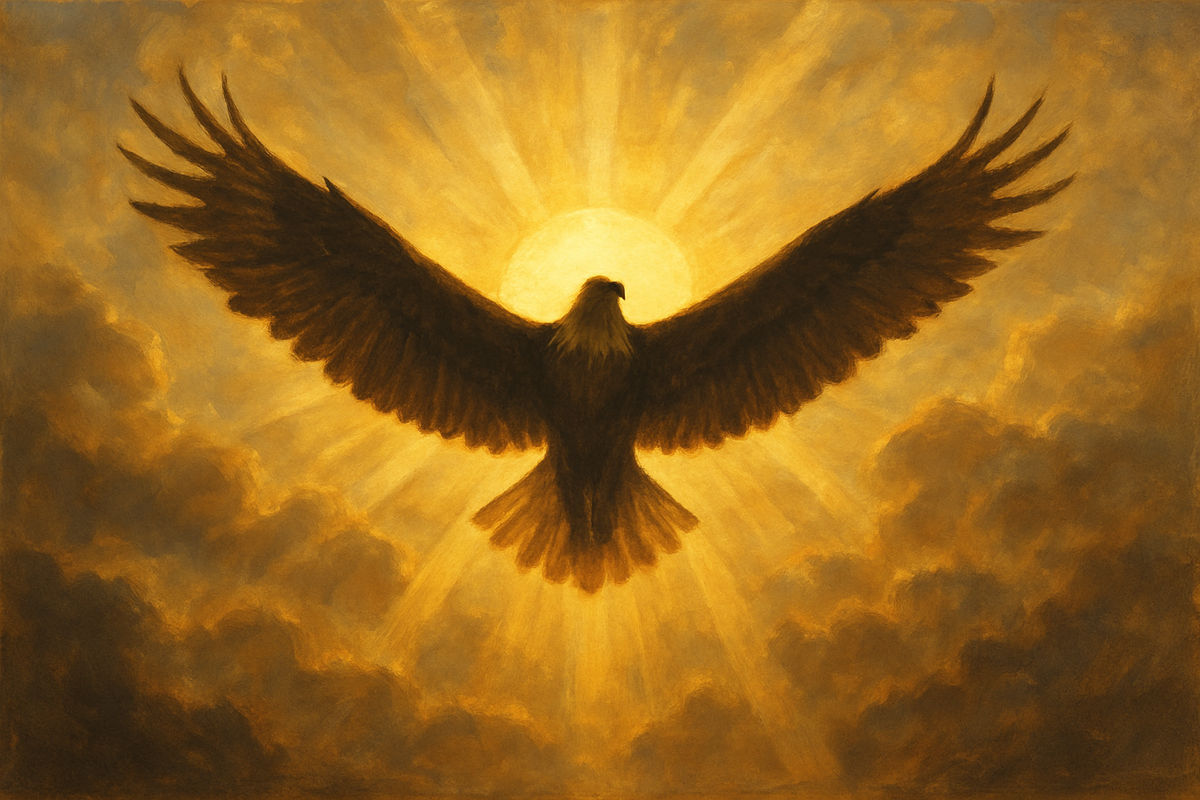
Dreaming of an eagle typically reflects your relationship with personal power, ambition, and perspective. Common dream scenarios include:
Unlike the shadowy, often misunderstood messages tied to birds like the crow's spiritual symbolism, eagle dreams are rarely ominous. Even the more intense scenarios — attack, injury — tend to point toward internal power struggles rather than external danger.
The eagle remains one of the most requested tattoo designs worldwide, and its popularity in ink follows the same symbolic logic as its spiritual meaning: strength, freedom, and an unwillingness to be caged, worn permanently on the skin.
Large chest and back pieces tend to depict the eagle mid-flight with wings fully extended, emphasizing dominance and freedom, while smaller forearm or shoulder tattoos often show a perched or screaming eagle head to signal focus and fierce resolve. American traditional-style eagle tattoos, frequently paired with flags, banners, or roses, lean into patriotic and military meaning, while more minimalist line-art eagles are popular among people who want the spiritual symbolism — vision, rising above hardship — without the nationalistic overtones.
Choosing an eagle tattoo is often a personal declaration of resilience: many people get one after surviving a difficult period, leaving an unhealthy situation, or achieving something they were once told was impossible. Military service members and veterans frequently choose eagle tattoos to honor duty and sacrifice, while others select the design purely for its spiritual resonance — a permanent reminder to keep choosing courage and elevated perspective over fear.
It helps to understand the eagle in context, since spiritual seekers often blur the meanings of different birds of prey and majestic creatures. Here's how they compare:
| Bird | Symbolic Focus | Typical Timing |
|---|---|---|
| Eagle | Vision, divine authority, life destiny | Long-term, generational |
| Hawk | Focused message, sharp awareness | Immediate, situational |
| Owl | Hidden wisdom, intuition in darkness | Subtle, unfolding |
| Swan | Grace, transformation, devotion | Gradual, emotional |
If eagle symbolism keeps appearing in your life, consider it an invitation rather than a coincidence. Practical ways to honor and integrate this energy include:
An eagle crossing your path is widely interpreted as a sign to trust your vision and take bold, confident action on something you've been hesitating about. It often arrives right before a major decision or turning point, signaling that you already have the clarity needed to move forward.
Yes, in nearly every major tradition — from Lakota to Roman to Christian symbolism — the eagle is considered an overwhelmingly positive omen tied to strength, protection, and divine favor. Even intense encounters, like a screeching or attacking eagle in a dream, usually point to inner power rather than actual danger.
In many Native American traditions, an eagle feather is a sacred, honored object representing bravery, wisdom, and a direct connection to the Creator, often awarded for significant achievements or acts of courage. Finding one unexpectedly is generally regarded as a rare spiritual gift rather than a random occurrence.
Eagle symbolism tends to relate to long-term destiny, divine authority, and elevated life perspective, while hawk symbolism usually points to a more immediate, focused message worth acting on right now. Both are birds of prey associated with vision, but the eagle carries a heavier weight of legacy and higher calling.
Beyond its role as a national emblem, the bald eagle spiritually represents hard-won freedom, protection, and resilience after near-collapse — a nod to the species' dramatic recovery from near-extinction. Seeing one is often read as encouragement that your own recovery or independence is closer than it feels.
Two eagles flying or perched together are traditionally interpreted as a sign of partnership, balance, and alignment, often appearing when an important relationship — romantic, familial, or professional — is entering a stronger, more harmonious phase. Some traditions also read this as confirmation that two people are meant to rise together rather than separately.
An eagle tattoo generally symbolizes freedom, courage, and personal resilience, and is frequently chosen to mark a difficult period someone has overcome. Depending on the style, it can also carry patriotic or military meaning, especially in American traditional tattoo work featuring flags or banners.
Many people report seeing an eagle in the days or weeks following a loved one's death and interpret it as a comforting sign that the person's spirit has risen to a higher, freer state. Because the eagle is so widely associated with the soul's ascent and divine connection, this encounter is generally seen as reassurance rather than a message of warning.
Discover what the fox symbolizes spiritually—cunning, adaptability, and hidden wisdom—across cultures, dreams, and everyday encoun…
Leopard symbolism explained: spirit animal & totem meaning, black and snow leopard significance, dreams, tattoos, and leopard vs p…

Discover what the lynx symbolizes spiritually—secrecy, intuition, and hidden truth—plus its meaning in dreams, myth, and as a tote…