 Know
Know
Animal Symbolism
Snake Symbolism: Spiritual Meaning & Significance
Discover what snakes truly symbolize spiritually—transformation, healing, danger, and rebirth—across cultures, dreams, and everyda…
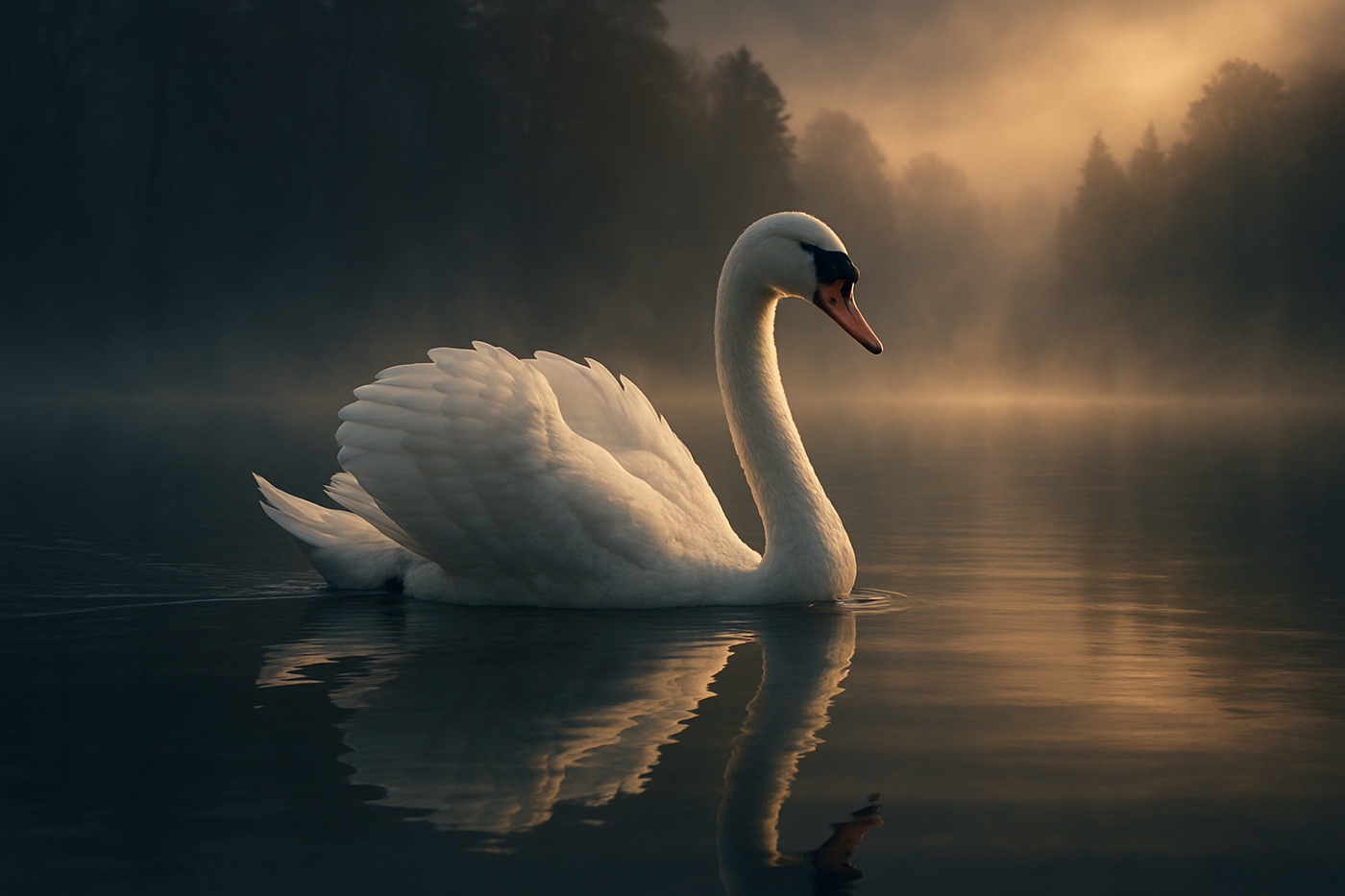
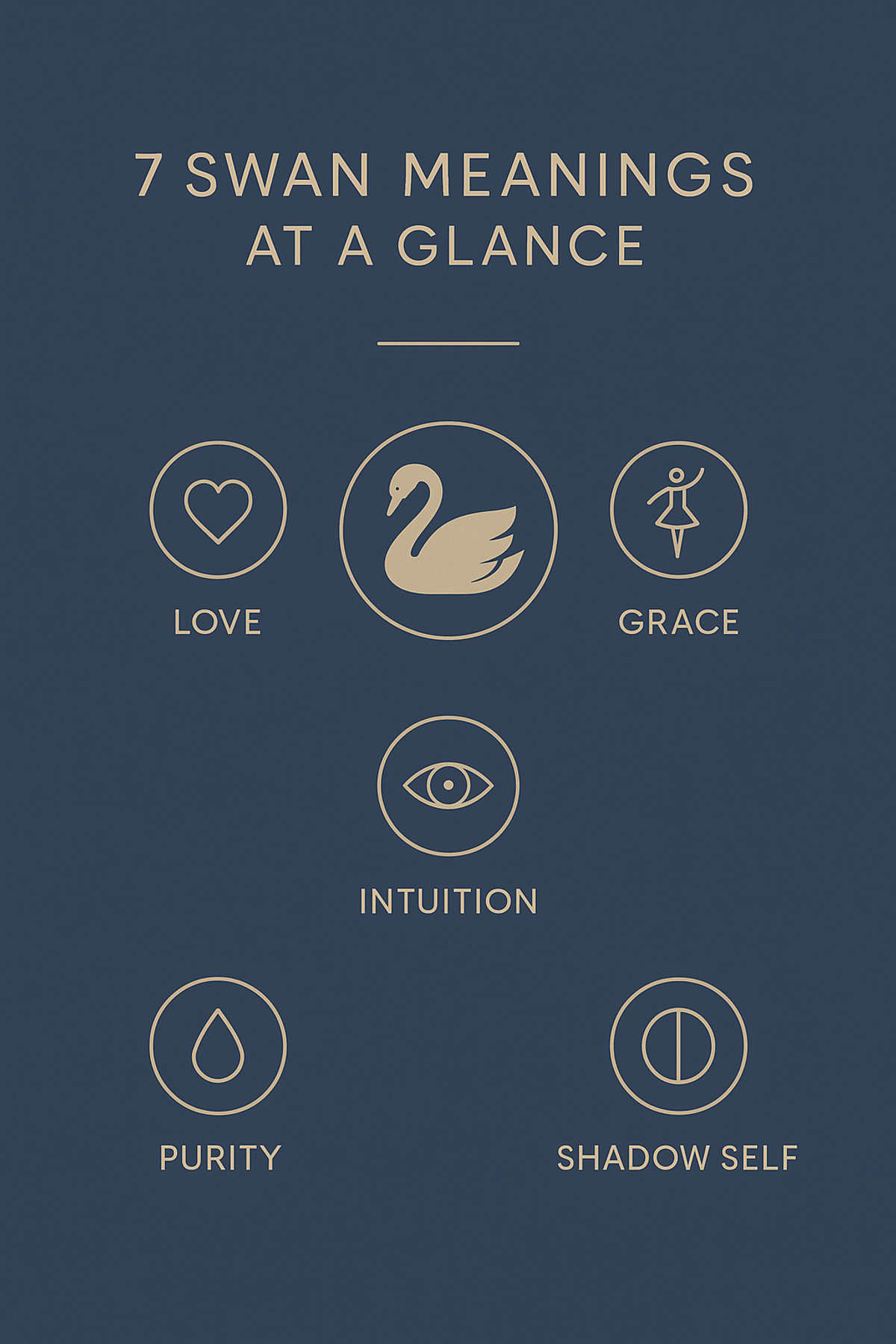
A swan symbolizes love, transformation, grace, and spiritual awakening. Across nearly every culture, this elegant water bird represents the journey from an unrefined past into your truest, most graceful self — and because swans pair for life, they're also one of the most universal emblems of soulmate love and devotion. Swan symbolism touches on intuition, purity, and the balance between light and shadow, seen most clearly in the white swan and black swan archetypes. Whether you've spotted one gliding across still water, dreamed about one, or feel drawn to it as a spirit animal, the swan's spiritual meaning always circles back to becoming who you were always meant to be.
You've probably seen a swan gliding across a still lake, its long neck curved like a question mark. It doesn't flap or rush—it glides. Silent. Steady. Poised. There's a strange kind of peace in watching a swan. Almost spiritual.
But here's the thing: we rarely ask why it feels that way.
Why do swans stop us in our tracks? Why do we associate them with love, poetry, or even mysticism?
This article isn't just a list of meanings. This is a journey into what swans truly symbolize—not only in myths and cultures around the world, but in our own subconscious, our relationships, and our stories.
Let's dive in.
Ask anyone who's stood near one in the wild—there's a certain stillness that overtakes the air. It's not just beauty. It's something more primal. The way a swan moves, the way it stares directly at you without fear… It feels ancient.
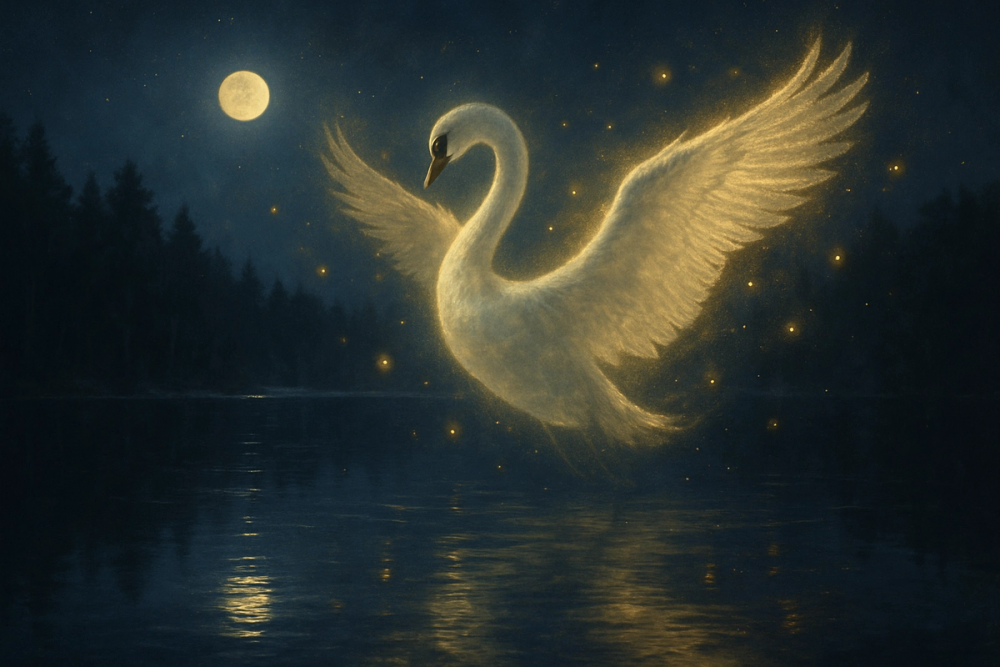
There's a reason so many cultures have seen swans as messengers from another realm. For some, they're signs of divine love. For others, they represent the human soul in its purest form.
Either way, one thing is clear: swans are never just birds.
Let's start at the soul level. Because if you've ever asked yourself, "Why does seeing a swan feel like something sacred?" — this is why.
One of the most powerful stories ever told about swans wasn't even about swans. It was about a so-called "ugly duckling."
That awkward little bird who didn't fit in. Mocked. Isolated. Misunderstood.
Until one day, after enduring the storms and the solitude, he saw his reflection in the water—and realized he had never been a duck at all.
He was a swan.
That story hits home for a reason. Swans symbolize transformation. Not quick fixes. Not surface-level makeovers. But the deep, often painful metamorphosis that comes when you grow into who you really are.
When a swan crosses your path—whether in a dream or on a quiet walk—it may be a sign that you're on the edge of becoming something more. Not something different—something realer.
Here's a fact that never fails to stun people: Swans mate for life.
They don't swipe right. They don't get cold feet. They find their partner—and they stick with them.
That's why swans have become a symbol of eternal love. But it's not just about romance. It's about commitment. Devotion. The kind of love that chooses every single day, even when it's hard.
In ancient poems and wedding traditions, swans are used to represent soulmates. That deep, bone-level recognition when two spirits understand each other without speaking — the same energetic pull people often describe when researching twin flame connections through the hummingbird.
And if you've ever felt that kind of connection—you already know why the swan is its perfect symbol.
There's something incredibly feminine about the way a swan moves.
Not "feminine" in the dainty, delicate way people think. No. Feminine in the cosmic sense. The divine kind. The kind that holds both softness and strength in the same breath.
In Hinduism, the goddess Saraswati—goddess of wisdom, creativity, and learning—rides a swan. The swan in this case isn't just a mode of transport. It's a spiritual symbol of discernment—the ability to separate what's real from what's illusion.
In that sense, swans don't just float on water. They float above noise. Above chaos. Above distraction.
They remind us to return to stillness. To intuition. To clarity.
If one culture saw the swan as sacred, that would be interesting. But when cultures that never touched each other all saw the same bird and felt the same awe—that's powerful.
Here's how the swan shows up in different corners of the world.
In Greek mythology, swans were often associated with Apollo, the god of music, prophecy, and the sun. The Greeks believed swans sang a song so beautiful that it could only be heard before death—hence the phrase "swan song."
One of the most famous myths is that of Zeus transforming into a swan to seduce (or violate, depending on the version) the mortal Leda. Their union produced Helen of Troy.
Even here, the swan is not just a bird—it's divine, seductive, and dangerous. Like the trickster energy often found in crow symbolism and mythology, the swan reminds us that sacred messengers aren't always gentle ones.
In Sanskrit, the swan is known as Hamsa. This isn't just a bird—it's a metaphysical concept.
The Hamsa is believed to have the ability to separate milk from water, symbolizing the capacity to discern truth from illusion. It's a spiritual superpower.
The swan is often the companion of sages, mystics, and gods—not because it's beautiful, but because it knows. It sees clearly. It lives between two worlds.
In Ireland, there's a haunting legend called The Children of Lir, where children are cursed to live as swans for 900 years. They sing songs of heartbreak, of exile, of longing.
In Celtic culture, swans are often connected to the Otherworld—a magical realm just beyond the veil of our own.
The Norse had similar reverence. Swans were thought to be sacred to Freyja, the goddess of love, and were believed to carry messages between realms.
It seems no matter where you go, the swan always symbolizes something more than a bird.
Swans appear only briefly in scripture, most notably in Leviticus and Deuteronomy, where they're listed among birds considered ceremonially unclean. Some biblical scholars read this less literally and more symbolically, associating the swan's white plumage with purity, transformation, and the soul's journey toward God — even if the bird itself wasn't meant to be eaten. In broader Christian symbolism, the swan's grace and its "swan song" have been used to represent a peaceful, faithful transition from earthly life into the divine.
Let's talk duality.
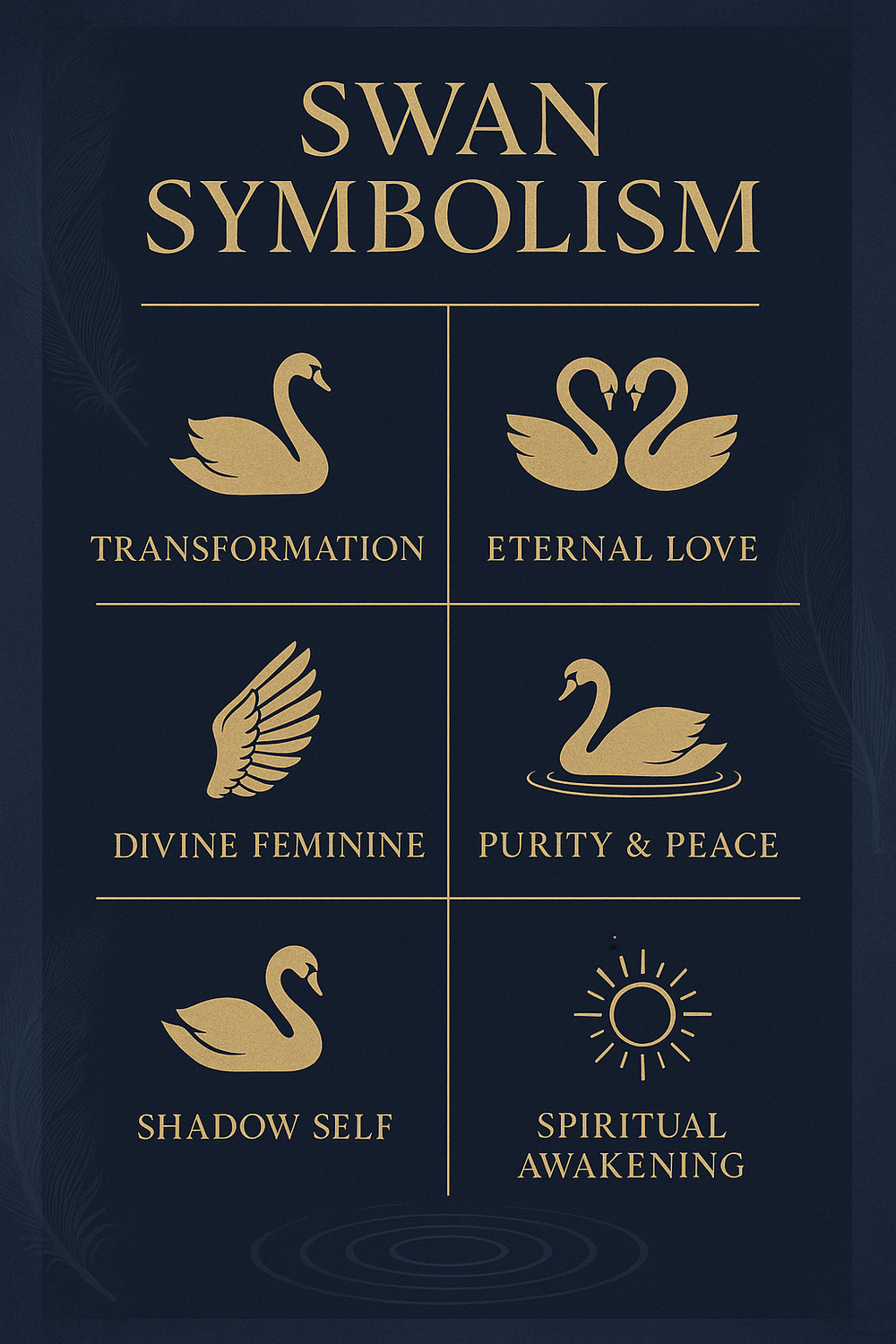
Because not all swans are white. And not all symbolism is light and gentle. Here's how the two compare side by side.
| Trait | White Swan | Black Swan |
|---|---|---|
| Core Meaning | Purity, peace, transcendence | The unknown, hidden truths |
| Energy | Spiritual harmony, serenity | Shadow work, the unconscious mind |
| What It Represents | What you present to the world | What you wrestle with alone |
| Best Known Symbol Of | Grace in motion, divine calm | "Black swan events" — rare, transformative change |
| Spiritual Invitation | Trust the stillness | Go deeper into the self |
For a long time, people believed black swans didn't exist. They were a metaphor for impossibility. Then explorers found them in Australia—and the phrase "black swan event" was born: a rare, unexpected moment that changes everything.
If the white swan is what we present to the world, the black swan is what we wrestle with alone. It's the fear, the chaos, the deep magic we don't quite understand — territory that overlaps closely with scorpion symbolism and shadow work.
And yet—it's just as essential.
Together, they form a kind of yin and yang. Two halves of the soul. Two wings of the same bird.
Dreams have a funny way of revealing things we haven't quite admitted to ourselves.
Sometimes, the symbols we see in sleep aren't random at all—they're mirrors.
So, what does it mean when a swan shows up in your dream?
The interpretation depends on the context, but generally speaking, dreaming of a swan often reflects something beautiful stirring beneath the surface. Something spiritual. Something emotional. Something awakening.
If you dream of a swan gently gliding across a lake, take a breath.
That's a good sign.
This kind of dream is often associated with emotional peace, inner grace, or the coming of a new beginning. It suggests you're entering a chapter where alignment between your inner world and outer reality is finally beginning to take form.
You've been through the storms. Now you float.
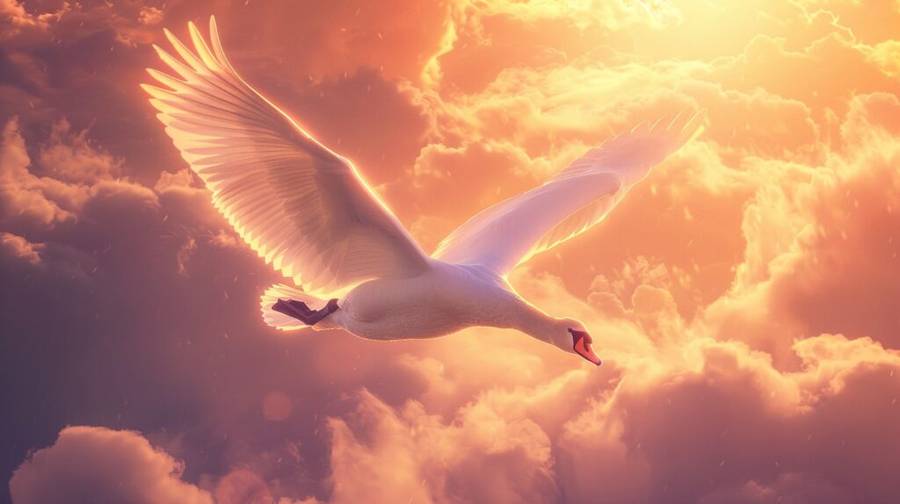
A swan in flight is a powerful image.
It can symbolize:
Flying swans are messengers. They're asking you: What are you still grounded by? What's holding you from soaring?
It's often a prompt to make a decision—especially one that lifts your soul.
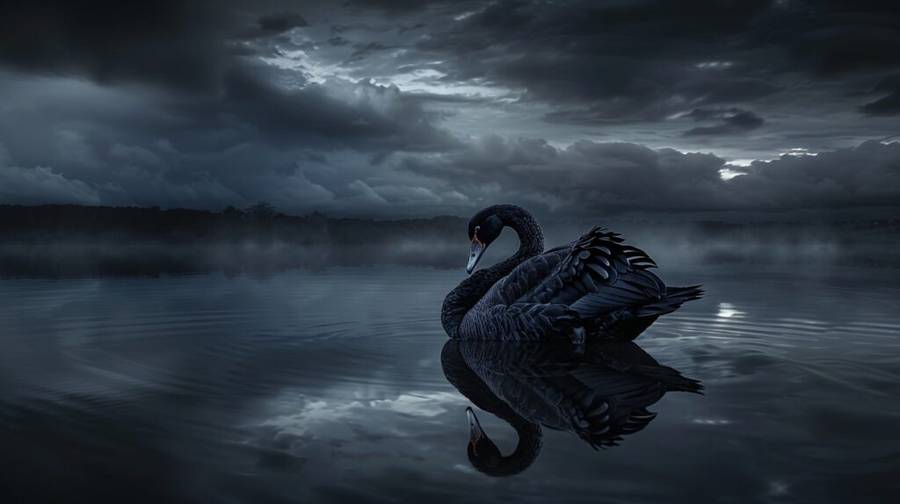
When you dream of a black swan, you're being invited to look inward. Way inward.
This isn't a bad omen—it's a deep invitation to explore the parts of yourself that are unacknowledged or hidden. It might relate to repressed feelings, childhood trauma, or fears you haven't put into words yet.
But remember: darkness isn't the opposite of light. It's the womb of light. It's where rebirth begins.
A black swan showing up could be your subconscious saying: You're ready. Go deeper.
Animals don't show up in our lives by accident—especially ones as symbolically rich as the swan.
If the swan appears to you repeatedly, either in the physical world or in meditation, it may be stepping forward as your spirit guide, totem, or power animal — much like how people who resonate with owl symbolism or hawk symbolism feel called toward heightened vision and awareness.
Each of those roles has a slightly different meaning. Let's break them down.
A spirit animal reflects your essence. It walks (or swims) beside you, mirroring your current path.
If the swan is your spirit animal, you are likely:
But the swan also nudges you to accept change. Its presence can mean that you are ready to step into a more refined version of yourself—one that values peace over chaos, and authenticity over appearance.
A totem represents the traits you were born with—or those you inherit from ancestors or lineage.
If the swan is your totem:
Swans as totems tend to guide people who are natural healers, poets, or dreamers who just haven't learned to trust their wings yet.
A power animal comes forward when you need it most—usually during a transition, struggle, or spiritual awakening.
Call on the swan as a power animal when:
The swan's message in these moments is always gentle, but firm: You already are who you're becoming.
If symbolism had royalty, the swan would wear the crown.
From ancient poems to modern cinema, the swan is one of the most enduring and poetic metaphors humanity has ever embraced.
In Greek poetry, swans were often associated with beauty and prophetic insight. Plato referred to the swan's final song before death as proof that the soul welcomes release—not with fear, but with melody.
Shakespeare used the swan in Othello to describe poetic grace: "I will play the swan, and die in music."
The idea of the swan song—a final, beautiful expression before death—has lived on for centuries as one of the most haunting images in literature.
No exploration of swan symbolism is complete without mentioning Swan Lake—Tchaikovsky's ballet masterpiece.
The ballet tells the story of Odette, a woman cursed to become a swan by day, and the tragic duality she shares with her doppelgänger, Odile—the black swan.
The story is filled with magic, betrayal, and impossible love—but at its heart, it's about inner conflict.
Odette and Odile aren't just characters. They are us.
The light and the dark. The beauty and the rage. The purity and the seduction. Both must exist. Both are true.
In the world of tattoos, the swan has become a favorite symbol for those who've undergone serious personal transformation. People who've lost everything and come back stronger. People who've outgrown an old life. People who've stopped hiding. Swan tattoos often pair the bird with water, feathers, or flight to emphasize rebirth and resilience.
In logos and branding, swans are used to project luxury, purity, and trust. Think about ballet schools, wellness brands, or high-end jewelry. The swan says it all—without speaking.
And in cinema? Think Black Swan, the psychological thriller starring Natalie Portman. That film wasn't just about a ballerina losing her mind. It was about a woman confronting the darkness she tried to suppress—and discovering its power.
The swan isn't a fairytale bird. It's a symbol of truth. Sometimes gentle. Sometimes terrifying. Always real.
Let's take a moment to answer some of the most commonly searched questions about swan symbolism—crisp, clear, and straight to the point.
What does a swan symbolize spiritually?
A swan represents transformation, grace, eternal love, and spiritual awakening. It reflects both divine feminine energy and the journey of becoming your truest self.
What does it mean when you see a swan in real life?
Seeing a swan can signify peace, clarity, or a reminder to trust your own emotional intelligence. It may also suggest you're entering a phase of personal transformation.
Are swans a good omen?
Yes. In most cultures, swans are seen as auspicious signs of good fortune, love, or spiritual guidance—especially when seen during times of uncertainty.
What is the meaning of a black swan?
Black swans represent the unknown, the unconscious mind, and unexpected events that lead to growth. Symbolically, they point to shadow work and hidden truths.
What do swan tattoos mean?
Swan tattoos often symbolize rebirth, resilience, deep emotional connection, or transformation from a painful past into a powerful new identity.
What does it mean to see a swan with its cygnets?
Spotting a mother swan with her cygnets is often read as a sign of protection, nurturing, and family devotion. Spiritually, it can point to a season of caring for something vulnerable — a project, relationship, or part of yourself — as it grows into its full strength.
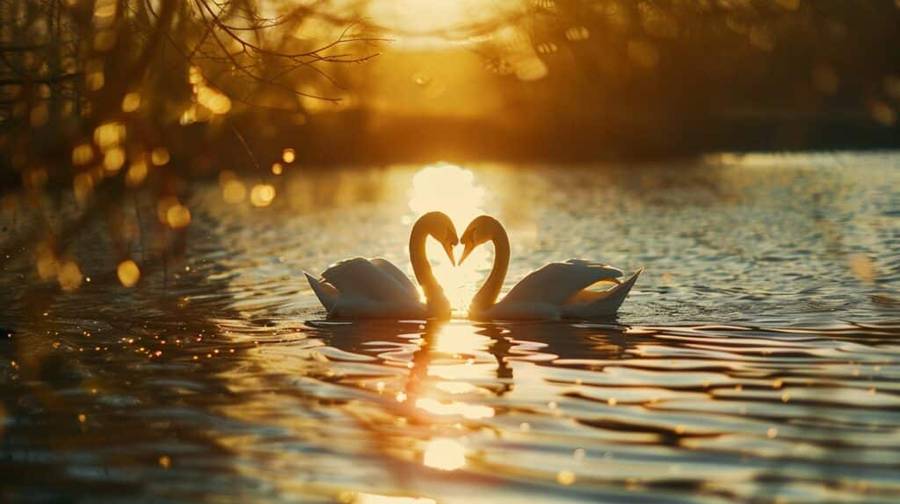
Two swans together, especially with necks curved into a heart shape, are one of the most recognized symbols of soulmate love and lasting partnership. Spiritually, this sighting is often interpreted as confirmation of a deep bond — either one you already share or one that's on its way. It can also represent balance, since the pair mirrors the harmony between two halves of a whole.
A dead swan is a striking image, and symbolically it usually points to the end of a chapter rather than literal misfortune — the close of a relationship, identity, or way of life that has run its course. It echoes the ancient idea of the "swan song," a final beautiful expression before something transforms into its next form. Rather than fearing it, this symbol invites you to honor what's ending so something new can begin.
Finding a swan feather is often seen as a gentle nudge from the spirit world, confirming that you're moving in the right direction with grace and purity of intention. Feathers in general are associated with messages from guides or loved ones who have passed, and a swan feather specifically carries themes of love, peace, and emotional healing. Many people keep one as a reminder to trust their intuition during a transition.
Swans appear briefly in the Old Testament among birds considered ceremonially unclean, but their symbolic reading has evolved well beyond that context. Many interpret the swan's white feathers and graceful nature as representing purity, transformation, and the soul's journey toward the divine. The "swan song" motif has also been used in Christian art and writing to depict a peaceful, faithful passing from earthly life.
Discover what snakes truly symbolize spiritually—transformation, healing, danger, and rebirth—across cultures, dreams, and everyda…
Discover what raven symbolism means - from Norse gods to Native creator myths, dreams, omens, and how to respond when one crosses …
Discover what the eagle truly symbolizes spiritually — vision, freedom, divine messages, myth, and dream meaning explained.