 Know
Know
Religion
Prayer Beads Meaning Across Religions: A Complete Guide
Discover what prayer beads mean in Christianity, Islam, Hinduism, and Buddhism, plus their symbolism, dream meanings, and how to u…
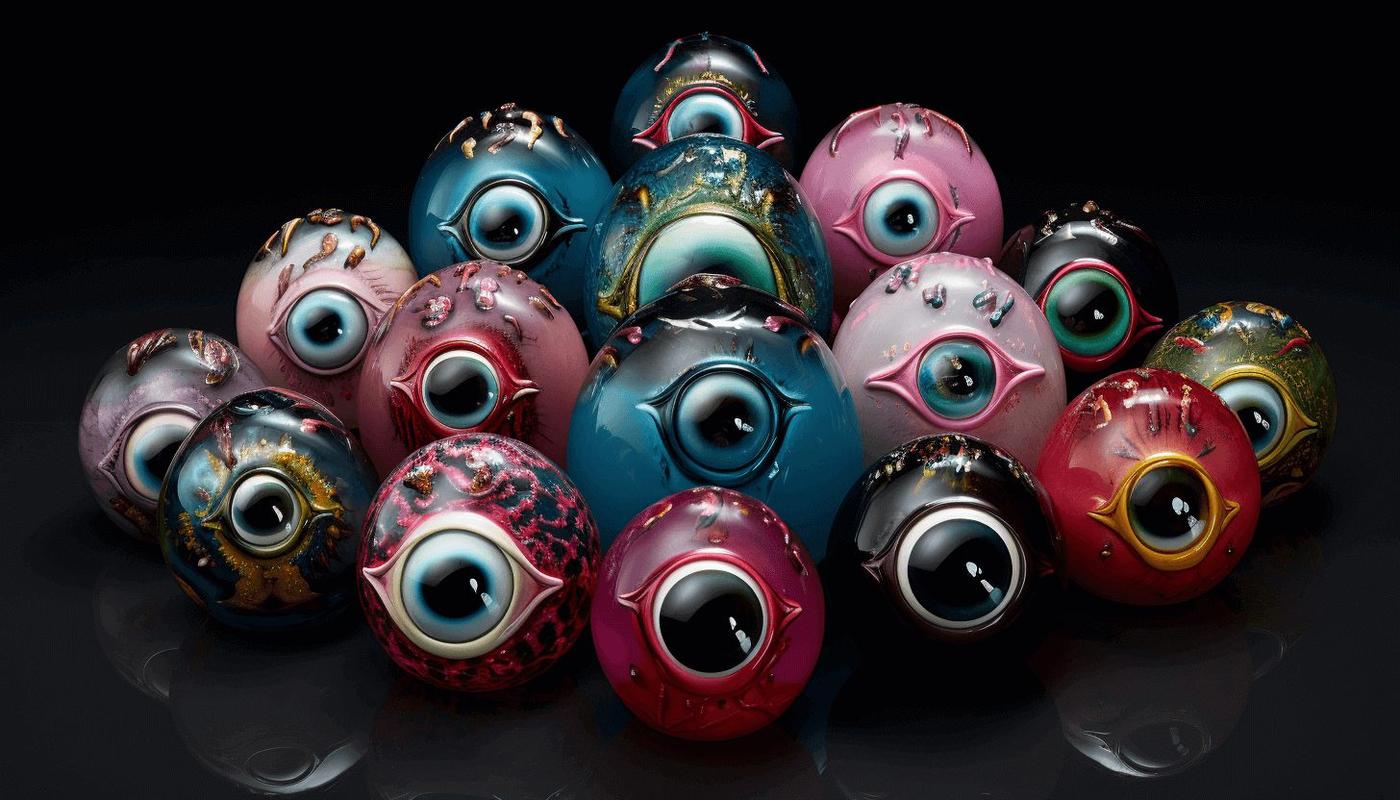
The fascinating concept of the Evil Eye has enthralled societies around the world for many generations. This enigmatic talisman is claimed to be so powerful that it can inflict injury, calamity or even death upon those whom it affects. Born of ancient folklore and superstition, the Evil Eye plays significance in Turkish, Greek, and Italian cultures among others with this write-up exploring the elaborate cultural essence of the Evil Eye as well as uncovering its symbolism, associated colors as well as revealing the history and origins of the Evil Eye.
The Evil Eye, or “Nazar,” is a protective talisman meant to ward off evil glares and protect against injury. This belief in the Evil Eye carries over many cultures and remains deeply embodied within the mythology of Mediterranean, Middle Eastern, and South Asian societies. It is a powerful symbol capable of causing harm and bestowing protection at the same time.
Amazing Fact: “What’s really amazing to note is the concept of ‘Evil Eye’ being so widespread that it has a scientific term dedicated to it: ‘ophthalmophobia,’ meaning ‘the fear of being watched.'”
Each color within the embodiment of the Evil Eye holds special meaning within various cultures for a particular aspect of life that it symbolizes. Blue is the most common color, and yet the other shades hold different meanings within the cultural context of the Evil Eye.
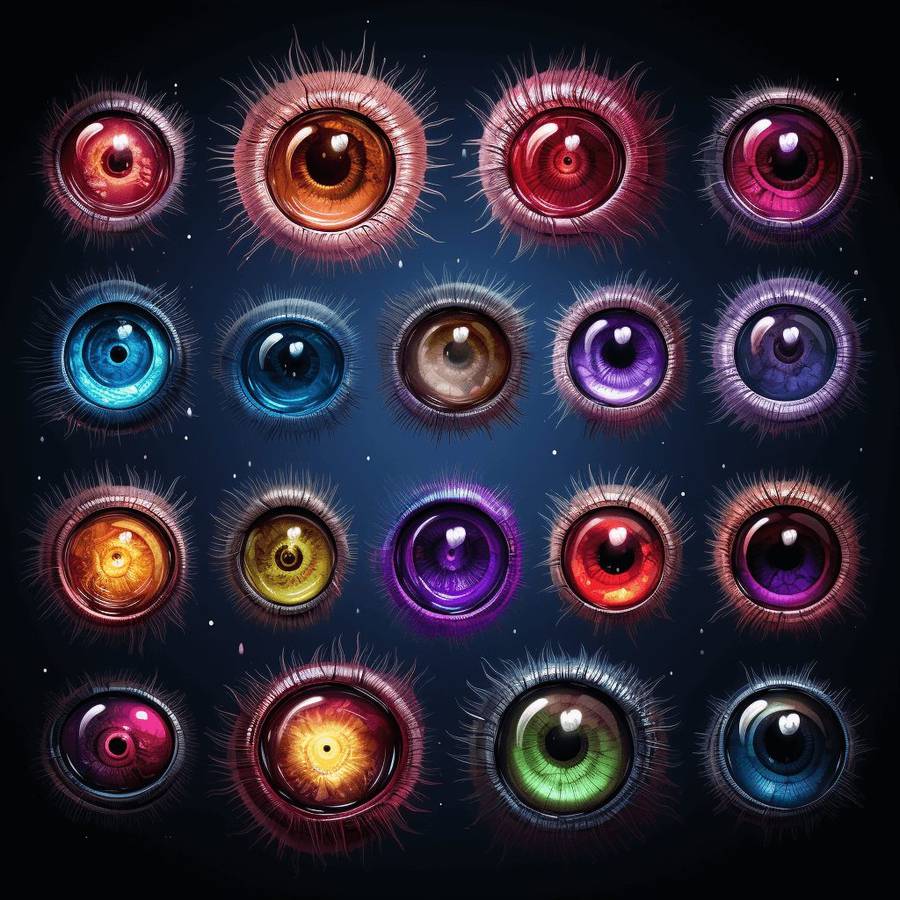 Black Evil Eye: The black association with the Evil Eye roots back to ancient cultures where it was associated with mystery and power, dispersing all the negative forces against it. Black stones such as obsidian became applied in different cultures for the aspect on the protection in amulets and talismans. The current popularity of the stone is being witnessed with its application in various cultures whereby black gets selected as a representative of potent forces that can be in a position to repel the negative.
“Beauty is in the eye of the beholder,’ but so, too, can be harmful when it comes to belief in the Evil Eye.”
It is important to note that within different cultural contexts, these colors might have another meaning and symbolism. In fact, the choice of color for an Evil Eye talisman too, is based on personal live and cultural use – thus enriching the kaleidoscope of meanings contained in this symbol which has come down to us through various ages.
The Evil Eye has its historical background with an age-old history of thousands of years with the interaction and association of great ancient civilizations like the Sumerians, Babylonians, and Assyrians. For these ancient cultures, the Evil Eye was considered an evil force that might bring about illnesses, bad happenings, and even demise. For that reason, they used different kinds of spells, amulets, and magical acts in order to be protected from being harmed by the gaze of the Evil Eye.
This belief of the Evil Eye spread in various time frames and from one region to another, such as the Mediterranean regions through the Middle East. The symbolism as well as the practices linked and woven on the mantle of the Evil Eye during each new phase changed its form according to the various beliefs and traditions of the civilization involved. For example, the Evil Eye was draped in mythology from ancient Greece and it rose to existence from jealous or envious looks from gods and mortals.
As history rolled on, the Evil Eye did get enmeshed into religious and spiritual beliefs as well to find a place across different religions like Islam, Judaism, as well as Christianity. Naturally, it kind of got the versions and explanation of the different religions and enriched its significance thus.
Today, the Evil Eye is an attribute that remains highly common across cultures. It is mostly put on as jewelry or displayed in houses, cars, and enterprises to symbolize protection. Meaning and cultural significance of the Evil Eye had in fact become so much a part of the people’s daily lives and customs of many as signifying a powerful talisman against evil and securing safety from its effects.
The Evil Eye brought with it unique origins and cultural significance in customs which were Turkish, Greek, and Italian making it rich in narrative.
Fun Fact: “Worked by a masterful handcrafting technique is the production of the blue ‘Nazar Boncugu’ amulets. This line of talismans is closely handmade by trained Turkish artisans who make use of sand, soda and metal oxides heated to very high temperatures through a well-defined process. Subsequent cooling having been completed, the relic materials are afterwards always sculpted into a distinctive visual motif dentate in accord to an eye.”
” ‘The human eye has a certain virulent quality. It not only receives the rays that come into it but also darts and shoots out of it its own,’ as Plutarch once observed.”
The belief of the Evil Eye has cut across and gained universal recognition through its course of history. It thus permeates the respective regions, cultures, and characteristics it comes into contact with; adapting to and coalescing distinct attributes the eye encounters on its path. The Evil Eye evokes that need of protection from harmful forces of jealousy and negativity, awakes our imagination and plays up the need to protect yourself and spread positive energy.
The belief over the Evil Eye is not just a cultural or religious phenomenon rather deeply rooted psychologically into man’s mindset. The concept of Evil Eye revolving negative emotions such as from envy to jealousy, feelings shared universally across all cultures. Therefore, envy could be a very strong feeling, and beliefs in the Evil Eye supply an external attribution for bad luck so as to make sense of constantly observed unjustified problematic situations and tragedies. This mirrors the psychological need of human beings to understand and make sense of the world.
Fun Fact: “A research ‘Cultural and individual differences in self-report jealousy’ published in 1996, towed the line: cultures believing Evil Eye philosophy have high levels of jealously in romantic relationships.”
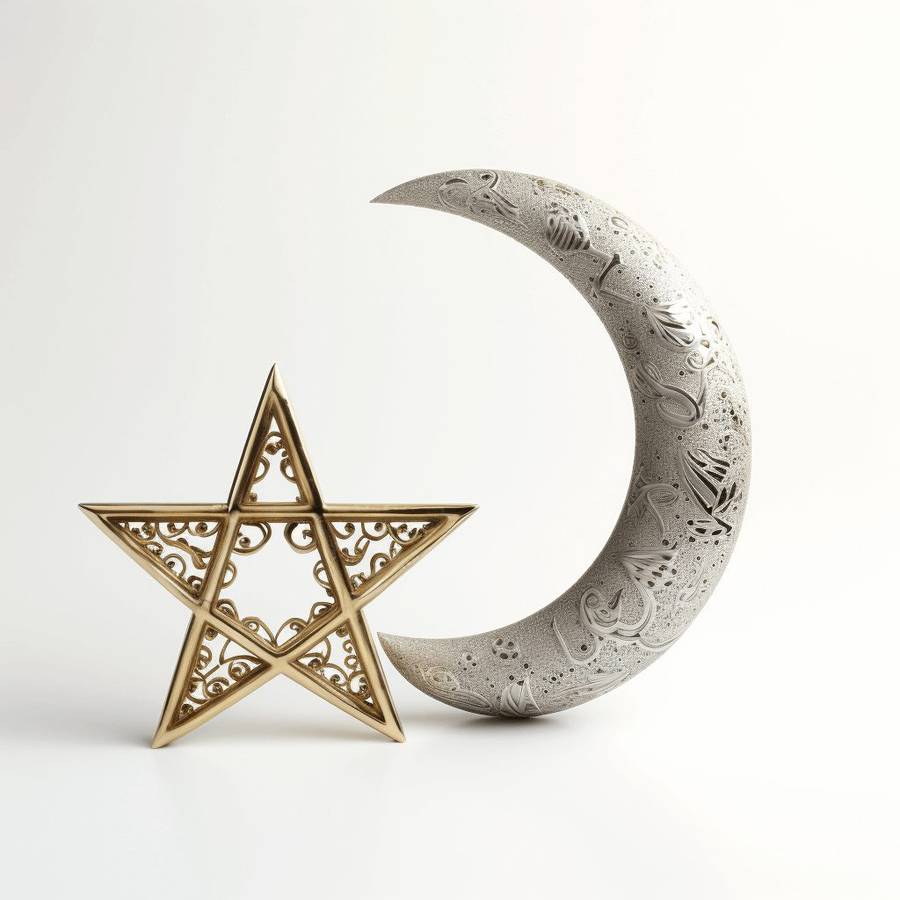
Evil Eye in Islam: The concept of Evil Eye, called ‘Al-Ayn’ in Arabic, is overtly integrated into the Islamic culture. Different verses of Quran and Hadiths (sayings of Prophet Muhammad) refer to the evil eye. Muslims’ prayer called ‘Dua’ are often made for protection from the evil eye.
Evil Eye in Judaism: The Evil Eye, which is also known as ‘Ayin Hara,’ is a concept that had even continued to exist in the various Talmudic and Kabbalistic literature. Here again, the Evil Eye in various traditions was mentioned that it recognizes various means of wrenching the attention of such a power and would caution against doing so by showing excessive pride or being ostentatiously wealthy. A red string bracelet is the most famous Jewish talisman against the Evil Eye, which is usually worn over the left wrist.
Today, in the modern pop, the symbol of the Evil Eye has become quite popular. We see this all the time in fashion, home décor, and even tattoos. Evil Eye jewelry is often designed with a striking blue eye motif and worn not only for protection but as an accent in the realm of fashion. Celebrities wear the Evil Eye bracelets and necklaces and, interestingly enough, sightings of the symbol exist in home designs.
Through centuries it found its way for symbol of Evil Eye to manifest in one form or the other through different art forms and literature. From ancient Roman mosaics and Greek pottery, it has been seen imprinted on contemporary paintings and sculptures. In literature, it looks like a metaphor for jealousy, envy, and ethnic ill-luck as it indeed is in literature a piece that serves its purpose greatly to an extent in storytelling.
The Evil Eye talismans can assume any form, and they usually are differently designed for different purposes. Here are a number of forms an Evil Eye talisman may take:
These forms of the Evil Eye talisman are varied, but serve that singular purpose – to provide protection for the owner against evil spirits and envious or hateful looks. What shape the object takes is often a matter of personal preference or cultural tradition.
Though essentially supernatural, some would argue that there is a scientific explanation of the impact of the Evil Eye. Apparently, the human gaze has been established to play a very deep psychological effect to the person at the receiving end. A hostile stare, of course, can elicit a stress response that may result in some real physiological and psychological effects.
While the concept of Evil Eye remains the same across cultures, it comes with variations based on local customs and beliefs. Herein is a list of different types of Evil Eyes as understood in various cultures:
Disclaimer: Although the Evil Eye is a universal concept, the beliefs and customs regarding as well as protective measures taken against it are different in every culture. Each culture has its interpretation of the Evil Eye and practice regarding it.
The meaning and the significance of the Evil Eye symbol were so appealing that jewelry in the similar design gained a lot of popularity throughout the world. It is not just about wearing an attractive design, but each piece comes along with the protective energy of the symbol as well as cultural importance.
Protective talisman is in the form of Evil Eye bracelets and is often worn by people from diverse cultures. It adds to more than an adornment to a bracelet, it is like an armor that protects the wearer from negative intentions and evil wishes.
In respect of that, bracelets with the Evil Eye sign are worn on the left wrist due to the fact it is considered to be more active for letting in energies. This fact has got particular relevance since the Evil Eye curse is believed to be sent from the damaging or envious sight. When one has the bracelet on, it keeps things off even before they happen to the wearer.
Moreover, the different colors in the Evil Eye charm also bring meaning to the person wearing since every color is associated with its protection and influences.
In this way, an Evil Eye bracelet blue can be worn for overall protection whereas the red Evil Eye may be worn to give one power and determination.Evil Eye necklaces are regarded not only as fashionable jewelry but also potent talismans. Worn very close to the heart, these necklaces preserve and guard the emotional and spiritual center of a person against all forms of negativity.
A pendant of the Evil Eye generally is designed to stare reverse at the world reflecting hostile gazes and guarding one from the potential harm. Just like that of the bracelet, the color of the pendent of the Evil Eye also plays a vital role. For example, one might wear a white-color Evil Eye necklace for its purifying and peaceful energies.
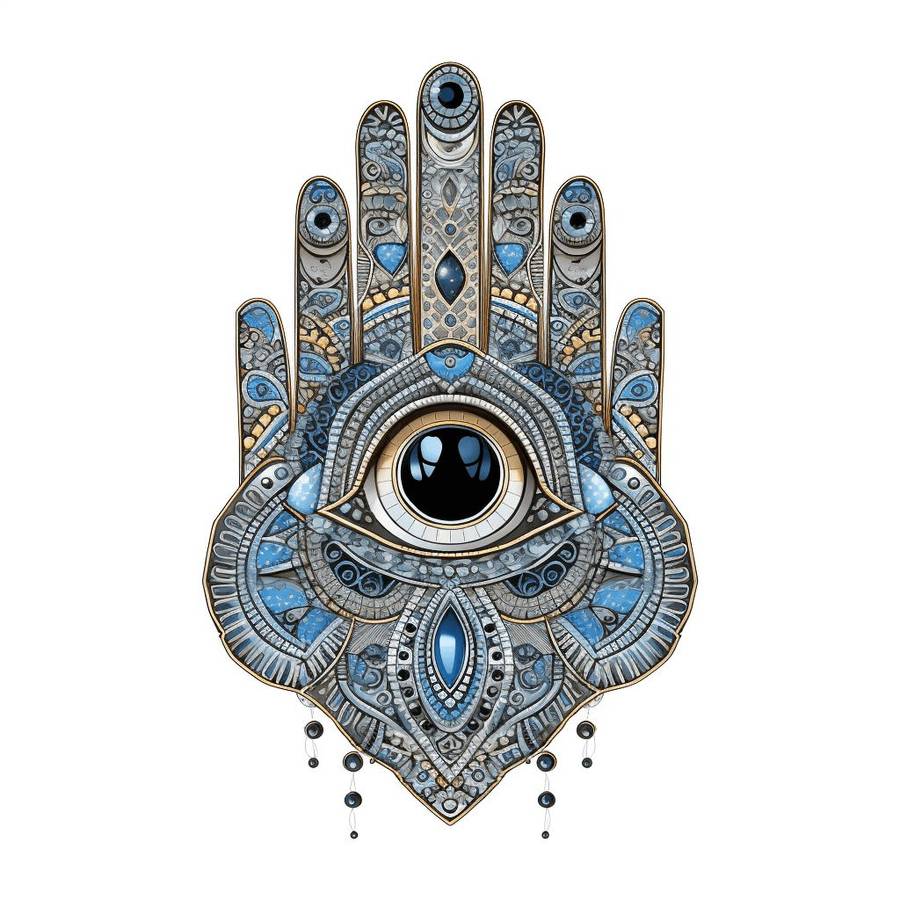
The Hamsa Evil Eye, in Islamic cultures known as Hand of Fatima or else Hand of Miriam in Jewish tradition, is a popular amulet symbolizing protection and believed to fend off the evil eye. The Evil Eye symbol is often embedded within the design of the Hamsa hand. Generally representing divine protection, it implies that good health, happiness, luck, and success shall follow the beholder of The Evil Eye symbol.
Although the design may differ in specifics, in most instances, a Hamsa hand should be designed in such a manner that it appears symmetrical except for the thumb and one pinky finger being similar. The central part of the Hamsa often depicts the Evil Eye symbol, usually in shades of blue that are associated with protective qualities against negative energies.
The Hamsa Evil Eye is used mainly in the Middle East and North Africa but due to attractive design as well as profound symbolic meaning, it gained worldwide recognition. Starting from jewelry pieces like necklaces and bracelets to wall decorations, key chains, and other forms of ornamentation, it comes diversified in all kinds of forms.
Conclusion, it has always been considered that the Evil Eye is an integral part of the collectivistic believes and thought processes, which dominate some cultures across the world. Its meaning roots go as far back as the ancient civilizations, and the scope and meanings of that symbol have deepened over centuries. Whether it is the Turkish Nazar Boncugu, the Greek Matiasma or the Italian Malocchio, what the Evil Eye comes to represent is the universal human need for protection against negativity and threat. Its continued presence in differing cultures is a testament to the power and cultural wealth it holds.
Yes, many people believe that wearing an evil eye helps protect him from negative energies and being the victim of others’ envious gaze.
Yes, that is universal symbol, an evil eye and anyone can wear despite of cultural or religious background.
The evil eye concept prevails in many diverse religions such as Islam, Judaism, Christianity, Hinduism among other religions.
There is a common belief that ones an evil eye amulet breaks, it must have absorbed a lot of negative energy, hence saving the wearer. They normally suggestion replacing it with other one.
There are a few mentions of what appears to be the evil eye concept in the Bible, and it is generally related to envy and greed. In one place, for example, Matthew 6:22-23 describes the eye as the “lamp of the body,” warning against an “evil eye.”
There is no set limit. You can wear as many evil eye bracelets as you would like, be it for personal comfort or aesthetic choice.
Normally, the blue evil eye is said to be the most powerful in warding off negative energies. The way some other beliefs might exist comes as a result of differences in regions and cultures.
This article is based on cultural and historical research and should not be considered as a factual account. Interpretations of evil eye colors are as varied across cultures and the traditional evil eye beliefs and personal interpretations themselves. Though every attempt had been made to ensure information found herein will be mostly accurate, there may be some cultural nuances, individual beliefs regarding the evil eye itself that is not encompassed in this article. Readers are encouraged to explore and respect the diverse perspectives surrounding this symbol.
Discover what prayer beads mean in Christianity, Islam, Hinduism, and Buddhism, plus their symbolism, dream meanings, and how to u…

Learn the most common guardian angel signs—from white feathers to repeating numbers—and what they really mean for your spiritual p…

Archangel Gabriel's true meaning, his role as heaven's messenger, and the signs — feathers, dreams, numbers — that reveal his pres…