 Know
Know
Religion
Archangel Michael: Meaning, Role & Signs of His Presence
Discover Archangel Michael's true meaning, his role as protector across faiths, and the signs that suggest he's near you right now…
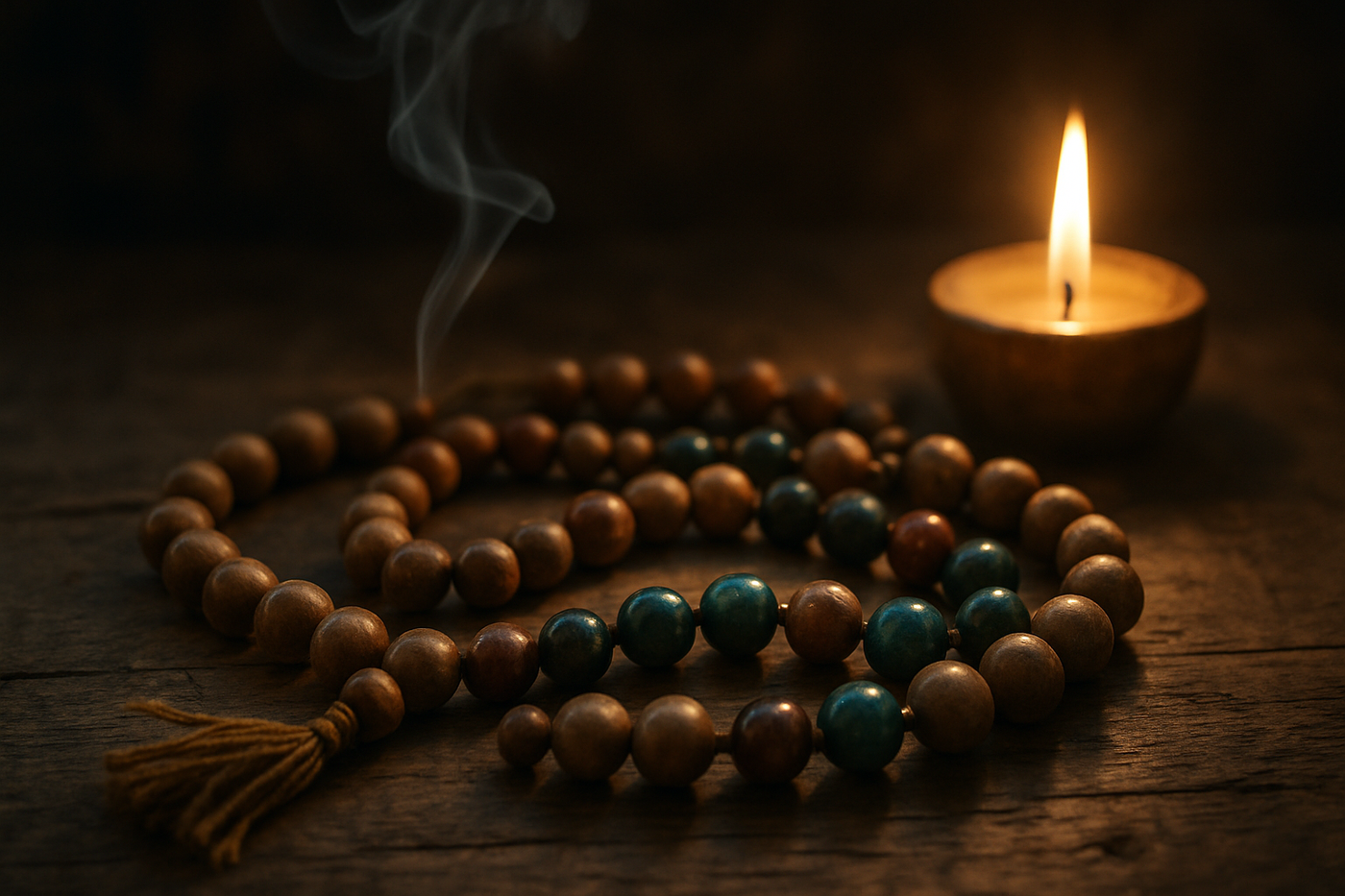
Prayer beads are strings of beads used to count prayers, mantras, or sacred names, helping the mind stay focused during devotion. Across religions they symbolize discipline, repetition as a path to the divine, and the physical act of counting one's way toward inner stillness. Whether it's a Catholic rosary, an Islamic misbaha, a Hindu japa mala, or a Buddhist mala, the core meaning is the same: each bead marks a breath, a word, or a wish drawn closer to the sacred.
There is something quietly moving about a string of worn beads passed from a grandmother's hands to her grandchild's. The wood is smooth where thumbs have rubbed it for decades, and the knots hold the shape of thousands of whispered prayers. Long before smartphones counted our steps, these small circles of stone, seed, and bone counted our hopes.
Every culture that has ever looked to the sky for answers seems to have invented its own version of this simple tool. A shepherd in the Egyptian desert once used pebbles dropped one by one into a bag. A monk in Tibet spun a mala between calloused fingers on a mountain pass. A grandmother in Naples clutched her rosary through war and grief. The beads change, but the human need behind them never does.
At their core, prayer beads exist to solve a very human problem: it is hard to keep count and stay present at the same time. By giving the fingers something to do, the mind is freed to focus on meaning rather than mathematics. This is why prayer bead traditions appear independently across continents and centuries, from the Mediterranean to the Himalayas, long before these cultures ever made contact with one another. Even the English word "bead" carries this history in its bones; it descends from the Old English word bede, meaning prayer, a linguistic fossil showing how tightly counting and devotion were once fused together.
Historians trace some of the earliest known prayer beads to Hindu ascetics in India around the 8th century BCE, who used seeds strung on thread to count repetitions of sacred syllables such as "Om." The practice likely spread along trade routes into Buddhism, and later influenced Islamic and Christian devotional tools through centuries of cultural exchange across the Silk Road and the Mediterranean world. By the time Desert Fathers in 3rd-century Egypt were tying knots in rope to count hundreds of daily prayers, the underlying idea had already traveled thousands of miles from its likely origin.
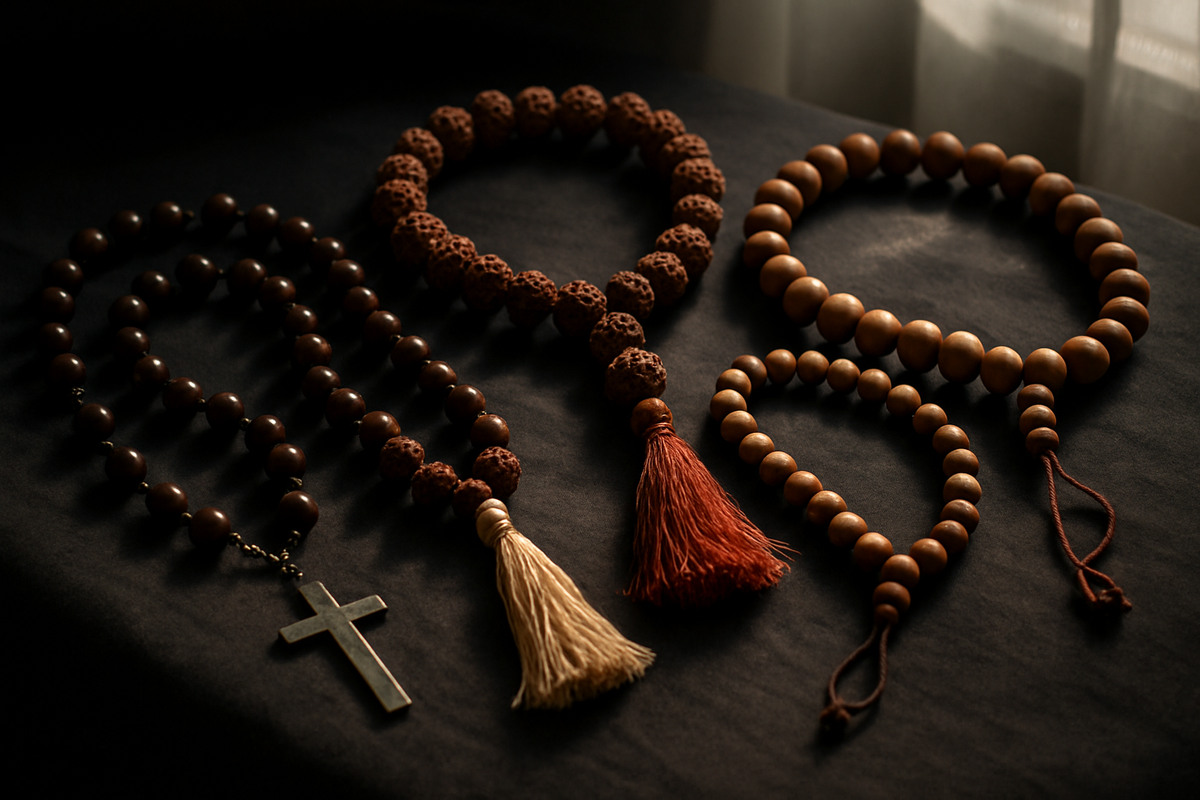
The Catholic rosary contains 59 beads arranged in five decades of ten, separated by larger beads, and is used to recite the Hail Mary, the Our Father, and the Glory Be while meditating on the Mysteries of Christ's life. Tradition credits its popularization to St. Dominic in the 13th century, though bead-based prayer existed among Christian monks even earlier as a way to recite 150 psalms. For readers curious about the deeper visual language of Catholic devotion, our guide to Catholic symbols and their meanings explores many related icons, and the different types of crosses often found attached to rosary beads carry their own rich histories.
The misbaha, also called tasbih, typically has 99 or 33 beads representing the 99 Names of Allah. Muslims use it during dhikr, the ritual remembrance of God, repeating phrases such as "SubhanAllah" (Glory be to God), "Alhamdulillah" (Praise be to God), and "Allahu Akbar" (God is Greatest) in sets of 33. This practice draws on the Quranic instruction to "remember God often" (Quran 33:41), and the physical rhythm of moving each bead helps practitioners maintain focus during long sessions of remembrance, especially after the five daily prayers.
The Hindu japa mala usually contains 108 beads, often made from rudraksha seeds or sandalwood, plus one larger "guru bead" that is never crossed during recitation. Practitioners chant a mantra once for each bead, completing a full mala as one cycle of japa, or repetitive prayer. The number 108 itself is considered sacred in Hindu cosmology, believed to represent the totality of existence, the number of Upanishads, or the distance ratios between the sun, moon, and Earth in ancient astronomical calculations.
Buddhist malas, nearly identical in structure to Hindu japa malas, are used to count mantra repetitions such as "Om Mani Padme Hum" in Tibetan Buddhism. One popular origin story, found in the Mokugenji Sutra, describes the historical Buddha recommending 108 beads made from bodhi seeds to a troubled king as a way to calm his mind through steady recitation. In Zen and Pure Land traditions, shorter malas of 27 or 18 beads are common for daily use, often carried on the wrist, and the mala is also a physical reminder of impermanence, since the strings eventually fray and the seeds wear smooth, mirroring the Buddhist teaching that all things change.
Eastern Orthodox Christians use a knotted prayer rope called a komboskini or chotki, traditionally tied from wool in intricate cross-knots rather than strung with beads. Monks on Mount Athos have tied these ropes by hand for centuries while whispering the Jesus Prayer: "Lord Jesus Christ, Son of God, have mercy on me, a sinner." The knots themselves are said to symbolize spiritual warfare against distraction, each one representing a small victory of focus over a wandering mind.
Sikh practitioners sometimes use a mala of 108 beads to recite Waheguru, the name of God, though the tradition places greater emphasis on inner remembrance than the physical object itself. Jewish practice offers a parallel without beads: during Sefirat HaOmer, the 49-day count between Passover and Shavuot, many households use a physical counter or calendar card to mark each day, echoing the same instinct to make an abstract spiritual practice tangible. Baha'i teachings also include a practice of repeating "Allah-u-Abha" 95 times daily, occasionally aided by counting beads, showing how the impulse to structure devotion through repetition reaches even into newer faith traditions.
| Tradition | Common Name | Typical Bead Count | Primary Use |
|---|---|---|---|
| Catholicism | Rosary | 59 | Hail Mary, Our Father, Mysteries |
| Islam | Misbaha / Tasbih | 99 or 33 | Dhikr, remembrance of Allah |
| Hinduism | Japa Mala | 108 | Mantra repetition |
| Buddhism | Mala | 108 or 27 | Mantra counting, mindfulness |
| Eastern Orthodoxy | Prayer Rope / Komboskini | 33, 50, or 100 knots | Jesus Prayer |
| Sikhism | Mala | 108 | Naam Japna (remembrance of God's name) |
Beyond their practical counting function, prayer beads carry layered symbolic meanings that transcend any single religion:
Dreaming of prayer beads is often interpreted as a sign that the dreamer's subconscious is seeking spiritual grounding or clarity during a chaotic period. In many dream interpretation traditions, seeing a rosary or mala in a dream suggests a need to slow down and return to a disciplined practice, whether spiritual or simply mental. A broken strand of beads scattering in a dream is sometimes read as a warning about fractured focus or an unresolved commitment, not unlike how symbols of promise such as a purity ring represent a vow that can be honored or broken. Holding beads calmly in a dream, by contrast, is generally viewed as a comforting sign of protection and guidance, similar to the reassurance many associate with guardian angel signs. Some popular dream dictionaries also assign meaning to bead color within these visions: white beads reportedly point to peace or a needed reset, black beads may signal grief that hasn't been fully released, and red beads are sometimes tied to passion or anger left unresolved.
If you're new to prayer beads, the tool matters far less than the intention behind it. Here is a simple way to begin, regardless of tradition:
When selecting prayer beads, many practitioners recommend choosing a material that feels personally meaningful rather than simply following trends, since the object is meant to become a lasting companion in practice. Wooden beads are lightweight and warm to the touch, gemstone beads are prized for their believed metaphysical properties, and knotted wool ropes carry centuries of monastic tradition. Whatever you choose, keep the beads somewhere respectful, such as a small pouch or a dedicated shelf, and consider it a living object that develops meaning through use rather than a static decoration.
Both Hinduism and Buddhism traditionally use malas with 108 beads for mantra repetition, and some Sikh practitioners follow the same count. The number 108 is considered sacred in Hindu cosmology and Buddhist numerology, often linked to spiritual completeness.
The 59 beads correspond to the structure of five decades of ten Hail Marys, separated by larger beads for the Our Father, plus a pendant section for introductory prayers. This structure helps worshippers meditate on the Mysteries of the Rosary in an organized sequence.
Many people use prayer beads for general mindfulness or meditation without practicing the associated religion, though it's respectful to understand the cultural and spiritual origin of the specific style you choose. Some traditions welcome open use, while others consider the beads sacred objects tied specifically to their faith practice, so a little research before buying or using them goes a long way.
A broken string is often seen symbolically as the completion of a prayer cycle or a release of built-up spiritual energy, rather than a bad omen in most traditions. Practically, it simply signals that the cord has worn thin from regular, devoted use, and many practitioners choose to restring the beads rather than discard them.
Discover Archangel Michael's true meaning, his role as protector across faiths, and the signs that suggest he's near you right now…
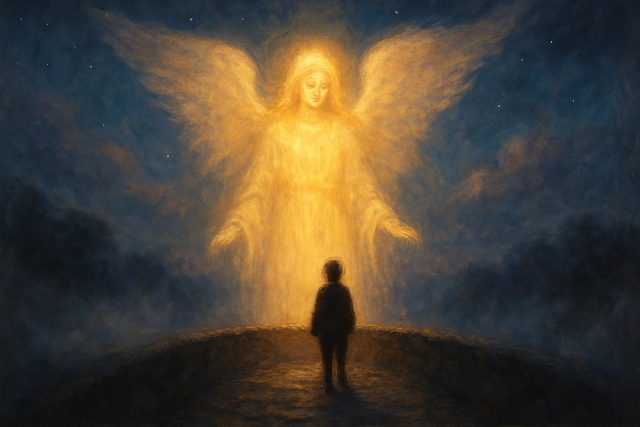
Learn the most common guardian angel signs—from white feathers to repeating numbers—and what they really mean for your spiritual p…

Table of Contents Introduction Ancient Beginnings Religious Resonance Geometry and Mysticism From Magen David to Modern Times Beyo…