Know
Know
There are many different types of crosses, each with its own distinct meaning and origin: liturgical crosses like the Latin and Papal Cross represent core Christian authority and sacrifice; Orthodox crosses like the Russian and Byzantine Cross reflect Eastern Christian theology; heraldic crosses like the Maltese and Templar Cross come from medieval chivalric orders; and ancient or cultural crosses like the Ankh and Celtic Cross predate or blend with Christian symbolism. Below, we break down all 43 types of crosses and their meanings by category, shape, and history.
Types of Crosses by Category
- Christian/Liturgical Crosses: Latin Cross, Papal Cross, Patriarchal Cross, Consecration Cross, Calvary Cross, Passion Cross, Golgotha Cross
- Orthodox Crosses: Russian Orthodox Cross, Byzantine Cross, Serbian Cross, Novgorodsky Cross, Coptic Cross, Ethiopian Cross
- Heraldic/Chivalric Crosses: Maltese Cross, Templar Cross, Patee Cross, Cross Moline, Cross Fleury, Bottony Cross, Cross Crosslet, Botonee Cross
- Ancient/Pre-Christian Crosses: Ankh, Sun Cross, Fylfot Cross (Swastika), Tau Cross, Chi-Rho Cross, Tau-Rho Cross (Staurogram)
- National/Cultural Crosses: Celtic Cross, Nordic Cross, Basque Cross, Lithuanian Cross, Grapevine Cross, Cross of Burgundy, Cross of Lorraine
There are 43 types of crosses, each carrying its own distinct meaning — from the Latin Cross, which represents Christ's crucifixion, to the Celtic Cross, which symbolizes eternity, and the Jerusalem Cross, which marks the Holy Land itself. Below you'll find the shape, history, and spiritual meaning behind every major type of cross and their meanings, a quick-reference comparison table, and answers to the most common questions people ask about Christian crosses.
The cross is the defining icon of Christianity, yet it appears in dozens of styles across cultures and denominations, each rich with historical and spiritual significance. Beyond the cross itself, Christianity is filled with other symbols carrying just as much theological weight — explore our full guide to Catholic Symbols to learn more about these related emblems.
This guide walks through 43 types of crosses and their meanings — their shapes, origins, and the denominations that hold them dear. Whether you're a scholar, a devout Christian, or simply curious, use the jump-links below to explore the stories behind these sacred symbols and their continued influence on Christianity today.
How Many Types of Crosses Are There?
There is no single official count of every cross variation ever created, since countless regional and denominational adaptations exist. For the purposes of this guide, however, we've identified and detailed 43 distinct, well-documented types of crosses — each with its own design, origin, and religious symbolism — to give you a clear, comprehensive reference rather than a vague estimate.
Jump to a Cross
- 1. Latin Cross
- 2. Greek Cross
- 3. Celtic Cross
- 4. St. Andrew's Cross
- 5. Maltese Cross
- 6. Cross of St. Peter
- 7. Tau Cross
- 8. Patriarchal Cross
- 9. Papal Cross
- 10. Cross of Lorraine
- 11. Jerusalem Cross
- 12. Canterbury Cross
- 13. Coptic Cross
- 14. Cross Fleury
- 15. Russian Orthodox Cross
- 16. Ankh
- 17. Chi-Rho Cross (Cross of Constantine)
- 18. Cross of Saint James
- 19. Patee Cross
- 20. Cross Moline
- 21. Fylfot Cross (Swastika)
- 22. Mariner's Cross (Anchor Cross)
- 23. Tau-Rho Cross (Staurogram)
- 24. Tetramorph Cross
- 25. Botonee Cross
- 26. Gamma Cross
- 27. Consecration Cross
- 28. Golgotha Cross
- 29. Byzantine Cross
- 30. Cross Crosslet
- 31. Cross of Burgundy
- 32. Lithuanian Cross
- 33. Nordic Cross
- 34. Sun Cross
- 35. Templar Cross
- 36. Basque Cross
- 37. Bottony Cross
- 38. Serbian Cross
- 39. Novgorodsky Cross
- 40. Grapevine Cross
- 41. Calvary Cross
- 42. Passion Cross
- 43. Ethiopian Cross
Types of Crosses and Their Meanings: Comparison Table
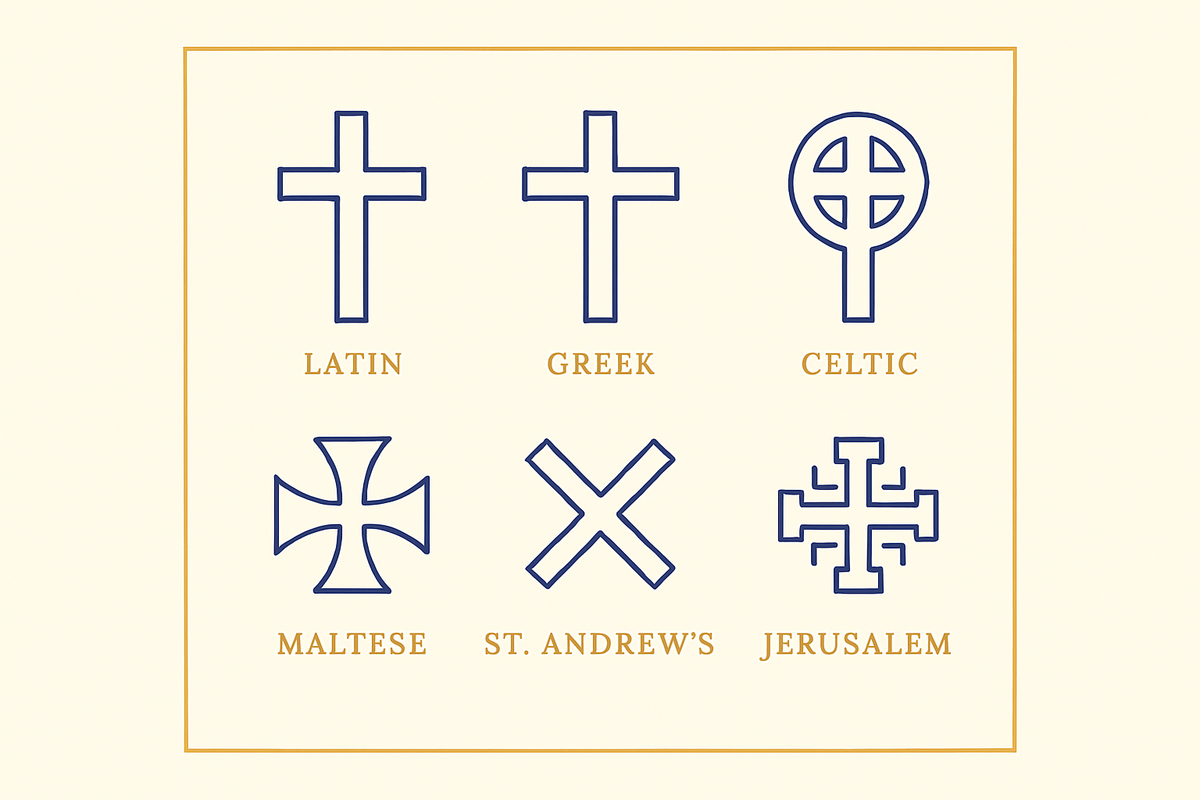
Here's a quick summary of the twelve most-searched crosses, their shapes, and what they represent — perfect if you only have a minute to compare.
| Name | Shape | Primary Meaning | Associated Tradition |
|---|---|---|---|
| Latin Cross | Long vertical, shorter horizontal near top | Christ's crucifixion and sacrifice | Western Christianity |
| Greek Cross | Four equal arms | Christianity's spread to all corners of the world | Eastern Orthodoxy |
| Celtic Cross | Cross with a connecting ring | Eternity, the sun, unending faith | Irish/British Christianity |
| St. Andrew's Cross | X-shaped (saltire) | Martyrdom of St. Andrew | Scotland, heraldry |
| Maltese Cross | Four V-shaped arms meeting at center | Charity, protection, humanitarian service | Knights Hospitaller |
| Jerusalem Cross | Large cross with four smaller crosses | The five wounds of Christ; the Gospel's spread | Crusader/Holy Land tradition |
| Byzantine (Orthodox) Cross | Three bars, one slanted | Crucifixion, INRI inscription, footrest | Eastern Orthodoxy |
| Papal Cross | Three descending horizontal bars | Papal authority | Roman Catholic Church |
| Patriarchal Cross | Two horizontal bars | Archbishop/patriarch authority | Catholic & Orthodox churches |
| Chi-Rho Cross | Overlapping Greek Chi and Rho | Christ's name; Constantine's conversion | Early Christianity |
| Templar Cross | Equilateral cross, often red on white | Faith and protection of pilgrims | Knights Templar |
| Coptic Cross | Circle with four equal arms and small crosses | God's eternal, all-encompassing love | Coptic Orthodox Church |
Types of Catholic Crosses
The most searched Catholic crosses are the Papal Cross, the Patriarchal Cross, the Consecration Cross, and the Maltese Cross — each tied to a specific role or ceremony within the Roman Catholic Church rather than to Christianity broadly. The Papal Cross signals papal authority during liturgical functions, the Patriarchal Cross marks the office of archbishops and patriarchs, the Consecration Cross is inscribed on church walls to mark a building's sanctification, and the Maltese Cross traces back to the Knights Hospitaller's charitable mission. Jump to their full entries: Papal Cross, Patriarchal Cross, Consecration Cross, and Maltese Cross.
1. Latin Cross
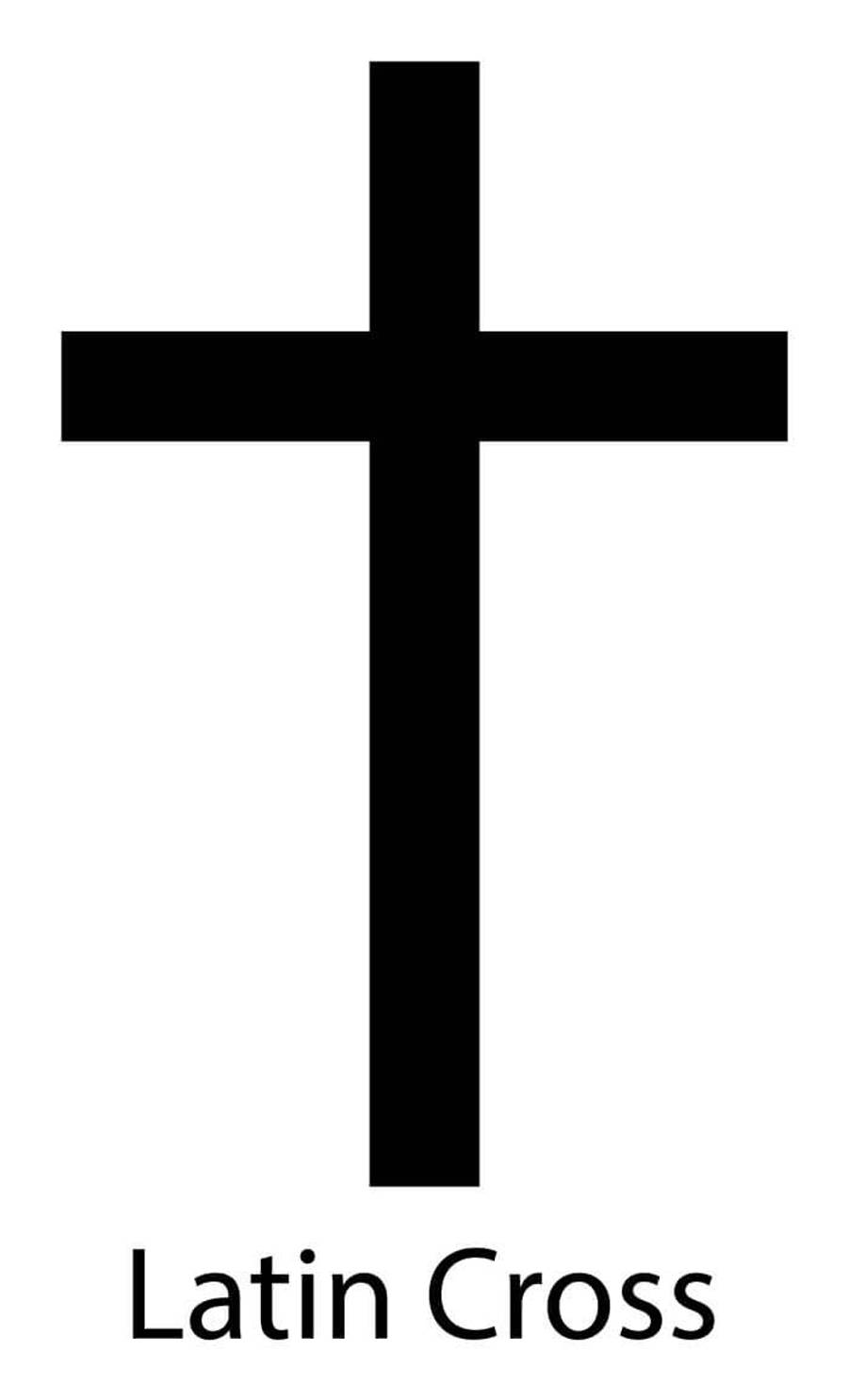
The Latin Cross, or Crux Ordinaria, is the most recognizable symbol in Christianity. Its vertical beam extends well below its horizontal crossbar, echoing the proportions of the cross on which Jesus Christ was crucified. It represents the central message of Christianity: Christ's sacrifice on behalf of humanity's sins.
- History: The Latin Cross became a formal Christian symbol at the dawn of the 4th century AD, when Emperor Constantine converted to Christianity. He claimed to have seen a cross of light in the sky before a decisive battle and subsequently adopted it as his military standard.
- Popularity: It is the single most common representation of the Christian faith, appearing in churches, cathedrals, and religious artwork worldwide.
- Shape: A long vertical beam crossed by a shorter horizontal beam near the top.
2. Greek Cross
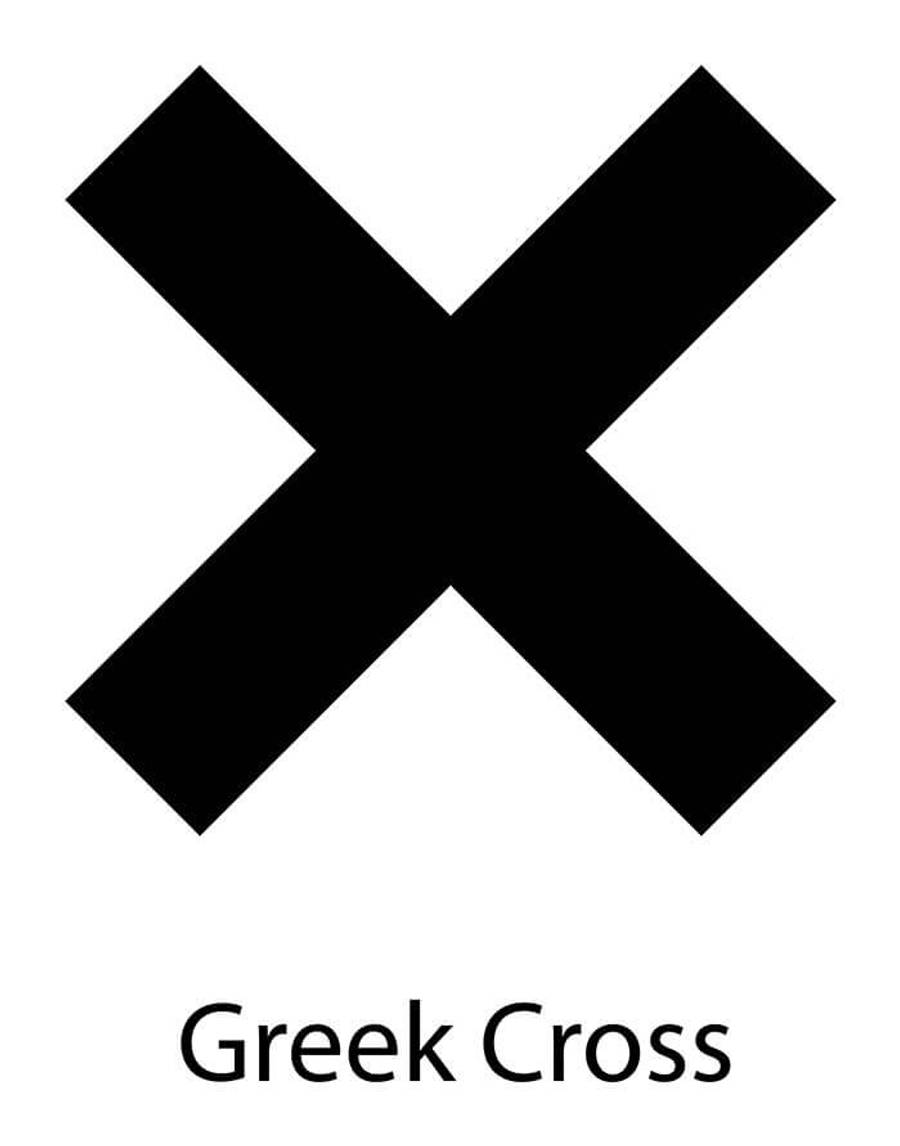
The Greek Cross is another powerful symbol in Eastern Orthodox Christianity. Its four equal-length arms represent the spread of Christianity to the four corners of the world.
- History: The design is ancient, rooted in early Byzantine culture and closely tied to the missionary work of the Eastern Orthodox Church.
- Popularity: It's a standard feature in Eastern Orthodox iconography and architecture.
- Shape: Four arms of equal length that form a perfect square when joined at their ends.
3. Celtic Cross
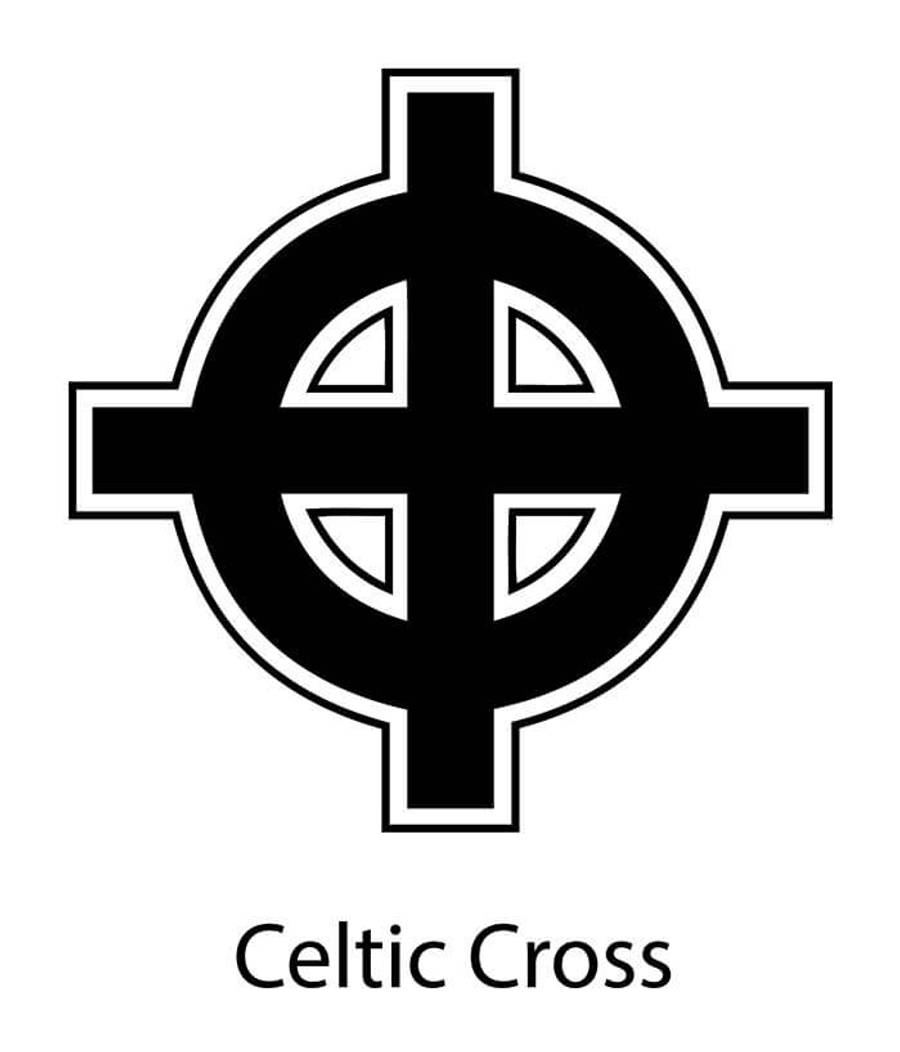
The Celtic Cross is defined by the ring connecting its arms, blending ancient Celtic symbolism of eternity with Christian faith — a visual cousin to symbols like the Tree of Life, which carries similar ideas of unending continuity. The ring is often interpreted as representing eternity or the sun.
- History: The Celtic Cross traces to Ireland and Britain in the early medieval period. According to popular Irish legend, Saint Patrick (or, in some versions, Saint Declan) introduced or popularized the Celtic Cross design, though no physical examples survive from that early period to confirm it.
- Popularity: Still widely used today, particularly in regions with Celtic heritage, appearing on tombstones, jewelry, and artwork.
- Shape: A cross with a circular ring running through the intersection of its arms.
4. St. Andrew's Cross
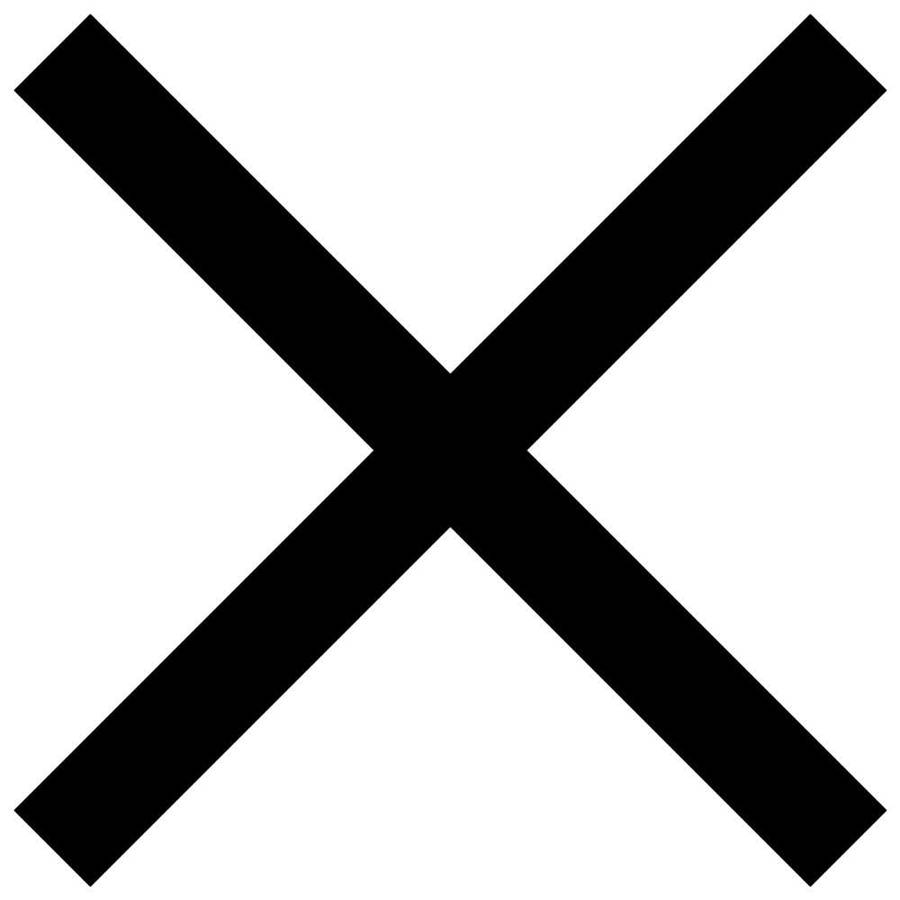
The St. Andrew's Cross, or saltire, is an X-shaped cross associated with Saint Andrew, who tradition holds was crucified on an X-shaped cross. The Scottish flag features a white saltire on a blue field.
- History: Used as a Christian symbol since at least the Middle Ages, with some tracing continuous use back to the 6th century AD.
- Popularity: Especially prominent in Scotland, where it appears on the national flag, and in heraldry more broadly, including on the flags of Jamaica and the historical Confederate battle flag.
- Shape: Two diagonals of equal length meeting at the center to form an X.
5. Maltese Cross
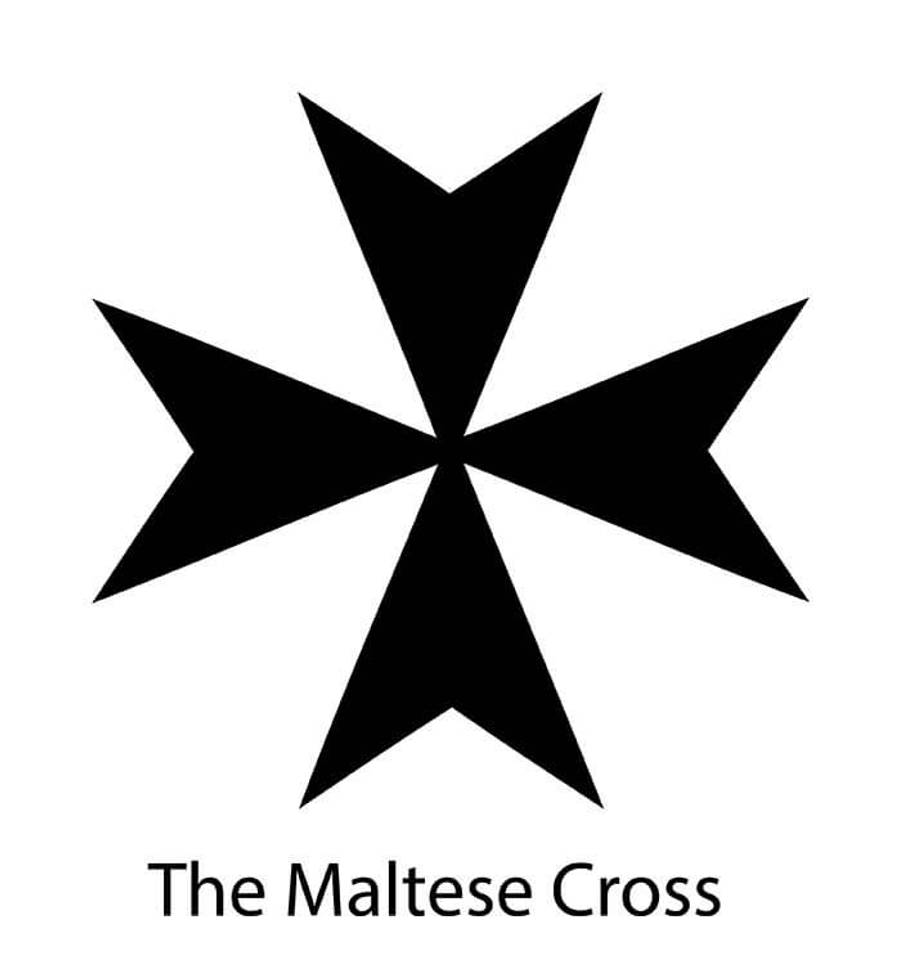
The Maltese Cross is a Greek cross with four V-shaped arms of equal length, tied historically to the Knights of Malta, or Knights Hospitaller — a Christian military order of the Middle Ages.
- History: Traceable to the 16th century, when it was associated with the Knights of Malta providing medical aid during the Crusades.
- Popularity: Today it's an international symbol of charity and humanitarian aid, closely connected to fire and rescue services and the St. John Ambulance organization.
- Shape: Four arrowhead-like shapes meeting at the center, each with its pointed end facing outward.
6. Cross of St. Peter (Upside-Down Cross)
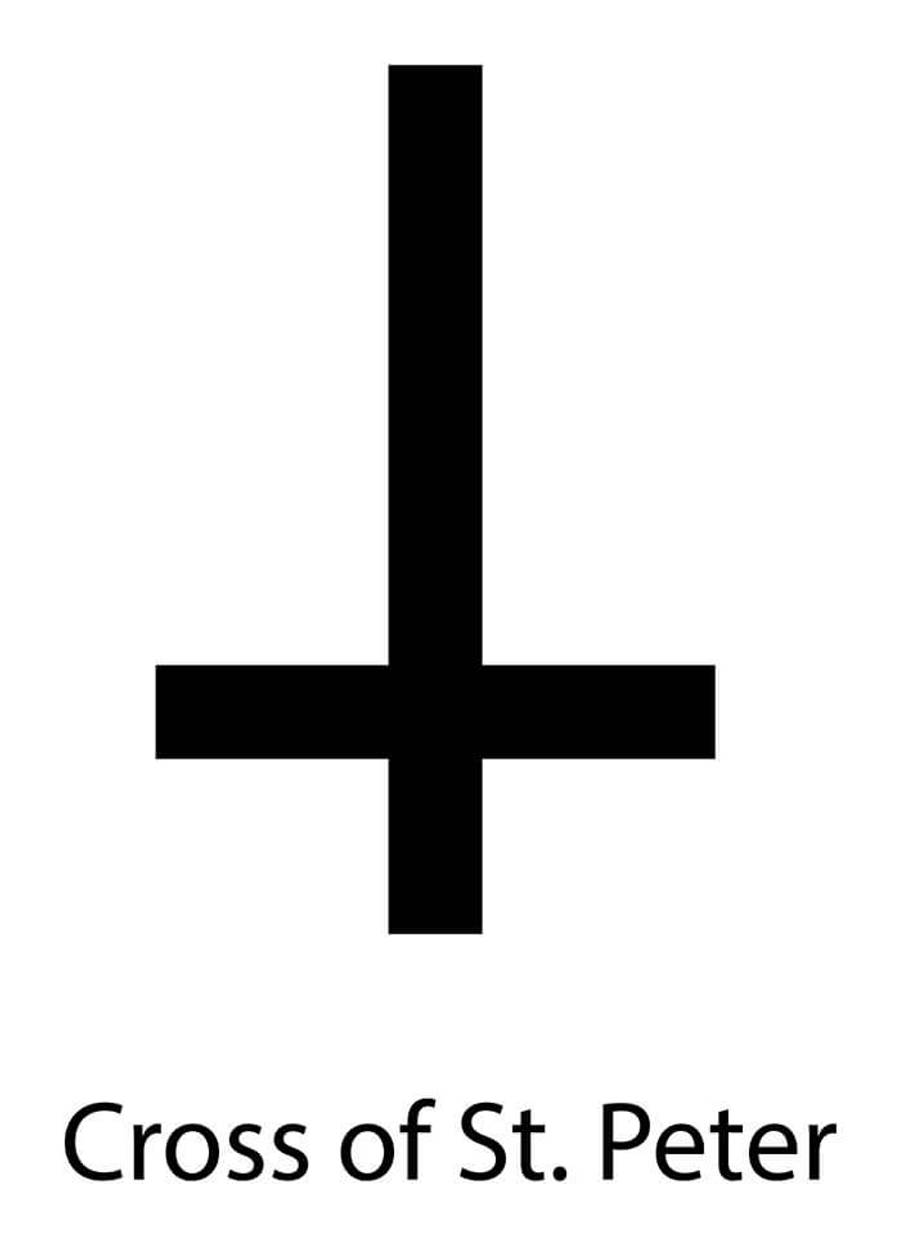
The Cross of St. Peter, also called the Petrine Cross or Upside-Down Cross, is a Latin Cross displayed inverted. According to longstanding Christian tradition, Peter was martyred in Rome under Nero and requested inverted crucifixion out of a sense of unworthiness, though his death is not recorded in Scripture and the detail comes from later apocryphal and patristic writings.
- History: The cross originates directly from St. Peter's martyrdom, one of the earliest and most significant events in the founding of the Church.
- Popularity: While not a mainstream devotional symbol, it remains respected as a representation of humility. Its inverted form has, unfortunately, also been co-opted in some circles for anti-Christian imagery — a distortion of its original, reverent meaning.
- Shape: A Latin cross flipped end over end.
7. Tau Cross (St. Anthony's Cross)
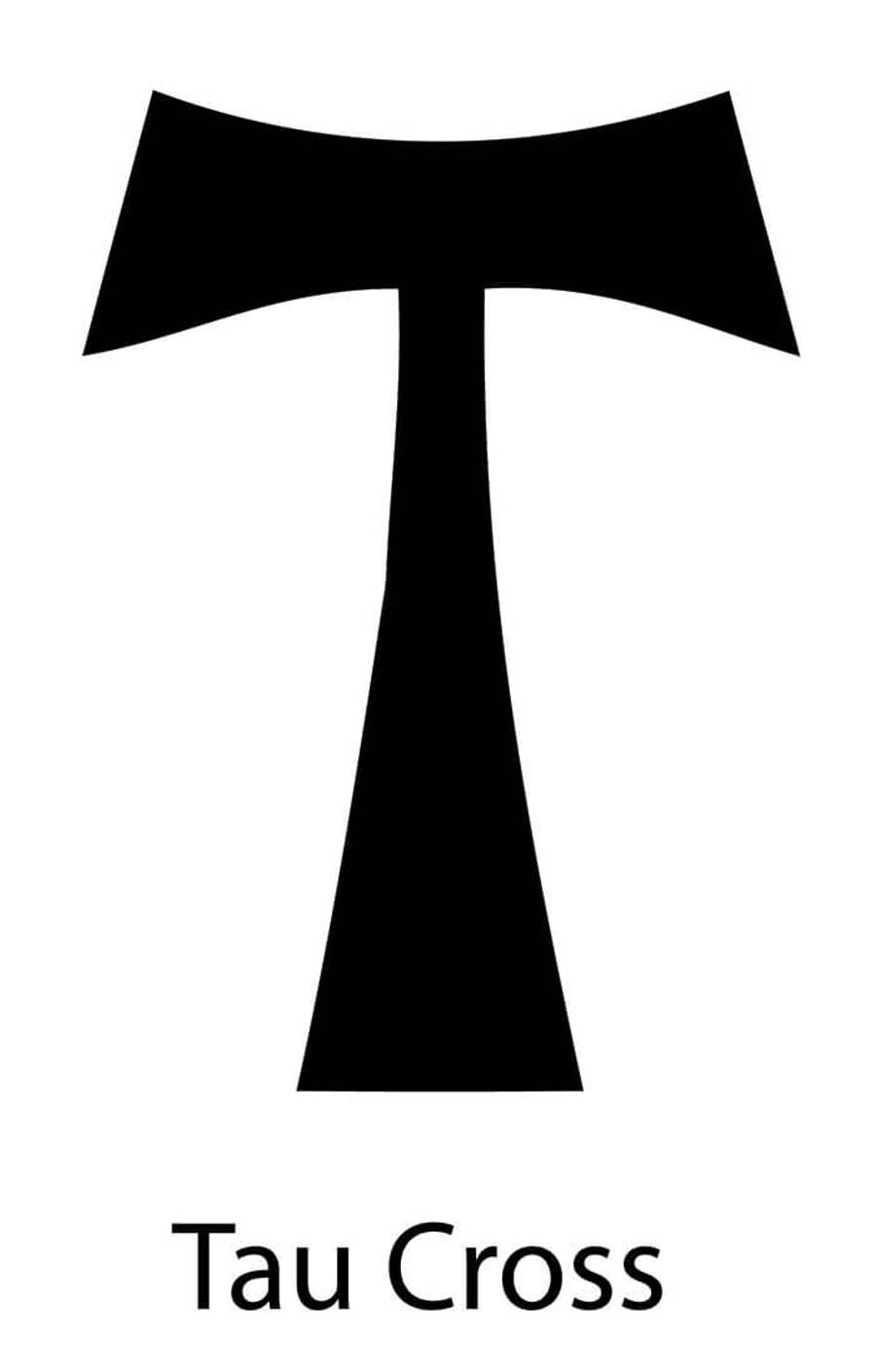
The Tau Cross takes the form of the Greek letter Tau (T). St. Anthony of Egypt, one of the earliest Christian monastics, is frequently depicted carrying one.
- History: The Tau Cross predates Christianity and was adopted by Christians as early as the 3rd century AD, once used on amulets as a sign of divine protection.
- Popularity: Less common today, though it holds special significance within the Franciscan order, whose founder favored the symbol.
- Shape: A vertical line intersected near its top by a shorter horizontal line, forming a "T."
8. Patriarchal Cross (Archbishop's Cross)
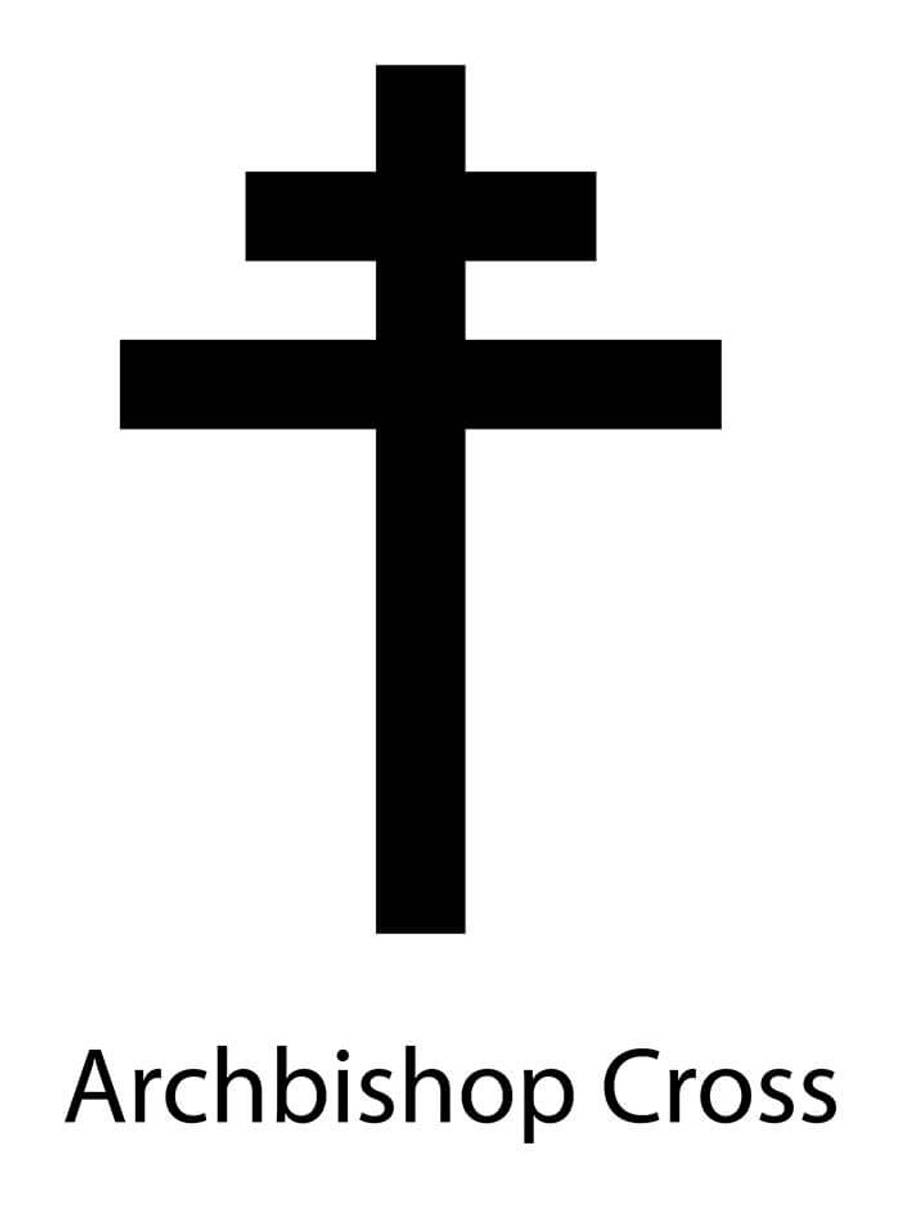
The Patriarchal Cross, also called the Archbishop's Cross or double cross, features two horizontal bars in addition to the vertical beam.
- History: First appearing in 9th-century Byzantine art, it became closely associated with archbishops and patriarchs of both the Eastern Orthodox and Catholic Churches.
- Popularity: Common throughout Europe and the Middle East, especially among Orthodox and Byzantine Catholic traditions.
- Shape: A Latin Cross with an additional, shorter horizontal bar above the main one.
9. Papal Cross
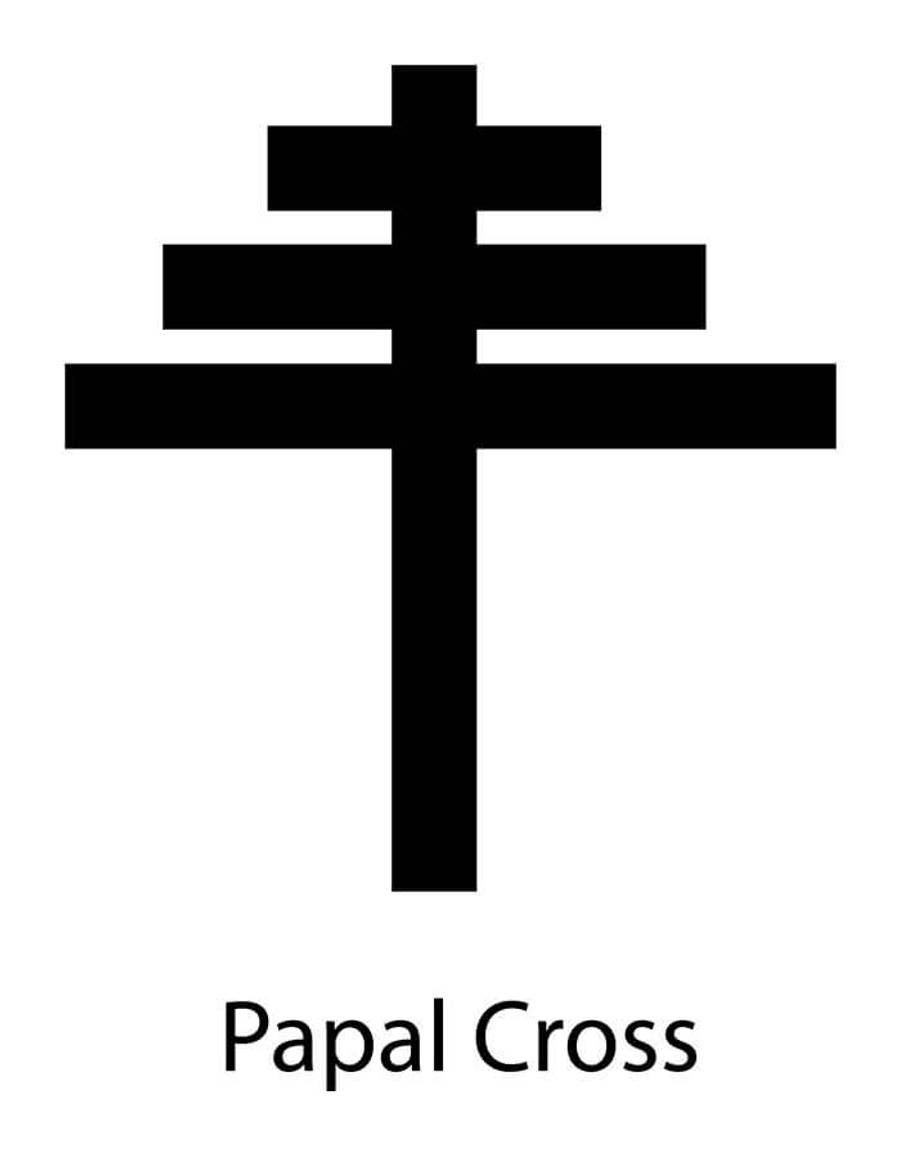
The Papal Cross features three horizontal bars of decreasing width and serves as the official insignia of papal authority during liturgical functions.
- Origin: Its precise origin is unclear, but it has represented the Pope's ecclesiastical authority and role as Bishop of Rome since at least the 13th century.
- Popularity: Used mainly within the Catholic Church, especially during papal ceremonies and in Vatican iconography.
- Shape: A long vertical beam crossed by three horizontal bars that grow progressively smaller toward the top.
10. Cross of Lorraine
The Cross of Lorraine is a double-barred cross in which the top bar is shorter than the lower one. Rooted in Eastern Christian tradition, it later became tied to the Dukes of Lorraine in France and the Kingdom of Hungary during the Middle Ages. It gained worldwide recognition when General Charles de Gaulle adopted it as the symbol of the Free French Forces and the French Resistance during World War II.
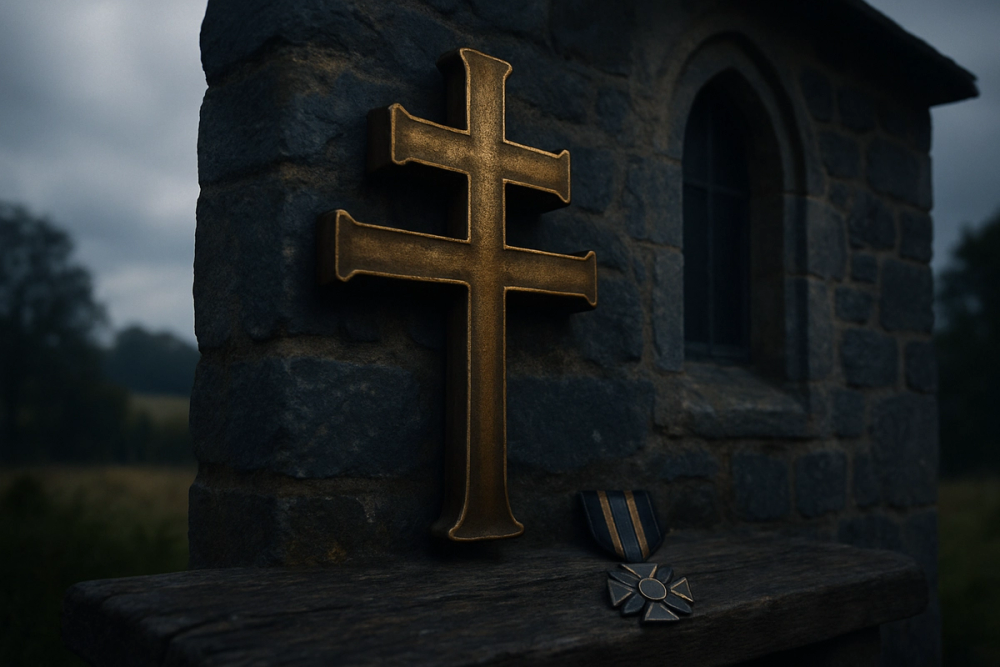
- History: Its journey from Eastern Christian iconography to a European ducal emblem, and finally to a wartime symbol of French defiance, gives it one of the richest histories of any cross on this list.
- Popularity: A frequent presence in heraldic emblems, it's now widely used by medical associations and remains a recognizable symbol of French national identity.
- Shape: A vertical bar crossed by two horizontal bars, with the lower bar longer than the upper.
11. Jerusalem Cross
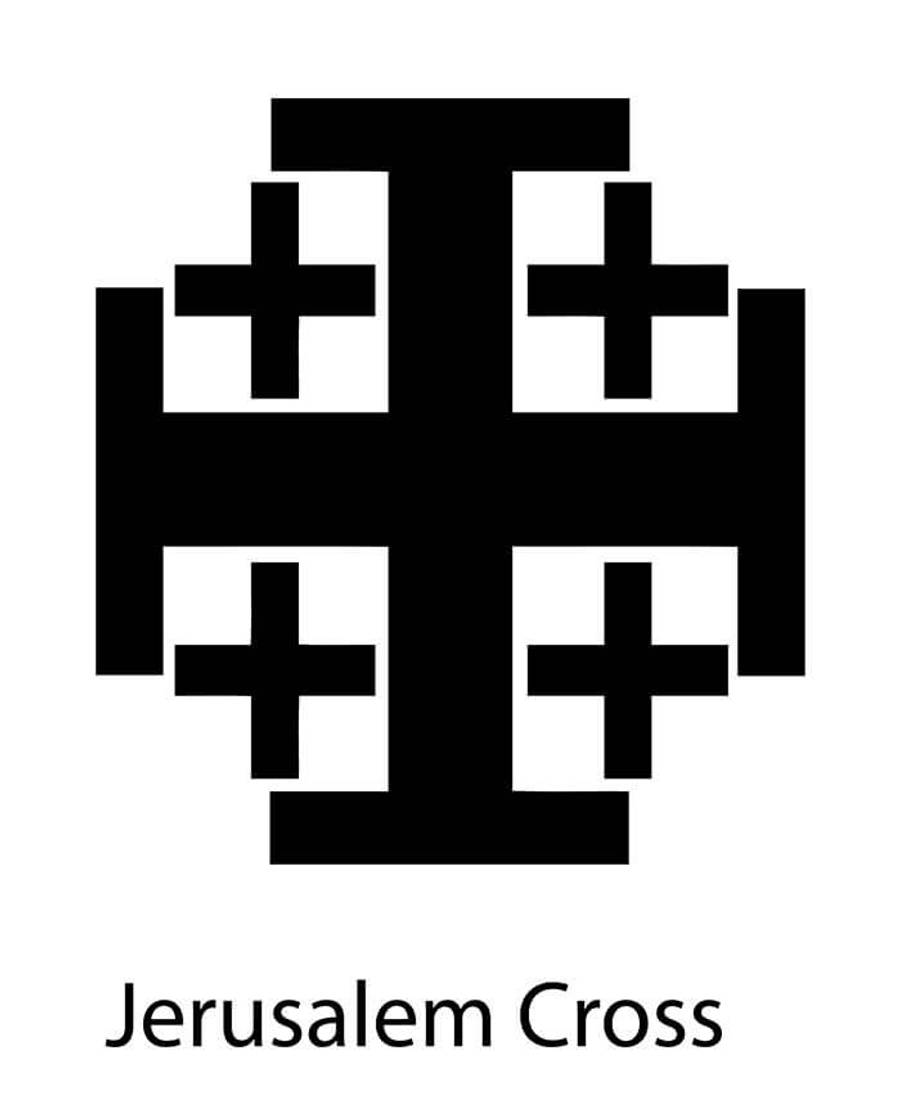
The Jerusalem Cross, or Crusader's Cross, features a large Greek cross surrounded by four smaller crosses — one of the most recognizable emblems of the Holy Land.
- History: Adopted by the Kingdom of Jerusalem after the First Crusade in the 11th century, symbolizing either the five wounds of Christ or the spread of the Gospel to the four corners of the world.
- Popularity: Commonly worn by Christian pilgrims as a mark of their connection to the Holy Land.
- Shape: One large central cross surrounded by four smaller crosses, one in each quadrant.
12. Canterbury Cross
The Canterbury Cross features four arms of equal length, each widening into a triangular point — a design tied directly to the mother church of the Anglican Communion.
- Origin: The Canterbury Cross is modeled after a Saxon brooch found in Canterbury dating to around 850 AD (the mid-9th century), discovered in 1867. It has since been installed as a symbol within Canterbury Cathedral.
- Popularity: One of the most important symbols of the Anglican Communion, commonly used in Church of England settings and Anglican jewelry worldwide.
- Shape: Square arms that widen into triangular points, each bearing a design of three downward-pointing triangles.
13. Coptic Cross
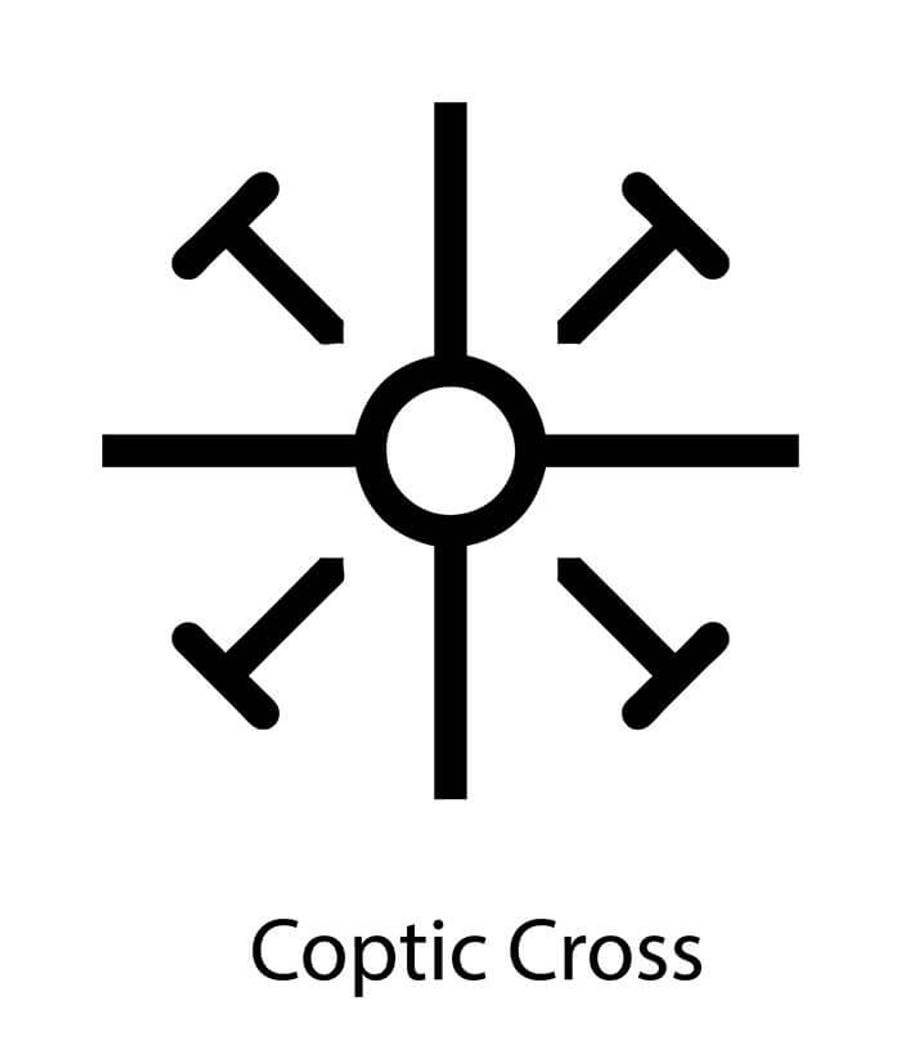
The Coptic Cross is the defining symbol of Egypt's Coptic Orthodox Church — a circle generating four equidistant arms, often decorated with additional miniature crosses.
- History: The design represents God's eternal love as revealed in Christ's crucifixion, and it has served as the central icon of Coptic Christianity since the church's earliest years.
- Popularity: Widely used among Egyptian Christians and the broader Coptic Orthodox community.
- Shape: A circular "nimbus" intersected by four arms, each typically ending in three points symbolizing the Holy Trinity.
14. Cross Fleury
The Cross Fleury is a stylized cross bordered with lily-like flourishes at each end, signifying purity and innocence.
- History: A staple of European heraldry, frequently appearing in crests and coats of arms.
- Popularity: Remains a well-known cross in heraldry and Christian artwork today.
- Shape: A traditional cross shape with arms ending in a fleur-de-lis, or lily-like, flourish.
15. Russian Orthodox Cross
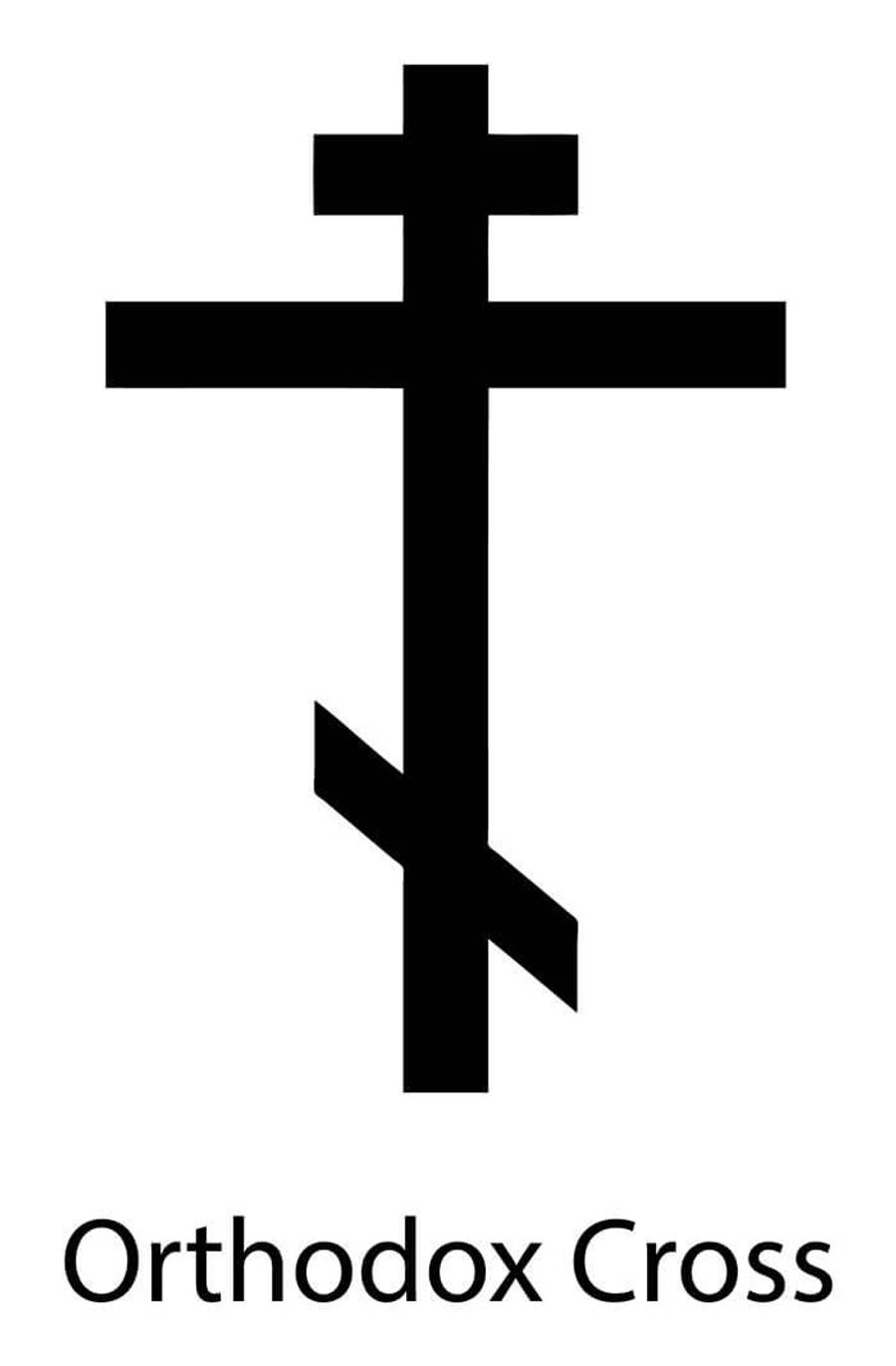
The Russian Orthodox Cross, also called the Suppedaneum Cross, has an additional slanted crossbar at the bottom in addition to the standard two bars.
- History: Rooted in Byzantine tradition, it was adopted by the Russian Orthodox Church and represents Eastern Orthodoxy in Russia and neighboring regions.
- Popularity: A central symbol across Russian Orthodox churches and religious artifacts.
- Shape: Three crossbars: the top bar signifies the inscription "INRI" (Jesus of Nazareth, King of the Jews) in Slavonic script, the larger middle bar is where Christ's hands were nailed, and the slanted lower bar represents his footrest, tilting upward toward the penitent thief and downward toward the impenitent one.
16. Ankh (Coptic Egyptian Cross)
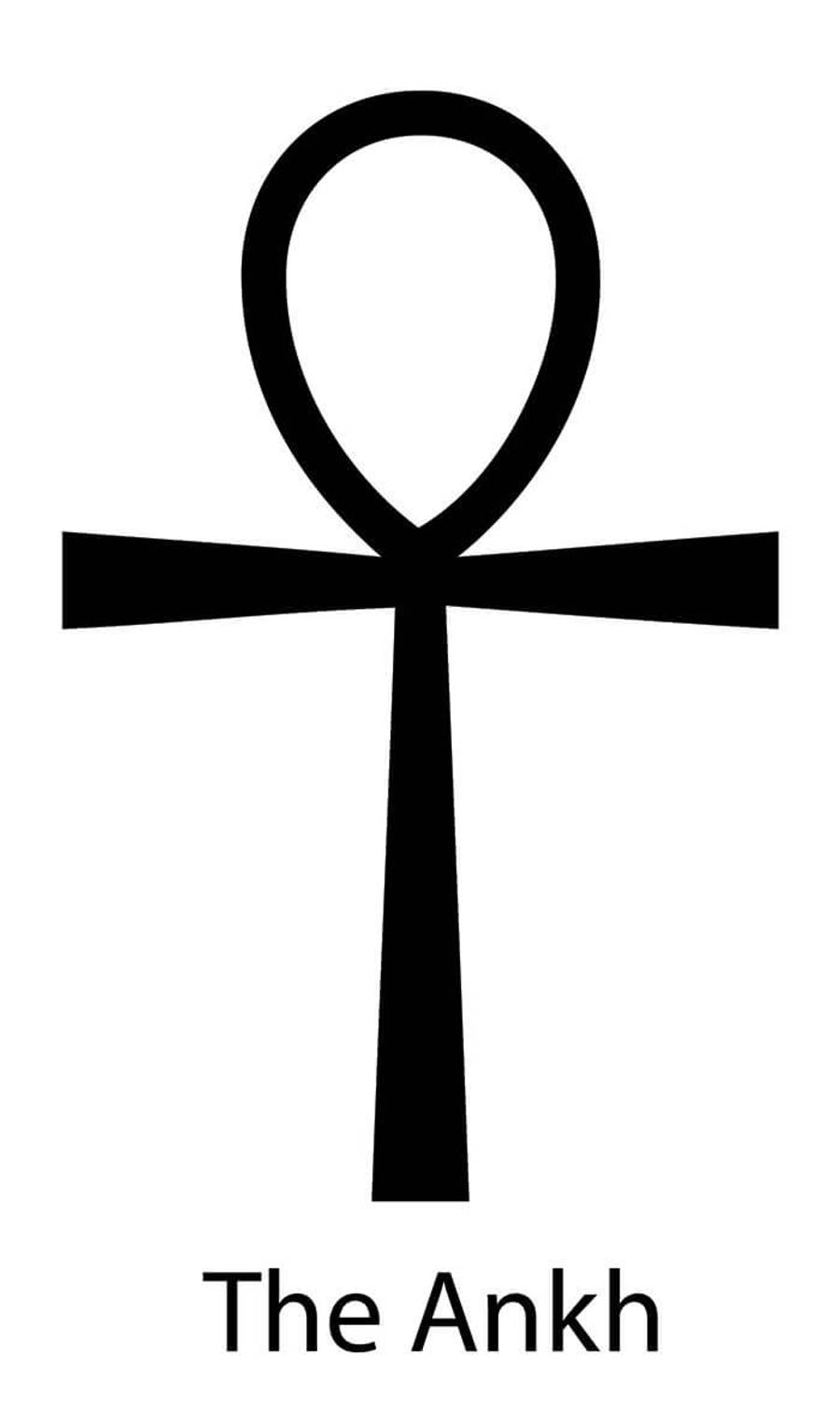
The Ankh is an ancient Egyptian symbol later adopted by Coptic Christians as the "key of life." Its top loop is associated with eternal life and the rising sun.
- History: Long predating Christianity as an Egyptian symbol of life and eternal life, it was later embraced by the early Coptic Christian Church as a symbol of Christ's promise of everlasting life.
- Popularity: Recognizable both as an ancient Egyptian symbol and a Coptic Christian one, appearing on church icons and jewelry alike.
- Shape: A T-shaped cross with a loop replacing the top bar.
17. Chi-Rho Cross (Cross of Constantine)
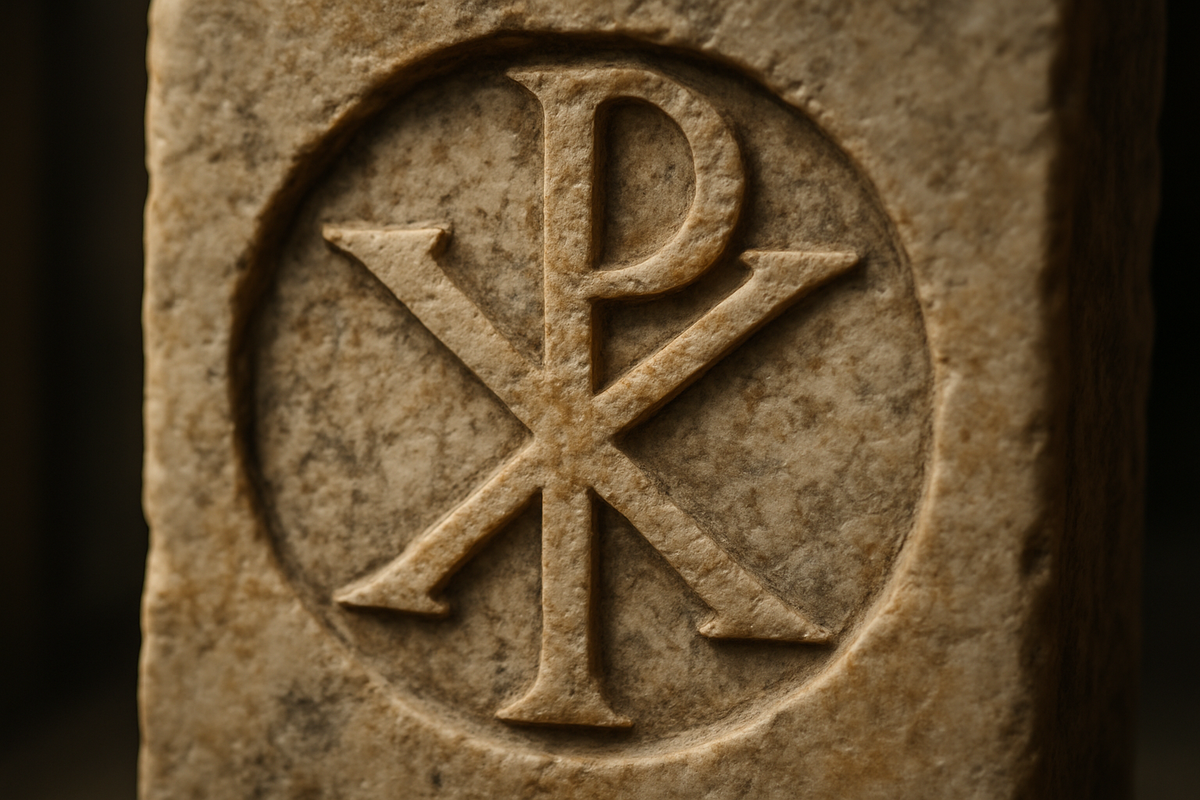
The Chi-Rho Cross is one of the earliest Christian monograms, formed from the first two Greek letters of "Christ" — Chi (Χ) and Rho (Ρ). It's often called the Cross of Constantine after the Roman emperor who made it famous.
- History: According to two differing ancient accounts later merged in popular tradition, Constantine either saw a cross of light in the sky before the Battle of the Milvian Bridge in 312 AD bearing the words 'In this sign, you shall conquer' (Eusebius), or was told in a dream to mark his soldiers' shields with the Chi-Rho symbol (Lactantius). After his victory, Constantine converted to Christianity and eventually made it the state religion of the Roman Empire.
- Popularity: Though less common in everyday use today, it retains major historical importance and still appears in liturgical art and Catholic heraldry.
- Shape: The Greek letters Chi (Χ) and Rho (Ρ) superimposed on one another, sometimes enclosed within a circle. Depictions range from abstract, overlapping letterforms to more literal, graphic renderings.
18. Cross of Saint James
The Cross of Saint James refers to the Apostle James the Greater. It typically appears as a cross flory — a cross whose arms end in fleurs-de-lis — and is central to the Order of Santiago, a Spanish order of knights.
- History: Traces to medieval times and gained prominence along the pilgrimage routes to Santiago de Compostela in Spain, said to hold the apostle's relics.
- Popularity: A popular symbol among pilgrims walking the Way of St. James today.
- Shape: A flory cross whose four arms terminate in fleur-de-lis points.
19. Patee Cross
The Cross Patée has arms that narrow toward the center and flare outward at the ends. It's strongly associated with Christian military orders of chivalry, including the Knights Templar and Teutonic Knights.
- History: Represented numerous Christian chivalric orders for centuries, particularly during the medieval period.
- Popularity: Still used in the iconography of military orders and societies as a mark of chivalric identity.
- Shape: Arms that are narrow at the center and broaden toward the perimeter, often slightly concave at the edges.
20. Cross Moline
The Cross Moline is shaped like a millrind, the iron support piece used in traditional millstones, and appears frequently in heraldry and church ornamentation.
- History: Originating in medieval Europe, it was popular among nobility and religious orders alike, rooted firmly in medieval heraldic tradition.
- Popularity: Still holds a place of honor in family emblems and coats of arms, particularly for families of Norman descent.
- Shape: Arms with split, curved ends that resemble a millrind.
21. Fylfot Cross (Swastika)
Also called the Fylfot Cross, the swastika is an ancient symbol that predates Christianity and has appeared across many cultures worldwide. In early Christian contexts, it served as a decorative motif.
- History: Used by many ancient cultures and worked into early Christian and Byzantine art as a symbol of good fortune.
- Popularity: Its 20th-century association with the Nazi Party has largely erased its earlier meaning in the West, though it retains deep cultural and religious significance across many Asian cultures today.
- Shape: An equilateral cross with arms bent at right angles, typically in a clockwise direction.
22. Mariner's Cross (Anchor Cross)
The Mariner's Cross, also called the Anchor Cross, takes the shape of a ship's anchor and signifies hope and steadfastness.
- History: Dates back to early Christianity, when it was a common symbol among sailors and seafarers, representing hope for a safe return home through turbulent waters.
- Popularity: Less common today than symbols like the ichthys (Jesus fish), though it has regained appreciation as a symbol of hope in nautical-themed jewelry and tattoos.
- Shape: A fusion of the traditional cross and an anchor, typically resembling a "t" with a curved or ringed top.
23. Tau-Rho Cross (Staurogram)
The Tau-Rho Cross, or Staurogram, combines the Greek letters Tau (Τ) and Rho (Ρ) and is considered one of the earliest christograms used in early Christian manuscripts.
- History: Dates to the 2nd century in early Christian papyrus texts, believed to depict the crucifixion, with the Rho representing Christ on the cross.
- Popularity: Not widely used today, but significant in academic and ecclesiastical study of early Christian iconography.
- Shape: The loop of the Rho placed over the vertical bar of the Tau, evoking the image of Christ's crucifixion.
24. Tetramorph Cross
The Tetramorph Cross is a unique design incorporating four creatures, each symbolizing one of the four Gospels of the New Testament.
- History: Its use reaches back to the early Christian Church, with roots in earlier Middle Eastern and Mediterranean cultures.
- Popularity: Used in Christian art and architecture to represent the four evangelists — Matthew, Mark, Luke, and John.
- Shape: A cross typically bearing four evangelist symbols at its corners: a winged man or angel (Matthew), a winged lion (Mark), a winged ox (Luke), and an eagle (John).
25. Botonee Cross
The Botonee Cross, also known as the Budded Cross, features trefoils or buds at the end of each arm — a design meant to symbolize the Holy Trinity.
- History: Believed to have originated in Gothic architecture, it has been widely used in Christian art and ecclesiastical decoration ever since.
- Popularity: A universally recognized cross found across denominations and church iconography.
- Shape: A standard cross whose arms each end in a trefoil, or three-leaf, design representing the Father, Son, and Holy Spirit.
26. Gamma Cross
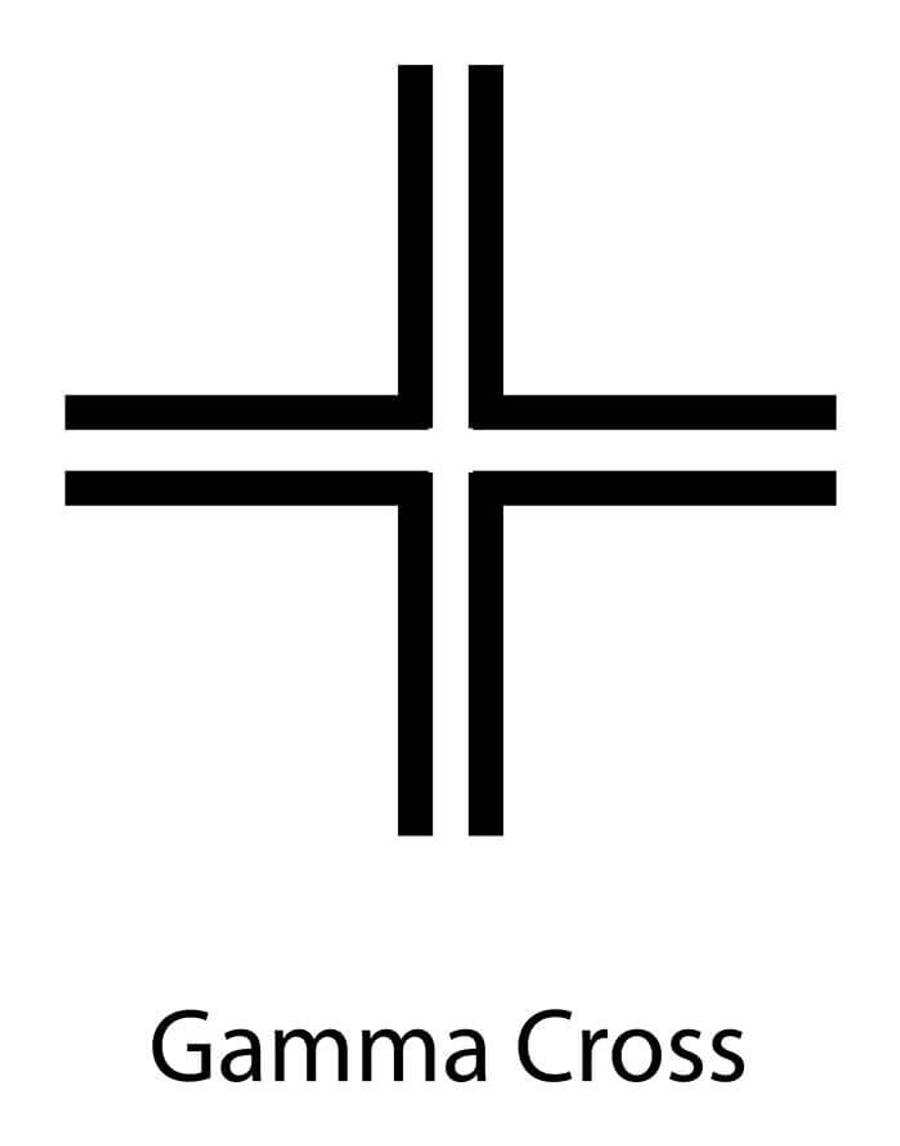
The Gamma Cross takes its shape from the Greek letter "gamma," typically built from a long vertical shaft crossed near the top by a shorter horizontal bar.
- History: Its exact origins are difficult to pin down, but it has been linked to various ancient cultures and religions, often connected to concepts of strength or the link between life and death.
- Popularity: Less common today as a devotional symbol, though it retains meaning within specific cultural and academic contexts due to its ties to the Greek letter itself.
- Shape: A downward-pointing vertical shaft with a shorter arm crossing near the top, echoing the Greek letter gamma.
27. Consecration Cross
The Consecration Cross is a familiar sight in Christian churches, marking the spots where a bishop anointed the building with chrism during its consecration.
- History: Part of Christian liturgical tradition since the early Middle Ages, used to mark a church's formal sanctification.
- Popularity: Found in churches around the world as physical evidence of a building's sanctified status.
- Shape: Typically a simple Latin cross, sometimes encircled, inscribed on the interior walls of a church.
28. Golgotha Cross
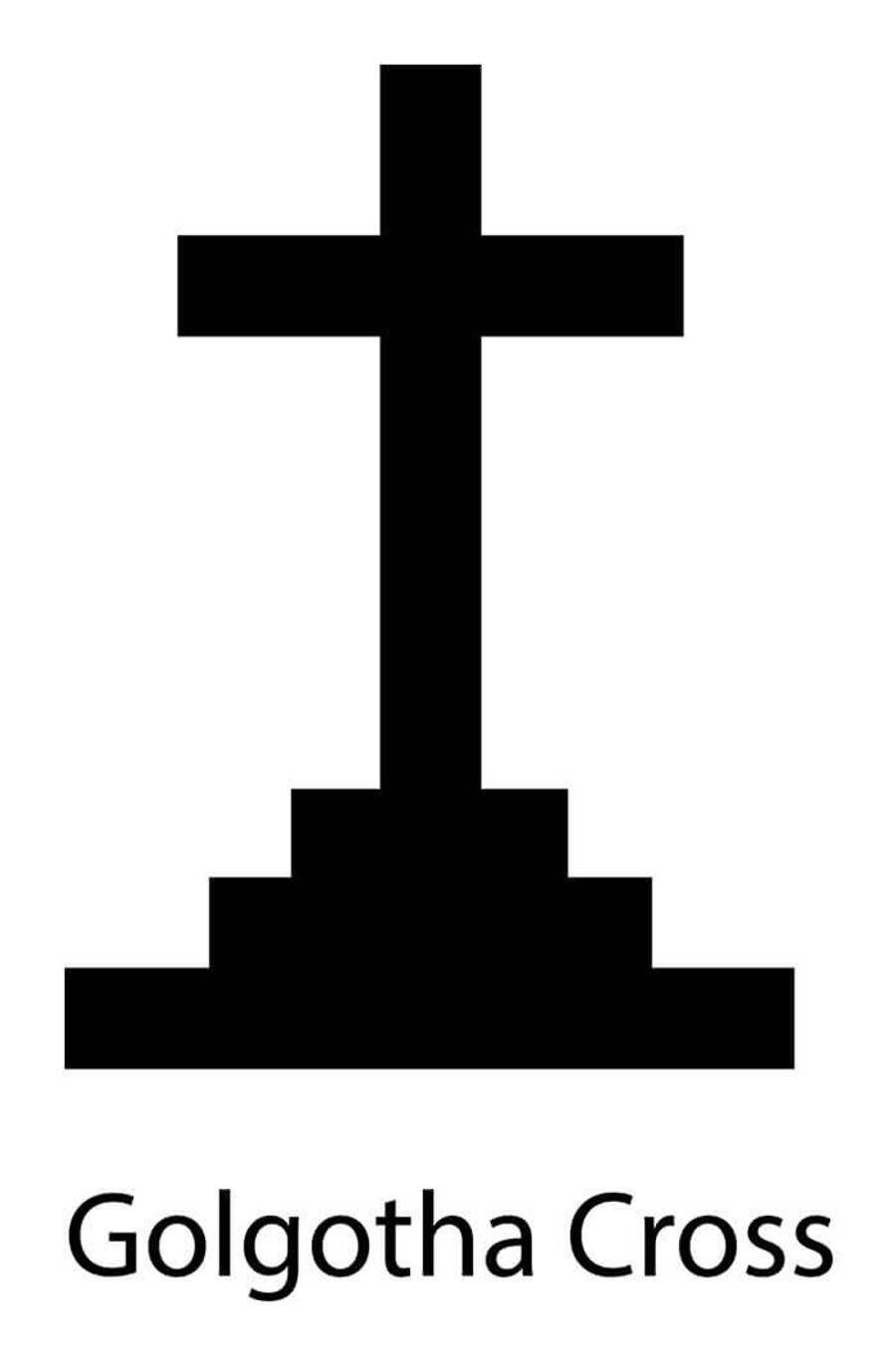
The Golgotha Cross, also called the Crucifixion Cross, is a plain vertical post with a crossbar near the top, representing the cross on which Jesus Christ was crucified.
- History: Named for Golgotha, the site believed to be where Jesus was crucified, embodying the central Christian theme of sacrifice and redemption.
- Popularity: One of the most widely recognized symbols in Christianity, common in churches, religious art, and iconography as a marker of death and resurrection.
- Shape: A "T" or "t" shape with a longer vertical post and a shorter horizontal bar near the top.
29. Byzantine Cross
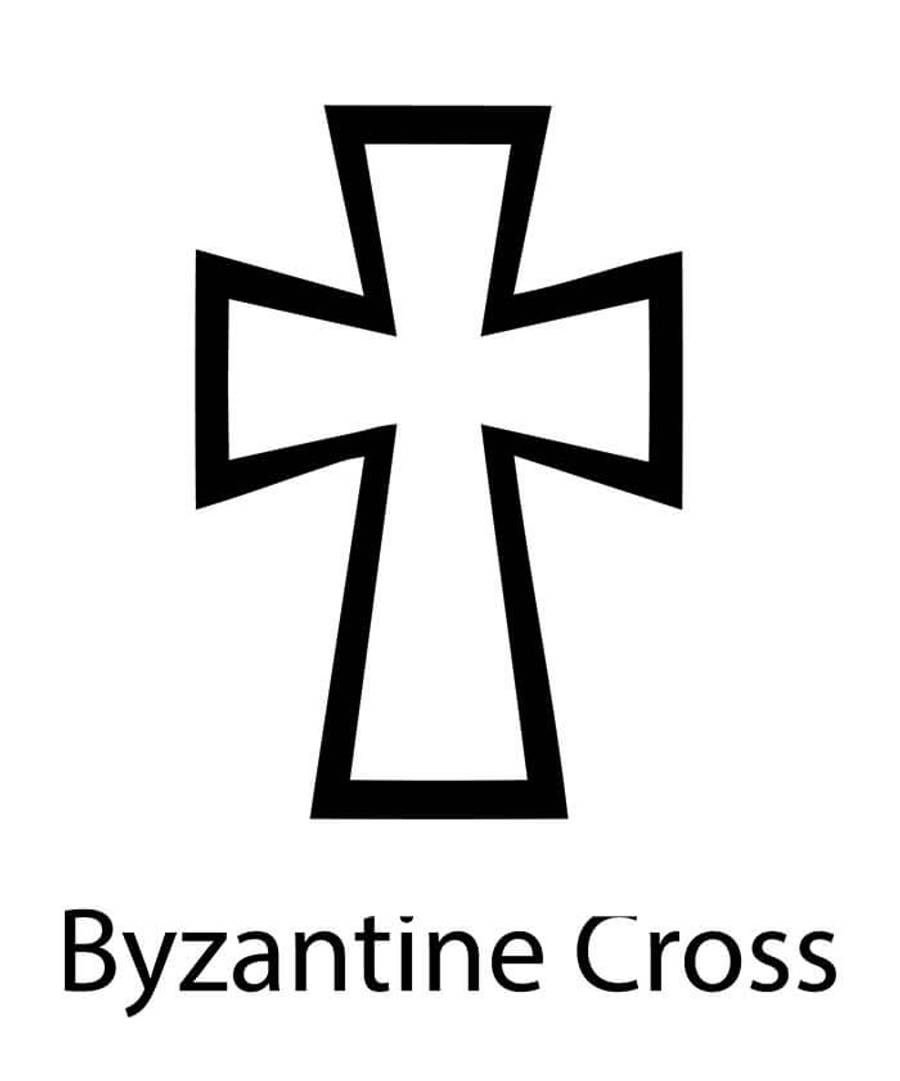
The Byzantine Cross, also called the Eastern Orthodox Cross, is distinguished by two horizontal bars: a shorter top bar signifying the inscription "INRI," and a slanted lower bar representing Christ's footrest.
- History: Originated in the Byzantine Empire, the birthplace of the Eastern Orthodox Church, and carries deep theological meaning tied to Christ's crucifixion and resurrection.
- Popularity: Prominent in Eastern Orthodox religious artwork, architecture, and liturgical objects.
- Shape: Three bars total — a small top bar for the INRI inscription, a main horizontal bar where Christ's hands were nailed, and a slanted bottom bar for the footrest.
30. Cross Crosslet
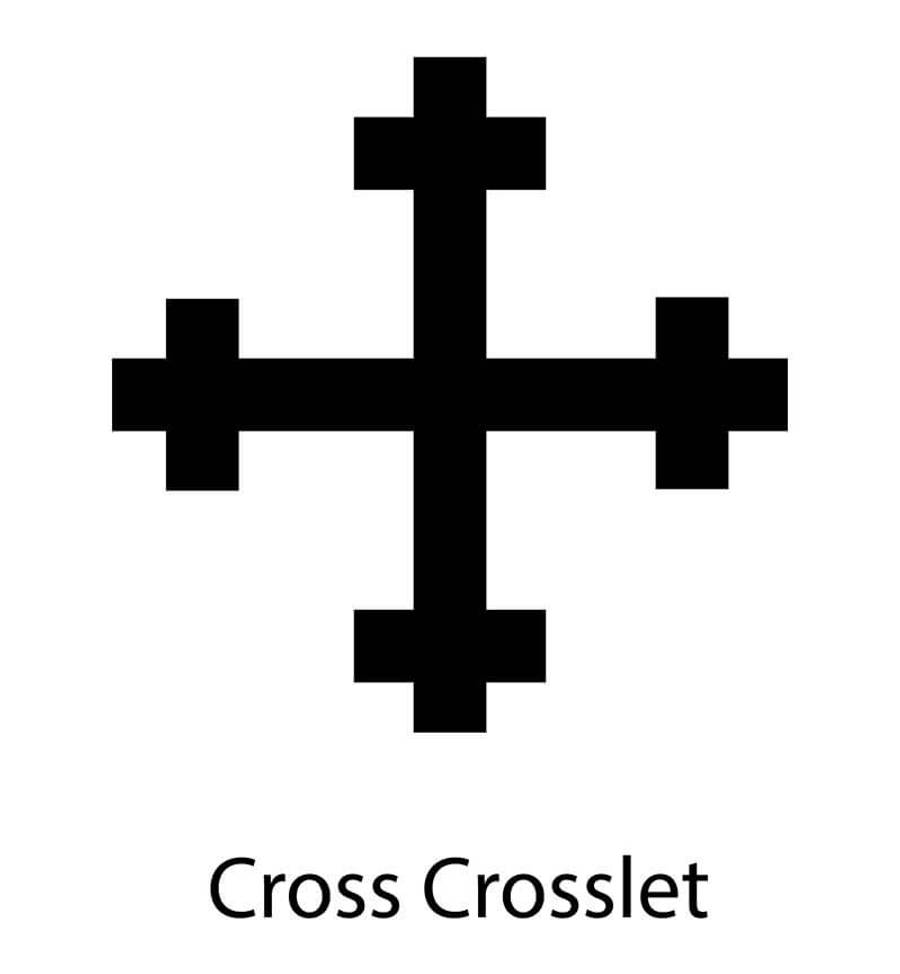
The Cross Crosslet features a central vertical and horizontal bar, each end bifurcated into a smaller crossbar, giving the appearance of four small crosses joined at the center.
- History: An ancient Christian symbol common in heraldry, signifying the spread of Christian influence to all four corners of the world.
- Popularity: Appears widely in family crests, coats of arms, and the iconography of various Christian denominations.
- Shape: A central cross with a smaller crossbar at each end, forming four small crosses. When "fitchée," the lower arm is pointed for planting in the ground as a processional standard.
31. Cross of Burgundy
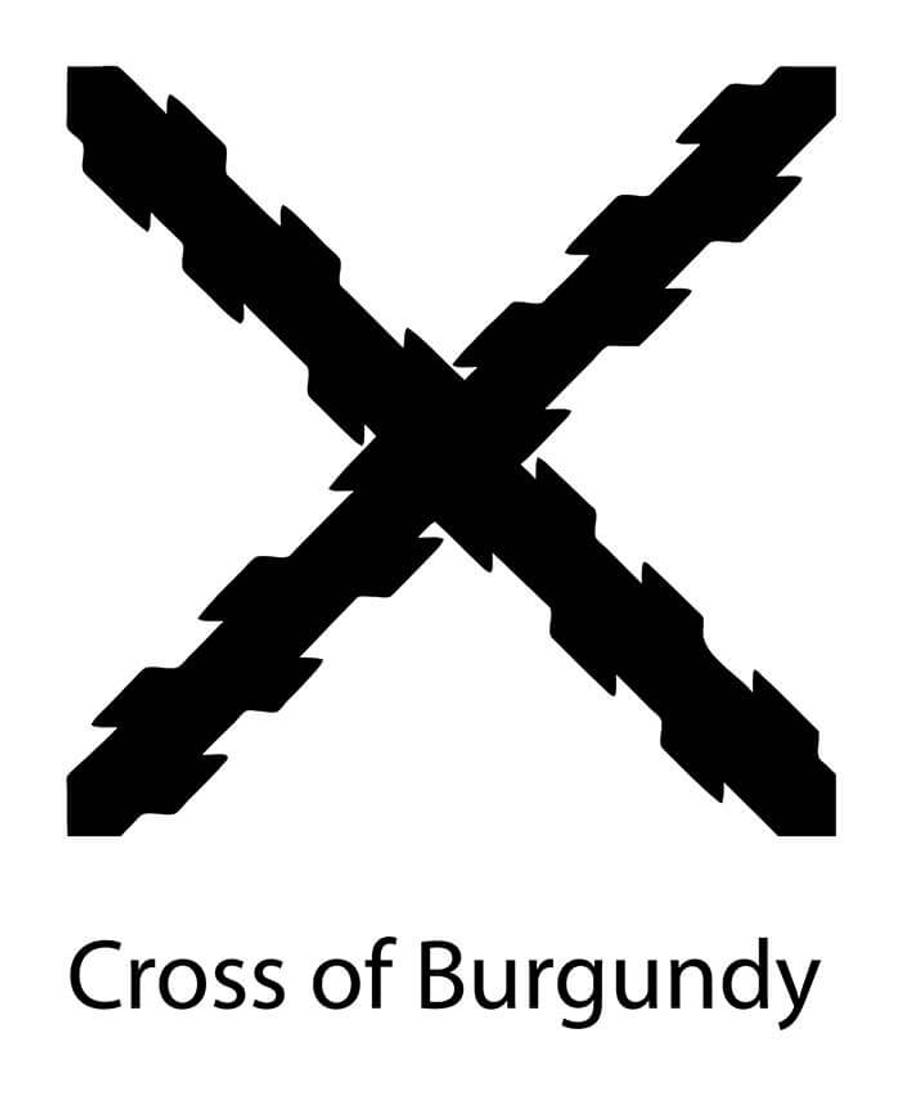
The Cross of Burgundy, also called the Saltire of Burgundy, is widely known for its diagonal "X" shape.
- History: Originates from the Duchy of Burgundy in modern-day eastern France, where it served as a naval ensign before being adopted by the Habsburgs, rulers of the Spanish Empire. Like the St. Andrew's Cross, it represents the crucifixion of Saint Andrew.
- Popularity: Still associated today with former territories of the Spanish Empire across Italy, the Low Countries, and Latin America, and remains popular in flags and heraldic iconography.
- Shape: Two diagonal lines intersecting at the center to form an "X."
32. Lithuanian Cross
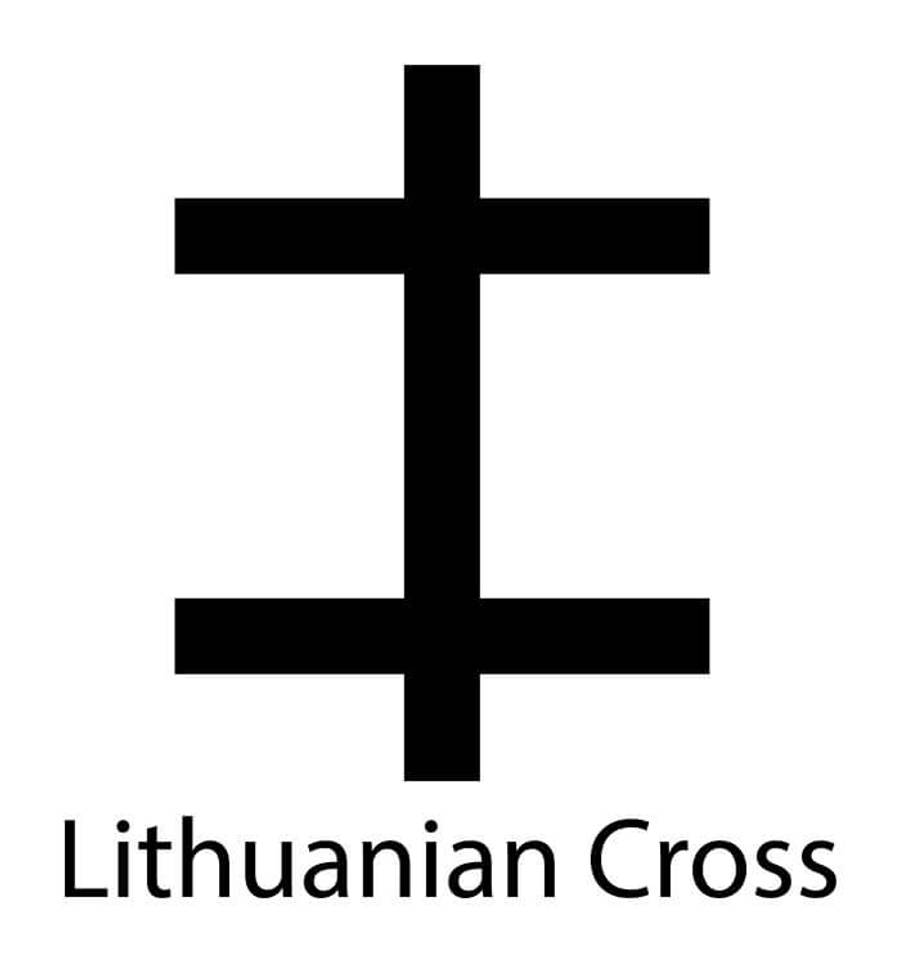
The Lithuanian Cross, sometimes called the Cross of Vytis or Iron Wolf Cross, commonly appears alongside the emblem of a knight on horseback (Vytis) or an iron wolf — both national symbols of Lithuania.
- History: Rooted in Lithuania's national history, with the Iron Wolf tied to legends surrounding the founding of Vilnius, the country's capital.
- Popularity: One of the most recognized pieces of Lithuanian national and cultural symbolism, appearing during national celebrations, on coins, and in military insignia.
- Shape: Typically a Latin cross at its core, often paired with the Vytis or Iron Wolf imagery, blending religious symbolism with national pride.
33. Nordic Cross
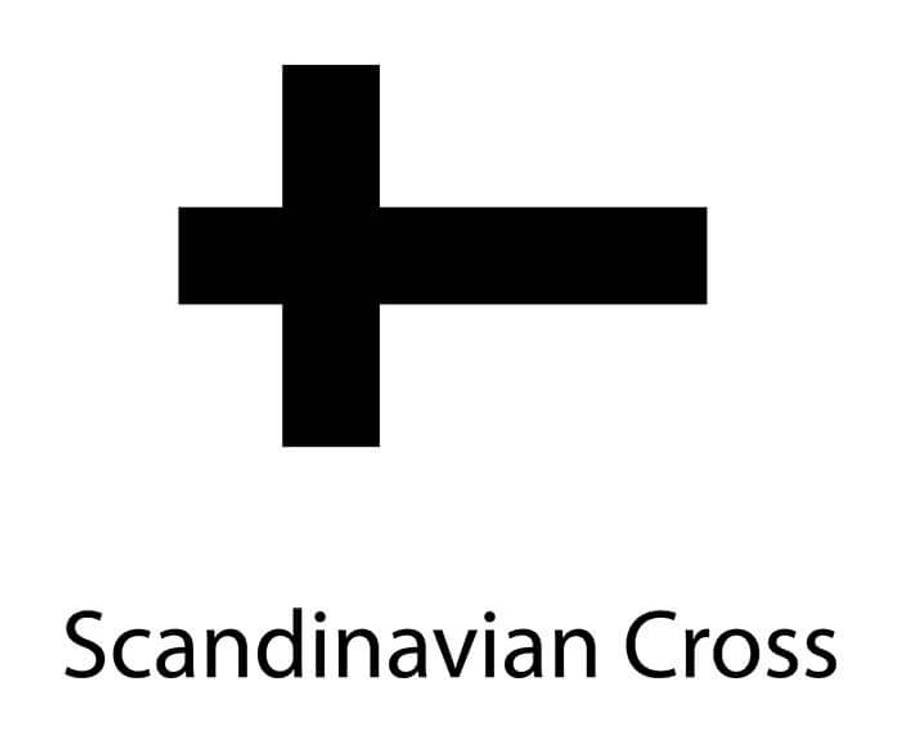
Also called the Scandinavian Cross, the Nordic Cross is defined by its off-center design, with the horizontal bar shifted closer to the hoist (left side) of the flag.
- History: Deeply tied to Denmark, Sweden, Norway, Finland, and Iceland, first appearing on the Danish flag (Dannebrog), one of the world's oldest national flags, dating to the 14th century.
- Popularity: Featured on every Nordic country's national flag today, symbolizing shared regional heritage alongside Christian history.
- Shape: A vertical bar extending the full length of the flag, with a horizontal bar positioned nearer to the hoist.
34. Sun Cross
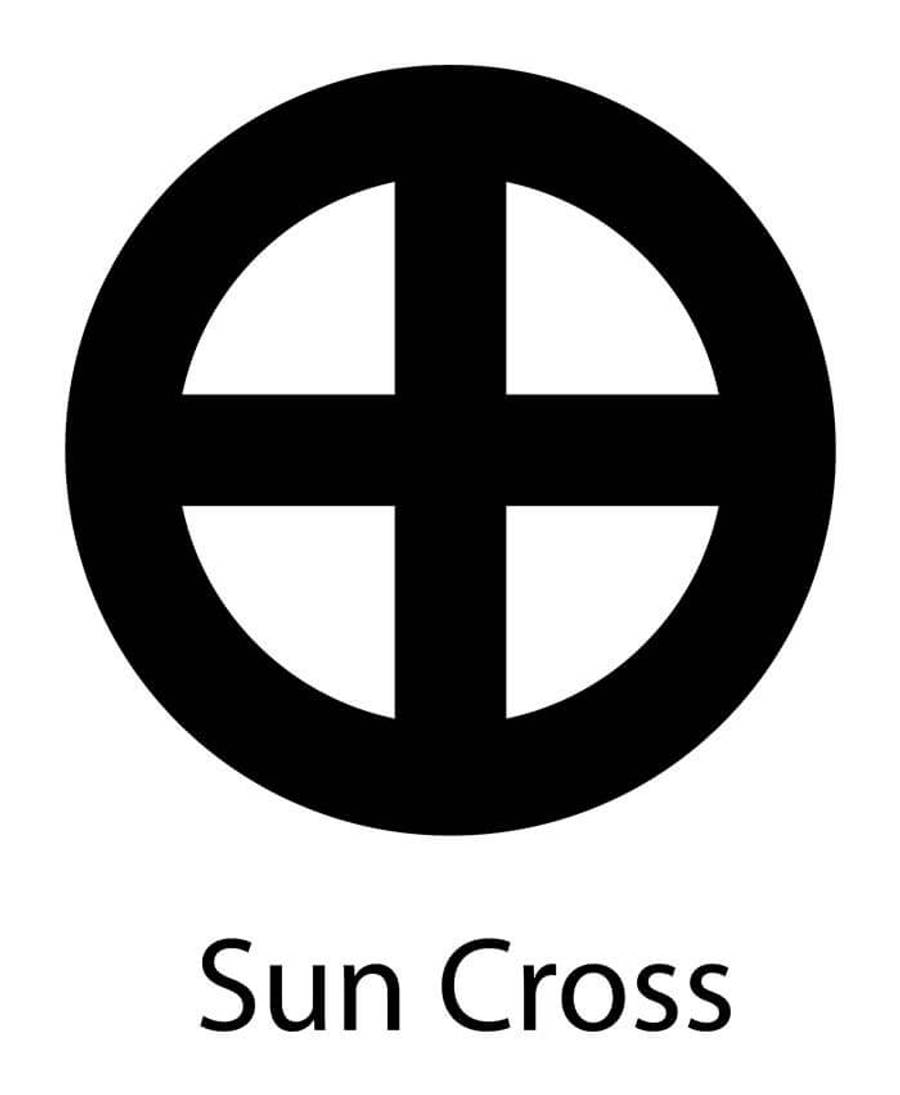
The Sun Cross, or Solar Cross, features an equal-armed cross enclosed within a circle, historically tied to solar calendars and the changing seasons.
- History: One of the oldest and most widespread religious symbols, dating to prehistoric times and adopted across cultures from Europe to Asia as a celestial marker.
- Popularity: Used today mainly in archaeological, anthropological, and mythological contexts, as well as within modern neopagan traditions like Wicca and Heathenry to mark the Wheel of the Year.
- Shape: An equal-armed cross enclosed within a circle, symbolizing the sun, the four seasons, or the four cardinal directions.
35. Templar Cross
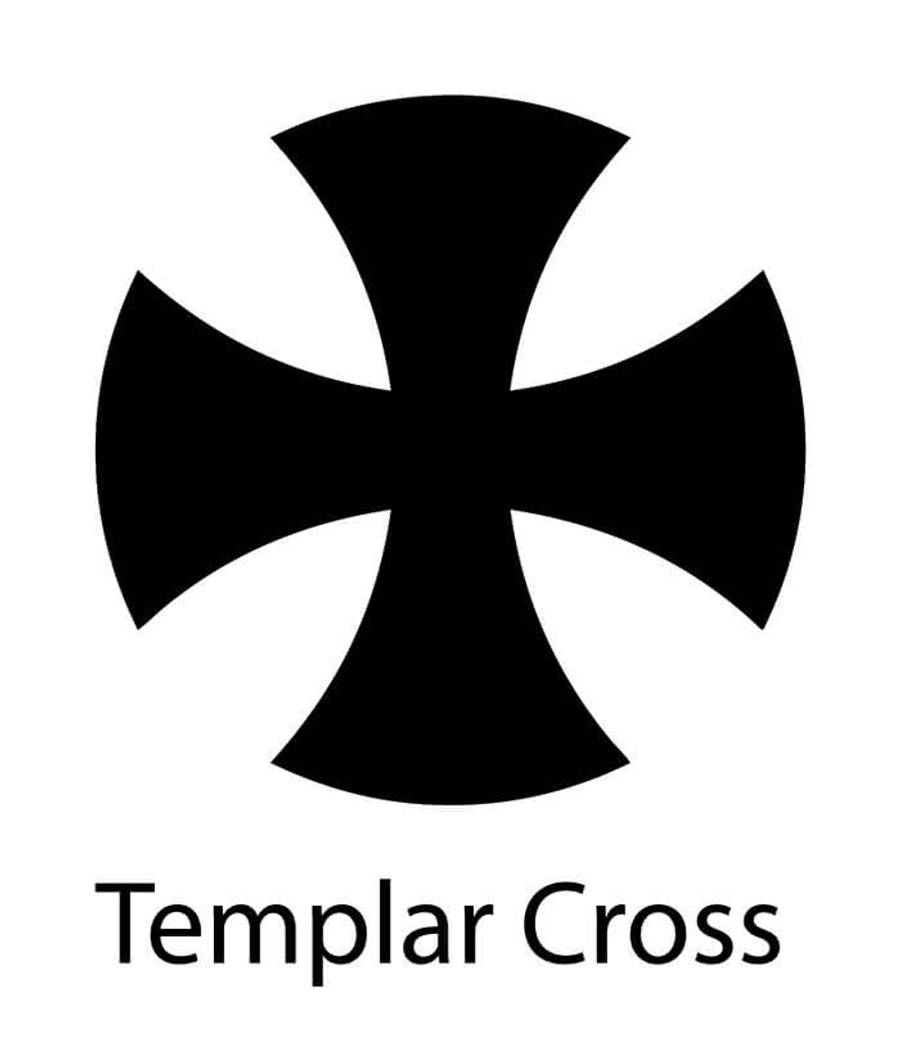
The Templar Cross is instantly recognizable as a bright red cross on a white background, though simpler equilateral versions also exist.
- History: Tied to the Knights Templar, a medieval Christian military order founded in the 12th century. Knights wore it on their uniforms and flags during the Crusades as a mark of faith and dedication to protecting Christian pilgrims.
- Popularity: Still a powerful symbol today, frequently referenced in historical literature, films, video games, and by modern organizations claiming ties to the order.
- Shape: An equilateral or slightly elongated red cross set against a white background.
36. Basque Cross
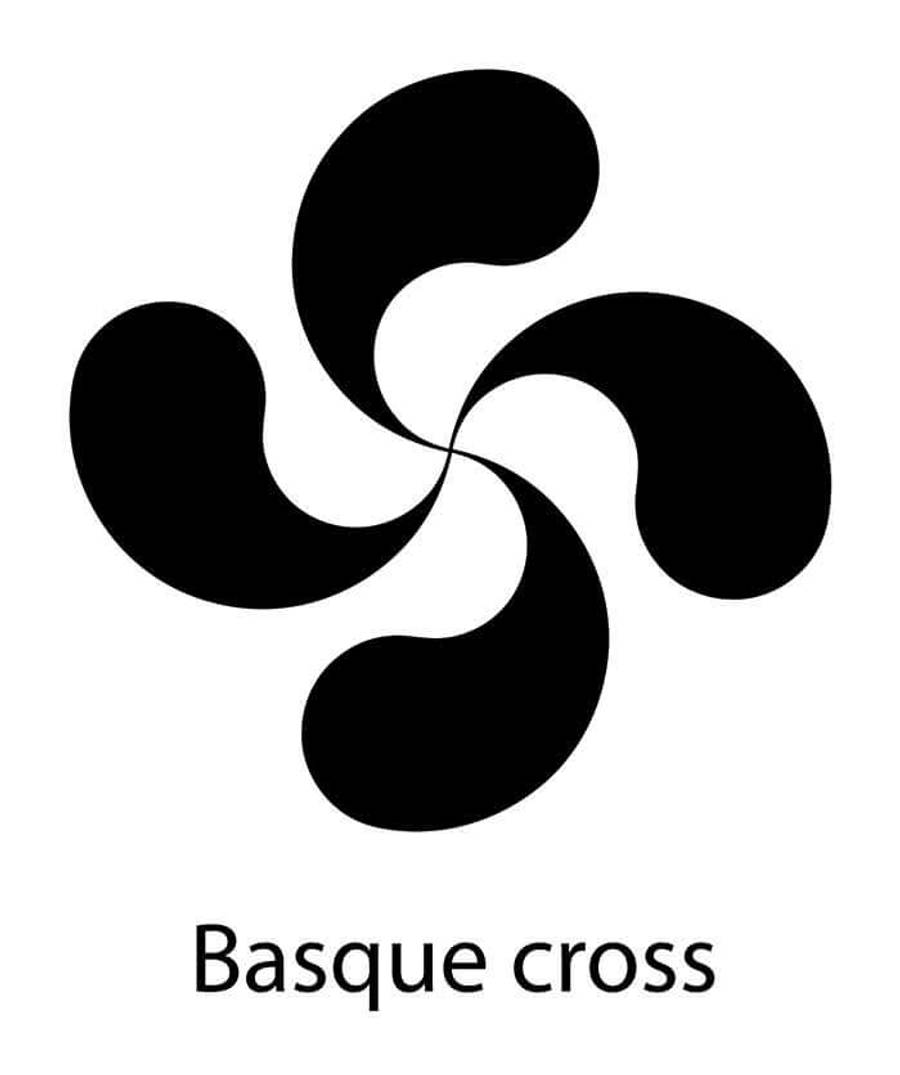
The Lauburu, or Basque Cross, features four comma-shaped "heads" arranged in a swirl. It's called a cross loosely, since its shape departs entirely from traditional cross designs.
- History: An emblem of the Basque Country, spanning parts of Spain and France. Its exact origin is debated, but it has long served as a protective symbol on tombstones and homes.
- Popularity: A recognized modern symbol of Basque identity, used in traditional dances, ceremonies, and contemporary design.
- Shape: Four comma or "teardrop" shapes arranged in a swirl, with a small gap at the center where the heads don't quite meet.
37. Bottony Cross
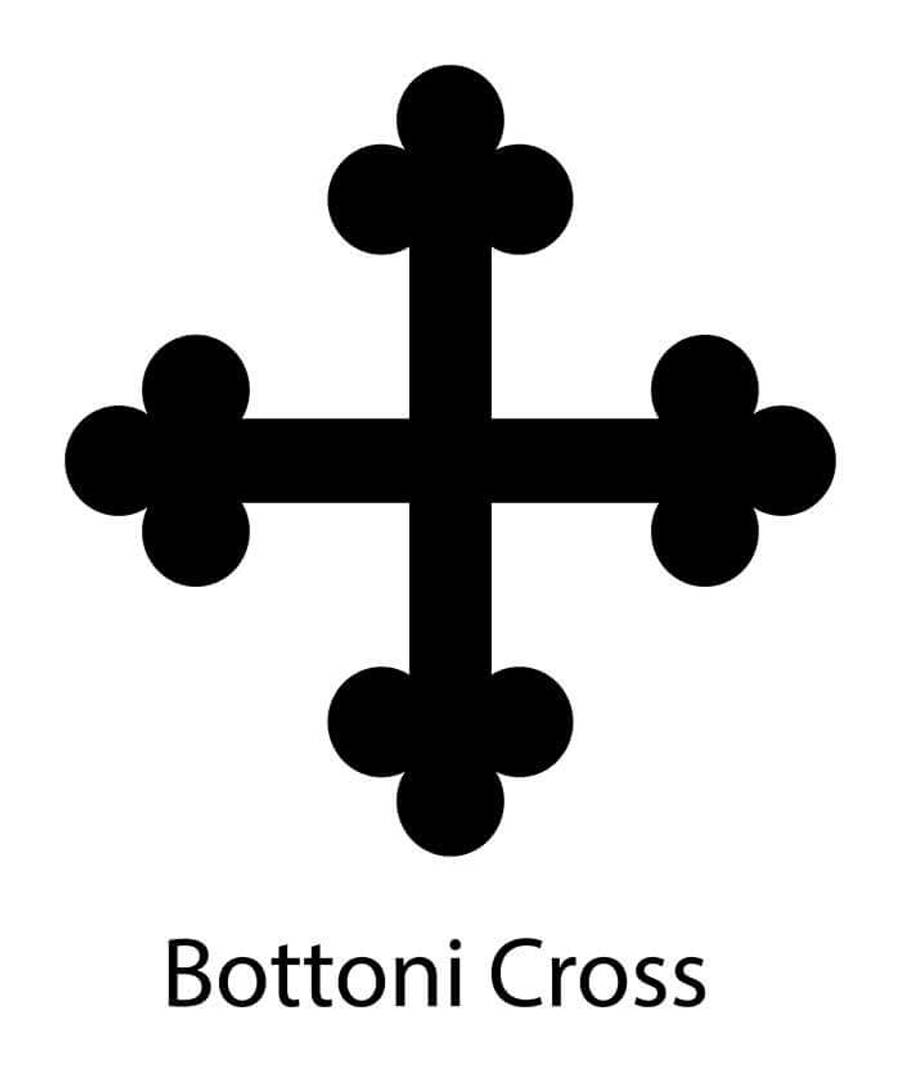
The Bottony Cross, also called the Cross Bottony or Cross Botonée, features a trefoil design at the end of each arm, resembling a bud or button.
- History: Closely tied to heraldry and ecclesiastical use since the Middle Ages. The name derives from the French word for "button," referring to its bud-like arm ends, and it's often linked to the Trinity due to its trefoil shape.
- Popularity: Used today in religious iconography, architectural design, and coats of arms carrying historical and religious symbolism.
- Shape: A cross whose arms each terminate in a trefoil, or three-lobed, design.
38. Serbian Cross
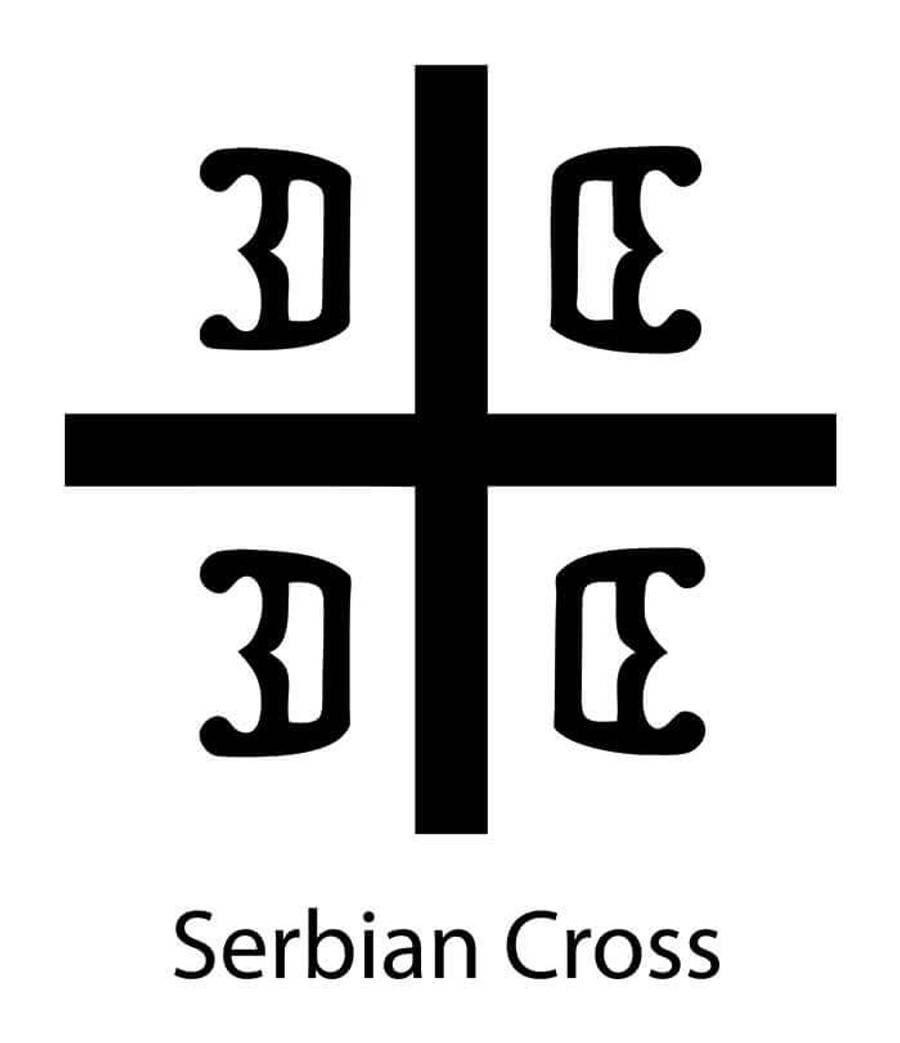
The Serbian Cross is a variant of the Byzantine Cross found in Serbian heraldry, with four stylized "C" shapes positioned in the corners around a central cross.
- History: Strongly tied to Serbia's Orthodox Christian heritage and the medieval Nemanjić dynasty. The four "C" shapes, or firesteels, are said to represent the Old Serbian saying "Само слога Србина спасава" — "Only Unity Saves the Serbs."
- Popularity: Central to the Serbian national emblem and flag, widely used in religious, national, and cultural events.
- Shape: A central cross accompanied by four firesteel shapes resembling "C" or Cyrillic "S" symbols in each corner.
39. Novgorodsky Cross
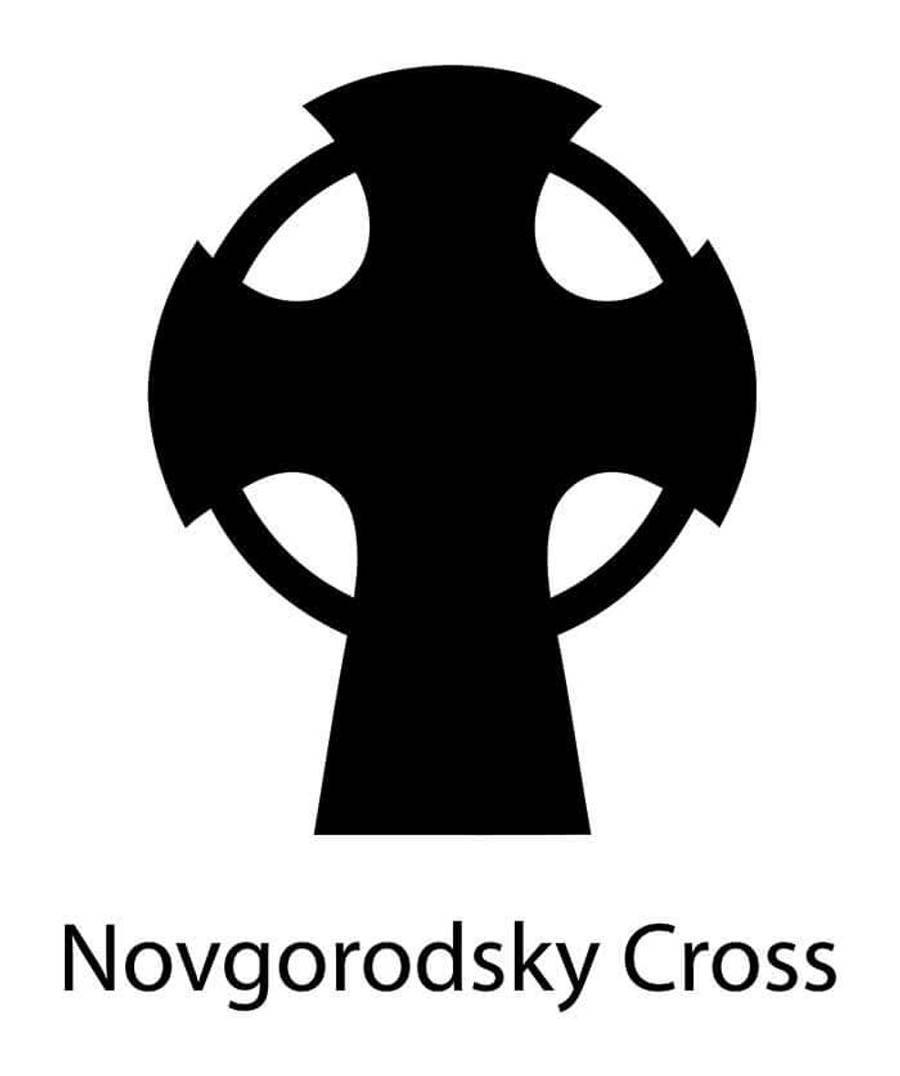
The Novgorodsky Cross is a complex Russian religious icon featuring a tilted footrest, a smaller crossbar above the main one, and inscriptions.
- History: Originates from the historic Russian city of Novgorod, once a major cultural and religious center, and served as a tool in theological instruction and ceremonial rites.
- Popularity: Widely represented today in museums, collections, and reproductions as a symbol of Russian and Novgorodian religious history.
- Shape: A complex design featuring a small crossbar above the main one, typically inscribed "King of Glory," along with a slanting footrest symbolizing the balance between good and evil, often accompanied by images of saints.
40. Grapevine Cross
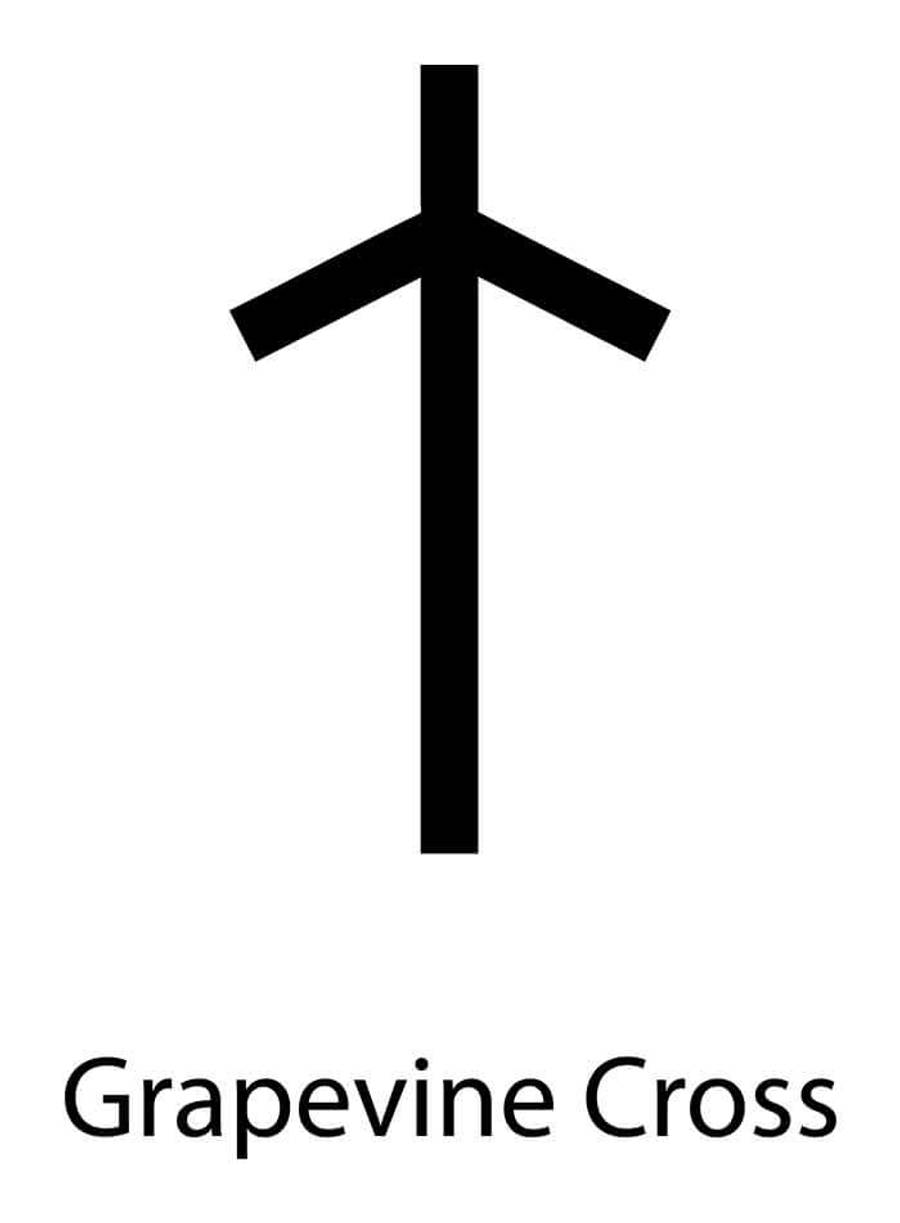
The Grapevine Cross, also known as Saint Nino's Cross, is Georgia's national cross, with branches that droop downward like a grapevine.
- History: Tied to Saint Nino, credited with converting the kingdom of Georgia to Christianity in the 4th century. Tradition holds she fashioned the cross from grapevine branches, binding it together with strands of her own hair.
- Popularity: A national symbol of Georgia, used extensively in the Georgian Orthodox Church and featured on the national flag.
- Shape: A cross with drooping arms resembling grapevine branches, ranging from simple to elaborately detailed depictions.
41. Calvary Cross
The Calvary Cross is a Latin Cross raised on a base of three steps, representing faith, hope, and love (or, in some interpretations, the Holy Trinity).
- History: Named for Calvary, the hill where Christ was crucified, and commonly used in Western Christian art and monuments since the medieval period.
- Popularity: Frequently seen atop church altars, gravestones, and outdoor memorials.
- Shape: A Latin Cross set atop a three-tiered, step-like base.
42. Passion Cross
The Passion Cross, sometimes called the Spear-Tip Cross, has arms that come to sharp, spear-like points, symbolizing Christ's suffering during the Passion.
- History: Common in medieval Christian art as a reminder of the physical suffering endured by Christ before and during the crucifixion.
- Popularity: Still used in religious art and jewelry as a more visually dramatic alternative to the standard Latin Cross.
- Shape: A Latin Cross whose arms taper into sharp, pointed tips.
43. Ethiopian Cross
The Ethiopian Cross features intricate, lace-like latticework, with designs unique to each region and church within the Ethiopian Orthodox Tewahedo Church.
- History: Rooted in Ethiopia's ancient Christian tradition, one of the oldest in the world, with distinct regional styles developed over centuries by local artisans.
- Popularity: Widely worn as jewelry and carried as processional crosses within Ethiopian Orthodox worship today.
- Shape: Highly ornamental, often square or rounded, with elaborate interlacing patterns rather than a simple beam design.
Conclusion: The Five Most Iconic Crosses
Across 43 types of crosses and their meanings, a handful stand out as the most universally recognized:
- Latin Cross — Christ's crucifixion and sacrifice
- Celtic Cross — Eternity and enduring faith
- Greek Cross — The spread of Christianity worldwide
- Jerusalem Cross — The Holy Land and the five wounds of Christ
- Maltese Cross — Charity and humanitarian service
From the universally recognized Latin Cross to the intricate patterns of the Celtic Cross and the specific insignias of military and Catholic orders, each design carries its own story within religious tradition and artistic expression. Whether displayed in churches, worn as jewelry, or featured in art, these crosses continue to inspire people around the world, connecting them to centuries of tradition and spirituality. To explore more emblems of the faith, visit our full guide to Catholic Symbols.
FAQ
What is the most common type of cross?
The Latin Cross is by far the most common type of cross, recognized instantly across Western Christianity. Its long vertical beam and shorter horizontal crossbar mirror the traditional shape of the cross used in Christ's crucifixion, making it the default symbol seen in churches, artwork, and jewelry worldwide.
What are the types of Catholic crosses?
The main types of Catholic crosses are the Papal Cross, Patriarchal Cross, Consecration Cross, and Maltese Cross, each tied to a specific role within the Church. The Papal Cross signifies papal authority, the Patriarchal Cross marks archbishops and patriarchs, the Consecration Cross marks a sanctified church building, and the Maltese Cross represents the charitable mission of the Knights Hospitaller.
What does an upside-down cross mean?
An upside-down cross is traditionally known as the Cross of St. Peter, referencing the Apostle Peter's request to be crucified inverted, since he felt unworthy to die in the same manner as Jesus. While this remains its original, reverent meaning within Christian tradition, the symbol has also been misappropriated in some modern contexts as an anti-Christian or countercultural image.
How many types of crosses are there?
This guide documents 43 distinct, well-recognized types of crosses, each with its own shape, history, and religious meaning. While countless minor regional variations exist beyond this list, these 43 represent the most historically and culturally significant cross designs across Christian tradition.