 Know
Know
Symbols
Caduceus Meaning: History of the Winged Staff Symbol
Discover the caduceus meaning: Hermes' winged staff of two serpents, its Greek origins, medical mix-up with Asclepius, and spiritu…

Last updated: June 2025 · Reviewed by the KnowMastery Editorial Team
An anchor symbolizes hope, faith, stability, and steadfastness — the ability to stay grounded even when life's currents grow rough. Rooted in its practical job of holding a ship steady against wind and tide, the anchor has become one of the world's most enduring emblems of security, safe return, and unwavering commitment, appearing everywhere from ancient Roman catacombs to modern tattoos and jewelry. Its meaning shifts slightly depending on context — religious, romantic, or personal — but the core idea never changes: something (or someone) is holding you firm.
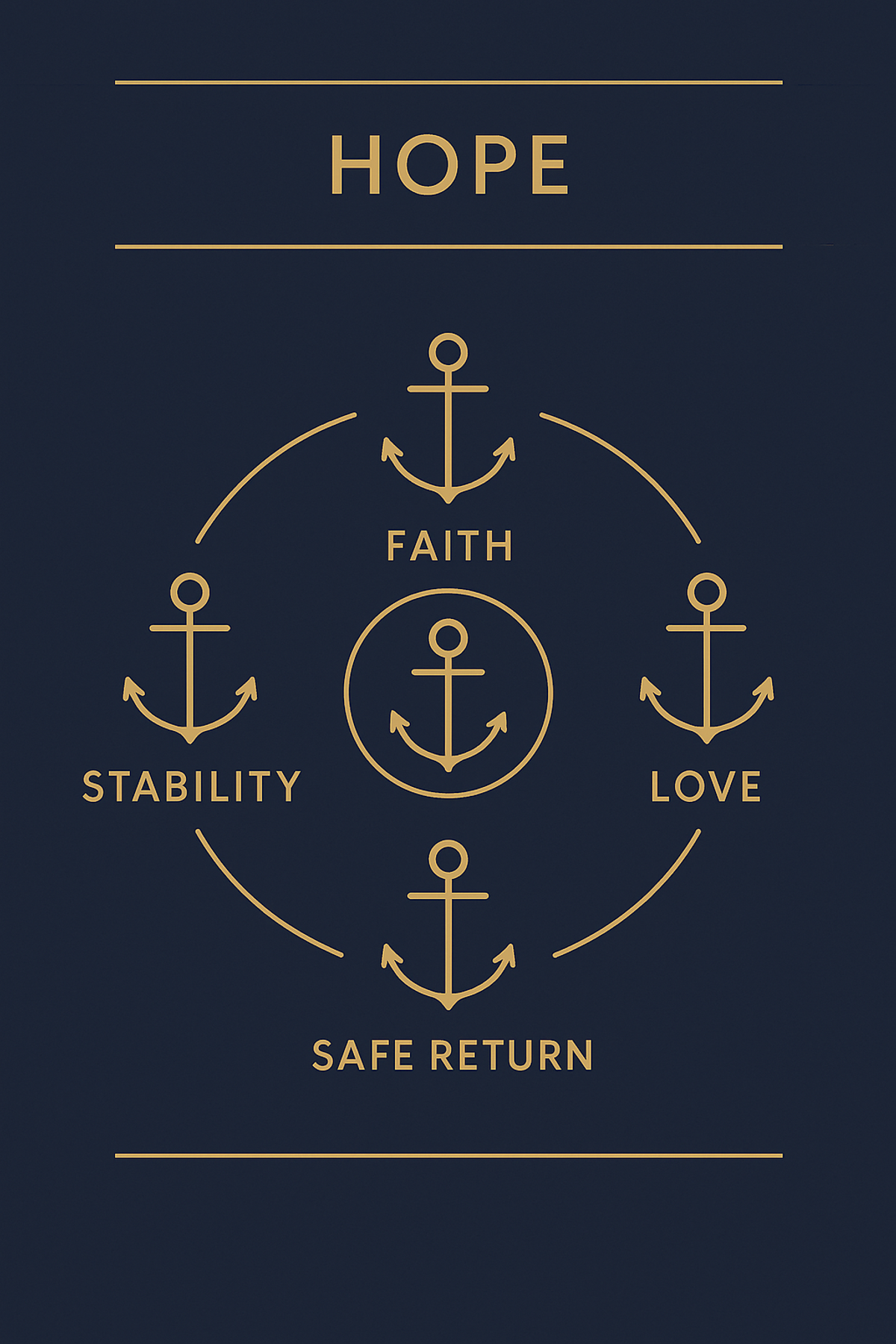
Since the dawn of seafaring, anchors have been indispensable tools in navigation and exploration. They serve as a lifeline for the ship, keeping it secure and steady amidst the uncertainty and turbulence of the sea. This vital role elevated the anchor from a mere tool to a powerful symbol, reflecting humanity's desire for safety, security, and steadfastness in the face of life's storms — a symbolic journey shared by other enduring emblems, including the claddagh ring, which likewise represents loyalty and lasting connection.
In ancient times, the anchor symbol was often associated with sea gods in Greek mythology, representing their dominion over the sea. Its symbolism deepened considerably with the rise of Christianity, when early believers adopted the anchor as a discreet stand-in for the cross, quietly expressing their faith during periods of persecution.
| Time Period | Associated Cultures | Symbolism |
|---|---|---|
| Ancient times | Greek | Power of sea gods |
| Early Christianity | Christian | Symbol of the cross, faith, and hope |
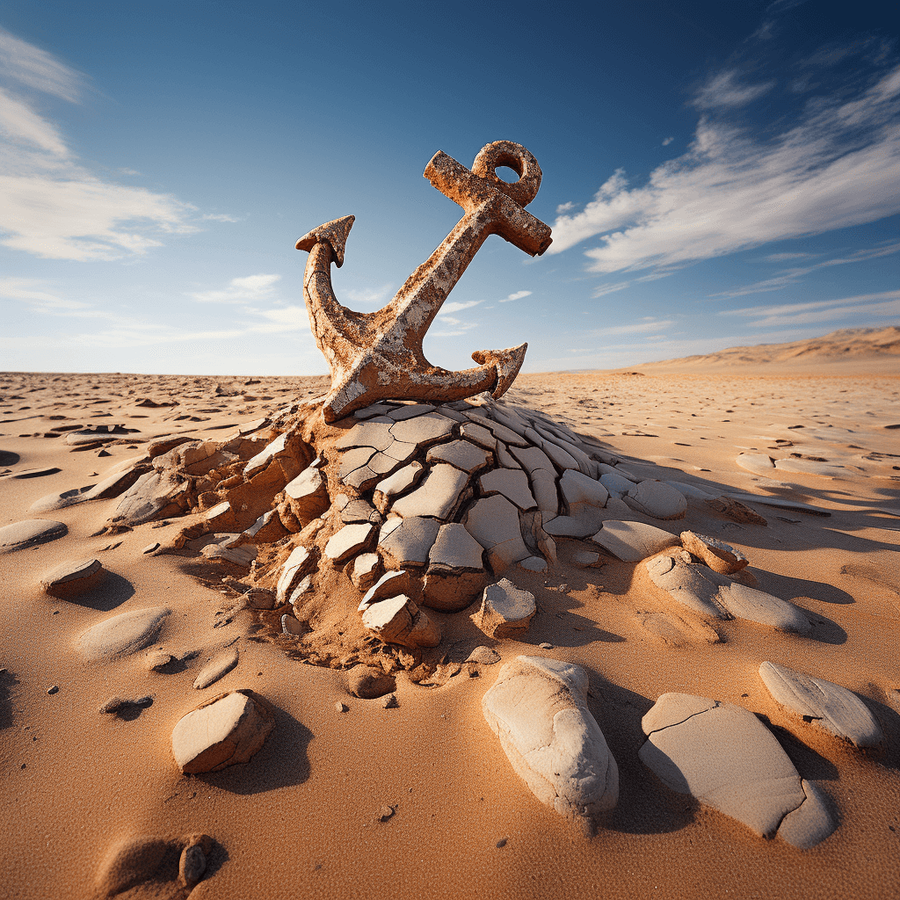
Anchors have been part of human civilization since ancient times, facilitating sea travel and exploration. The earliest anchors, simple rocks tied to ropes, were used by seafarers to prevent their boats from drifting. As maritime technology advanced, anchors evolved into the recognizable modern form we see today.
The symbolic interpretation of anchors developed alongside their physical evolution. In ancient Rome, the anchor symbol was carved into tombstones as a marker of a safe journey to the afterlife, and it was closely associated with the sea god Neptune, protector of sailors and travelers. Historians of early Christian catacomb art note that the anchor motif appears alongside fish and dove imagery on Roman burial markers from roughly the 2nd century CE onward, functioning as a covert profession of faith during periods when open Christian symbols were dangerous to display (source: catacomb inscription studies, Vatican Museums archives).
The anchor carries a multitude of spiritual and religious interpretations, spanning several faith traditions and personal belief systems.
In Christianity, the anchor is considered a symbol of faith, hope, and steadfastness. Early Christians used the anchor as a hidden representation of the cross during times of persecution, and the design later evolved into the formal "mariner's cross," a motif still found alongside other Catholic symbols in religious art and jewelry, and closely related to the broader family of different types of crosses used throughout church history.
In ancient Greek culture, the anchor was linked to Poseidon, god of the sea, and represented naval power and divine protection over sailors. The Romans carried this association forward, pairing the anchor with Neptune and using it as a mark of safe passage, both across literal seas and into the afterlife.
Beyond organized religion, many spiritual teachings use the anchor as a metaphor for grounding oneself and staying balanced in life. It serves as a reminder to remain steadfast and resolute in the face of adversity, much like the way a tree of life symbol represents rootedness and connection. Just as an anchor keeps a ship from drifting in the sea, the spiritual symbol of the anchor encourages individuals to stay grounded in their values and beliefs.
An anchor consists of several parts, each with its own function and symbolic significance. The central shaft, or shank, provides the anchor's backbone, while the flukes, or arms, are designed to dig into the sea bed, providing holding power. The crown connects the shank and the flukes, and the stock is set at a right angle to the flukes to roll the anchor into the correct position.
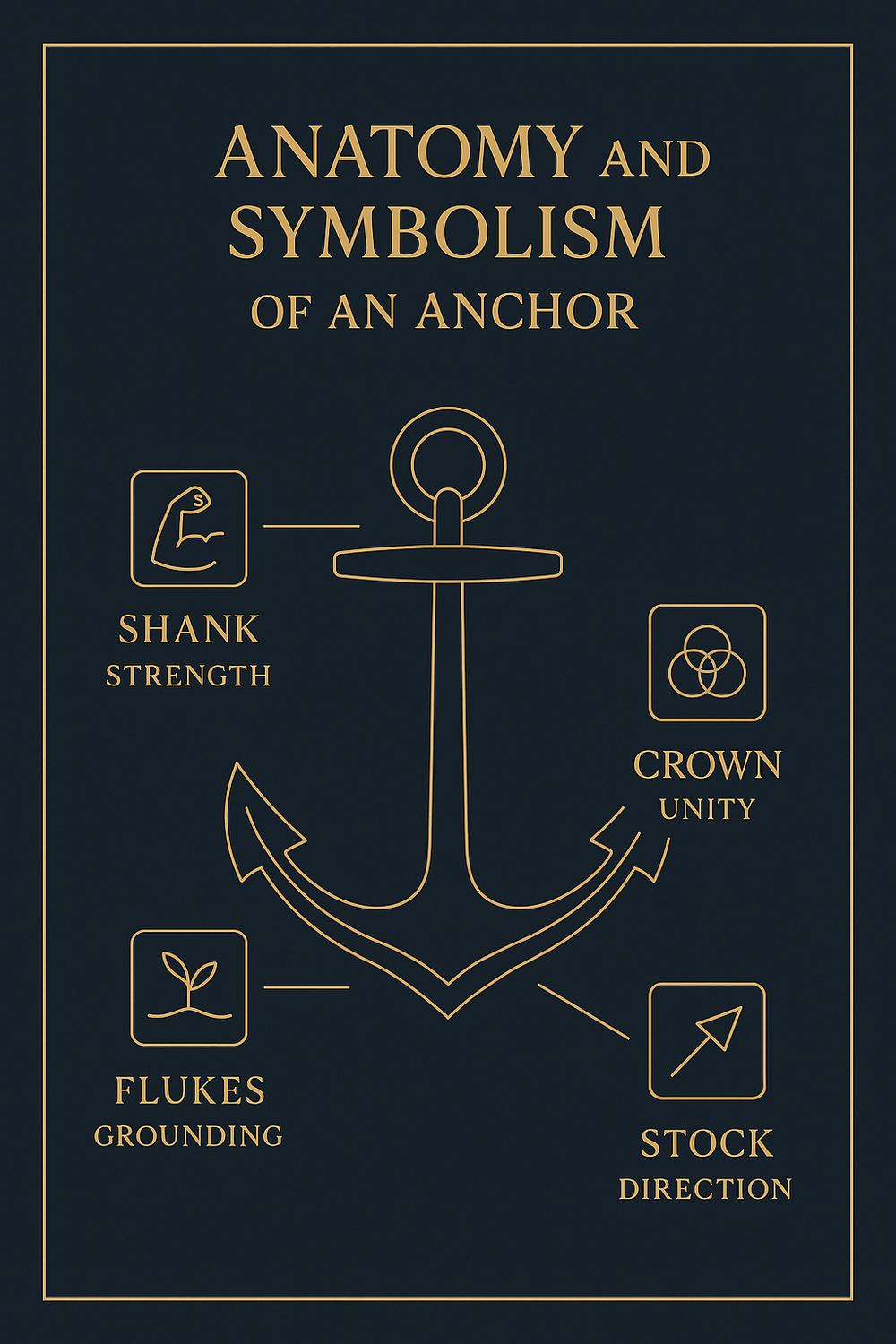
| Anchor Part | Function | Symbolic Meaning |
|---|---|---|
| Shank | Acts as the backbone of the anchor. | Represents strength and resilience. |
| Flukes | Designed to dig into the sea bed and provide holding power. | Symbolize security and grounding. |
| Crown | Connects the shank and flukes. | Denotes connection and unity. |
| Stock | Rolls the anchor into the correct position. | Symbolizes direction and orientation. |
The anchor is a universal symbol of hope and stability. Just as it holds a ship steady even in the stormiest of seas, it has come to represent a grounding force that provides safety and security. In life's turbulent times, an anchor symbol can serve as a reminder of hope, a beacon signaling that we can weather the storm and come out stronger.
Beyond faith and resilience, the anchor has become a widely recognized symbol of romantic and platonic devotion. When paired with a heart — whether in tattoo art, jewelry, or greeting cards — the anchor represents a love that is steady, dependable, and unshaken by hardship. It suggests a partner or relationship that keeps you grounded rather than one that leaves you adrift.
This is also where the phrase "you're my anchor" comes from: describing a person who provides emotional stability, calm, and a sense of home no matter what storms life brings. Much like protective folk symbols such as the hamsa, which is worn to guard against negativity and invite blessing, the anchor-with-heart motif is often chosen precisely because it doubles as both decoration and quiet reassurance — a small, wearable promise of steadiness between two people.
Anchors have been a popular motif in literature and art due to their rich symbolism. From classical works to modern pieces, anchors are often depicted as a sign of safety, hope, and steadfastness. They are used as metaphors to express enduring love, resiliency in the face of adversity, and the human need for a secure base.

Anchors are a popular design for tattoos, thanks to their potent symbolism and classic, timeless look. People often choose an anchor tattoo to represent strength, stability, and a strong foundation — or to remind themselves to stay grounded when life gets turbulent. The specific meaning often shifts depending on what the anchor is paired with.
| Tattoo Variation | Meaning |
|---|---|
| Anchor with Heart | This design often symbolizes love that is both strong and enduring, a love that provides stability and security. |
| Anchor with Roses | A symbol of beauty and love anchored in strength and endurance. |
| Broken Anchor | This can symbolize letting go or moving on from something that was once a source of stability or security. |
| Anchor with Birds | This design can symbolize a well-grounded hope or a sense of freedom and stability. |
There are many ways to incorporate the anchor symbol into your daily life. Whether through fashion, home decor, or personal practice, here are a few suggestions:
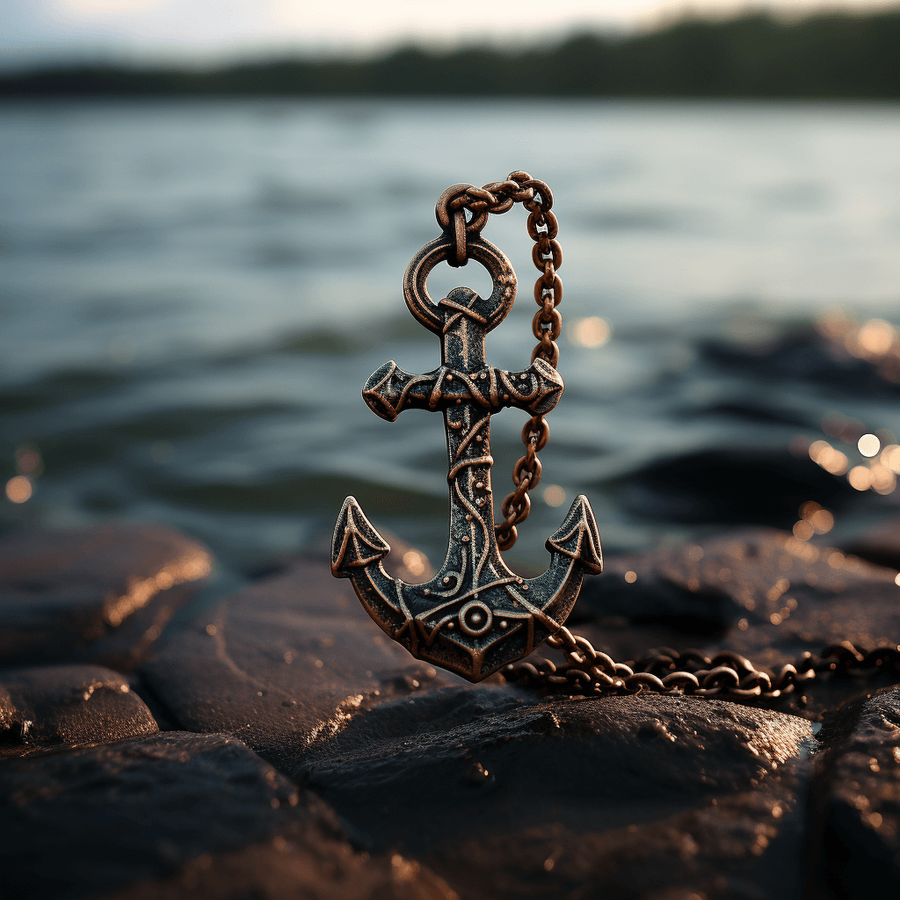
Anchor jewelry carries a deep symbolic meaning, often associated with hope, safety, and stability. Whether you choose to wear an anchor necklace, bracelet, or ring, you carry these symbolic connotations with you wherever you go.
| Jewelry Type | Styling Tip |
|---|---|
| Anchor Necklace | Wear it with a simple, solid color top to let the necklace be the centerpiece of your outfit. |
| Anchor Bracelet | Pair it with a casual outfit for a subtle, symbolic touch to your everyday look. |
| Anchor Ring | Wear it alone or stack it with other rings for a layered look. It can serve as a personal reminder of the qualities you aspire to. |
Given the anchor's practical application in maritime activities, it naturally has a strong presence in nautical traditions. Here are some instances where the anchor symbol plays a significant role:

Despite its largely positive connotations, the anchor symbol isn't without controversy. Here are a couple of examples:
The anchor symbol is steeped in history and multifaceted symbolism. It stands as an emblem of strength, safety, and stability, rooted in its practical application and enriched by religious, spiritual, and cultural interpretations. However, it's crucial to remember that every symbol's meaning is subject to individual perspectives and cultural contexts.
Regardless of the controversies surrounding its usage, the anchor continues to be a beacon of hope and steadfastness for many. So, whether you are inspired to tattoo an anchor on your skin, wear it around your neck, or simply appreciate its historical and symbolic significance, remember that it's the anchor's unwavering ability to keep us grounded that truly makes it special.
An anchor often symbolizes stability, security, and steadfastness to a person. It's a symbol that keeps us grounded and provides a sense of comfort and hope during turbulent times.
In texting, the anchor emoji is usually used to convey a sense of stability, security, or a need to stay grounded. It can also be used in a nautical context or to represent hope.
Yes, a person can be considered an "anchor" if they provide stability, comfort, and a sense of safety in your life. They are someone who keeps you grounded and helps you remain strong during difficult times.
An anchor for our soul often refers to something, or someone, that gives us hope and keeps us grounded in our faith, beliefs, or life purpose. In a religious context, this phrase is often used to describe faith in God or a spiritual principle.
In the Bible, particularly Hebrews 6:19, the anchor is used as a metaphor for hope: "We have this hope as an anchor for the soul, firm and secure." This verse conveys the idea that faith in God provides stability and security, much like an anchor does for a ship.
An anchor with a heart is a symbolic pairing that represents the connection of love with stability. It can signify enduring love or a stable, dependable relationship.
An angel with an anchor often represents hope, faith, and salvation. The angel can represent a messenger or servant of God, while the anchor stands for hope and stability in faith.
In the context of God's word, particularly in Christianity, the anchor symbolizes hope, faith, and trust in God. It's an emblem that serves as a reminder of the steadfastness and security that comes from believing in God's promises.
The anchor cross, also known as a mariner's cross, is a Christian symbol that combines a cross and an anchor. It represents Jesus' crucifixion and Christians' hopeful faith, and it's often used to symbolize steadfast faith in Jesus.
In the book of Hebrews, the anchor is used as a symbol of hope and faith. Hebrews 6:19 says that hope is "an anchor for the soul, firm and secure," conveying that hope in God's promises provides believers with steadfastness akin to an anchor for a ship.
In ancient Greek culture, the anchor symbol was associated with the sea god Poseidon and was a symbol of naval power. In early Christianity, which was heavily influenced by Greek culture, the anchor was also used as a hidden symbol of the cross.
The anchor in Roman symbolism was closely related to naval activities, representing safety and solidity, and was often carved on tombstones and linked to the sea god Neptune. Early Christians in the Roman Empire also used the anchor as a disguised cross and as a marker for secret meeting places.
For women, an anchor tattoo commonly represents inner strength, independence, and emotional stability, often softened with feminine details like flowers, hearts, or delicate script. It can also mark a meaningful relationship, a loved one lost at sea or in the navy, or a personal reminder to stay grounded through change.
For men, an anchor tattoo has traditionally symbolized strength, stability, and a connection to naval or seafaring heritage, historically worn by sailors to mark having crossed the Atlantic. Today it's also chosen simply as a personal emblem of resilience and steadfastness through hardship.
When someone calls you their anchor, they mean you provide them with emotional stability, calm, and a sense of security amid life's ups and downs. It's a term of deep affection, suggesting that your presence keeps them grounded the way an anchor keeps a ship from drifting.
Discover the caduceus meaning: Hermes' winged staff of two serpents, its Greek origins, medical mix-up with Asclepius, and spiritu…

Discover what the Om symbol truly means—its Hindu, Buddhist, and Jain roots, dream symbolism, and how to use it in daily life.

Discover what the compass symbolizes across cultures — from spiritual guidance and moral direction to finding your true life purpo…