 Know
Know
Animal Symbolism
Snake Symbolism: Spiritual Meaning & Significance
Discover what snakes truly symbolize spiritually—transformation, healing, danger, and rebirth—across cultures, dreams, and everyda…
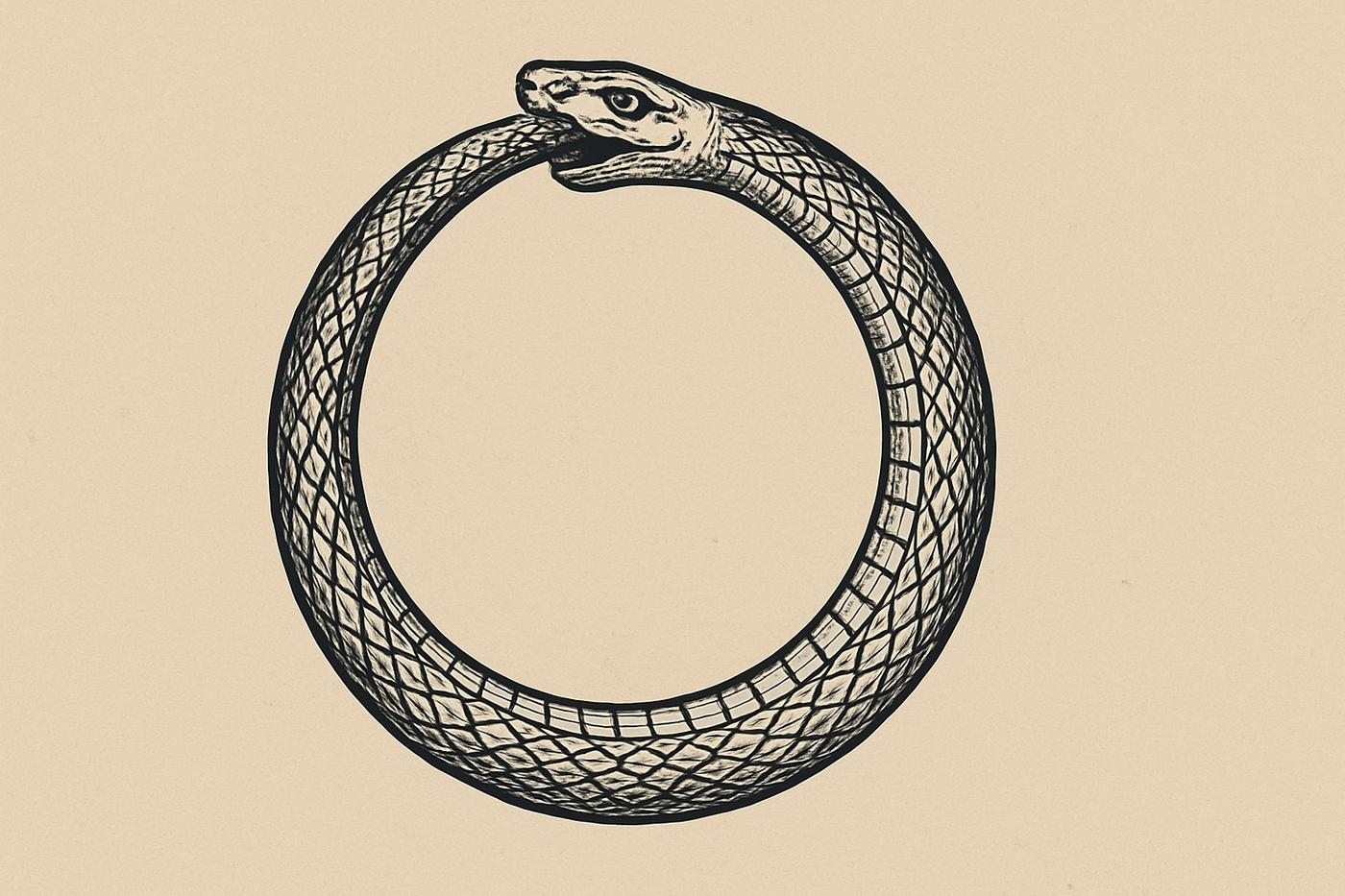
It’s one of the oldest symbols in human history—a serpent curled in a perfect circle, devouring its own tail. Simple at first glance, yet endlessly profound. This is the ouroboros: a symbol of infinity, rebirth, and the unbreakable cycle of life and death.
But what does the snake eating its own tail really mean? And why has it endured across so many cultures, religions, and philosophies for over 3,000 years?
The ouroboros represents more than just an endless loop. It reflects the way life devours itself and creates again—a self-sustaining universe. In modern terms, it’s the visual definition of “what goes around comes around.”
The name “ouroboros” comes from ancient Greek: oura (tail) and bora (eating)—literally, “tail-eater.” But the symbol itself predates Greek culture by over a thousand years.
Across each culture, the message was the same: life renews itself, endlessly.
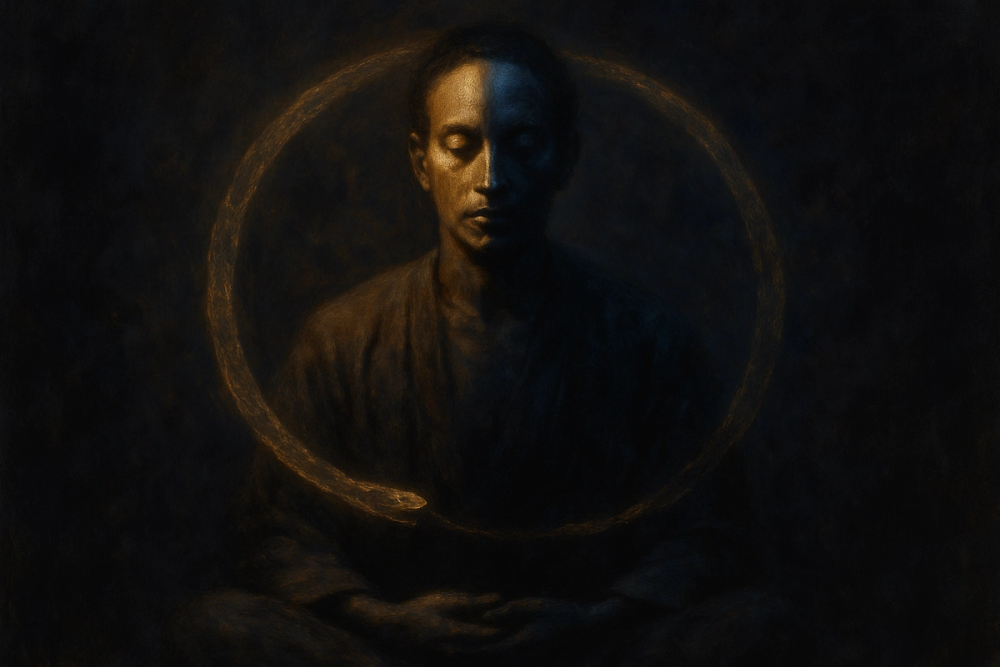
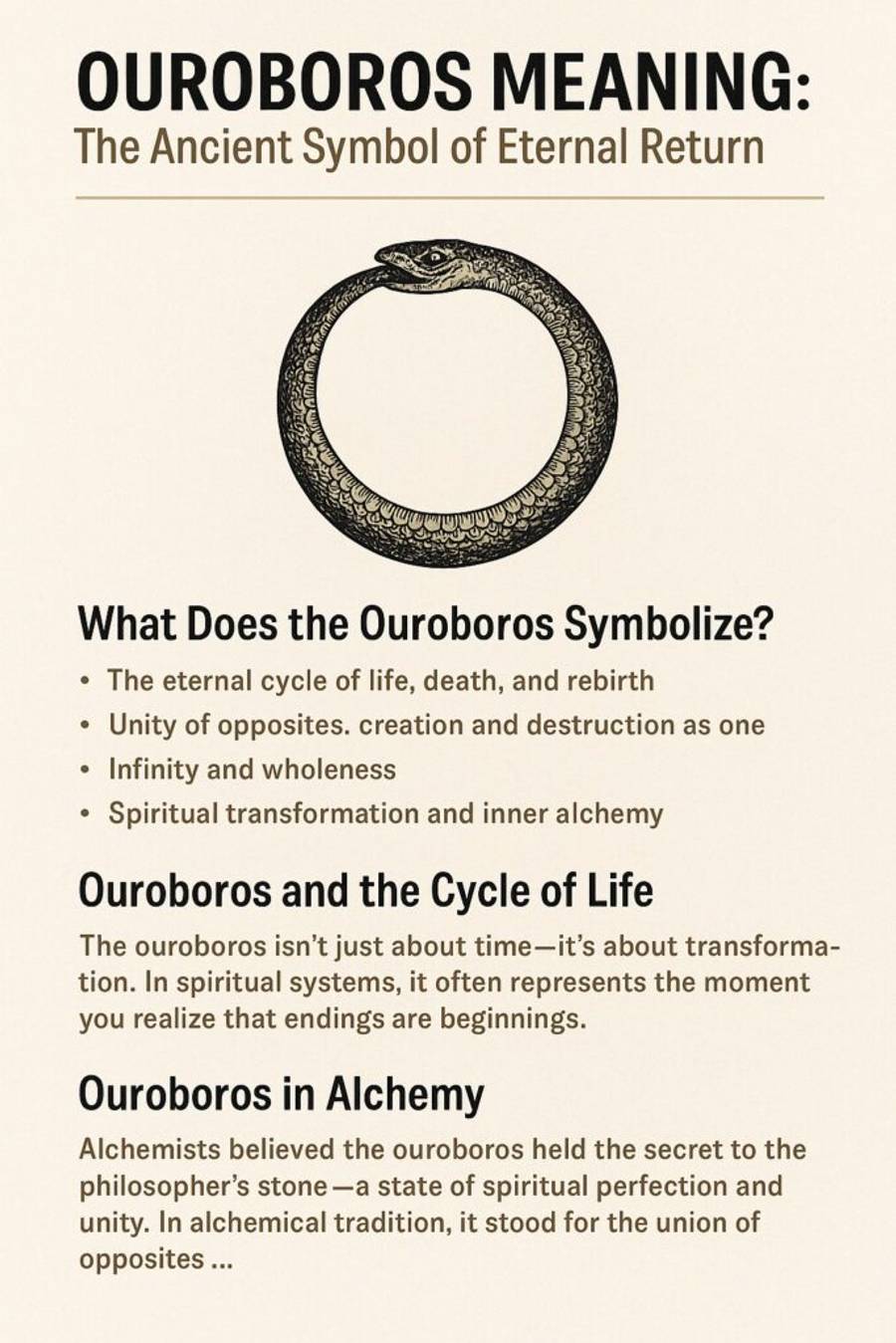
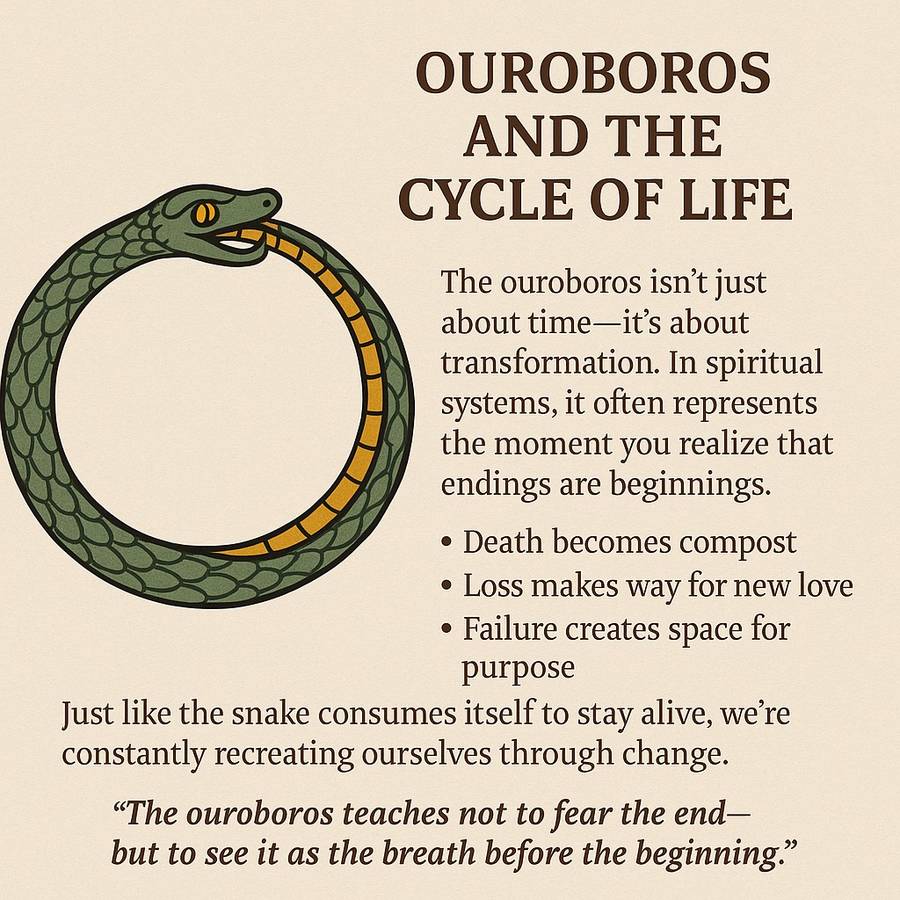
The ouroboros isn’t just about time—it’s about transformation. In spiritual systems, it often represents the moment you realize that endings are beginnings.
Death becomes compost. Loss makes way for new love. Failure creates space for purpose. Just like the snake consumes itself to stay alive, we’re constantly recreating ourselves through change.
“The ouroboros teaches not to fear the end—but to see it as the breath before the beginning.”
This is especially true in personal growth, shadow work, and healing. When you let go of old versions of yourself, you’re not dying—you’re evolving. That’s the essence of the ouroboros: transformation within continuity.
Of all its uses, the ouroboros meaning in alchemy may be the most fascinating. Alchemists believed the ouroboros held the secret to the philosopher’s stone—a state of spiritual perfection and unity.
One of the most famous images of the ouroboros comes from the 2nd-century text Chrysopoeia of Cleopatra. There, the snake encircles the words:
“The All is One.”
In alchemical tradition, this symbol stood for the union of opposites: fire and water, masculine and feminine, life and death. It was about merging everything into a single, eternal truth. The ouroboros became a visual mantra for the transformative process—both in metal and in spirit.
Today, the ouroboros meaning alchemy still resonates with anyone walking a path of self-transformation, spiritual practice, or even psychological healing.
Can a snake eating its own tail symbolize love? Surprisingly—yes. The ouroboros meaning in love centers around the idea of relationships as ever-evolving cycles of growth, death, and renewal.
In deep, soul-based relationships, you’re constantly shedding layers of self and rediscovering one another. You don’t “complete” someone—you mirror their transformation. This is the ouroboros at its core: two people growing, falling apart, and choosing to come back together—stronger each time.
That’s why you’ll often see the ouroboros used in wedding rings or matching tattoos. It represents not perfection, but eternal commitment to renewal. Love that evolves, adapts, and doesn’t fear the end of old dynamics.
At a glance, the ouroboros and the infinity sign might seem interchangeable. But their meanings—while related—have subtle differences worth noting.
While the infinity symbol expresses a continuous state, the ouroboros infinity meaning speaks to cycles within the infinite—where destruction is not the opposite of creation, but part of it.
Infinity is a concept. Ouroboros is a story.
The ouroboros appears in many ancient cultures, often reimagined but rooted in the same idea—the world renewing itself through itself.
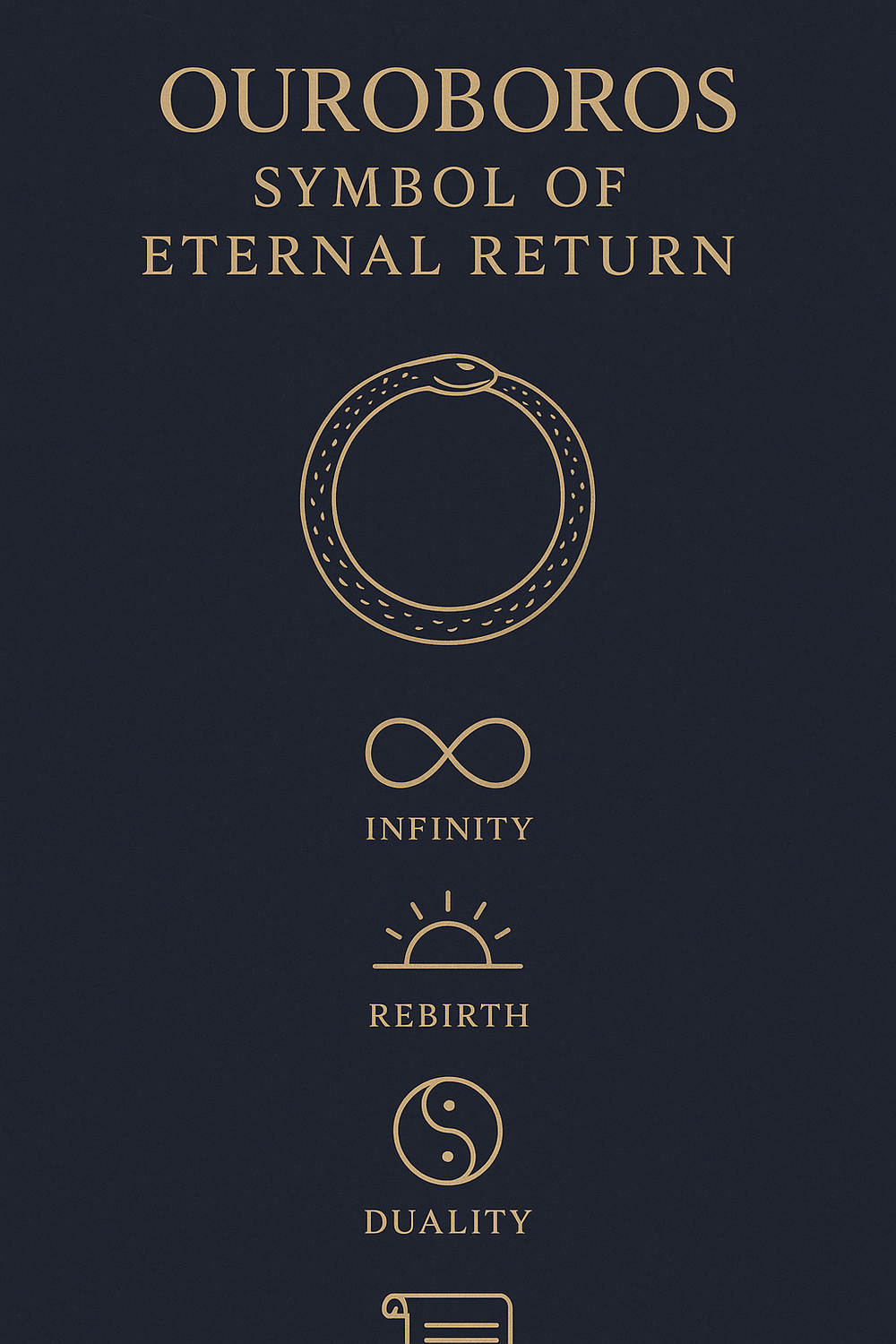
Across time and cultures, the core message repeats: what dies is not gone—it becomes.
Swiss psychologist Carl Jung saw the ouroboros as a powerful archetype of the individuation process—where the conscious and unconscious mind spiral into unity.
He believed the image represented a person’s journey to become whole: embracing shadow, confronting cycles of pain, and integrating all parts of the self.
“The ouroboros is a dramatic symbol for the integration and assimilation of the opposite, i.e. of the shadow.” – C.G. Jung
From a psychological perspective, the ouroboros is not just cosmic—it’s personal. It’s about owning your evolution, even the messy, cyclical parts.
The ouroboros meaning centers around eternal cycles—life, death, rebirth—as well as wholeness, infinity, and spiritual transformation.
The ouroboros meaning love represents evolving relationships—ones that grow, break, renew, and deepen. It’s a symbol of lasting, regenerative love.
In alchemy, the ouroboros represents the union of opposites and the process of turning lead (the base self) into gold (the higher self). It’s the core symbol of transformation.
Not quite. While both represent continuity, the ouroboros infinity meaning adds life, transformation, and spiritual renewal to the concept of eternity.
It’s a reminder of our inner cycles—who we’ve been, who we’re becoming, and the peace found in embracing all versions of ourselves.
Discover what snakes truly symbolize spiritually—transformation, healing, danger, and rebirth—across cultures, dreams, and everyda…
Discover what raven symbolism means - from Norse gods to Native creator myths, dreams, omens, and how to respond when one crosses …
Discover what the eagle truly symbolizes spiritually — vision, freedom, divine messages, myth, and dream meaning explained.