Symbols
33 Symbols of Friendship and What They Truly Mean
Discover 33 powerful symbols of friendship — from the Claddagh ring to yellow roses — and the loyalty, trust, and love each one re…
 KnowMastery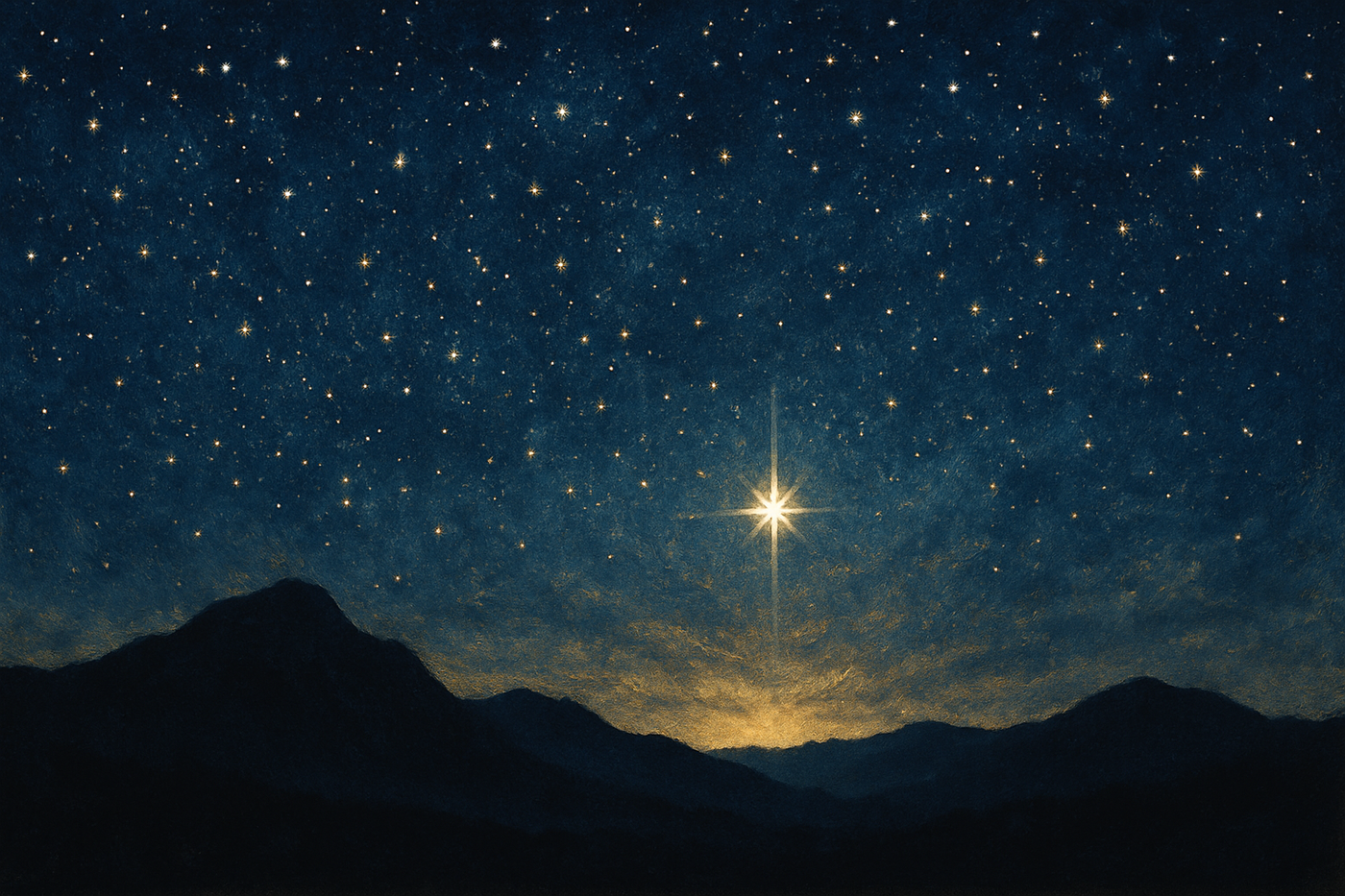
A star symbolizes guidance, hope, and destiny — a fixed point of light that helps travelers find their way, reminds the hopeless that darkness is temporary, and represents the unique path each soul is meant to walk. Nearly every civilization has looked up at the night sky and read stars as messages: from sailors steering by the North Star to ancient priests mapping the fate of kings. At its core, the star is humanity's oldest symbol of orientation — both literal and spiritual.
Think of the last time you felt completely lost — in a decision, a relationship, a chapter of your life with no clear map. Now imagine looking up and finding one steady point of light that hadn't moved, wouldn't move, no matter how dark the sky became. That is the emotional core of star symbolism: something constant when everything else feels uncertain.
Long before GPS, before compasses, before written language, human beings survived by trusting the stars. That trust never really left us — it just changed shape, from ships crossing oceans to the tattoos, jewelry, and quiet wishes we still make on a falling star tonight.
Stars appear in mythology, religion, and folk tradition almost universally as symbols of light in darkness. This single idea branches into several related meanings:
The meaning of a star shifts depending on who is looking up at it. Here are some of the clearest historical threads.
The Egyptians believed the imperishable circumpolar stars — those that never set — were the souls of pharaohs who had achieved eternal life. The sky goddess Nut was depicted swallowing the sun each evening and giving birth to the stars each night, linking the night sky directly to death, rebirth, and immortality. Star charts were even painted on the ceilings of royal tombs to guide the deceased toward the afterlife.
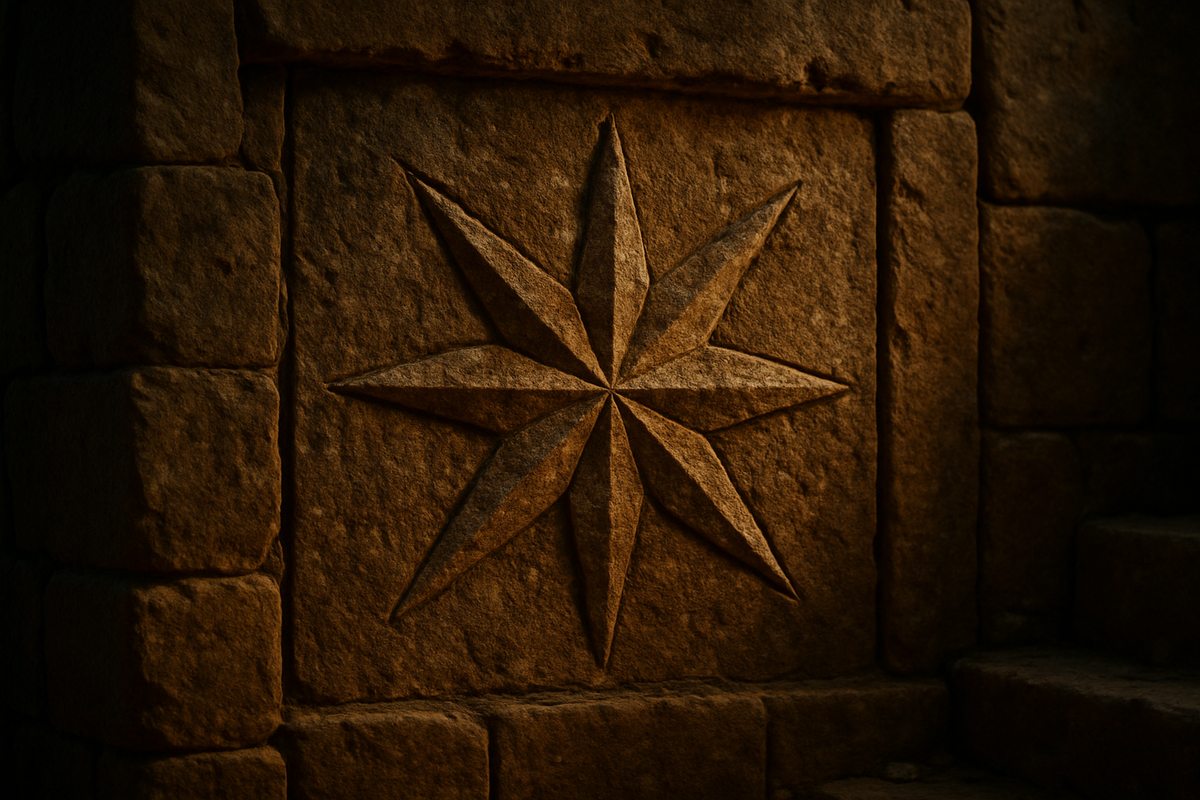
In Babylon, the eight-pointed star represented Ishtar (Inanna), goddess of love, war, and the planet Venus. Her star was carved into temple walls and boundary stones as a mark of divine protection and power — one of the earliest recorded uses of the star as a protective emblem, a role stars still play in modern amulet jewelry.
Among the Lakota and Blackfeet nations, the Morning Star (the planet Venus at dawn) symbolizes renewal, courage, and spiritual awakening, and appears on ceremonial star quilts gifted at births, weddings, and funerals. The star quilt tradition transformed European trade fabric into a deeply Indigenous symbol of honor and hope.
In Christian tradition, the Star of Bethlehem guided the Magi to the newborn Christ, making the star a permanent symbol of divine guidance toward truth. It remains one of the most recognizable Catholic symbols displayed during Advent and Christmas, often placed atop trees as a literal "guiding light."
The six-pointed Star of David (Magen David), formed by two interlocking triangles, became a defining symbol of Jewish identity from the medieval period onward and now sits at the center of Israel's national flag, representing protection, unity, and covenant.
The star and crescent moon, adopted widely by the Ottoman Empire, became associated with Islamic identity across many nations' flags. While not originally religious in origin, the pairing came to represent sovereignty, faith, and the light that guides believers through the night of ignorance.
In Chinese astronomy and Taoist cosmology, the Pole Star (Polaris) was seen as the seat of the Celestial Emperor, the fixed center around which all other stars — and by extension, the whole empire — revolved. This mirrors a broader theme in Chinese philosophy, where a fixed center and moving elements together sustain cosmic order and balance.
Beyond historical religion, stars carry rich meaning in esoteric and modern spiritual practice.
The pentagram is one of the oldest continuously used symbols in the world, traced back over 4,000 years to Mesopotamia. In modern Wiccan and Pagan practice, its five points represent the elements — earth, air, fire, water, and spirit — with the topmost point symbolizing spirit governing the physical elements below it. Worn upright inside a circle (a pentacle), it is considered a symbol of protection and balance, not the dark connotation popular culture sometimes assigns it.
Known as the Elven Star or Faery Star in modern Pagan traditions, the seven-pointed star is linked to the seven classical planets, the seven chakras, and the seven days of creation, making it a symbol of mysticism, magic, and spiritual completeness.
Because Polaris appears almost motionless while the rest of the sky rotates around it, it became humanity's most trusted navigational marker — especially for sailors and, later, for enslaved people escaping along the Underground Railroad in 19th-century America, who followed the "Drinking Gourd" constellation north toward freedom. This same idea of a steady point holding you firm through turbulent conditions echoes the symbolism explored in anchor meaning, another emblem of hope and stability.
Dream interpretation traditions generally treat stars as positive omens, though their condition in the dream matters:
As with most symbolic dream imagery, the meaning is deeply personal — much like the protective, guiding imagery found in dream catcher symbolism, where nighttime visions are filtered between guidance and warning.
Numerology assigns meaning to the number of points on a star, tying each shape back to deeper symbolic patterns. A five-pointed star reflects the number 5 — change, freedom, and human experience. A six-pointed star reflects the number 6 — harmony, balance, and union of opposites. An eight-pointed star reflects the number 8 — infinity, abundance, and cosmic order. If you're drawn to a particular star shape, exploring the number behind it through numerology can reveal why it resonates with your personal path.
| Star Type | Points | Primary Symbolism | Cultural Origin |
|---|---|---|---|
| Pentagram | 5 | Elements, protection, balance | Mesopotamia / Wicca |
| Star of David | 6 | Unity, covenant, protection | Judaism |
| Elven/Faery Star | 7 | Mysticism, magic, chakras | Modern Paganism |
| Star of Ishtar | 8 | Love, power, divinity | Mesopotamia |
| North Star (Polaris) | Single point | Guidance, steadfastness, purpose | Global navigation traditions |
| Nautical Star | 5, two-toned | Safe return, protection at sea | Sailors, tattoo tradition |
| Star of Bethlehem | Radiant, multi-point | Divine guidance, revelation | Christianity |
Star symbolism isn't just something to admire in mythology — it can become a personal practice for grounding hope and direction:
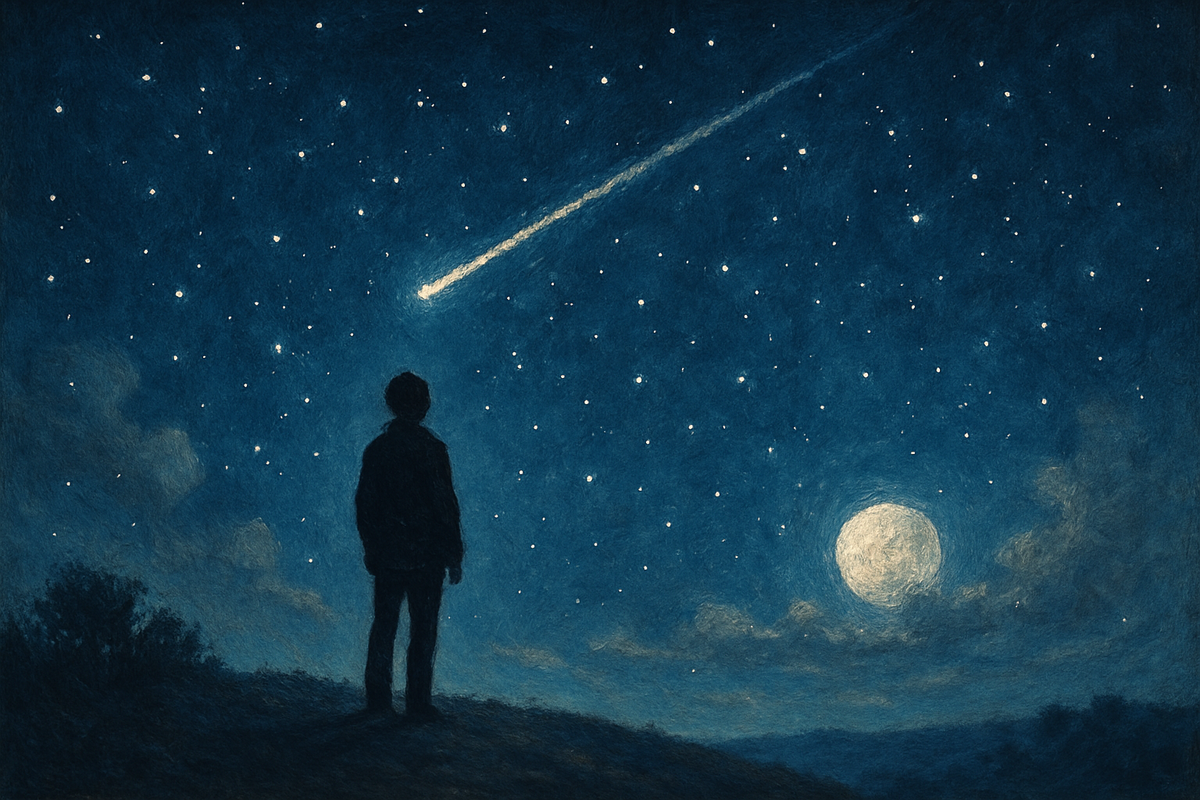
A shooting star traditionally symbolizes a wish about to come true, a sudden burst of change, or a fleeting opportunity that requires quick action. Because meteors burn brightly for only a moment, they're often read as a reminder to seize chances before they pass.
Dreaming of bright, clear stars usually signals hope, guidance, and confidence in your current path, while dim or fading stars can point to uncertainty or lost direction. A falling star in a dream often represents an approaching change or a wish close to fulfillment.
The five-pointed star, or pentagram, represents the five elements — earth, air, fire, water, and spirit — with spirit governing the rest when the star points upward. In many spiritual traditions it symbolizes protection, balance, and the union of body and soul.
Polaris, the North Star, appears almost fixed in the sky while everything else rotates around it, making it the most reliable navigational marker for centuries of sailors and travelers. This steadiness made it a lasting symbol of constancy, purpose, and trustworthy direction during uncertain times.
Discover 33 powerful symbols of friendship — from the Claddagh ring to yellow roses — and the loyalty, trust, and love each one re…
In this enlightening journey, we are set to explore the profound depth and beauty encapsulated in 59 symbols of hope that grace ou…
Discover 50+ symbols of kindness and compassion — from the heart and dove to Guan Yin and the lotus — and what each one truly mean…