
Symbols
Rainbow Symbolism: Hope, Promise & Transformation
Discover what a rainbow truly symbolizes—hope, divine promise, and spiritual transformation—across mythology, dreams, and modern c…
 KnowMastery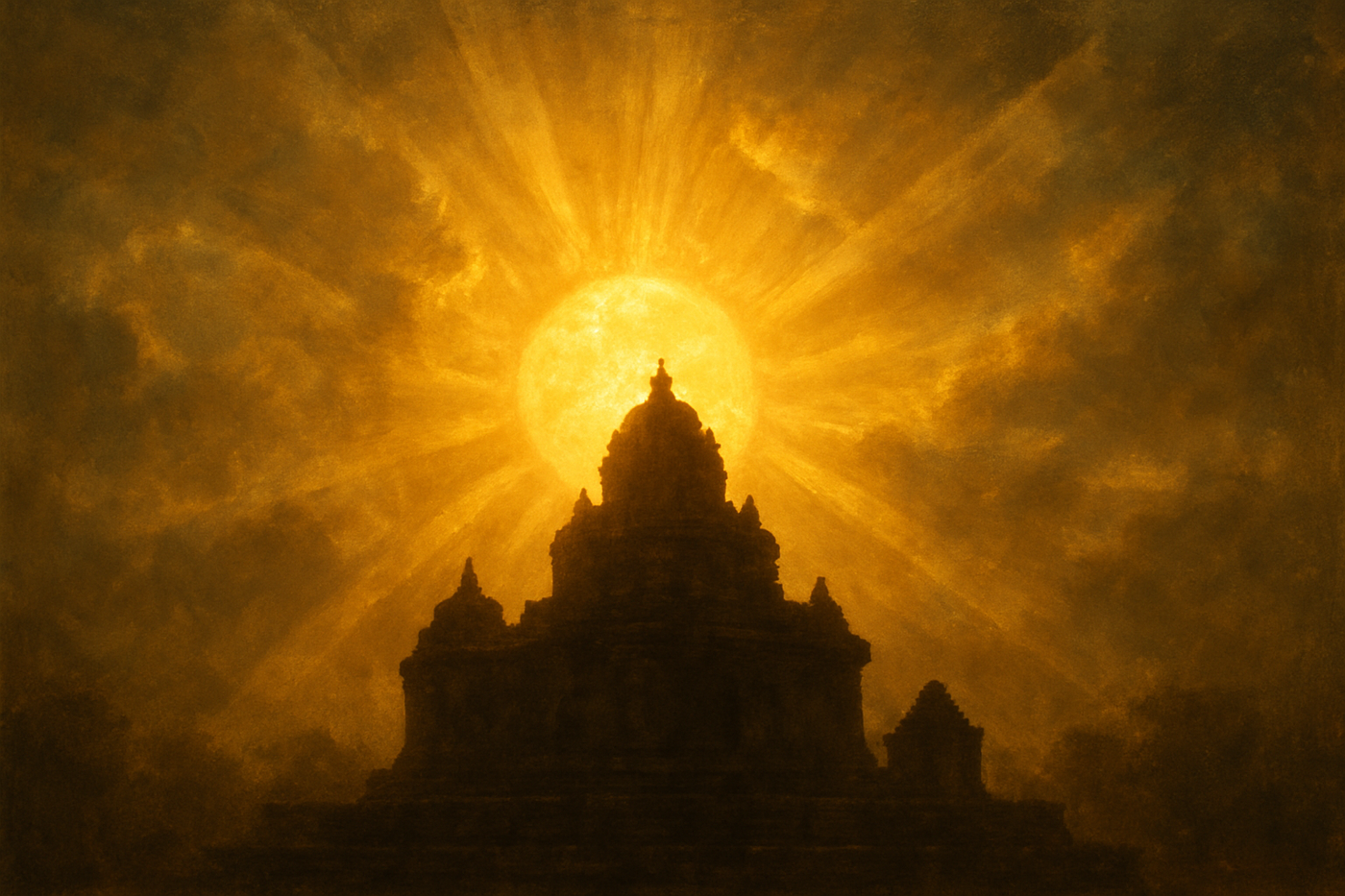
The sun symbolizes life force, illumination, power, and divine consciousness. Across nearly every ancient culture, it represented the masculine principle of energy, vitality, and truth — the force that dispels darkness, marks time, and sustains all living things. As a symbol, the sun bridges the physical and the spiritual: it is both the literal star that grows our crops and the archetype of enlightenment, kingship, and the eternal self.
Close your eyes and picture the first sunrise you truly remember watching — maybe from a car window, a mountaintop, or a childhood bedroom. There is something in that gold light that speaks before words do. It says: you are seen, you are warmed, you are alive.
Humans have chased that feeling since before recorded history. We carved sun-faces into stone, built temples aligned to solstices, and crowned our kings with rays of gold. The sun never asked to be worshipped — it simply kept rising. And maybe that quiet, relentless faithfulness is exactly why it became the most universal symbol of power and life the world has ever known.
At its core, the sun represents four intertwined ideas that appear again and again across mythology, religion, and psychology:
Psychologically, Carl Jung associated the sun with the conscious self and the animating force of the psyche — the part of us that seeks growth, individuation, and awareness. In this sense, the sun is not just a sky object but an inner symbol: the spark of selfhood pushing toward wholeness, much like the balance explored in Yin Yang symbolism, where the sun often represents the active, yang half of existence.
Nearly every ancient civilization built a mythology around the sun, though the details differ in fascinating ways.
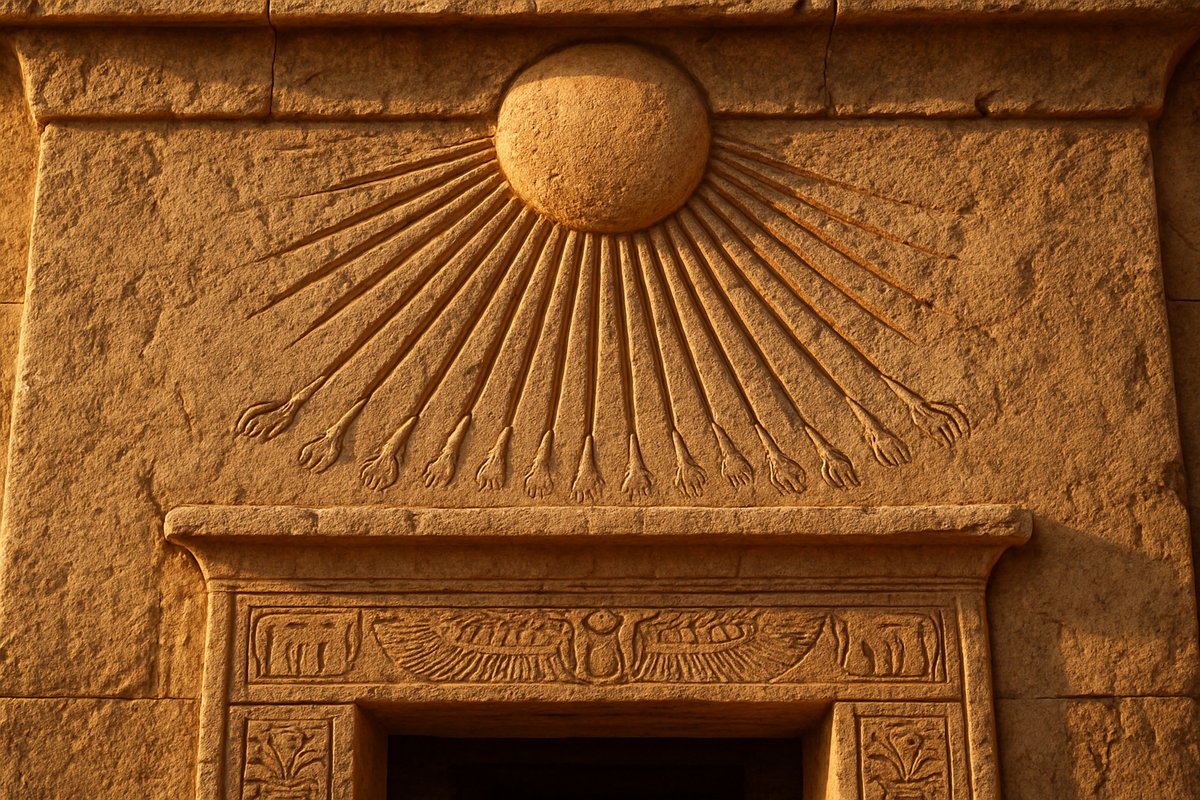
In Egyptian religion, Ra was the sun god who sailed across the sky in a solar barque each day and journeyed through the underworld each night, battling the serpent Apep to rise again at dawn. This daily death-and-rebirth cycle made the sun the central metaphor for eternal life, which is why pharaohs were considered living sons of Ra and why solar imagery covers Egyptian tombs, obelisks, and temple walls at Karnak.
The Greeks personified the sun as Helios, who drove a fiery chariot across the heavens, later merging in cultural memory with Apollo, god of light, music, prophecy, and reason. The Romans adopted this solar reverence directly into Sol Invictus — "the Unconquered Sun" — an official state cult in the 3rd century CE whose festival date, December 25th, would later influence the timing of Christmas.
For the Aztecs, Tonatiuh was the fifth sun, a deity requiring blood offerings to keep rising — a belief so central that entire calendrical and sacrificial systems revolved around solar survival. The Inca Empire went further, considering the emperor a direct descendant of Inti, the sun god, and building the Coricancha temple in Cusco specifically to catch and reflect sunlight off gold-plated walls.
In Shinto belief, Amaterasu is the sun goddess from whom the Japanese imperial line claims descent, and her mythological hiding in a cave — plunging the world into darkness until coaxed out by other deities — remains one of the most famous solar-return myths outside Egypt. This legacy still appears today on Japan's national flag.
Many Plains Nations, including the Lakota and Cheyenne, hold the Sun Dance, a sacred multi-day ceremony of renewal, sacrifice, and communal prayer performed at the height of summer to honor the sun's life-giving power, often involving fasting, drumming, and a central sacred pole representing the connection between earth and sky. The sun also appears as a central motif in woven and beaded art, much like the protective symbolism found in the dream catcher's spiritual meaning, both reflecting a worldview where cosmic forces actively participate in daily human life.
Beyond mythology, the sun holds deep meaning in mysticism, astrology, and numerology.
| Culture | Deity/Symbol | Core Meaning |
|---|---|---|
| Ancient Egypt | Ra | Eternal life, kingship, cosmic order |
| Ancient Greece | Helios / Apollo | Reason, prophecy, artistic inspiration |
| Ancient Rome | Sol Invictus | Unconquerable imperial power |
| Inca Empire | Inti | Divine kingship, agricultural abundance |
| Japan (Shinto) | Amaterasu | National origin, purity, imperial lineage |
| Aztec Empire | Tonatiuh | Sacrifice, cosmic survival, time cycles |

Dreaming of the sun is generally considered a positive omen, though its meaning shifts with context:
Dream analysts generally agree that solar dreams reflect the dreamer's relationship with their own vitality, identity, and willpower — the same inner "self" energy that anchors so much of the sun's waking symbolism.
You don't need to build a temple to Ra to invite solar energy into your life. Consider these grounded practices:
The sun frequently merges with other sacred symbols. Solar rays surround saints in Christian iconography, appear behind the Virgin Mary in Immaculate Conception imagery, and radiate from crosses in early medieval art, a visual language of divine glory borrowed almost directly from older solar cults. In protective folk traditions, sun discs were carved onto doorways, cradles, and amulets to ward off evil, playing a similar guardian role to symbols like the Hamsa hand or the branching, ever-renewing Tree of Life, both of which channel cosmic protection into everyday objects.
No other symbol unites science and spirit quite like the sun. It is measurable, physical, and essential to biology — yet it has never stopped being sacred. From Ra's nightly battle against darkness to a tarot card promising joy after hardship, the sun's message has remained remarkably consistent for over five thousand years: darkness is temporary, and light always returns.
Spiritually, the sun represents consciousness, truth, and the life force that animates the soul. It is often seen as a symbol of the higher self, enlightenment, and the divine spark present within every living being.
Meanings vary by culture but share common threads: Egyptians saw the sun as Ra, god of eternal life; the Japanese trace their imperial line to the sun goddess Amaterasu; and the Inca considered their emperor a direct descendant of the sun god Inti. Despite different names, all associate the sun with divine authority and life-sustaining power.
Dreaming of a bright, rising sun typically symbolizes new beginnings, clarity, and renewed confidence, while a setting or hidden sun can point to closure, rest, or suppressed potential. Overall, solar dreams tend to reflect your relationship with your own vitality and sense of identity.
Yes, in many traditions the sun is considered a powerful good-luck symbol associated with success, protection, and vitality. Sun motifs have historically been used in amulets, doorway carvings, and jewelry specifically to invite positive energy and ward off darkness or misfortune.
Discover what a rainbow truly symbolizes—hope, divine promise, and spiritual transformation—across mythology, dreams, and modern c…
Discover what the spiral symbolizes across cultures — growth, evolution, and the inward spiritual journey — plus dream meanings an…

Symbols for Brotherhood Welcome, dear readers, to a journey where we explore the profound depth and unity encapsulated in various …