Symbols
Star Symbolism: Guidance, Hope & Destiny Explained
Discover what stars truly symbolize—guidance, hope, and destiny—across cultures, dreams, and spiritual traditions, plus how to use…
 KnowMastery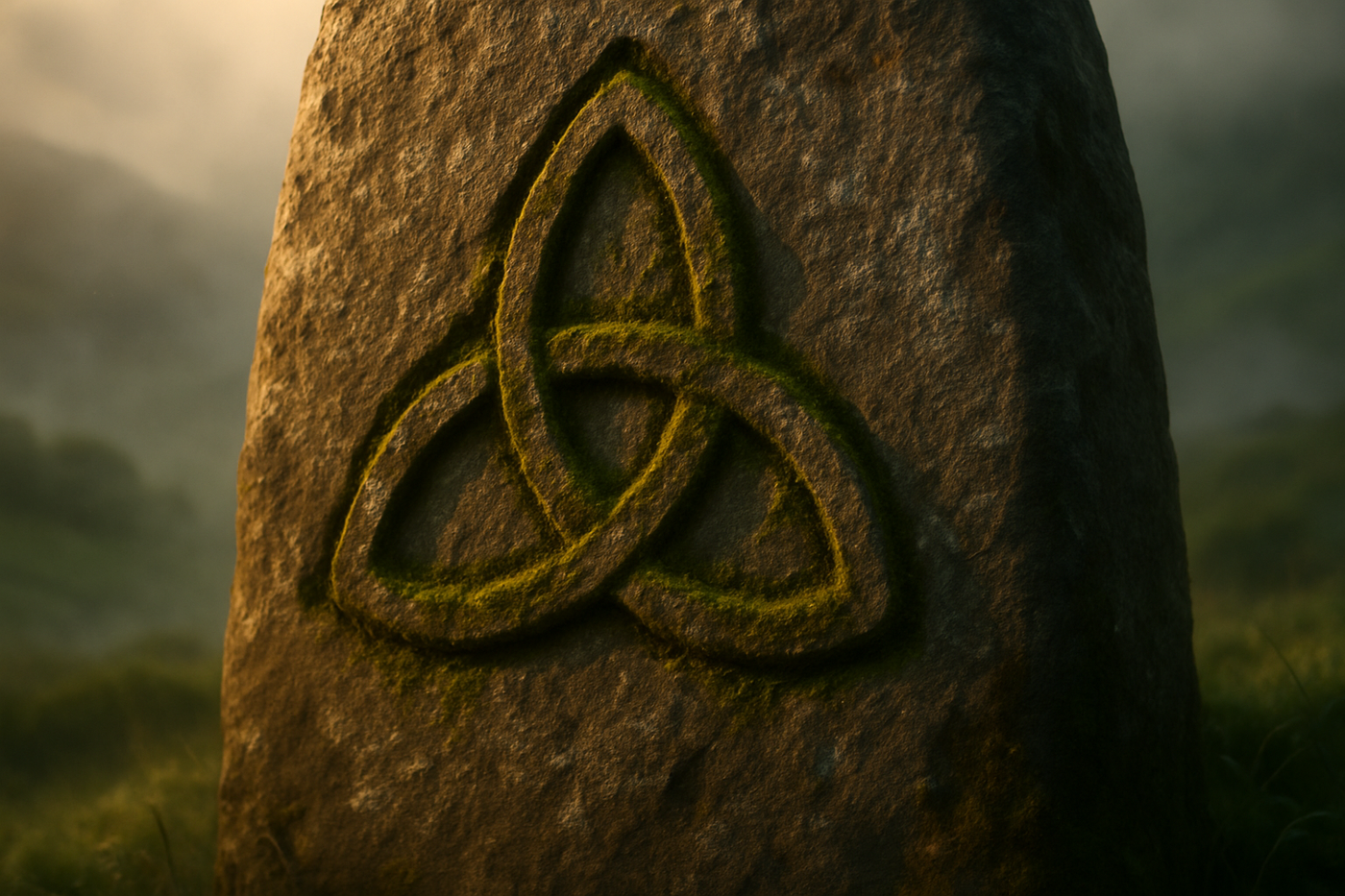
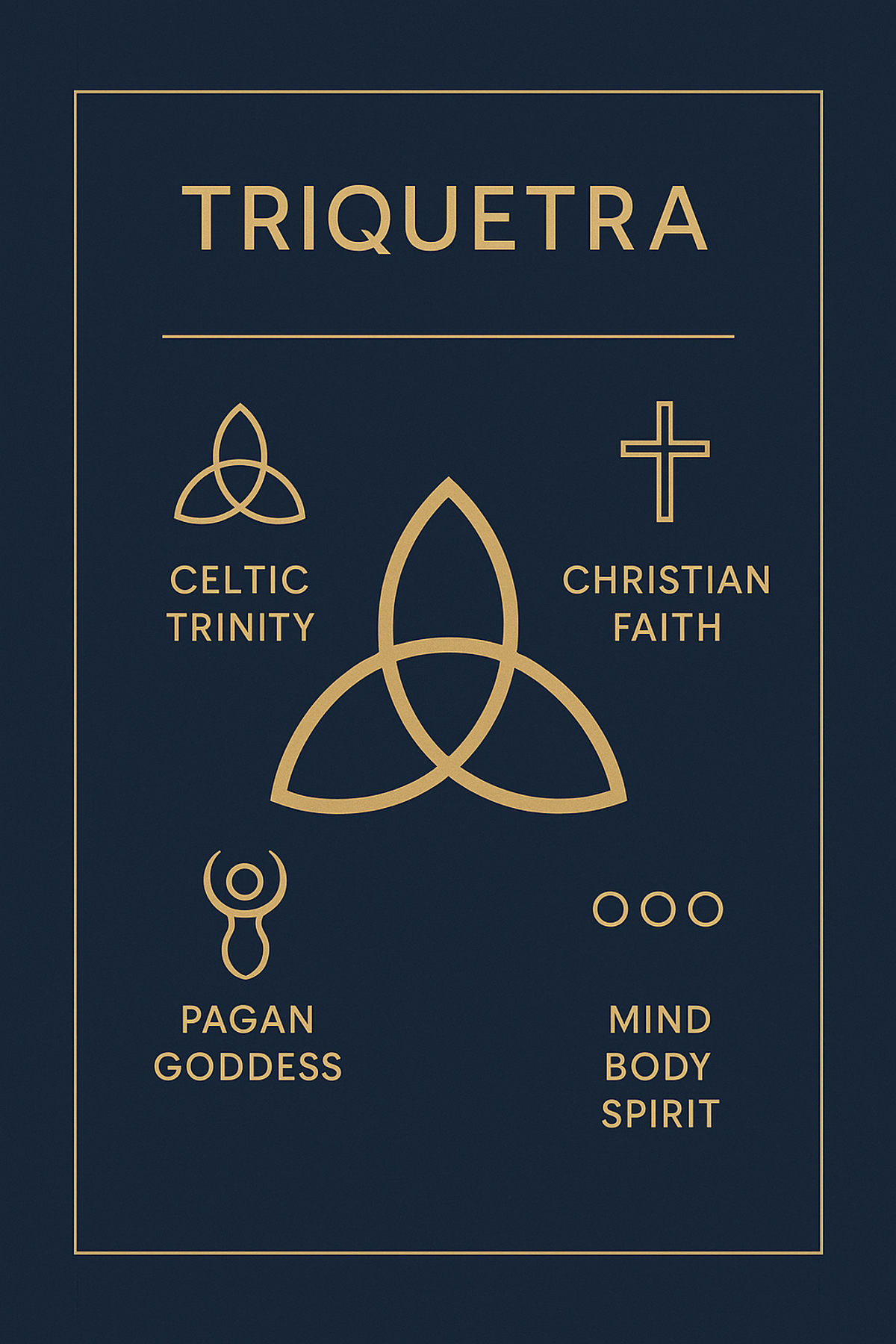
A triquetra is a three-pointed Celtic symbol made of three overlapping arcs that interlock into one continuous, unbroken line. It represents the unity of three connected things — most commonly body, mind, and spirit, or the Christian Holy Trinity — bound together in an eternal loop with no clear beginning or end.
Long before it appeared on jewelry or television screens, this quiet knot of three loops was carved into stone by people who had no writing system, only symbols to carry their deepest beliefs forward. There is something almost hypnotic about tracing its lines with your finger, watching how each arc feeds into the next without ever truly stopping.
Maybe that is why the triquetra still finds its way onto rings, pendants, and tattoo skin centuries later. It feels like a small piece of ancient memory, holding a promise that some things - love, faith, family - are stronger when they exist as three intertwined parts rather than one lonely line.
The word triquetra comes from the Latin tri (three) and quetrus (cornered), literally meaning "three-cornered." Structurally, it is formed by three vesica piscis shapes (the almond-shaped overlap created when two circles intersect), arranged so their curves interlock into a single, continuous line with no start or finish.
Triquetra-like carvings exist on Nordic runestones and Celtic stone crosses dating back over 1,000 years; claims that the same interlaced design appears on ancient Indian temple carvings are not supported by reference sources and should be treated as unverified. Its earliest known appearances predate Christianity entirely, showing up on pottery, coins, and monuments across Northern Europe as a general symbol of trinity and eternal connection - long before it was adopted into any specific religious tradition.
Although the triquetra is not exclusively Celtic in origin, it became deeply woven into Celtic art, particularly in illuminated manuscripts like the Book of Kells and the earlier Book of Durrow, both created by Irish monks in the centuries around 700-800 CE. The Celts held the number three in extraordinary reverence, believing that triads - three-part groupings - captured the truest expression of a complete idea. That reverence for three as a "complete" or sacred number is not unique to the Celts either; you can see a similar fascination with numerical symbolism explored in our guide to what numerology means and why certain numbers carry spiritual weight across cultures.
This obsession with threes was not superstition alone; it reflected a worldview in which balance required three points of stability, much like a three-legged stool. A symbol with only two parts, like the yin yang balance of opposing forces, expresses duality - but the triquetra expresses something the Celts considered even more complete: unity achieved through three.
Christianity spread through Ireland from the 5th century, and in popular tradition monks are said to have reinterpreted existing Celtic symbols like the triquetra for Christian use, though scholars have long debated whether the triquetra was originally a pagan symbol at all or whether its link to the Trinity is a later interpretation. The triquetra became known as the "Trinity Knot," a visual meditation on the Christian doctrine of the Father, Son, and Holy Spirit existing as three distinct persons within one indivisible God.
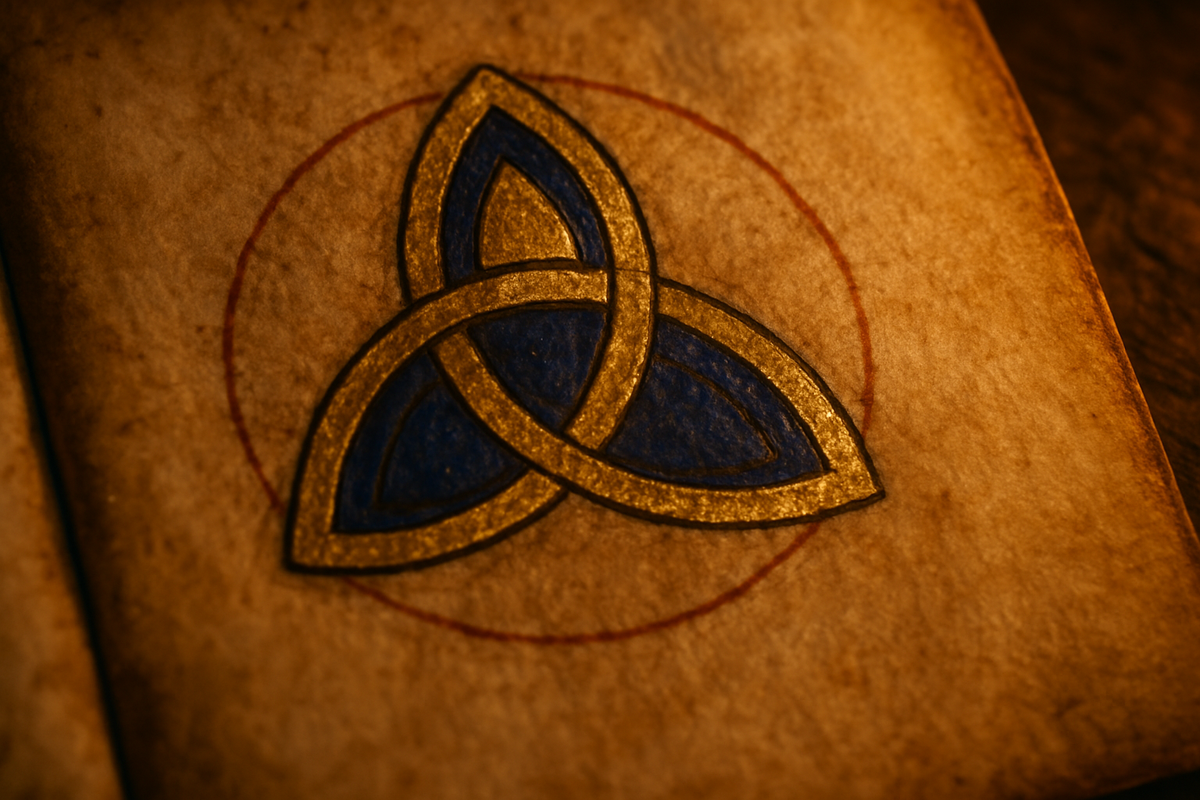
Some versions of the symbol were later encircled by a single unbroken ring, reinforcing the idea of eternal, unbreakable unity between the three divine aspects. This adaptation appears throughout Irish Christian art, on illuminated gospel pages, high crosses, and church stonework, sitting comfortably alongside other sacred emblems discussed in our guide to different types of crosses and their meanings and our broader overview of Catholic symbols and their meanings, which were similarly used to teach doctrine visually to largely illiterate medieval congregations.
Interestingly, a nearly identical three-pointed interlocking shape called the valknut appears in Norse iconography, carved on Sweden's Stora Hammars stones and Denmark's Snoldelev stone, associated with Odin and the passage of fallen warriors into the afterlife. While the valknut is typically made of triangles rather than curved arcs, the conceptual overlap - three interlocking forms representing death, fate, and transition - shows how independently different cultures arrived at similar three-part symbolism to express life's biggest mysteries.
Today the triquetra carries a wide range of personal and spiritual meanings, shaped by the wearer's own beliefs rather than one fixed doctrine. Because its three loops can represent almost any meaningful trio, it has become a flexible, deeply personal symbol.
| Context | Common Meaning |
|---|---|
| Christian faith | Father, Son, and Holy Spirit as one divine trinity |
| Wiccan and Pagan practice | Maiden, Mother, Crone; or Earth, Sea, Sky |
| Personal wellness | Mind, body, and spirit in harmony |
| Family symbolism | Three generations, or love uniting three people |
| General spirituality | Past, present, and future connected in one eternal loop |
Because the lines never break, many people also read the triquetra as a symbol of protection - an unbroken boundary that wards off negative energy, similar in intent to protective symbols like the Hamsa hand.
For a huge number of people today, the first place they ever encountered a triquetra wasn't a museum or a church - it was on screen. In the long-running TV series Charmed, a triquetra encircled by a ring appears on the cover of the Halliwell sisters' Book of Shadows, serving as the visual emblem of their combined "Power of Three."
The show didn't invent the symbol; it simply borrowed the same ancient three-arc design used for centuries in Celtic and Christian art and gave it a new, witch-craft-adjacent context for a modern audience. Because Charmed reached such a wide viewership, the triquetra is now instantly recognizable to many people as "the witch symbol" long before they learn about its Celtic or Christian roots.
This pop-culture association has also fueled a common - and understandable - question: is the triquetra actually a symbol of witchcraft, or something darker? We answer that directly in the FAQ section below, but the short version is that the symbol's meaning has always been about unity and balance, regardless of which tradition is using it.
Symbols that carry strong cultural weight often surface in dreams during periods of transition. If a triquetra or similar interlocking knot appears in a dream, it may reflect a subconscious search for balance between three competing priorities - perhaps work, family, and self-care pulling you in different directions simultaneously.
Some dream interpreters also connect the symbol to a need for closure or completion, since its unbroken lines suggest something that is whole but still in motion. A dream featuring this shape might be nudging you to notice where three parts of your life need to be reconciled into a steadier, more unified rhythm. Others interpret it as a sign that a three-way relationship or decision - between two options and a compromise, for instance - is finally settling into place.
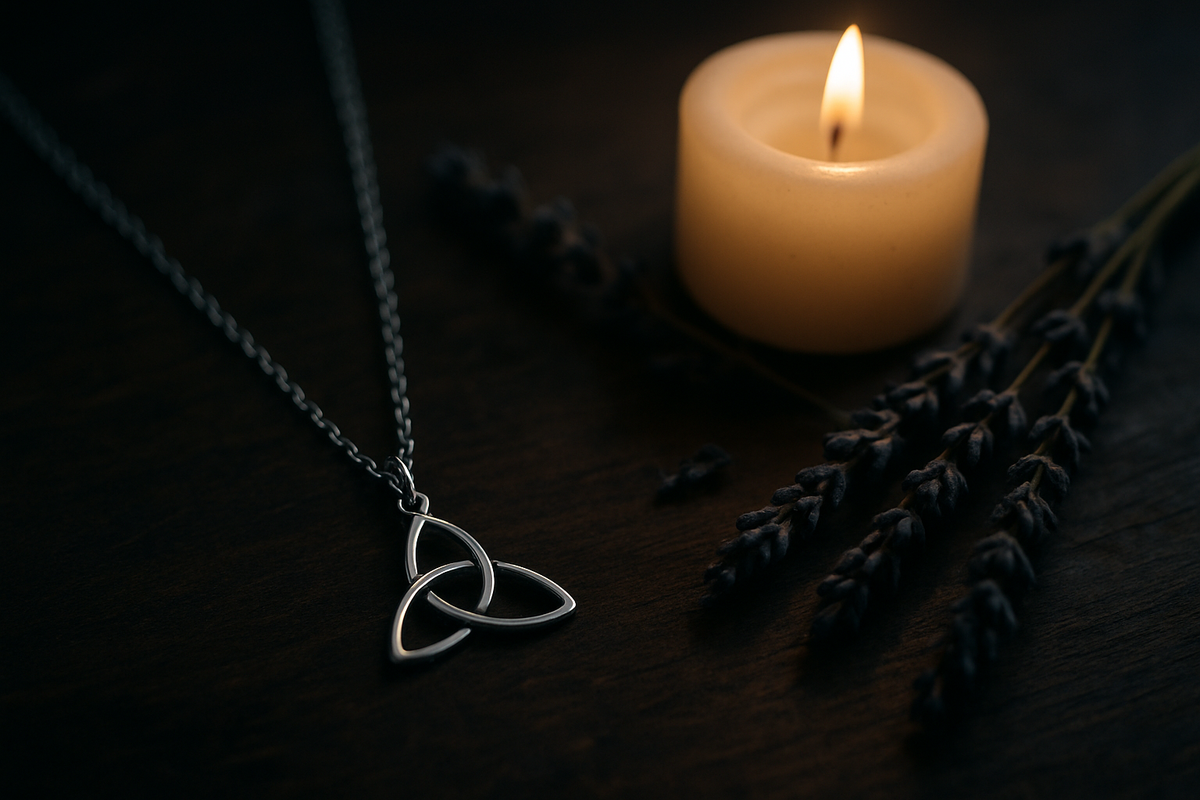
The triquetra remains popular in jewelry, tattoos, and home décor because it manages to feel both ancient and effortlessly modern. Its clean geometric lines suit minimalist tastes, while its layered symbolism gives it emotional depth few purely decorative symbols can match.
Whatever form it takes, the symbol works best when its meaning is chosen intentionally. Much like exploring the layered branches of the Tree of Life, understanding the "why" behind a symbol makes wearing or displaying it feel far more personal than decorative alone.
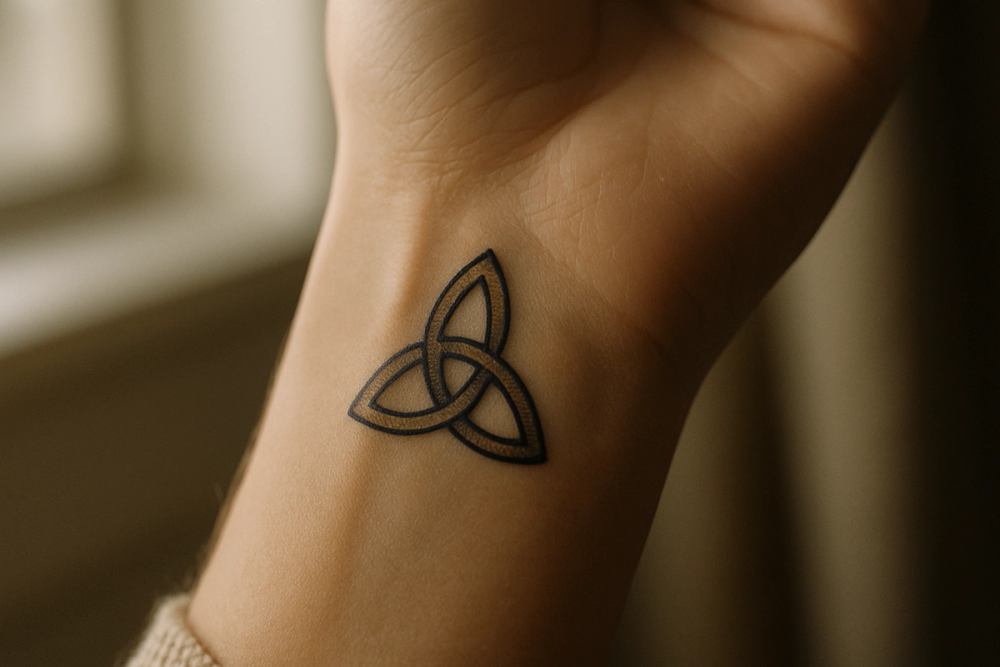
The triquetra is one of the most requested trinity-symbol tattoos, prized for looking just as striking as a tiny minimalist line-work piece as it does in a larger, more detailed design. Popular placements include the wrist, forearm, ankle, behind the ear, and the back of the neck - spots where the symbol's clean geometry stays legible and elegant even at a small size.
Personal meanings behind the tattoo vary widely from person to person. Common reasons people choose it include:
Many people also pair the triquetra with complementary symbols to layer in more meaning - a surrounding circle to emphasize eternity, a small Claddagh knot for love and loyalty, or a Tree of Life motif for growth and family roots. Because the design reads as spiritual rather than tied to one exclusive religion, it's a popular choice for anyone wanting a meaningful three-part tattoo without committing to overtly denominational imagery.
It's easy to confuse the triquetra with other three-part or interlocking symbols, but each carries its own distinct history and visual structure.
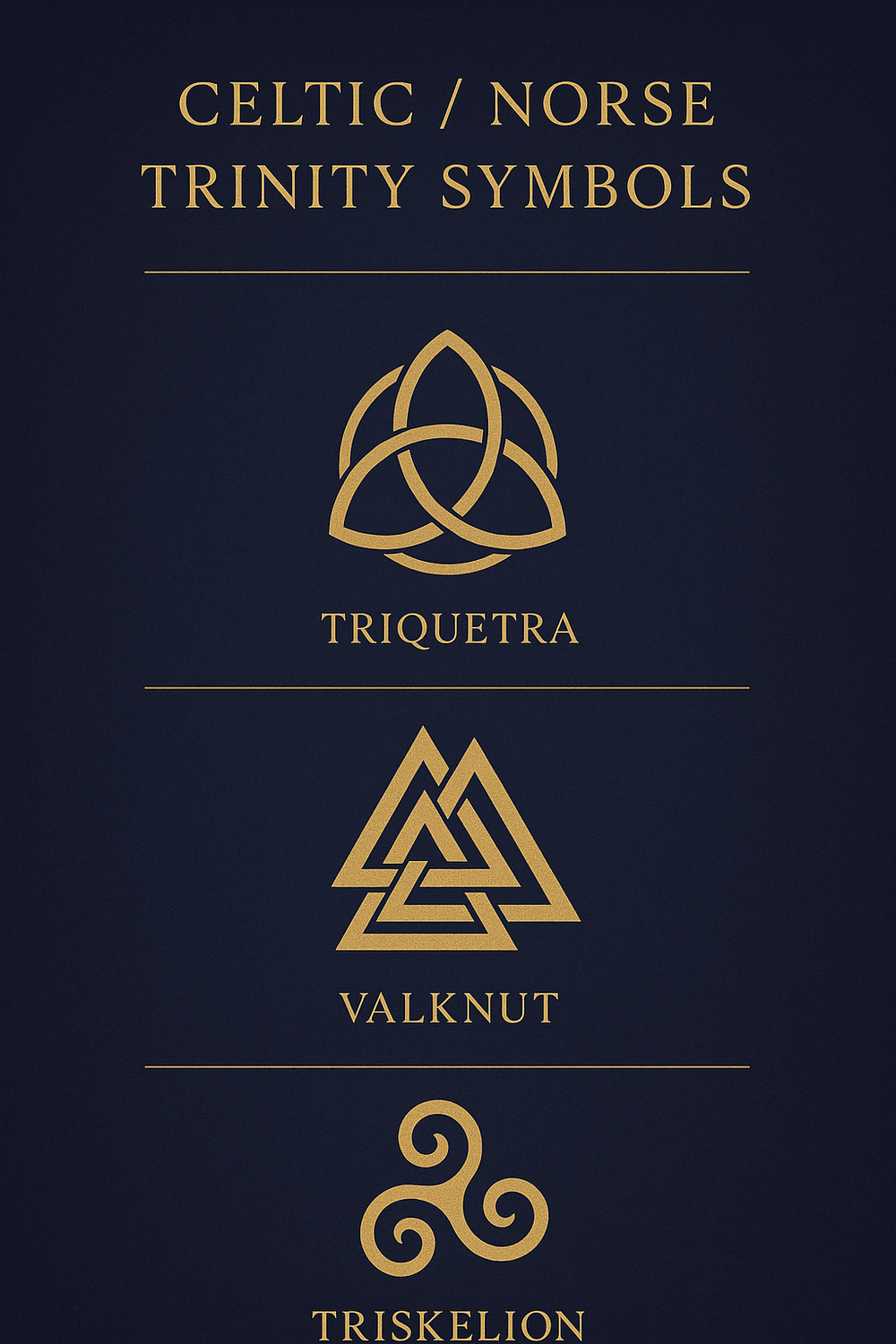
Recognizing these differences matters if you're choosing a symbol to wear or gift - each one, while visually related, tells a distinct spiritual story.
The historical claims referenced in this guide - including triquetra-like carvings on Nordic runestones, its prominent use in the Book of Kells, and the triple-spiral carvings at the Newgrange passage tomb - are drawn from established archaeological and art-historical research on early medieval Celtic manuscript art and Neolithic Irish monuments. For further reading, digitized facsimile pages of the Book of Kells are held by Trinity College Dublin, and detailed archaeological surveys of Newgrange are published by Ireland's Office of Public Works and the Brú na Bóinne visitor archive.
The triquetra represents the unity of three connected parts, such as mind, body, and spirit, or in Christian contexts, the Father, Son, and Holy Spirit. Its unbroken, continuous lines also symbolize eternity and everlasting connection between whatever three elements it represents to the wearer.
No - the triquetra itself has no inherent connection to evil; it's a neutral geometric symbol of trinity and eternal unity that has been used by Celtic pagans, Christians, and modern Wiccans alike. Its association with witchcraft largely comes from pop culture, especially its appearance on the Book of Shadows in the TV show Charmed, but historically it was just as often carved into churches and gospel manuscripts as a Christian symbol.
It is both, depending on context - the triquetra predates Christianity and appears in Celtic and Norse art as a general trinity symbol, but it was later adopted by Irish Christians as the "Trinity Knot" to represent the Holy Trinity. Today it's used comfortably within Pagan, Wiccan, and Christian traditions alike.
A triquetra is a specific type of Celtic knot made from three interlocking arcs forming a continuous three-pointed shape. "Celtic knot" is a broader term covering many interwoven designs, including knots with four, five, or more points, of which the triquetra is just one well-known example.
Generally no, since the triquetra's meaning has always been fluid and adopted across multiple cultures and eras rather than tied to one exclusive tradition. Wearing it thoughtfully, with an understanding of its history, is widely considered a respectful way to honor the symbol rather than appropriate it.
Discover what stars truly symbolize—guidance, hope, and destiny—across cultures, dreams, and spiritual traditions, plus how to use…
Discover 33 powerful symbols of friendship — from the Claddagh ring to yellow roses — and the loyalty, trust, and love each one re…

In this enlightening journey, we are set to explore the profound depth and beauty encapsulated in 59 symbols of hope that grace ou…