 Know
Know
Animal Symbolism
Snake Symbolism: Spiritual Meaning & Significance
Discover what snakes truly symbolize spiritually—transformation, healing, danger, and rebirth—across cultures, dreams, and everyda…
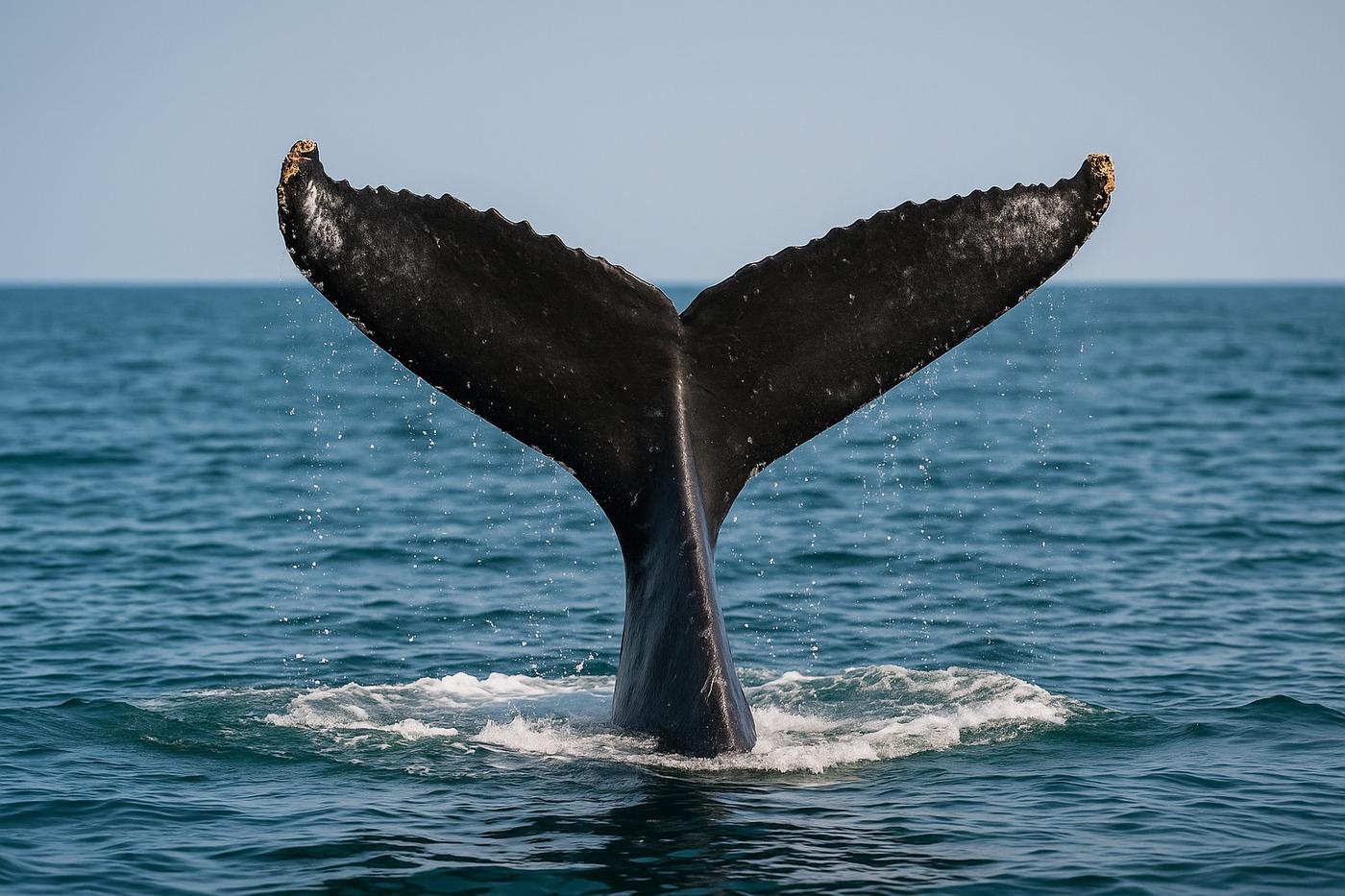
The whale tail meaning symbolizes strength, emotional depth, and spiritual transition. It represents the sacred moment of diving inward, trusting what lies beneath the surface, and rising again with grace. Across Māori, Polynesian, and modern spiritual traditions, the whale tail is read as a totem of protection, resilience, and connection to ancestral wisdom — a reminder that real power moves quietly beneath the surface before it ever breaks into view.
When a whale dives, it doesn't just disappear—it leaves a mark. A powerful tail arcs into the sky, framed by sunlight, then vanishes into the depths. That brief moment, that elegant rise and fall, has become more than an image. It's a symbol—a spiritual invitation to explore the deep within yourself.
The whale tail meaning has evolved across cultures and time, from ancient Polynesian carvings to modern jewelry and ocean art. But its heart remains the same: trust the journey beneath the surface.
| Context | Core Meaning |
| Spiritual | Trusting your emotional depths and returning to the surface with grace |
| Totem | Resilience, protection, and quiet strength through life's cycles |
| Māori / Muri Paraoa | Sacred symbol of ancestral guardianship and safe passage |
| Tattoo | Personal transformation, healing, and courage to face hardship |
| Dream | Something meaningful surfacing from the subconscious |
| Necklace | Emotional grounding and a wearable connection to ocean energy |
The whale tail represents a union of opposites—sky and sea, strength and softness, movement and stillness. It's a totem of resilience and emotional intelligence, asking you to move forward, even through deep or dark places, with intention and inner power. Much like the hawk, the whale tail asks you to see beyond the immediate surface and trust a wider perspective.
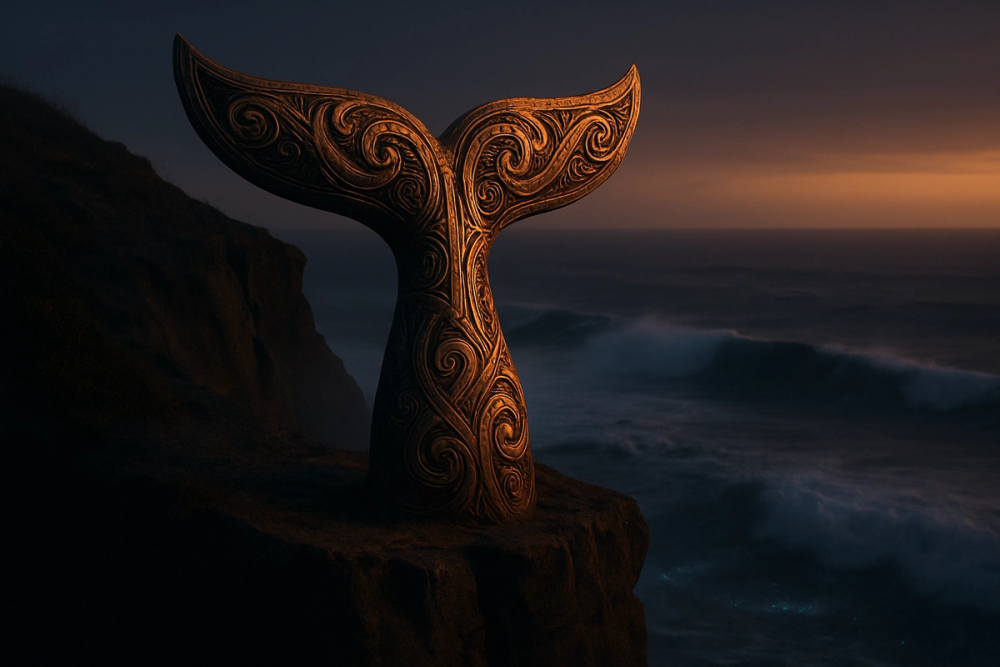
For many, the whale tail is a reminder that even when you disappear from the surface—emotionally, spiritually—you're still moving with purpose below.
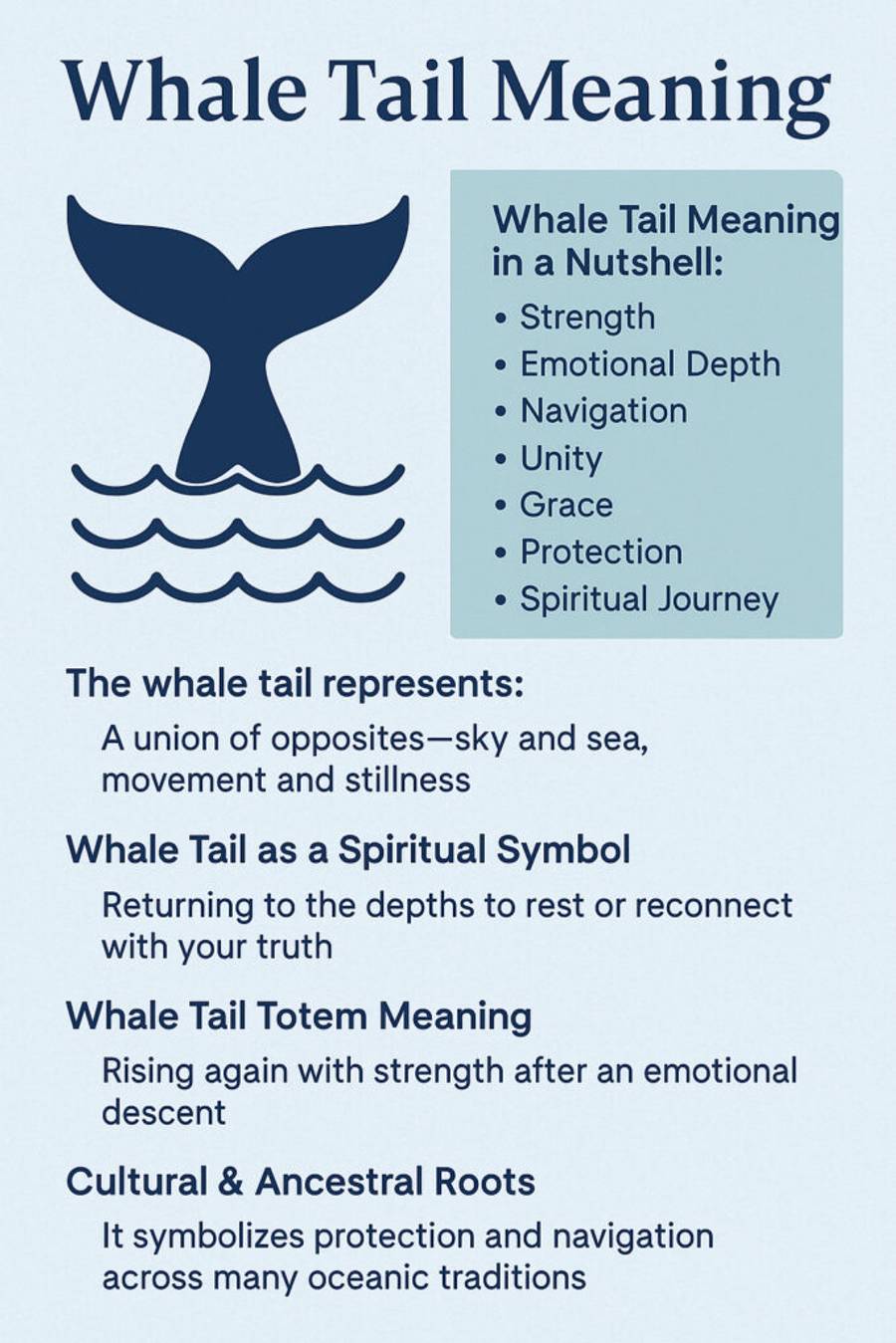
In spiritual terms, the whale tail symbolizes the return to the depths—whether that means diving into the unconscious, reconnecting with your truth, or simply taking time to rest and reset.
Unlike land animals, the whale doesn't leave footprints. It leaves a feeling. A ripple. A shift. That's the heart of its spiritual message: impact doesn't always look loud.
Common spiritual associations include:
Whether appearing in dreams, art, or even jewelry, the whale tail asks: Are you ready to move with the tide instead of against it? Like the emotional sensitivity linked to the hummingbird, the whale tail invites you to honor feeling as a form of wisdom, not weakness.
As a totem, the whale tail carries messages for those who live deeply and love quietly. You might feel drawn to the tail symbol if you:
The whale tail totem also speaks to those learning to move through cycles: rising, diving, resting, returning. It reminds us that progress isn't always visible—and that's okay. This quiet, patient wisdom echoes the watchful nature of an owl totem, another guide known for seeing what others miss.
"The whale doesn't fear the dark. It swims through it—gracefully."
If you've ever felt called by the ocean, the tail may be your spirit guide—not to the shore, but into yourself.
In Māori culture, the whale tail is known as Muri Paraoa. It's a sacred symbol representing protection, navigation, and spiritual connection to ancestors. Whales were seen as kaitiaki—guardians—offering safe passage across vast and unpredictable seas, functioning much like an ancestral spirit guide watching over the living.
Whale-related imagery -- such as carved whale-tooth and whale-ivory pendants and whalebone clubs -- is well documented in Polynesian material culture and ceremonial tools across the Pacific, though a distinct 'whale tail' motif specifically is not established in the sources reviewed. They were used not only for their visual beauty but for what they represented: a silent power that could carry life forward, even in the most turbulent waters. In these traditions, the whale tail symbol was more than artistic—it was spiritual armor, guidance, and map rolled into one.
Pacific Northwest Native American and First Nations cultures, such as the Kwakwaka'wakw and Nuu-chah-nulth, feature whales prominently in ceremony, crest art, and myths like Thunderbird and Whale, and whale imagery is widely regarded as a symbol of a community's spiritual and material relationship with the sea, though sources do not specifically confirm abundance, family protection, and safe travel as a documented, fixed set of meanings. Whale imagery often appears alongside other totem animals in carvings, reinforcing the idea that the whale tail is a guardian symbol recognized across many cultures, not just a single tradition.
Today, the whale tail has found new life in wearable art, coastal decor, and even public monuments. But its core message hasn't changed. In fact, each form carries a unique layer of symbolism.
Wearing a whale tail necklace or bracelet, for instance, often symbolizes:
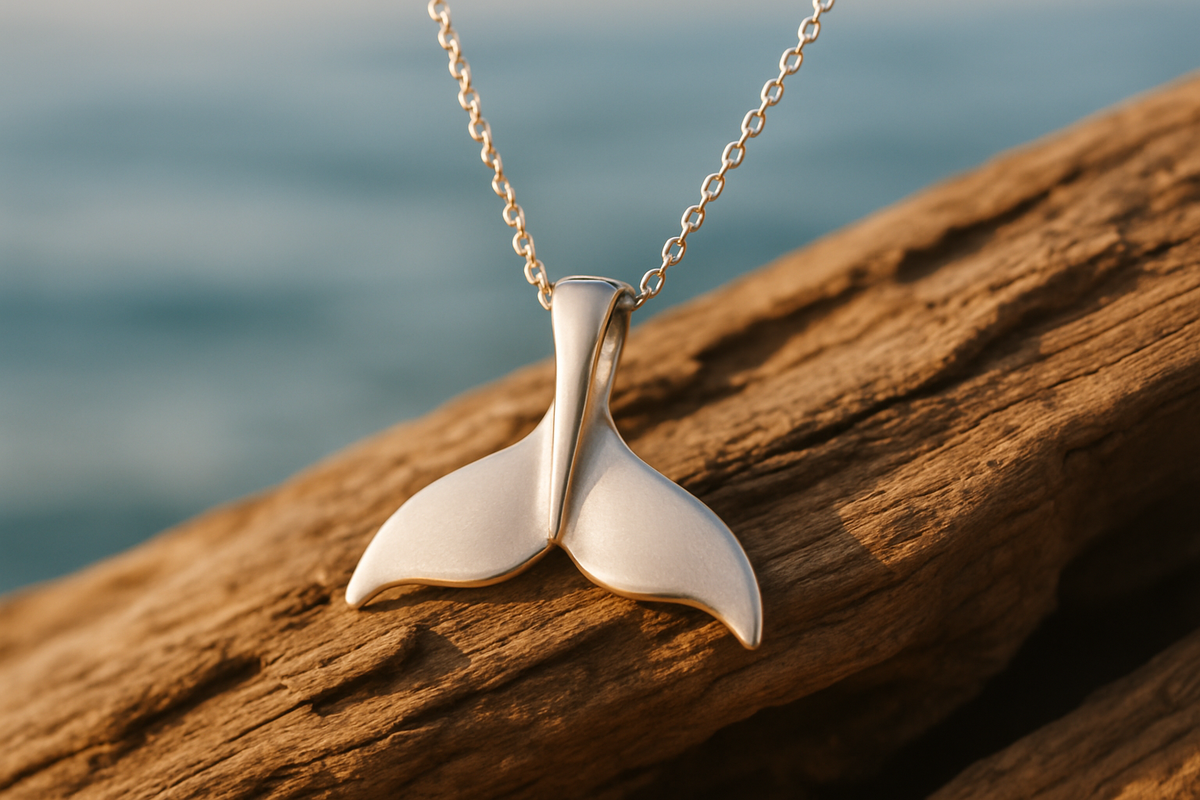
Many people choose whale tail tattoos to express their journey through hardship—or to mark a personal transformation, like healing after grief or returning to self after burnout. The image of the tail disappearing into the water captures that sacred moment of transition, much like the graceful shift-and-return symbolism found in swan symbolism.
Even in art installations like Vermont's iconic "Reverence," a sculpture of whale tails rising from land, the message is clear: Power doesn't have to shout. It can simply surface and disappear again—leaving awe in its wake.
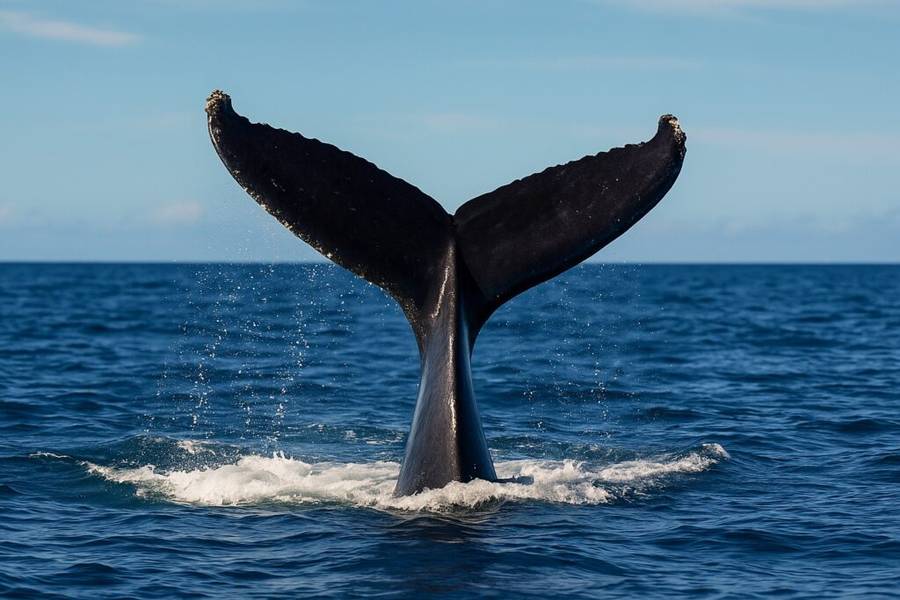
Dreaming of a whale tail can be both powerful and mysterious. Often, it's a sign that something below the surface of your life—or your emotions—is rising up to be acknowledged.
Common interpretations of a whale tail dream include:
Just like the tail breaks the surface for a moment and then disappears, your dream might be showing you a glimpse of something deep, spiritual, and ready to be explored.
The whale tail meaning in spiritual terms represents strength, grace, and emotional depth. It encourages trust in your inner compass and connection to the rhythms of life.
Yes. As a totem symbol, the whale tail offers protection, emotional resilience, and guidance through life transitions. It's often connected to ancestral wisdom and spiritual navigation.
A whale tail tattoo often symbolizes emotional healing, transformation, and the courage to dive into life's depths. It can also honor a connection to the ocean or one's spiritual path.
A whale tail necklace is typically worn as a symbol of emotional grounding, ocean connection, and quiet resilience. Many wearers choose it to honor a personal transformation or as a reminder to stay steady through emotional highs and lows, similar to how a talisman keeps its wearer anchored.
Seeing two whale tails together is often interpreted as a sign of partnership, balance, or a shared journey—whether with a partner, family member, or community. It can also symbolize the union of opposites: strength paired with softness, or the seen paired with the unseen.
Dreaming of a whale tail suggests something meaningful is surfacing from your subconscious. It may indicate that you're ready to face deep emotions or begin a new personal chapter.
Yes. In Māori tradition, the whale tail—or Muri Paraoa—is a sacred symbol of protection, spiritual guidance, and ancestral connection. It plays an important role in Pacific storytelling and carving.
If you've heard the term "whale tail" used to describe a fashion trend from the early 2000s (a visible thong above low-rise jeans), you're not alone. But the spiritual meaning of the whale tail symbol couldn't be more different.
It's worth keeping this distinction in mind, especially since the two meanings occasionally overlap in casual conversation or search results.
Discover what snakes truly symbolize spiritually—transformation, healing, danger, and rebirth—across cultures, dreams, and everyda…
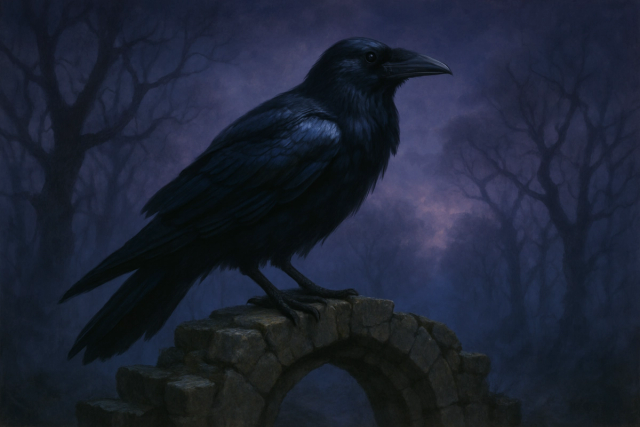
Discover what raven symbolism means - from Norse gods to Native creator myths, dreams, omens, and how to respond when one crosses …
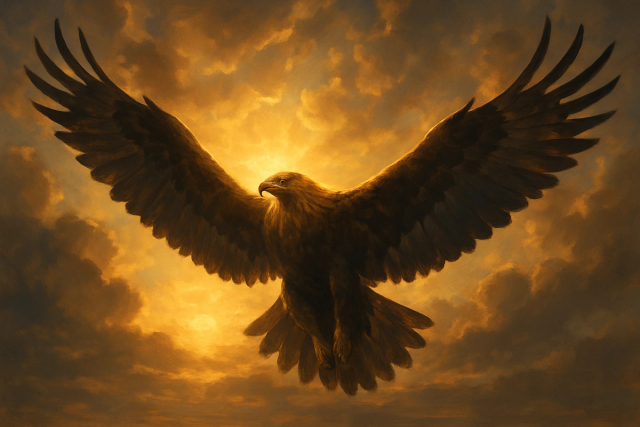
Discover what the eagle truly symbolizes spiritually — vision, freedom, divine messages, myth, and dream meaning explained.