 Know
Know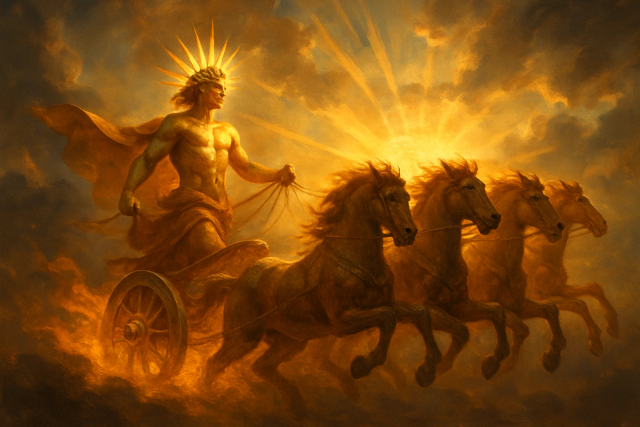
Greek Mythology
Helios: The Titan God of the Sun in Greek Myth
Discover Helios, the Greek Titan sun god who drove his blazing chariot across the sky—his myths, symbols, and spiritual meaning ex…
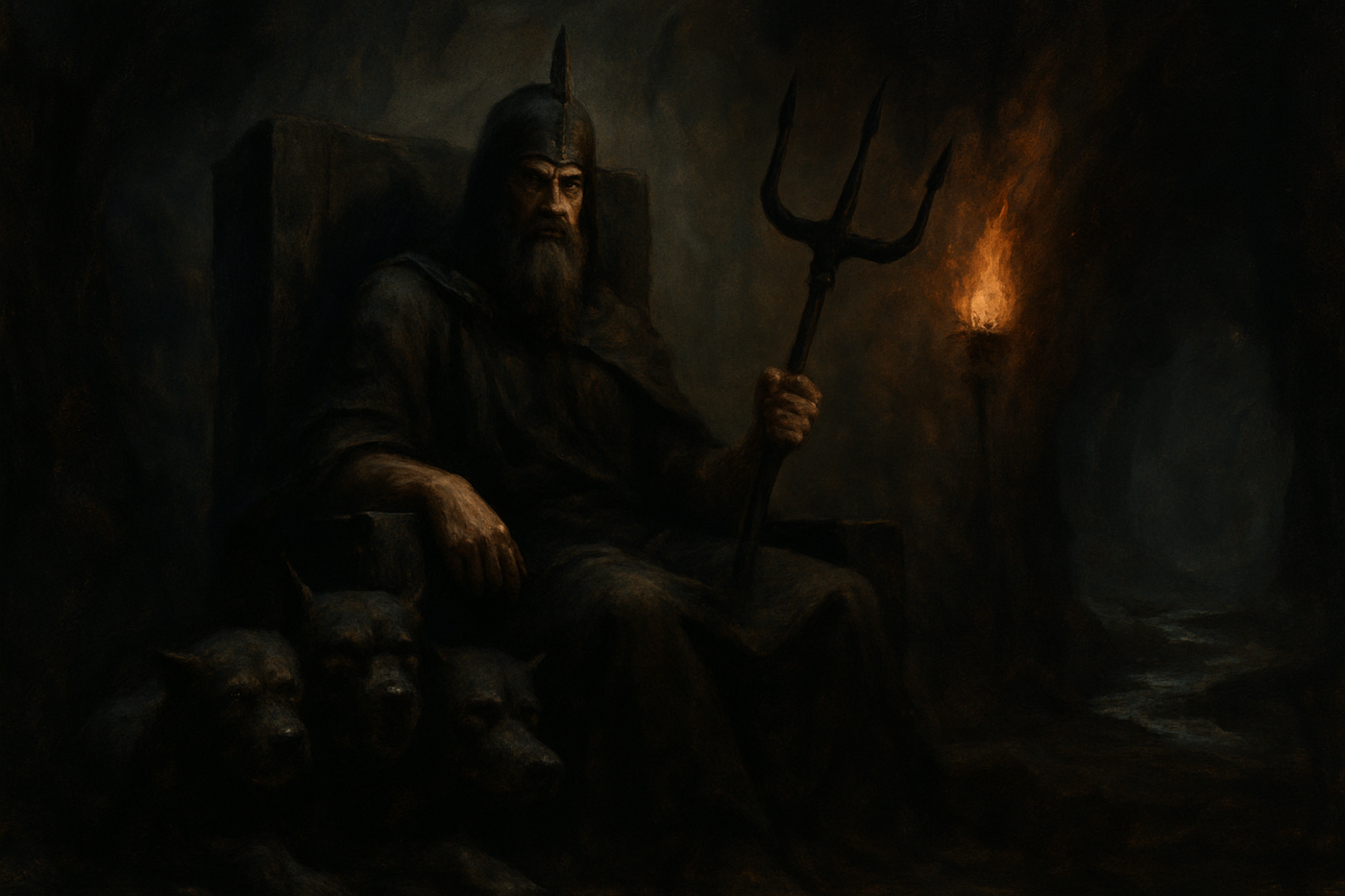
Hades is the Greek god of the underworld and ruler of the dead, one of three sons of Cronus and Rhea who divided the cosmos after the fall of the Titans. He is not a devil or a symbol of evil; the ancient Greeks saw him as a stern, impartial administrator who governs every soul - hero, sinner, or ordinary citizen - according to fixed cosmic law. His name eventually became synonymous with the realm he ruled, a shadowy kingdom of judgment, rest, and quiet transformation rather than fiery punishment.
Picture a throne carved from black stone, lit by no sun, ringed by rivers that whisper the names of the dead. There sits a god almost no one dared address by name, out of fear that simply speaking it might draw his gaze. Yet this is a god who never once left his domain to meddle in the petty rivalries of Olympus.
There is something quietly noble in that restraint. While his brothers waged wars and chased mortal lovers across the earth, Hades stayed home, tending to the dead with a grim but unwavering fairness. To understand him is to understand how the Greeks made peace with mortality itself.
Hades was one of six children born to Cronus and Rhea, siblings to Zeus, Poseidon, Hera, Demeter, and Hestia. After the Titanomachy - the ten-year war against the Titans - the three brothers drew lots to divide the universe. Zeus won the sky, Poseidon the sea, and Hades received the underworld. This was never a punishment or demotion; it was simply his portion of a divine inheritance, and he ruled it with unmatched, unglamorous authority.
Hades rarely appears alongside the wider pantheon covered in guides to the Greek gods, largely because he almost never left his realm. His most famous myth is the abduction of Persephone, daughter of Demeter, whom he took to the underworld to be his queen. The story explains the turning seasons: Persephone's months below ground correspond to autumn and winter, while her return to earth brings spring's renewal - a myth so central that it links Hades permanently to Demeter's grief.
Hades is instantly recognizable through a consistent set of symbols in Greek art and literature:
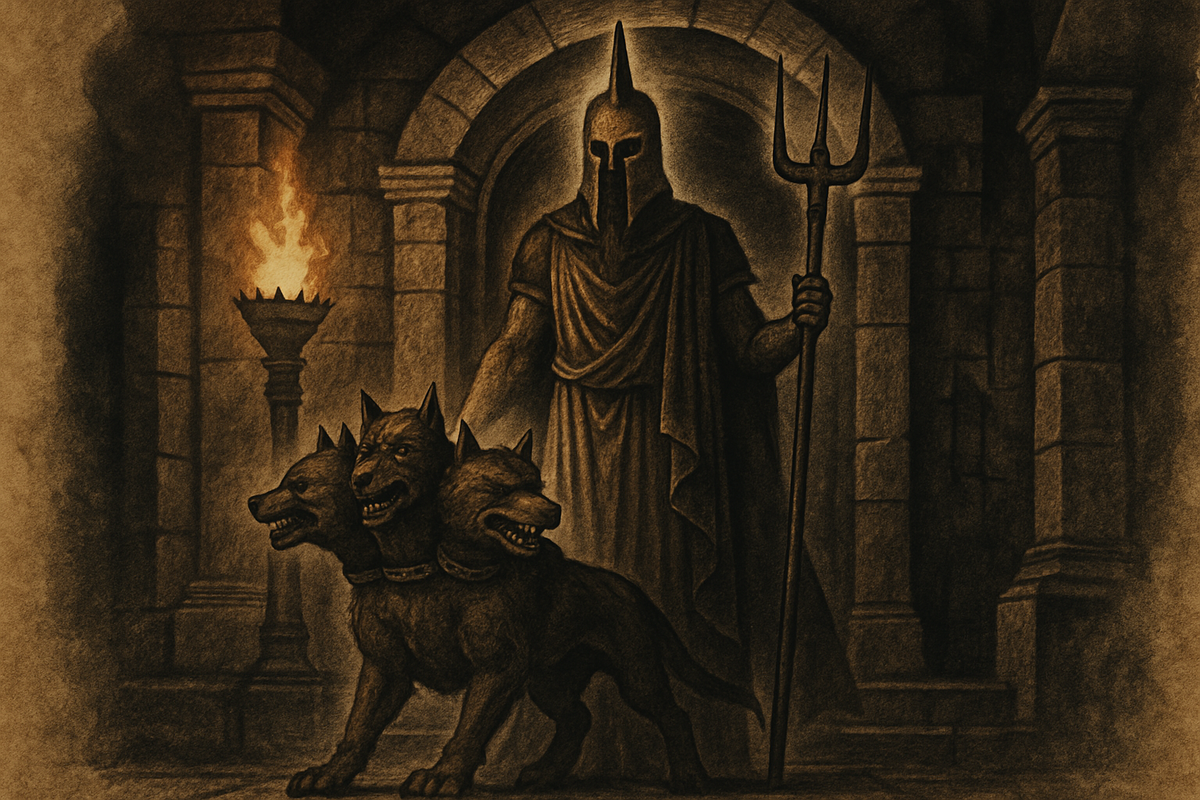
The Greek underworld was not a single pit of torment but a layered kingdom with distinct regions. The Asphodel Meadows housed ordinary souls, the Elysian Fields rewarded heroes and the virtuous, and Tartarus imprisoned those who had defied the gods, such as Sisyphus and Tantalus. Five rivers - Styx, Acheron, Cocytus, Phlegethon, and Lethe - wound through this land, each carrying symbolic weight, from oath-binding (Styx) to forgetting (Lethe).
Hades presided over this system alongside Persephone, assisted by three judges of the dead - Minos, Rhadamanthus, and Aeacus - who weighed a soul's final destination against the life it had lived. This structured, almost bureaucratic vision of the afterlife reveals how deeply the Greeks valued order, even in death.
Because Hades governs the dead, later Christian translators sometimes used his name interchangeably with hell, creating centuries of confusion. But the two concepts differ sharply. Hades presides over a neutral afterlife administration, not eternal torment reserved for the wicked; most souls there are simply ordinary people, neither punished nor rewarded. The table below clarifies the distinction.
| Aspect | Greek Hades | Christian Hell |
|---|---|---|
| Ruler | Hades, a just god, not evil | Satan, an adversarial figure |
| Purpose | Neutral afterlife for all souls | Eternal punishment for sinners |
| Structure | Multiple regions: Elysium, Asphodel, Tartarus | Single realm of suffering |
| Moral tone | Order and inevitability | Judgment and damnation |
Beyond mythology, Hades has come to represent deeper psychological and spiritual ideas. He embodies the parts of life we resist facing: endings, grief, transformation, and the unseen. In modern spiritual interpretation, invoking Hades symbolism often relates to:
The Romans renamed Hades as Pluto, emphasizing his connection to underground riches rather than death alone, and his festival, the Lemuria, focused on placating restless spirits rather than fearing the god himself. The Etruscans had their own underworld deity, Aita, often depicted wearing a wolf-headed cap - a striking parallel to the Greek Helm of Darkness that shows how neighboring cultures independently imagined similar guardians of the dead. Further east, Mesopotamian myth placed the underworld under Ereshkigal, a far harsher queen whose realm allowed no return, while Egyptian tradition gave the afterlife to Osiris, who judged hearts against the feather of Ma'at. Set beside these figures, Hades stands out as comparatively restrained - a bureaucrat of death rather than a punisher of it.

Dreaming of Hades or descending into an underworld-like landscape often reflects a period of internal reckoning rather than literal fear of death. Common interpretations include:
You do not need to worship ancient gods to draw meaning from Hades' archetype. Consider these practical approaches:
Though he kept apart from Olympus, Hades' myths intertwine with several major deities. His marriage to Persephone links him permanently to Demeter, whose grief over her stolen daughter shapes the mythological origin of winter. His brothers Zeus and Poseidon divided the cosmos with him after the Titanomachy, forming an uneasy but respectful triad of power. Even wisdom and prophecy gods occasionally intersect with underworld myths through the fate of souls, reinforcing how deeply death was woven into the wider structure of the Greek pantheon.
Hades is neither good nor evil in Greek mythology; he is a neutral, just administrator of the dead who follows strict cosmic law. Unlike later depictions of the devil, he does not tempt mortals or delight in suffering, and many myths portray him as fair, if stern.
Hades is the god of the underworld and the dead, ruling over the afterlife realm where souls go after death. He also governs the hidden wealth of the earth, a connection emphasized more strongly through his Roman name, Pluto.
Hades' wife is Persephone, daughter of Demeter, whom he took to the underworld to be his queen. Unlike many Olympians, Hades had very few children, with some traditions naming the Furies or Melinoe as offspring linked to the underworld.
Many ancient Greeks avoided speaking Hades' name directly out of fear it might draw his attention or invite death, instead using euphemisms like "Plouton" (the rich one) or "the unseen one." This practice reflects the deep respect and caution surrounding death in Greek religious life.
Discover Helios, the Greek Titan sun god who drove his blazing chariot across the sky—his myths, symbols, and spiritual meaning ex…

Discover Gaia, the primordial Greek goddess of Earth—her origins, myths, symbolism, dream meaning, and how to honor her energy tod…
Discover Nike, the Greek goddess of victory — her myths, symbols, Roman parallel Victoria, and what she means in dreams and daily …