Greek Mythology
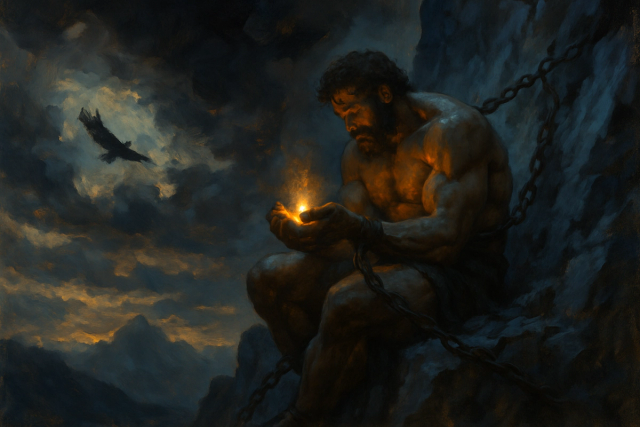
Prometheus: The Titan Who Gave Fire to Humanity
Discover Prometheus, the Titan who stole fire from Olympus for mankind — his myth, punishment, symbolism, and lessons for today.
 KnowMastery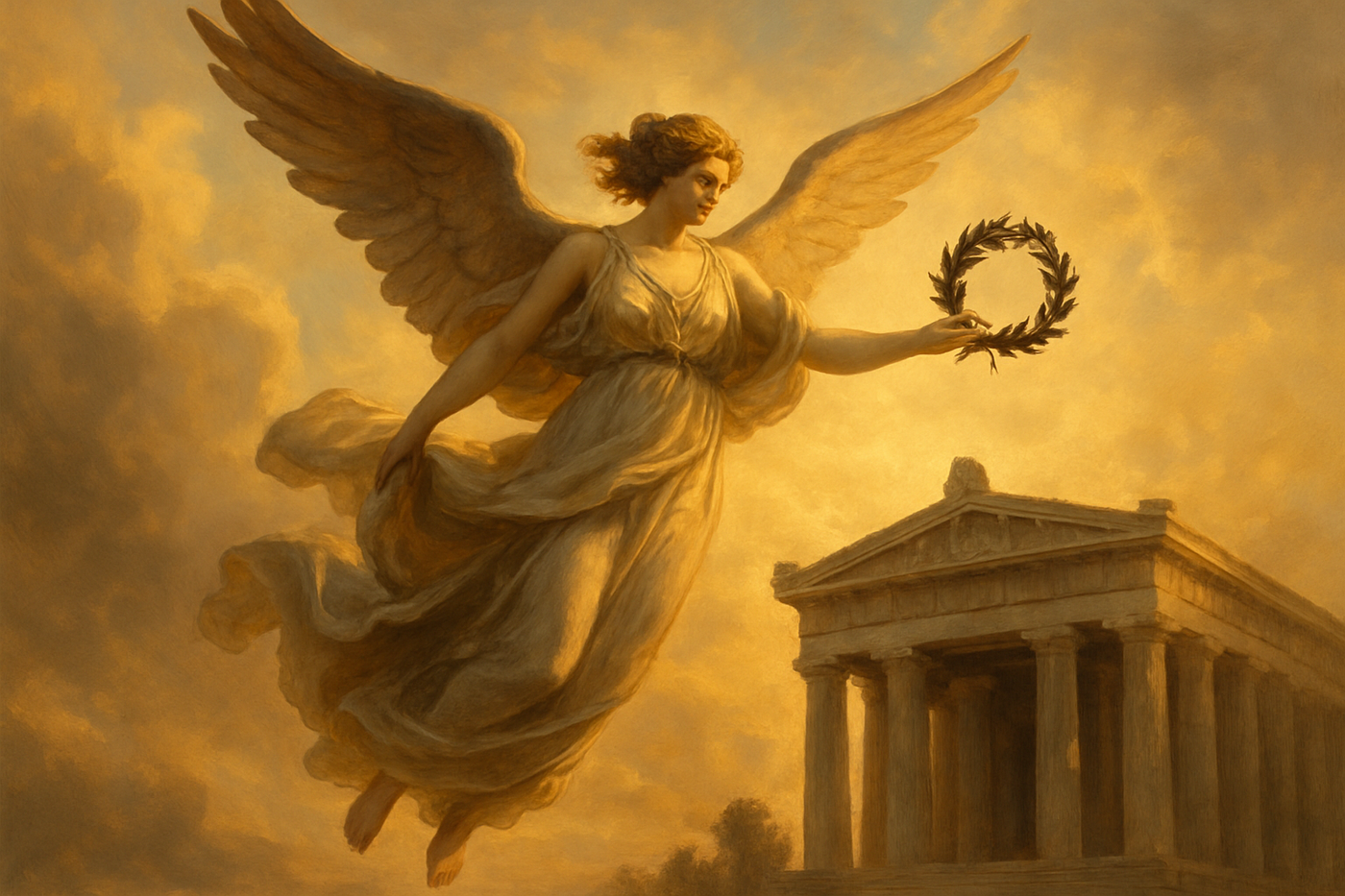
Nike is the Greek goddess of victory — the divine force believed to appear at the exact moment triumph is secured in war, sport, or any hard-won contest. Daughter of the Titan Pallas and the river goddess Styx, she is depicted as a winged woman carrying a laurel wreath, her Roman counterpart known as Victoria.
Picture a Greek soldier standing on a blood-soaked field at dusk, uncertain whether the gods have favored him. Then, just above the horizon, wings catch the last light — swift, silent, unmistakable. That is Nike. She does not fight. She does not scheme. She simply arrives, and her arrival changes everything.
For over two thousand years, people have carved her image into temples, stamped her onto coins, and painted her onto pottery, hoping to summon that same fleeting, electric feeling: the instant when struggle finally gives way to triumph.
Nike belongs to a lesser-known but powerful family of deities. Her father, Pallas, was a Titan associated with warfare, and her mother, Styx, was the primordial river goddess who separated the world of the living from Hades. This lineage placed Nike firmly between two forces — conflict and consequence — which fits her role perfectly: she is the outcome that follows every clash. Homer never gives her a starring role in the Iliad, yet later poets treated her as an ever-present force hovering just beyond the reach of mortal sight.
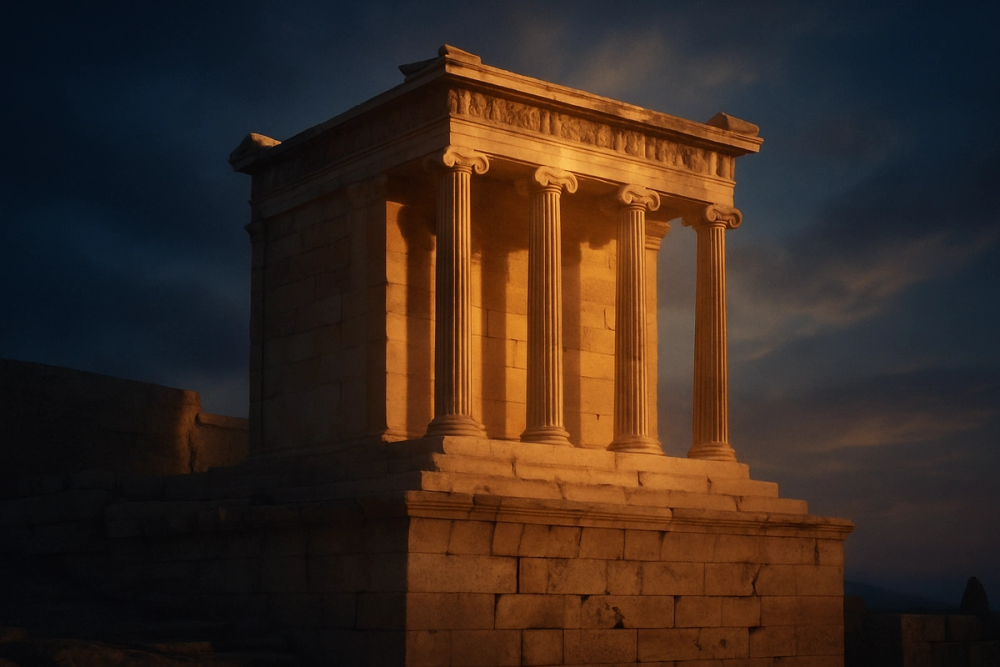
She is frequently listed among the closest companions of Zeus, King of the Gods, and Athena, goddess of wisdom and strategic warfare. In fact, Nike is so entwined with Athena that the two are sometimes fused into a single figure — Athena Nike — worshipped together on the Athenian Acropolis as the patroness of victories both military and civic. Within the broader Olympian hierarchy that includes queenly figures like Hera, Nike occupies a quieter but essential role: she is never the ruler, only the herald that confirms who has won.
According to Hesiod's Theogony, Nike sided with the Olympians during the Titanomachy, the ten-year war between the Titans and the younger gods. Her presence on the winning side cemented her permanent role: wherever the righteous or the strong prevail, Nike is said to hover nearby, wreath in hand.
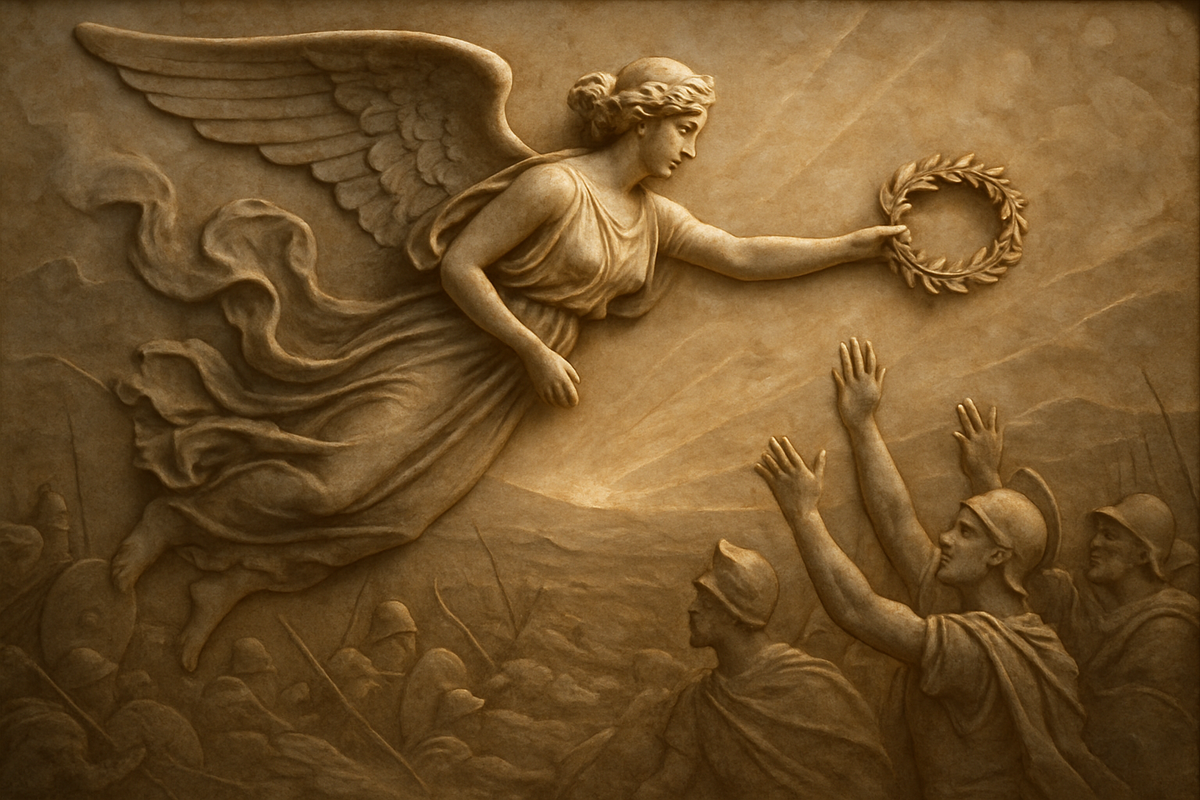
Nike was not an only child. Hesiod's Theogony names three siblings born from the same union of Pallas and Styx: Kratos (Strength), Bia (Force), and Zelos (Rivalry, Zeal, or Emulation). Together, these four siblings formed a tight-knit quartet of abstract powers, each embodying a different facet of dominance and drive.
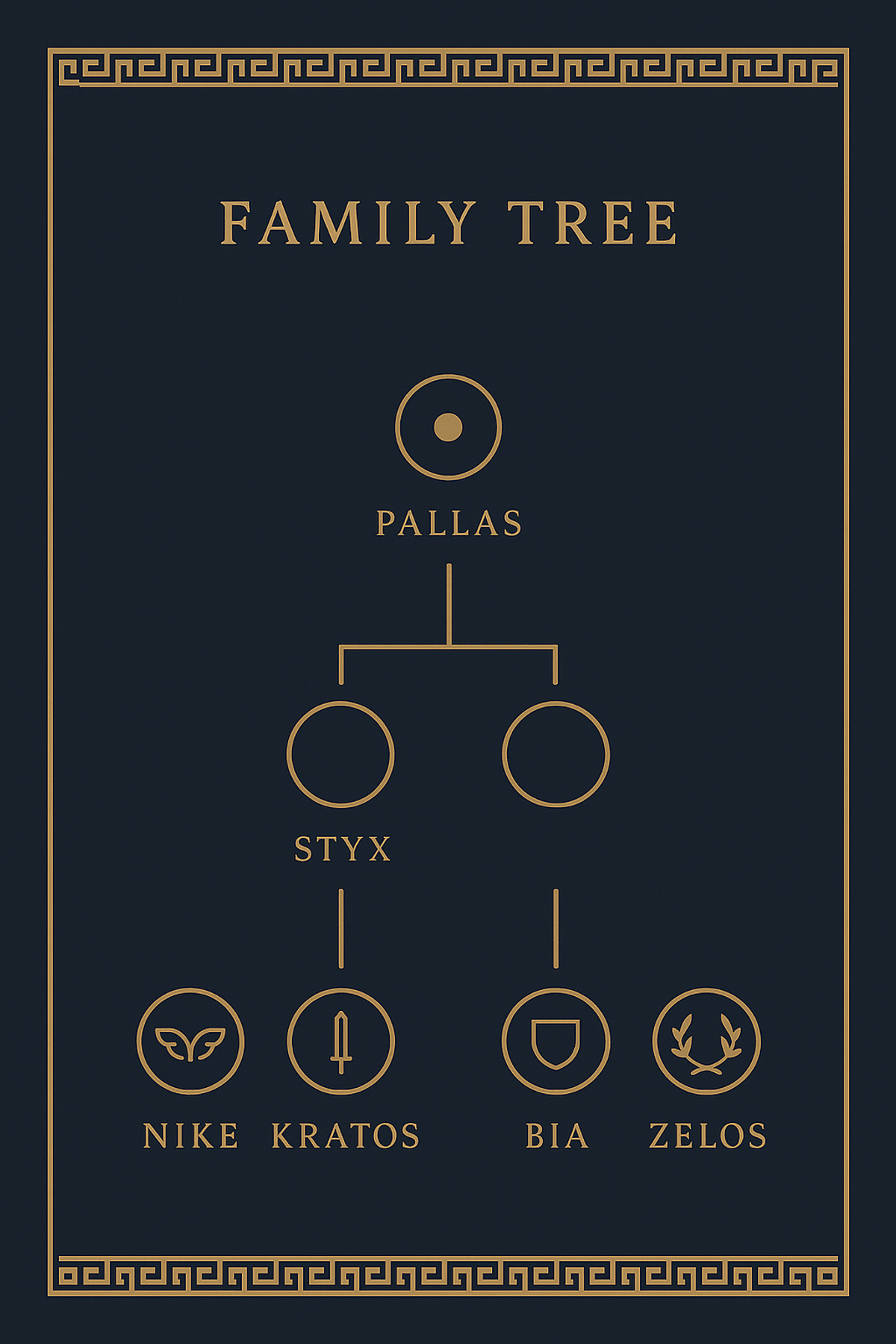
When the Titanomachy erupted, Styx brought all four of her children to fight alongside Zeus against the Titans — a decision that proved decisive. In gratitude, Zeus granted the siblings permanent places in his court: Kratos and Bia became his enforcers, most famously appearing in Aeschylus's Prometheus Bound as the ones who physically chain Prometheus to his rock. Zelos represented the competitive drive that fuels ambition, while Nike represented the outcome all three of her siblings ultimately served — the moment of victory itself. This family unit explains why Nike so rarely acts alone in myth: strength, force, and rivalry each need a resolution, and she is that resolution made divine.
Ancient artists relied on a consistent visual vocabulary to identify Nike across temples, vases, and coins. Recognizing these symbols helps modern readers spot her influence in classical art immediately.
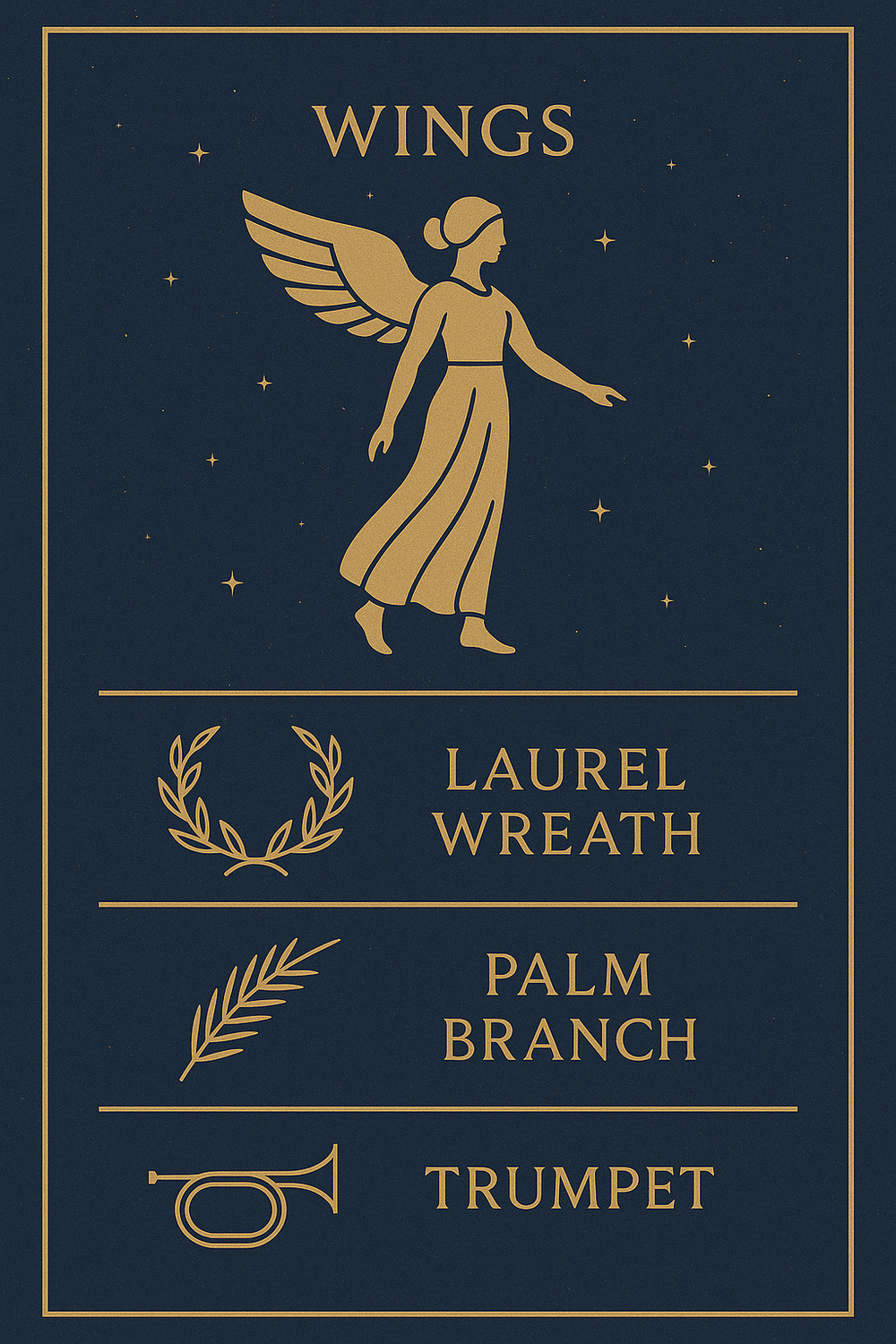
One of the earliest surviving free-standing examples, the Nike of Paionios at Olympia (circa 420 BCE), shows her seemingly touching down mid-flight, robes billowing as if caught by a sudden gust — a sculptural trick later echoed and surpassed by the Winged Victory of Samothrace.
Several ancient cultures personified victory, but Nike's closest and most historically significant counterpart is her direct Roman adaptation, Victoria.
| Figure | Culture | Key Symbol | Primary Domain |
|---|---|---|---|
| Nike | Greek | Wings, laurel wreath | All forms of triumph — war, sport, art |
| Victoria | Roman | Wings, palm branch, globe | Military conquest and imperial power |
Related figures appear elsewhere in the ancient world too: the Byzantines shortened her name to Nika, inscribing crosses onto her wreath as victory took on Christian meaning, while the Romans also honored Bellona, a separate goddess who personified the brutality of war itself rather than its outcome. Neither eclipsed Nike's core identity as the goddess of the winning moment, not the conflict that produced it.
On the western edge of the Acropolis stands the small but exquisite Temple of Athena Nike, built around 420 BCE during the Peloponnesian War. Athenians prayed here before military campaigns, seeking Nike's favor to accompany Athena's wisdom into battle. Inside, sculptors carved reliefs of Nike removing her sandal — a curious, intimate image scholars believe symbolized victory pausing to rest, or perhaps the goddess making herself barefoot on sacred ground.
When Rome absorbed Greek religious ideas, Nike was rebranded as Victoria, one of the empire's most politically important deities. Generals dedicated altars to her after conquests, and emperors placed her image on coins to legitimize their rule. The winged statue atop the Curia in the Roman Senate — the Altar of Victory — remained a flashpoint of religious tension for centuries as Christianity rose and pagan senators fought to keep her there.
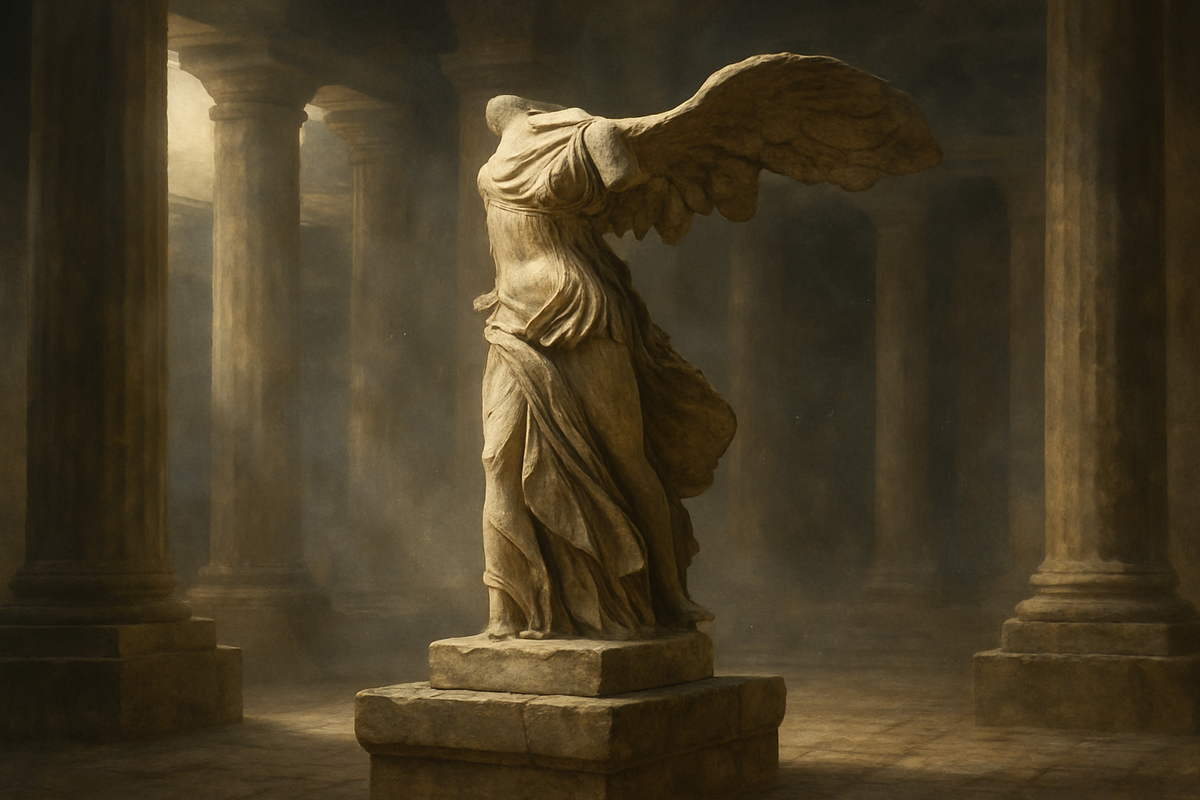
Perhaps the most famous surviving image of Nike is the Winged Victory of Samothrace, a marble masterpiece from roughly 200–190 BCE now housed in the Louvre. Missing its head and arms, the statue still conveys astonishing motion — robes whipped by wind, wings spread as if she has just landed on the deck of a ship after a naval triumph. It remains one of the most visited and admired sculptures in the world, a testament to how deeply victory imagery resonated across Hellenistic culture.
As the eastern Roman Empire converted to Christianity, the old goddess transformed rather than vanished. Byzantine artisans inscribed her wreath with a cross, and the acclamation "Nika!" ("Conquer!") was shouted at chariot races and imperial ceremonies — most famously during the deadly Nika riots of 532 CE in Constantinople. The winged pagan figure faded, but the hunger for divinely sanctioned victory she embodied survived inside a new faith.
Beyond mythology, Nike has become a spiritual shorthand for breakthrough. People invoke her symbolically — consciously or not — whenever they visualize crossing a finish line, closing a difficult chapter, or overcoming an obstacle that once felt impossible.
Dreaming of a winged woman, a laurel wreath, or a figure resembling Nike is often interpreted as a subconscious signal of impending success or resolution. Depending on context, the dream may carry different nuances:
Whether you're drawn to Greek mythology spiritually or simply want a powerful personal symbol, there are grounded ways to incorporate Nike's energy into daily life:
Nike rarely appears in isolation within mythology — she is most often shown supporting other deities, much like Zeus, Athena, and even Apollo, whose musical and athletic contests she was believed to preside over as the judge of excellence. Exploring the wider list of Greek gods and their symbols helps place her role in context among the Olympian hierarchy.
Nike is the Greek goddess of victory in all its forms — military, athletic, artistic, and personal. She is depicted crowning winners with a laurel wreath, symbolizing recognized triumph rather than the struggle itself, and she appears at the decisive turning point rather than throughout the contest.
Yes, Nike has three siblings: Kratos (Strength), Bia (Force), and Zelos (Rivalry). All four were children of Pallas and Styx, and together they fought alongside Zeus during the Titanomachy, earning permanent places in his divine court.
Nike's Roman equivalent is Victoria, who carried nearly identical iconography — wings, a wreath, and often a palm branch or globe. Victoria became one of the most politically significant deities in the Roman Empire, appearing on coins and imperial monuments to legitimize military rule.
Nike does not command armies or wield weapons; her "power" is the ability to appear at the precise moment a contest is decided, marking the winner. She is often described as bestowing victory itself rather than causing it, acting as confirmation rather than intervention.
Nike's wings symbolize how suddenly and swiftly victory can arrive, often after long uncertainty. Ancient artists used the wings to visually separate her from purely human figures, signaling that triumph is a divine gift descending from above rather than something earned through effort alone.
Nike is closely associated with Athena and often appears as her companion or attendant, sometimes worshipped jointly as Athena Nike at sites like the Temple of Athena Nike on the Acropolis. They are not sisters by blood but are frequently linked in art and worship because both preside over strategic, righteous victory rather than brute conquest.
The laurel wreath represents honor, achievement, and public recognition of success rather than the effort behind it. This symbol has survived into modern culture through Olympic medal ceremonies, academic "laureate" titles, and victory imagery in art and political iconography alike.
Yes, the sportswear company Nike takes its name directly from the Greek goddess of victory, and its famous "swoosh" logo is inspired by the shape of her wings. The name was chosen specifically in 1971 to evoke speed, triumph, and athletic excellence, replacing the company's earlier name, Blue Ribbon Sports.
Discover Prometheus, the Titan who stole fire from Olympus for mankind — his myth, punishment, symbolism, and lessons for today.
Discover Gaia, the primordial Greek goddess of Earth—her origins, myths, symbolism, dream meaning, and how to honor her energy tod…

Discover who Medusa really was, why she turned people to stone, and what her snake-haired image symbolizes in myth, dreams, and cu…