 Know
Know
Greek Mythology
Helios: The Titan God of the Sun in Greek Myth
Discover Helios, the Greek Titan sun god who drove his blazing chariot across the sky—his myths, symbols, and spiritual meaning ex…
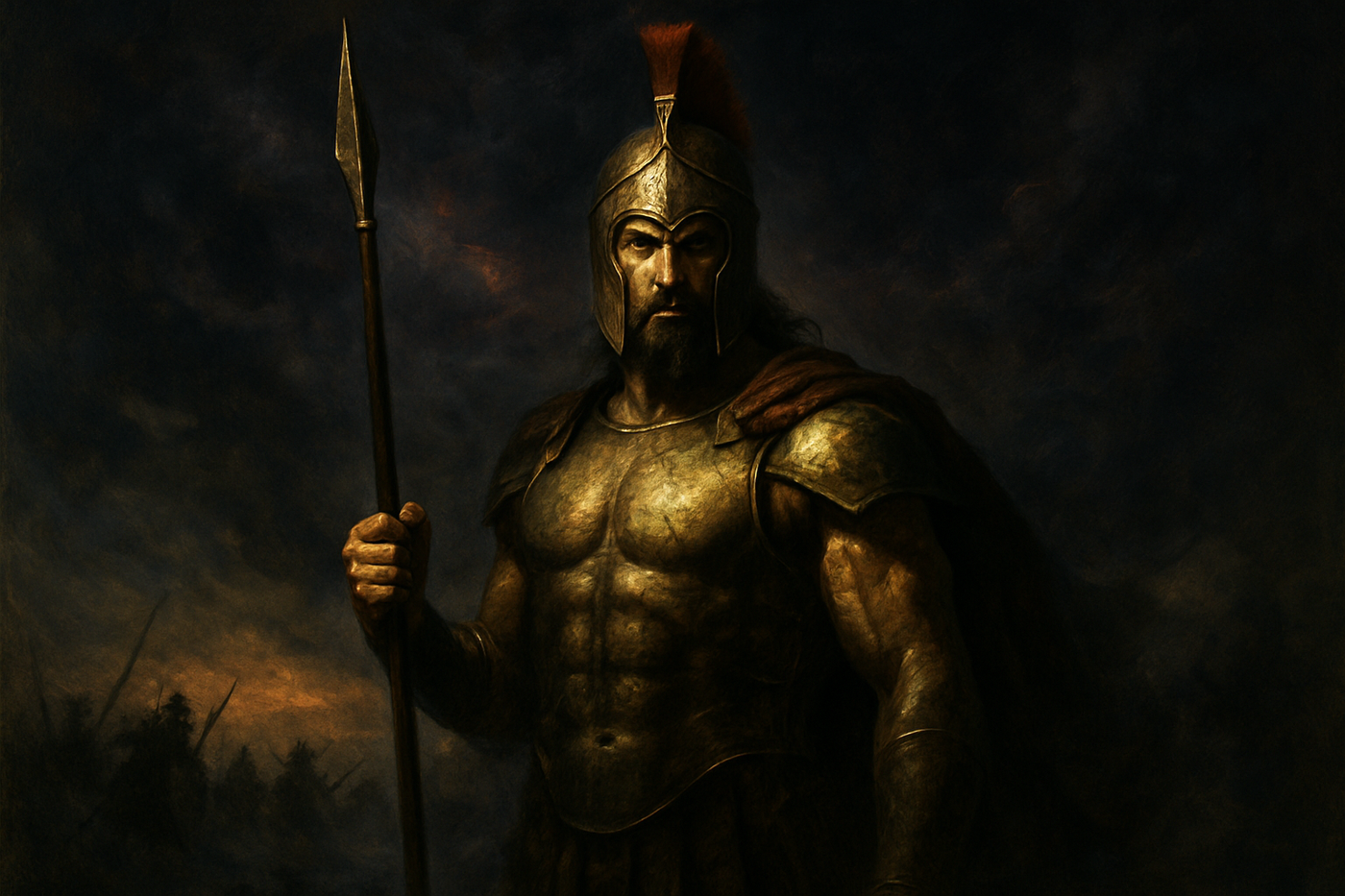
Ares is the Greek god of war, the son of Zeus and Hera, and one of the twelve Olympian deities. He embodies the violent, chaotic, and physical dimension of warfare, in sharp contrast to his half-sister Athena, who represents strategic and disciplined combat. Known to the Romans as Mars, Ares is typically shown carrying a spear and wearing a helmet, accompanied by his sacred animals — the vulture and the dog. Though feared on the battlefield, he was famously devoted to Aphrodite, the goddess of love.
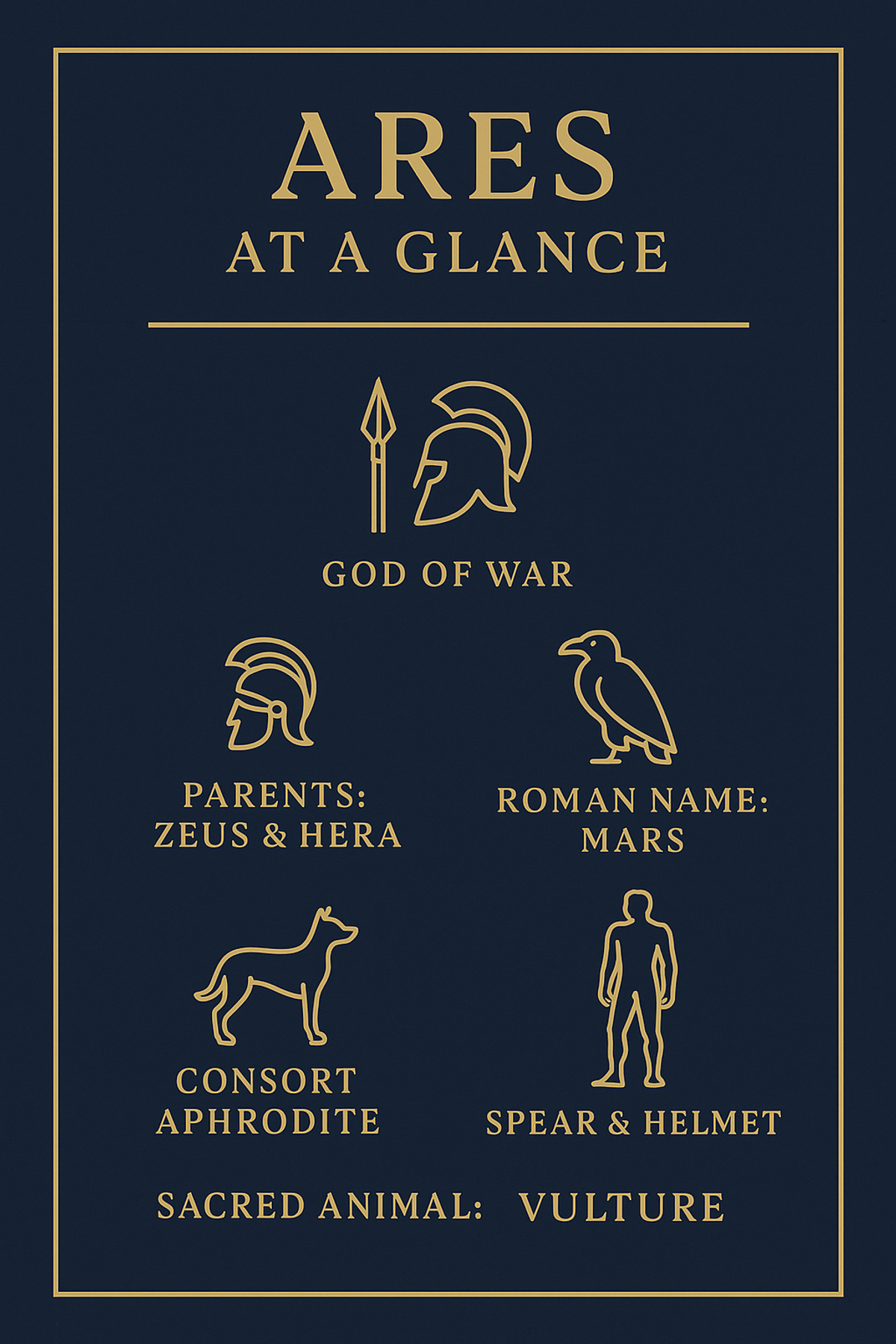
Before diving into the myths, here is a fast reference for the most commonly searched facts about Ares — his family, symbols, and Roman identity.
| Attribute | Details |
|---|---|
| Domain | War, violence, courage, bloodshed |
| Parents | Zeus and Hera |
| Siblings | Athena, Apollo, Artemis, Hephaestus |
| Consort | Aphrodite |
| Roman Name | Mars |
| Symbols | Spear, helmet, dog, vulture |
When we think of the pantheon of Greek gods, Ares often stands out as the fierce and formidable God of War. But who was Ares before he became this symbol of battle and strength? Let’s embark on a journey that traces the evolution of Ares from the ancient tales of Greece to the artistic interpretations of the Renaissance. His earliest appearances, including in Homer’s Iliad and the Homeric Hymn to Ares, already show a god both feared and mocked by his fellow Olympians.
The tales of Ares’ origins are as varied as the landscapes of Greece itself. Born to Zeus, the king of gods, and Hera, the queen, Ares was always destined for greatness. In the early myths, he was often portrayed not just as a warrior but also as a lover, a son, and sometimes, a misfit among the gods.
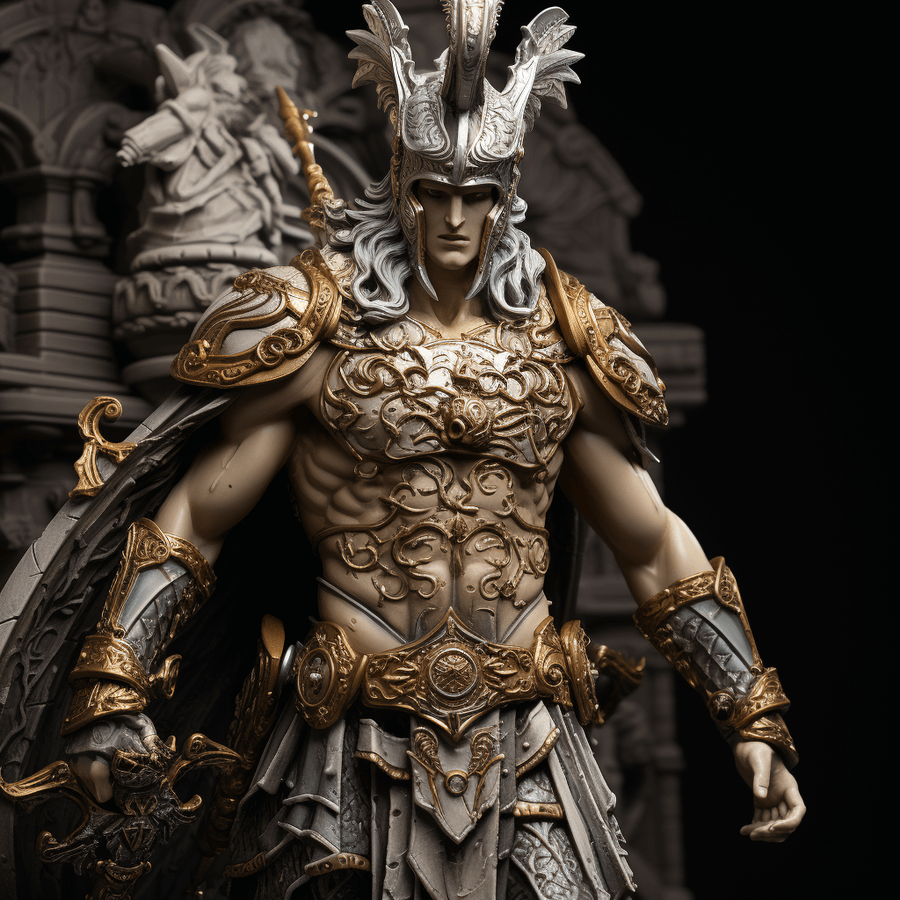
As the influence of Greek culture spread to Rome, so did the tales of its gods and goddesses. Ares was adopted by the Romans and transformed into Mars, the father of Rome. While the essence of the god remained, his image underwent a significant transformation. Mars was not just a god of war; he was a protector of Rome, a symbol of strength and honor.
| Attributes | Ares | Mars |
|---|---|---|
| Symbol | Spear and Helmet | Shield and Lance |
| Role | God of War | Protector of Rome |
| Reputation | Brutal and Impulsive | Honorable and Strong |
The Renaissance, a period of rebirth and rediscovery, saw a resurgence of interest in Greek and Roman myths. Artists and writers sought inspiration from ancient tales, and Ares was no exception. He was often depicted in battle scenes in art, showcasing his might and prowess. In literature, poets and playwrights explored the complexities of his character, presenting him as both a hero and a villain.
From the ancient shores of Greece to the bustling cities of the Renaissance, the tales of Ares have captivated and intrigued. His journey, filled with battles, love affairs, and transformations, is a testament to the enduring power of mythology and its ability to evolve with time.
Ares, the son of Zeus and Hera, stands as the Greek God of War. Celebrated for his bravery, he also embodies the raw chaos of battle. Unlike Athena’s strategic approach to warfare, Ares represents its untamed ferocity, making him a captivating figure in mythology.
At the heart of Greek mythology lies a pantheon of deities, each embodying a spectrum of human traits. Ares, the God of War, is no exception. He embodies both bravery and violence, often depicted with a spear in hand and a helmet atop his head. But what drives this duality? Let’s delve deeper into the contrasting representations of Ares in mythology.
On one hand, Ares is celebrated for his unmatched bravery. He is the god who charges into battle without hesitation, defending Olympus and its inhabitants. His courage is legendary, inspiring warriors and heroes alike. In epic tales, Ares often stands alongside the likes of Hercules and Achilles, fighting against monstrous creatures and formidable foes.
Yet, for all his bravery, Ares is equally known for his brutality. Unlike Athena, who represents strategic warfare, Ares embodies the chaotic and destructive nature of the battle. His temper is quick to flare, and his methods are often ruthless. This side of Ares has led to many conflicts, both on the battlefield and among the gods.
How does one reconcile these two sides of Ares? The answer lies in understanding the complexities of human nature. Just as we possess light and dark, so does Ares. His bravery inspires, while his brutality serves as a cautionary tale. Through his dual nature, Ares reminds us of the thin line between heroism and recklessness, urging us to find our balance.
In the vast tapestry of Greek mythology, few relationships are as intriguing as that between Ares and Athena. Both gods of war, yet their approaches to battle and leadership couldn’t be more distinct. Let’s dive into the dynamic between these two powerful Olympians and understand the nuances that set them apart.
Both Ares and Athena are offspring of the mighty Zeus. While Ares is the son of Zeus and Hera, Athena’s birth is unique. She sprang fully armored from Zeus’s forehead after he swallowed her pregnant mother, Metis. This shared lineage often brought them together in tales, but their personalities often set them on different paths.
Despite their differences, Ares and Athena have found themselves both as allies and adversaries. One of the most notable tales is their involvement in the Trojan War. While Ares supported the Trojans, Athena sided with the Greeks, leading to several clashes on the battlefield.
Though often at odds, there’s mutual respect between Ares and Athena. They recognize each other’s strengths and have collaborated on several myths to overcome common adversaries. Their dynamic relationship serves as a reminder that even within the realm of war, there are varied philosophies and approaches, each with its own merits.

The annals of Greek mythology are replete with tales of epic battles and legendary warriors. At the forefront of many of these tales stands Ares, the formidable God of War. His involvement in these conflicts, especially the Trojan War, showcases his prowess, allegiances, and the complexities of his character. Homer’s Iliad gives one of the most vivid accounts, where Ares is wounded by the mortal Diomedes with Athena’s help and retreats howling to Olympus.
The Trojan War, a decade-long conflict between the city of Troy and the Achaeans, is one of the most famous wars in mythology. While mortal heroes like Achilles and Hector took center stage, the gods were not mere spectators. Ares, with his fierce nature, naturally played a pivotal role.
Beyond the walls of Troy, Ares was involved in numerous other battles. Whether aiding the giants in their revolt against the Olympians or fighting against the monstrous Typhon, Ares was often in the thick of the action.
Ares’ involvement in these epic battles cements his reputation as a god who thrives in the chaos of war. Yet, it also highlights his complexities. He is not just a god of destruction but also loyalty, passion, and sometimes strategy. Through these tales, we get a glimpse into the multifaceted nature of Ares, making him one of the most intriguing gods in Greek mythology.
While Ares is predominantly known for his martial prowess, his romantic escapades are equally legendary in the annals of Greek mythology. These affairs, ranging from dalliances with goddesses to entanglements with mortals, not only add depth to his character but also intertwine with various myths, adding layers of intrigue and drama.
The most renowned of Ares’ love affairs is undoubtedly with Aphrodite, the goddess of love and beauty. Despite Aphrodite marrying Hephaestus, the blacksmith god, her heart was trapped by the passionate and fierce Ares. Their union, though clandestine, resulted in several offspring, including Eros, the god of love, and Harmonia, the goddess of harmony.
Ares’ romantic interests were not limited to divine beings. He had several affairs with mortals, each with its own set of tales and consequences.
The romantic entanglements of Ares often intersected with other myths, adding complexity to the tales. For instance, the affair with Aphrodite wasn’t just a simple love story. It was intertwined with tales of jealousy, subterfuge, and even humor, as showcased in the story where Hephaestus ensnares the illicit lovers in a net as revenge.
Through these tales of love, passion, and drama, we see a different facet of Ares, one that goes beyond the battlefield, revealing a god capable of deep emotions and vulnerabilities.
While tales of Ares’ valor and romantic escapades are well-known, his influence extended beyond myths and into the daily lives of the ancient Greeks. Across the Grecian landscape, there are sacred sites dedicated to the God of War, each echoing tales of his might and offering insights into how the ancients revered him.
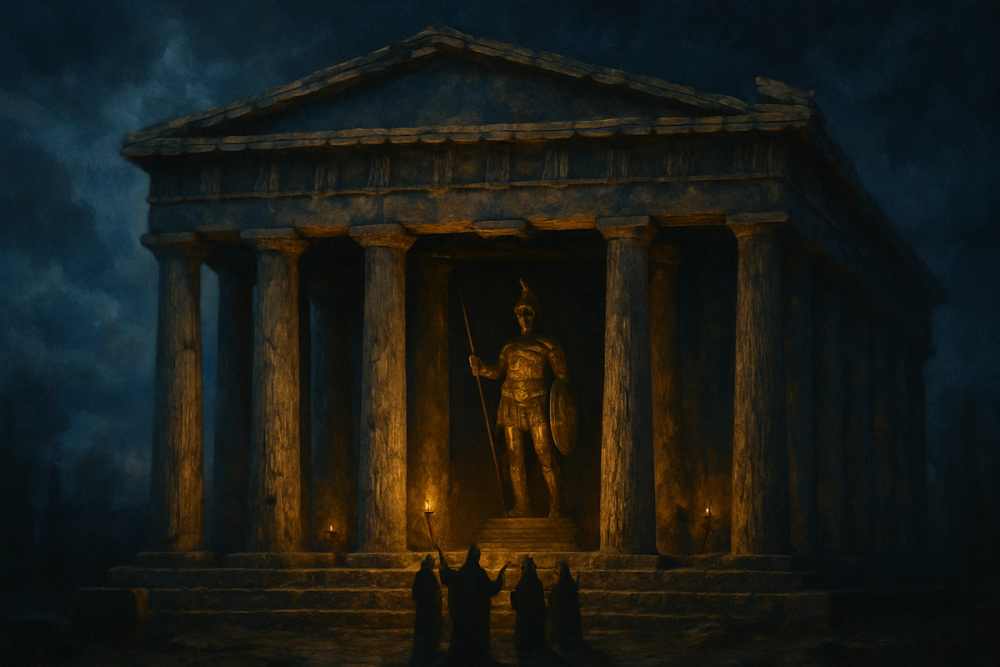
Temples dedicated to Ares were scattered across ancient Greece. These structures, often adorned with statues and reliefs, served as places of worship and reflection.
Rituals played a crucial role in connecting the devotees with Ares. These ceremonies, often accompanied by hymns and offerings, were performed to seek his favor, especially before battles.
Several festivals were dedicated to Ares, where stories of his courage were narrated, and his blessings sought. These festivals, often marked by feasts and performances, were not just religious events but also social gatherings, strengthening communal bonds.
From grand temples to intricate rituals, the sacred sites and ceremonies dedicated to Ares offer a glimpse into the God of War’s profound impact on ancient Greek society. They stand as testaments to his enduring legacy, far beyond the tales of battles and romances.

The legacy of Ares, the formidable God of War, transcends ancient myths and continues to influence contemporary culture. From the silver screen to the pages of novels, the modern world has reimagined and reintroduced Ares in various avatars, reflecting society’s evolving perceptions of heroism, conflict, and divinity.
Modern cinema, with its penchant for epic tales and larger-than-life characters, has often turned to Ares as a source of inspiration. Whether portrayed as the primary antagonist or a complex deity grappling with his nature, Ares’ cinematic depictions are a testament to his enduring appeal.
In literature, Ares has been explored in depth, with authors delving into his psyche, relationships, and the duality of his character. From fantasy novels to historical fiction, the God of War has been reimagined, humanized, and even satirized.
Contemporary artists, much like their ancient counterparts, have been captivated by Ares. Through sculptures, paintings, and digital art, they’ve showcased the god in myriad forms, each interpretation reflecting the artist’s unique perspective on war, passion, and divinity.
As we navigate the corridors of modern culture, the omnipresence of Ares is undeniable. His evolution from an ancient deity to a modern icon underscores the timeless allure of mythology and its profound impact on human imagination.
Every deity in Greek mythology is associated with a set of symbols that encapsulate their essence, power, and domain. Ares, the God of War, is no exception. His symbols, ranging from weapons to animals, provide a deeper insight into his character, influence, and the reverence he commanded among the ancients.
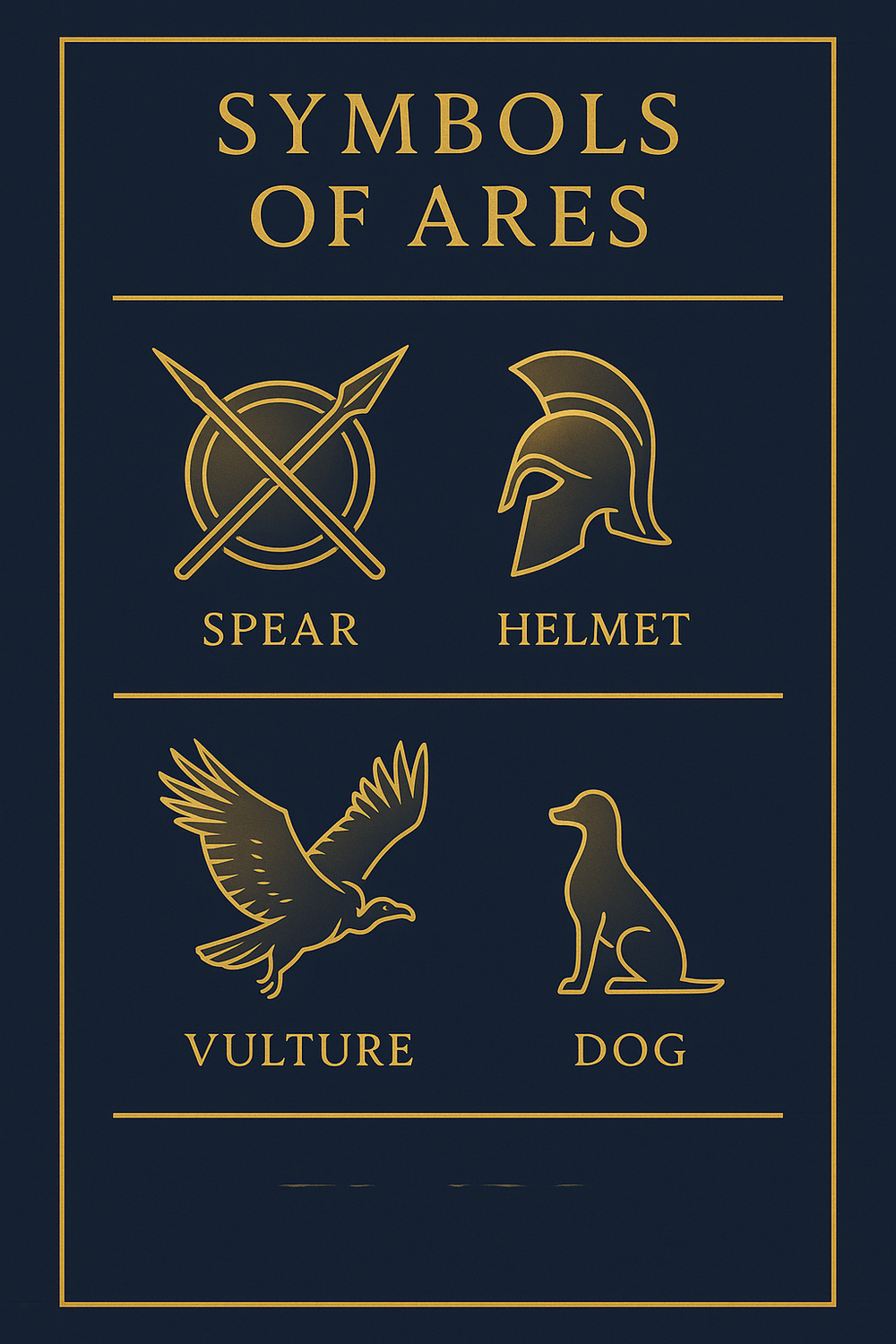
| Category | Symbol | Description |
|---|---|---|
| Weapons | Spear | Represents Ares’ direct approach to battle and his unmatched skill in combat. |
| Shield | Symbolizes both defense and attack, highlighting Ares’ dual role as a protector and a destroyer. | |
| Helmet | Indicates Ares’ readiness for war and his role as a leader in battle. | |
| Animals | Vulture | Symbol of death and the aftermath of war, often seen on ancient battlefields. |
| Dog | Represents both loyalty and aggression, encapsulating the dual nature of Ares. |
One of the most recognizable representations of Ares is the emblem of a shield with a spear crossed over it. This emblem, often engraved on ancient coins or monuments, served as a reminder of Ares’ omnipresence in times of war and peace. It symbolized protection, strength, and the ever-present possibility of conflict.
Decoding the symbols of Ares offers a richer understanding of the god beyond the tales of battles and romances. They serve as a window into the ancient world’s psyche, their fears, aspirations, and the reverence they held for the formidable God of War.
Though Mars is simply the Roman name for Ares, the two identities diverged significantly in how their respective cultures understood war itself. Comparing them side by side reveals as much about Greek and Roman values as it does about the god himself.
In Greece, war was viewed with ambivalence — necessary but destructive — and Ares reflected that unease. He was rarely a hero in Greek storytelling, more often a cautionary figure whose bloodlust brought humiliation, as when Athena and Diomedes wounded him in the Iliad. Rome, by contrast, was built on military conquest and expansion, so Mars was elevated to near-paternal status. Romans considered Mars, alongside Jupiter, one of the most important state gods, and mythologized him as the literal father of Romulus and Remus, the city’s founders.
Worship differences reflect this cultural gap. Ares had comparatively few major temples in Greece — Sparta was a notable exception given its militaristic society — and he was often worshipped out of necessity rather than devotion. Mars, however, had a prominent temple in the Roman Forum, an entire month named for him (March, or Martius), and priesthoods such as the Salii dedicated specifically to his rites. Roman generals invoked Mars before campaigns as a matter of civic duty, not fear.
The Roman version of the god left a far deeper linguistic legacy. English words like “martial” (martial arts, martial law) descend directly from Mars, while the fourth planet from the sun bears his name, later lending its identity to the zodiac sign Aries. Ares, meanwhile, survives mostly in academic and mythological contexts rather than everyday vocabulary — a quiet testament to how Rome’s reverence, more than Greece’s wariness, shaped the god’s lasting cultural footprint.
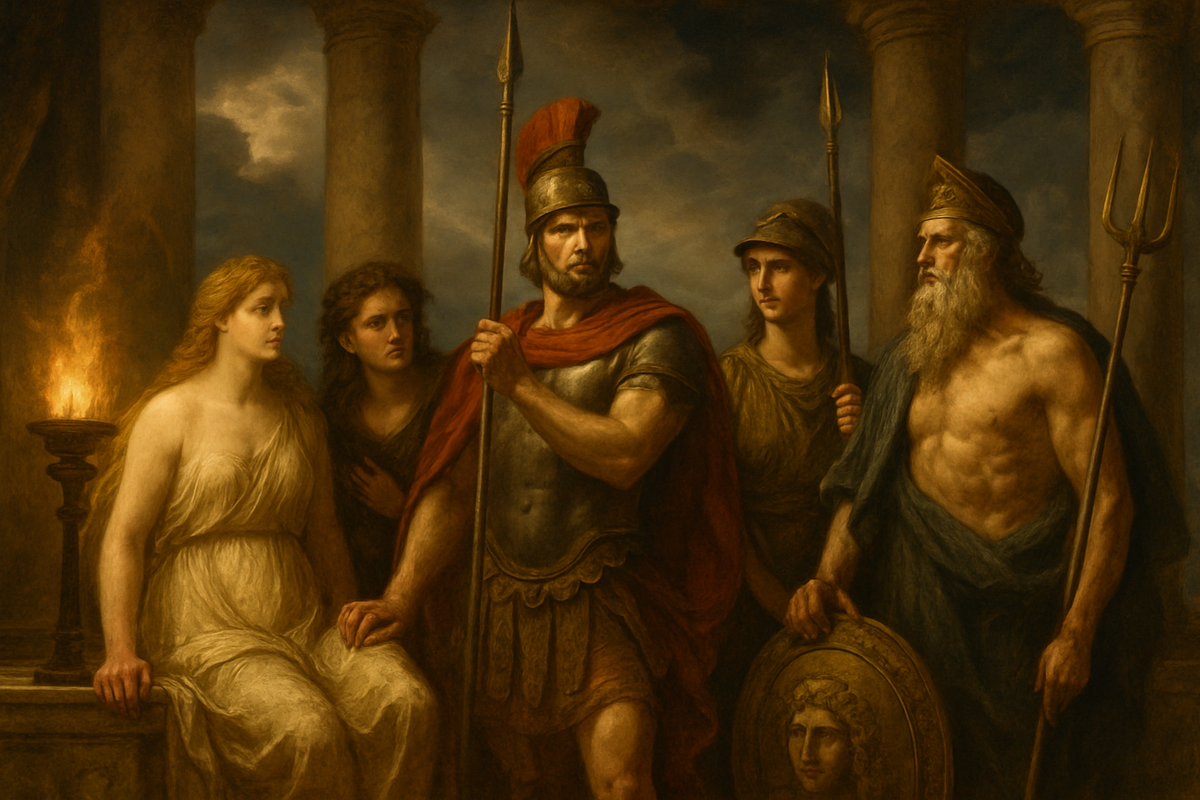
Ares rarely acted alone. His myths are populated by a consistent cast of allies who shared his appetite for conflict, and rivals who repeatedly humbled or opposed him. Understanding these relationships clarifies Ares’ place within the Olympian hierarchy.
These alliances and rivalries reveal a god defined as much by his relationships as by his violence — a deity who inspired loyalty in some corners of Olympus and resentment in others.
Ares is the Greek god of war specifically in its violent, physical, and chaotic form — bloodshed, aggression, and the raw brutality of combat. This is distinct from Athena, who governs the strategic and disciplined side of warfare, making the two gods complementary opposites within the same domain.
As an Olympian god, Ares possesses immortality, superhuman strength, and mastery of combat and weaponry unmatched by mortals. He can also incite bloodlust and panic in soldiers on the battlefield, a power tied directly to his role as the embodiment of war’s chaos rather than its tactics.
With Aphrodite, Ares fathered Eros (god of love), Harmonia (goddess of harmony), and the twin spirits Phobos (fear) and Deimos (dread), who often accompanied him into battle. He also had children with mortals, including Romulus and Remus through Rhea Silvia, the legendary founders of Rome.
Ares became known as Mars when the Romans absorbed Greek mythology into their own religious framework. The name and reputation shifted because Roman culture, built on military conquest, elevated the war god to a revered, paternal state deity rather than the feared and often mocked figure he was in Greece.
Athena, according to Greek mythology, sprang fully grown and armored from the forehead of her father, Zeus. As a deity born in such a unique manner, she was deemed the embodiment of her father’s intellect and wisdom. Throughout various myths, Athena’s wisdom manifests in her role as a mentor, strategist, and even peacemaker, making her the epitome of divine knowledge and prudence in the Greek pantheon.
Zeus’ disdain for Ares stems from Ares’ impulsive and violent nature, which often contrasts with other Olympian gods’ more strategic and orderly approach. While Zeus recognized the necessity of war, he often disapproved of Ares’ unbridled passion for conflict without reason or strategy.
In most myths, Ares is not depicted as being killed. However, he faced humiliation and defeat on several occasions, notably at the hands of Athena and the mortal hero Diomedes during the Trojan War.
No, Ares is the Greek god of war, while Aries is one of the twelve signs of the zodiac. However, the name “Aries” is derived from the Latin word for ram, and a ram symbolizes the zodiac sign. The connection between Ares and Aries is that the planet Mars, named after Ares’ Roman counterpart, rules the Aries sign.
Ares is a male deity in Greek mythology, often depicted as a virile and muscular god representing the raw force of war.
The zodiac sign Aries is associated with Ares, primarily because Aries is ruled by the planet Mars, which is named after Ares’ Roman counterpart.
Ares had several love interests, but his most famous and passionate affair was with Aphrodite, the goddess of love. Their union resulted in several offspring, including Eros (god of love) and Harmonia (goddess of harmony).
While Ares is a formidable god, he has shown fear or at least respect for certain other deities, especially his sister Athena, who has bested him in combat on several occasions.
Ares’ primary weakness is his impulsive nature. Unlike other war deities like Athena, who represents strategy, Ares often acts without thinking, driven by sheer aggression and bloodlust. This impulsiveness has led to his defeat and humiliation in various myths.
While many gods across different mythologies represent war, Ares uniquely represents the raw violence and chaos of battle. In contrast, deities like Athena represent the strategy and wisdom of warfare. This makes Ares a more volatile and unpredictable god, embodying the inherent unpredictability of war itself.
Journey swiftly through the world of Greek gods and goddesses with our guide. Uncover their stories by visiting the links below.
Discover Helios, the Greek Titan sun god who drove his blazing chariot across the sky—his myths, symbols, and spiritual meaning ex…

Discover Gaia, the primordial Greek goddess of Earth—her origins, myths, symbolism, dream meaning, and how to honor her energy tod…

Discover Nike, the Greek goddess of victory — her myths, symbols, Roman parallel Victoria, and what she means in dreams and daily …