 Know
Know
Greek Mythology
Helios: The Titan God of the Sun in Greek Myth
Discover Helios, the Greek Titan sun god who drove his blazing chariot across the sky—his myths, symbols, and spiritual meaning ex…
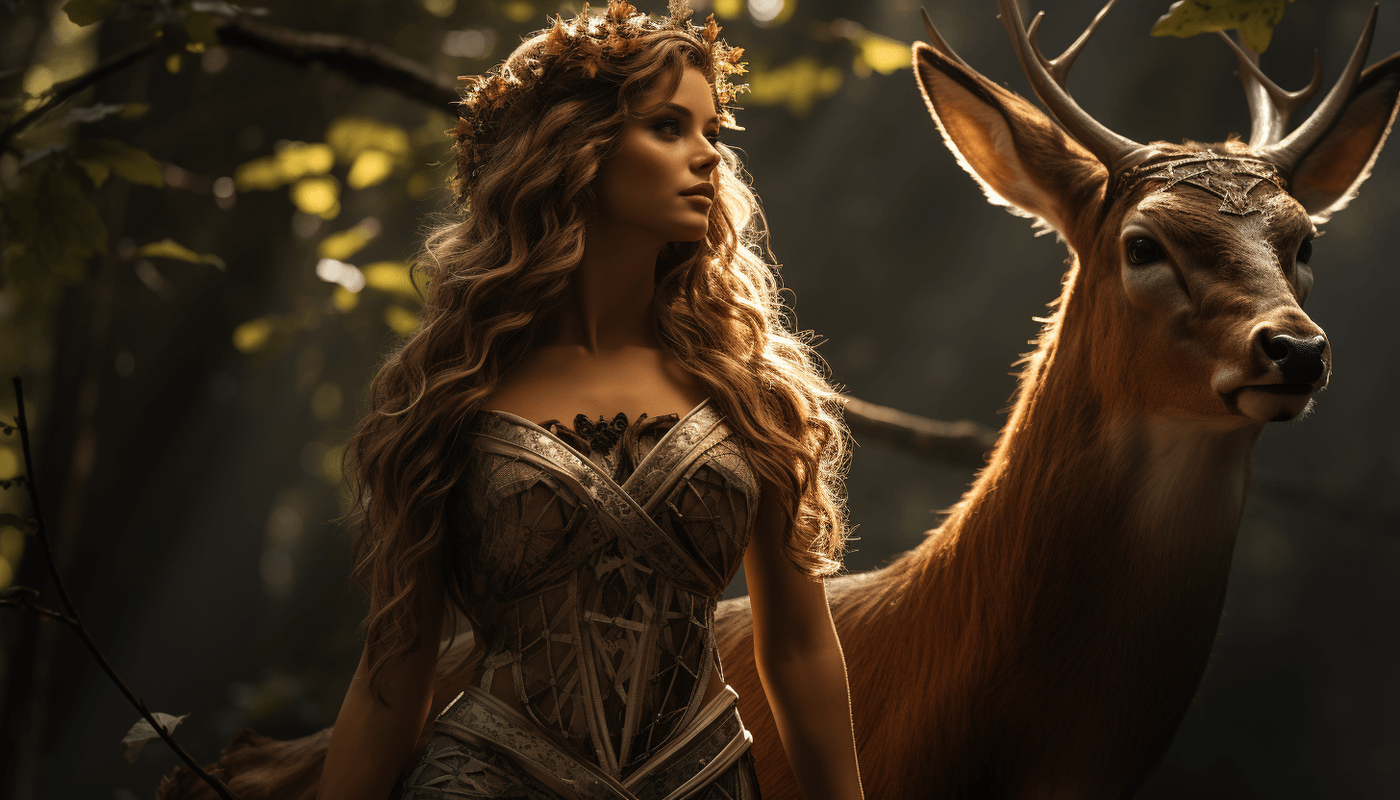
Artemis is the Greek goddess of the hunt, the moon, wild animals, and childbirth, and the eternal-maiden protector of young women and girls. Daughter of Zeus, king of the gods, and the Titaness Leto, and twin sister to Apollo, she is most often depicted with a silver bow and accompanied by a stag. Beyond her myths, Artemis endures today as a widely recognized symbol of independence, boundary-setting, and feminine power.
| Category | Details |
|---|---|
| Name | Artemis |
| Domain | Hunt, wilderness, the moon, virginity, childbirth |
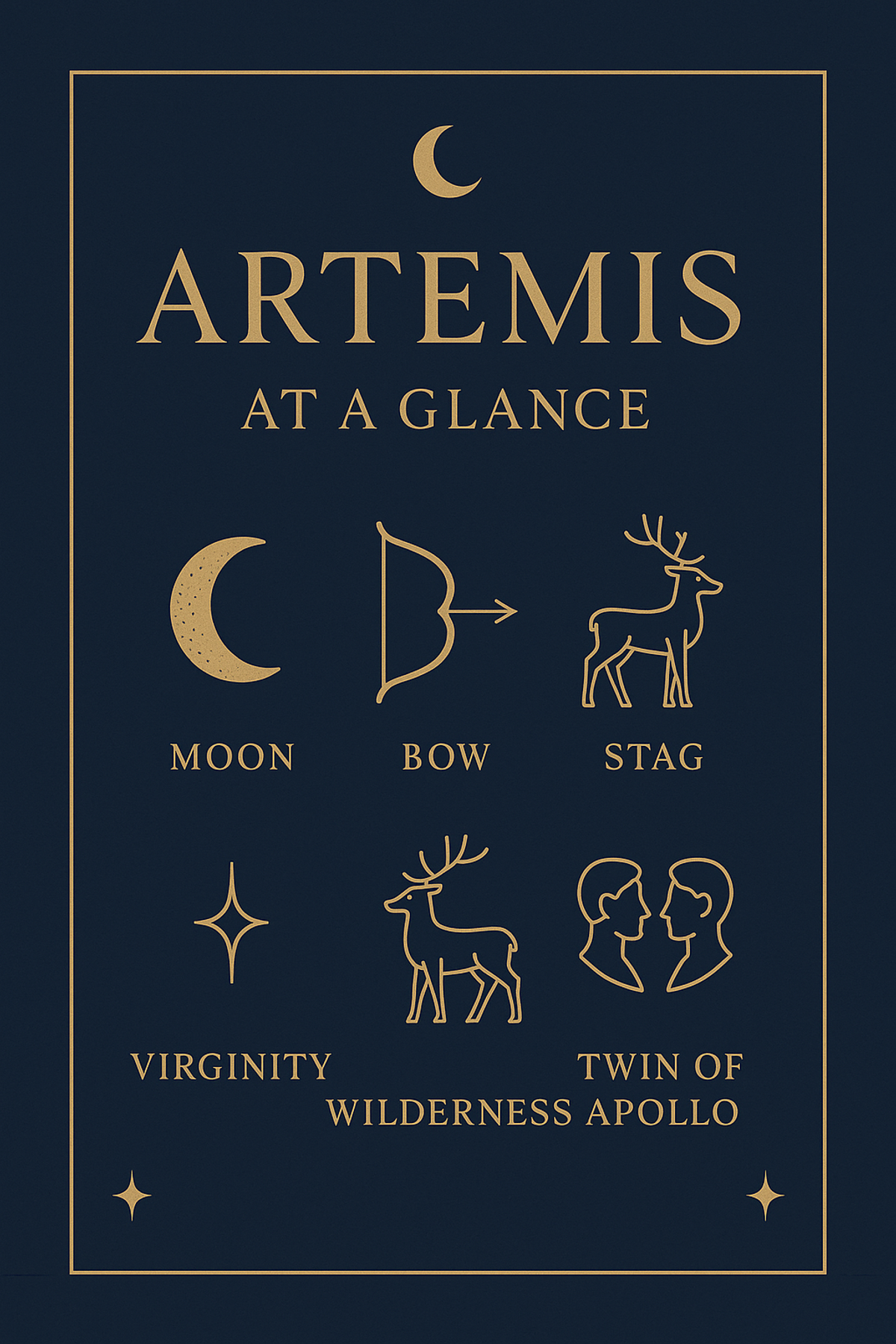
| Symbols | Bow and arrow, crescent moon, stag, cypress tree |
| Parents | Zeus and Leto |
| Siblings | Apollo (twin brother) |
| Roman Equivalent | Diana |
| Sacred Animal | Deer / Stag |
Jump to a section:
Artemis, with her fierce demeanor and silver bow, has long been a figure of intrigue and reverence in Greek mythology. Often synonymous with wilderness and the untamed lands, she was the daughter of Zeus, king of the gods, and Leto, a Titaness. She was born on the island of Delos, making it a sacred place for her worshippers, and her birth was anything but ordinary.
Artemis's birth tale intertwines with that of her twin brother, Apollo. Hera, queen of the gods and Zeus's wife, driven by jealousy toward Leto, forbade any land from offering her a place to give birth. However, Delos, being an unstable island and not "fixed" land, provided refuge to Leto.
From her early tales, Artemis was not just a huntress. Her domain extended to encompass the mysteries of nature. The moonlight filtering through dense forests, the animals roaming wild and free — all of it fell under her protection.
| Domains | Descriptions |
|---|---|
| Wild Animals | The beasts of the forests were Artemis’s companions and under her safeguard. |
| Virginity | Embodying purity and chastity, Artemis protected her own virtue and that of her followers. |
| Childbirth | Paradoxically, while being a virgin, Artemis was also considered a protector of women in childbirth, drawing from her experience during Apollo’s birth. |
To truly appreciate Artemis's significance, one must delve into her foundational tales. These early stories don't just chronicle her divine deeds — they also paint a vivid picture of her character, values, and the multifaceted domains she ruled over.
In the vast tapestry of Greek mythology, few threads are as distinct and notable as the unyielding chastity of Artemis. Revered not only as the goddess of the hunt but also as the protector of the young and the guardian of purity, Artemis's commitment to remain an eternal maiden stands out, offering profound insights into her character and the values she epitomizes.
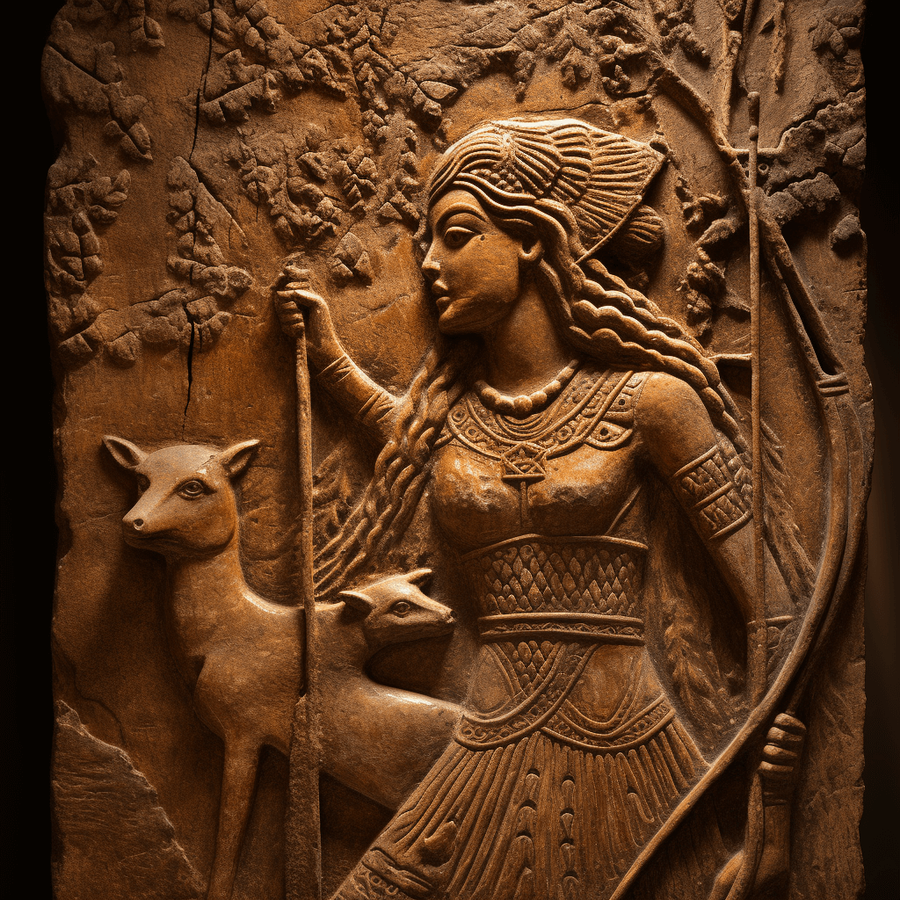
From a tender age, Artemis knew the path she wished to tread. To ensure her autonomy, independence, and dedication to the wild, she made a solemn request to her father, Zeus: the boon of eternal virginity. Recognizing her unwavering conviction, Zeus granted her wish, allowing her to remain free from the romantic entanglements that often brought both joy and sorrow to other gods and mortals alike.
While other Olympian deities like Aphrodite and Hera were often embroiled in tales of passion and jealousy, Artemis remained apart, her narratives seldom touched by such intrigues. This difference not only accentuates her unique position among the gods but also underscores the ideals she represented: strength in autonomy and pride in one's chosen path.
Understanding Artemis's vow is paramount to comprehending her essence. In a pantheon teeming with powerful figures, she carved a niche for herself, shining brightly as a beacon of unwavering principle and purity.
In the intricate world of Greek mythology, symbols play a crucial role in encapsulating the essence of the gods, their tales, and the principles they embody. Artemis, the Goddess of the Hunt, is no exception. Through her emblematic symbols — the bow, the moon, and the stag — we gain a deeper understanding of her character, dominion, and influence.
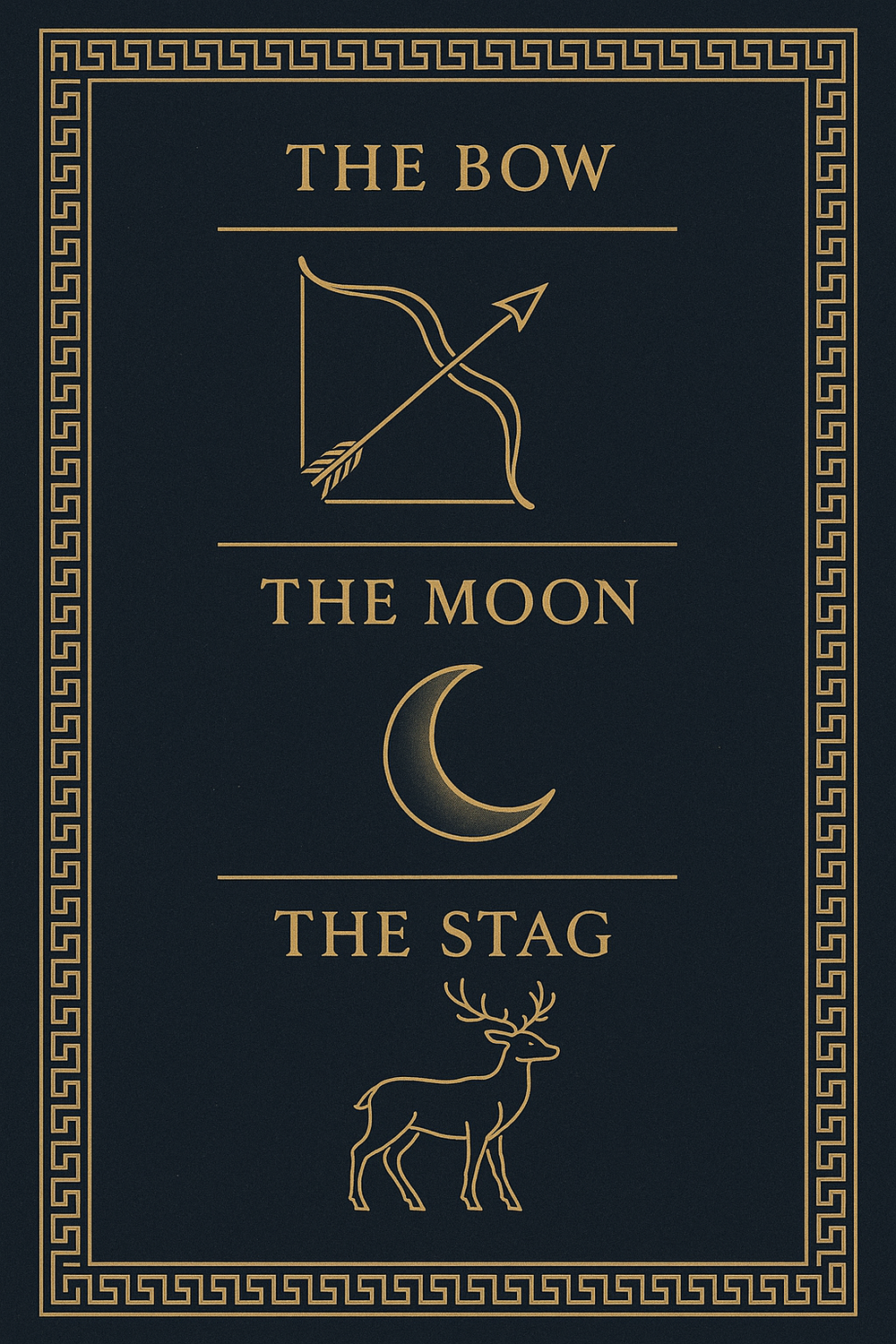
Perhaps the most iconic symbol associated with Artemis is her bow. More than a mere weapon, the bow signifies her prowess as a huntress and her command over the wilderness. When one imagines Artemis, it's often as a determined figure, bow in hand, eyes focused on a distant target. As a symbol, it embodies not just her role as a huntress but also her unerring focus and commitment to her duties and principles.
The stag, with its majestic antlers and graceful demeanor, is another symbol intrinsically linked to Artemis. In various tales, Artemis is often seen accompanied by golden-horned stags, signifying her deep connection to the wilderness and its creatures. It's a symbol of purity, agility, and vigilance. Just as a stag remains ever-alert to its surroundings, Artemis too is ever-vigilant, guarding the forests and their inhabitants.
In understanding these symbols, we don't just learn about objects or animals; we delve deeper into the psyche of the goddess they represent, appreciating her role and relevance in Greek mythology even more.
Beyond her ancient myths, Artemis has taken on a life of her own as a modern archetype. For anyone exploring goddess symbolism, spiritual practice, or feminine energy work, Artemis represents something deeply relevant today: the courage to set boundaries, live independently, and trust one's own instincts.

Artemis never needed a partner to define her power. Her refusal to marry or answer to a husband has made her a touchstone for anyone reclaiming autonomy in their own life — a reminder that self-sufficiency is its own kind of strength, not a lack of connection.
Few figures in mythology punish trespassers as swiftly as Artemis. Symbolically, her stories teach the importance of protecting one's personal space, values, and body — a lesson many modern readers apply to relationships, work, and self-respect.
As goddess of the moon, Artemis is closely tied to cycles, intuition, and the rhythms of feminine experience. In modern spiritual practice, invoking Artemis is often associated with tapping into intuition during the waning or new moon, and with honoring one's own inner cycles rather than external expectations.
Taken together, these themes explain why Artemis has outlasted her original myths: she isn't just a hunter from an ancient story, but a lasting symbol of self-possession that still resonates today.
In the rich tapestry of Greek mythology, relationships between deities shape narratives, principles, and lessons for humanity. One such dynamic, laden with mutual respect, competition, and deep-seated love, is the bond between Artemis, the Moon Goddess, and Apollo, the Sun God. As divine twins, their stories often intersect, providing us with insights into their individual characters and shared histories.
Artemis and Apollo were the children of Zeus and Leto. Due to Hera's jealousy, Leto was forced to find a secluded place to give birth. With Artemis born first, an interesting aspect of their bond took root: despite being just hours old, Artemis assisted her mother in delivering her twin brother. This act not only showcases Artemis's role as a guardian of childbirth but also the immediate connection between the siblings.
While they had distinct domains — Artemis presiding over the wilderness and the moon, and Apollo governing music, arts, and the sun — their roles often complemented each other. This was especially evident in their shared duty of bringing sudden deaths: Artemis to women and Apollo to men. Together, they maintained the delicate balance of life and death, ensuring the harmony of the natural world.
Yet, like all siblings, they had their moments of discord. Whether it was due to disagreements or challenges thrown at each other, these instances added depth to their relationship. An example is the tale of Orion, a giant huntsman. While the stories vary, in one version, Apollo, feeling threatened by Orion's closeness to his sister, tricks Artemis into shooting him. Despite the conflict, it's their reconciliation and continued bond that stands out.
In conclusion, the dynamic between Artemis and Apollo serves as a testament to the multidimensional nature of siblinghood. Through their tales, we are reminded of the joys, challenges, and enduring nature of the bond between brothers and sisters, making their stories ever relevant and relatable.
The tapestry of Greek mythology is woven with tales of divine intervention, retribution, and salvation. Among its prominent threads are the tales of Artemis, the Goddess of the Hunt. With a fierce sense of protection over the natural world and the beings within her domain, Artemis was not one to be wronged. Here, we delve into some major myths where Artemis's acts of vengeance and protection come to the fore, reflecting her multifaceted nature.
One of the most well-known myths involving Artemis is the tragic tale of Actaeon, a renowned hunter. Upon accidentally witnessing Artemis bathing in a secluded forest stream, he was transformed into a stag by the enraged goddess. Unable to communicate, Actaeon found himself pursued and eventually torn apart by his own hunting dogs, a dire consequence for a momentary trespass.
Niobe, proud mother of fourteen, boasted about her children and belittled Leto, the mother of Artemis and Apollo, for having only two. In retaliation, Apollo and Artemis struck down Niobe's children. However, in some versions of the tale, it's believed that Artemis, in a fleeting moment of mercy, spared a few of Niobe's daughters.
Artemis's protective nature wasn't just reserved for moments of vengeance. She also played the role of a guardian. A poignant example is the story of the Aloadae giants. They sought to storm Mount Olympus, and during their assault, they kidnapped Artemis. However, instead of retaliating with violence, Artemis transformed herself into a doe, causing confusion and eventually leading to the giants' downfall.
In the vast realm of Greek mythology, Artemis stands out as a deity who fiercely protects her domain and principles. Her tales, filled with both wrath and compassion, resonate with the duality of human nature, making her one of the most relatable and revered figures in ancient lore.
Artemis, with her multifaceted roles ranging from the protector of the wilderness to the guardian of young girls, occupied a significant place in ancient Greek religious practices. Her cult, widespread and diverse, witnessed myriad forms of worship, celebrated in various temples and through unique rituals.
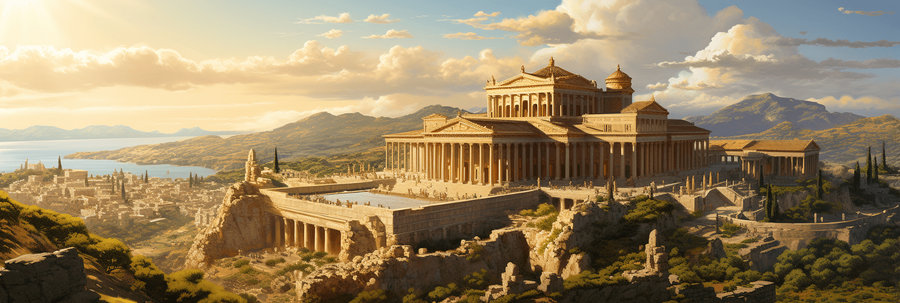
The architectural marvels dedicated to Artemis were not just places of worship but also epitomized the glory and reverence accorded to the goddess. Some of the most renowned temples include:
The worship of Artemis wasn't confined to mere prayers. It encompassed a range of rituals and festivals, reflecting the diverse roles she played in the lives of her devotees.
| Ritual/Festival | Description |
|---|---|
| Brauronia | A festival celebrated in Brauron, young girls, representing bears, “played the bear” for Artemis, symbolizing the transition from childhood to adulthood. |
| Munychia | Commemorated in Athens, it celebrated Artemis as the protector of communities. Cakes shaped like the full moon were offered to honor her. |
| Taurian Artemis Festival | Held in Tauris, this festival is linked to the myth of Iphigenia and had, according to some accounts, human sacrifices as an integral part. |
Why was Artemis so widely worshiped? The answer lies in her diverse roles. As the goddess of wilderness, she safeguarded nature and its beings. As the guardian of childbirth and young girls, she was invoked for protection and blessings. These diverse facets made her an indispensable figure in the spiritual and everyday lives of ancient Greeks.
In conclusion, the cult of Artemis provides a fascinating insight into the religious practices of ancient Greece. Her temples stood as testaments to her grandeur, while the rituals and festivals celebrated her diverse roles, making Artemis an enduring and revered figure in ancient Greek religion.
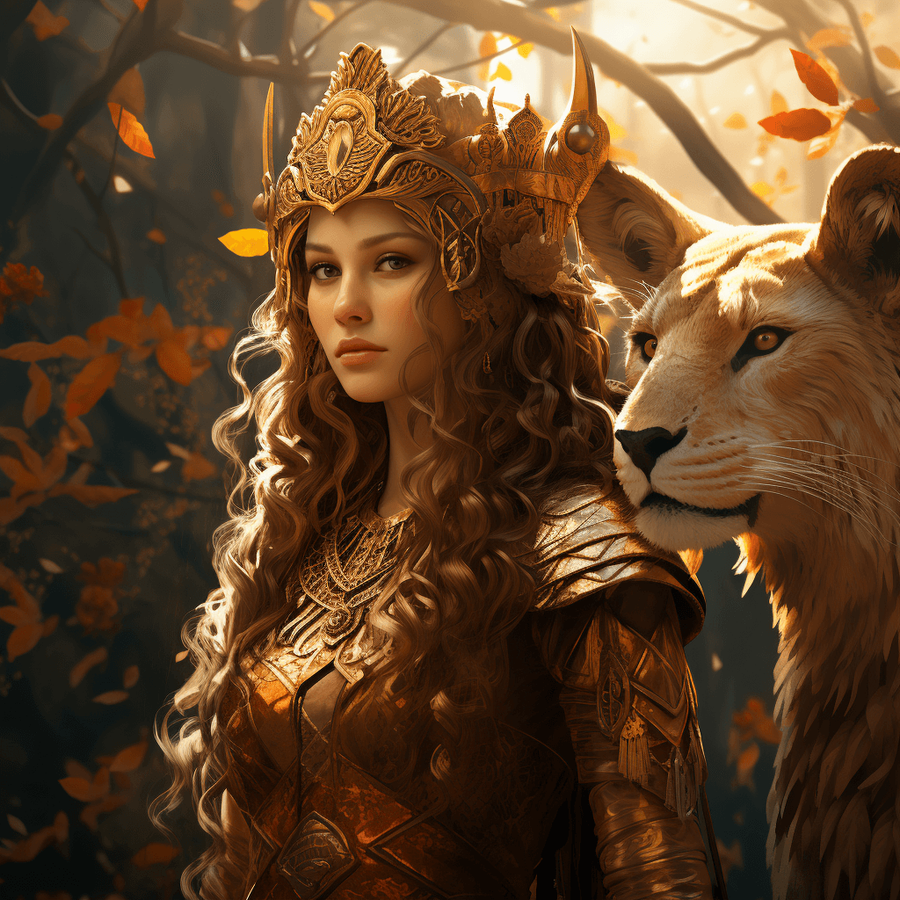
Among the many intriguing facets of Artemis, her bond with the wilderness and its inhabitants stands out prominently. As the guardian of forests, mountains, and meadows, it's no surprise that Artemis is often portrayed surrounded by a retinue of nymphs and a host of animals.
Often seen flanking the goddess in art and literature, the nymphs, as ethereal maidens, were intrinsically linked to nature's elements. From the echoing cries of the Oreades (mountain nymphs) to the soft whispers of the Dryades (tree nymphs), these divine entities represented various facets of the wild.
Animals were more than mere creatures in the realm of Artemis. They were sacred symbols, emblematic of purity, strength, and freedom. Among the myriad creatures, a few held a special place beside the goddess:
Why did these companions hold such a revered space beside Artemis? The companionship between Artemis and her entourage was not just about divine associations; it was a depiction of harmony. Artemis, with her nymphs and animals, painted a picture of an ecosystem in balance, where divinity mingled seamlessly with nature's rhythm.
Artemis's relationship with her companions accentuates her role as the guardian of nature, highlighting the profound respect ancient Greeks held for the wilderness. Through her, the intertwining relationships between the divine, humans, and nature found a harmonious representation, urging us to cherish and protect the natural world around us.
When we envision Artemis, it's easy to be captivated by her prowess as the Huntress, her silhouette adorned with a quiver and bow. However, delving deeper into the labyrinth of Greek mythology reveals a multi-dimensional goddess who also bore significant responsibilities as the guardian of childbirth and the young.
It's a conundrum that fascinates many: How could Artemis, the eternal virgin, be associated with childbirth? The paradox lies in the ancient Greeks' perception of virginity. For them, virginity was a symbol of independence and autonomy, and not merely a physical attribute. In her capacity as an autonomous deity, Artemis presided over the critical moments of life, ensuring the safe transition of women into motherhood.
While Artemis's association with childbirth might seem unexpected, another deity, Ilithyia, further cements this role. Ilithyia, often identified with or as an aspect of Artemis, was explicitly worshiped as the goddess of childbirth. Ancient texts and hymns often invoked Ilithyia's favor to ensure the smooth delivery of a child and the safety of the mother.
The juxtaposition of Artemis as both the huntress and the guardian of childbirth showcases the depth and versatility of Greek deities. It underscores the idea that life is a spectrum of experiences, and divinity is no exception. In Artemis, we find a harmonious blend of strength and nurture, of fierce independence and gentle care.
As we reflect on Artemis's multifaceted nature, it becomes evident that she is not just the goddess of the hunt but also a symbol of the many roles women play, transcending boundaries and defying singular definitions.
Amidst the myriad tales and depictions of Artemis, an intriguing facet remains her powerful influence on the cultural and religious celebrations of ancient Greece. Festivals and games, awash with excitement, athleticism, and reverence, were organized in her honor.
The most notable celebration in honor of Artemis was the Artemisia, an annual festival observed with great zest. It wasn't just a tribute to the goddess's hunting prowess, but also her roles as the protector of young women and nature.
In the region of Brauron, a unique version of Artemis, known as Artemis Brauronia, was venerated. Here, festivities were particularly focused on the transition of girls to womanhood.

Artemis's association with the deer was celebrated during the Elaphebolia. Participants would craft cakes in the shape of stags and does. While it was primarily a tribute to her hunting aspect, it also subtly acknowledged her nurturing nature towards gentle creatures.
Athletic games, mirroring the Olympic Games, were also organized in various sanctuaries of Artemis. These weren't just a display of physical prowess but were also imbued with religious undertones, ensuring the participants competed with both vigor and reverence.
Exploring these festivals and games deepens our understanding of Artemis's influence. It wasn't just about worship; it was about integrating her teachings and values into everyday life, celebrating both the wild and the nurturing facets of the formidable Huntress Goddess.
As with many figures of ancient mythology, Artemis's sphere of influence hasn't been limited to tales of old. Her iconic status has permeated artistic endeavors across eras, inspiring generations of poets, playwrights, sculptors, and even modern filmmakers.
In The Homeric Hymns, a collection of poems dedicated to Greek deities, Artemis's birth, her youthful exploits, and her fierce nature are vividly depicted. Playwrights like Euripides and Aeschylus have incorporated her essence into their tragedies, presenting multi-faceted views of the goddess — sometimes as the unyielding huntress, at other times as the protector of the innocent.
The European Renaissance witnessed a revival in interest for Greek mythology. Artists and sculptors, captivated by the tales of Artemis, incorporated her symbolisms into their masterpieces. Whether it's Titian's Diana and Actaeon or Rembrandt's Artemis as Diana, her ethereal presence was profoundly captured in canvases and stone.
Modern authors have not been impervious to Artemis's allure. From Rick Riordan's Percy Jackson series, where she leads a band of immortal huntresses, to non-fiction works discussing her influence, the spectrum of references is vast.
Artemis's leap into modern media is a testament to her timeless charm. Films have reimagined her in various avatars, blending her ancient traits with contemporary contexts. Television series, while often taking creative liberties, have succeeded in introducing the goddess to newer audiences, ensuring her tales remain evergreen.
Many poets, enticed by Artemis's multifaceted nature, have penned verses dedicated to her. They often juxtapose her wilderness with her nurturing demeanor, crafting verses that are both evocative and contemplative.
In sum, Artemis's indelible mark on the literary and artistic realms is undeniable. As generations evolve and mediums change, one thing remains constant: the fascination and reverence for the Huntress Goddess. Through words, strokes, and frames, her legacy continues, reminding us of her unparalleled spirit and her place in the annals of culture and art.
The vast tapestry of global mythologies often presents intriguing parallels, with deities from distinct cultures bearing remarkable resemblances in their roles and attributes. Artemis, the revered Huntress Goddess of ancient Greece, is no exception.
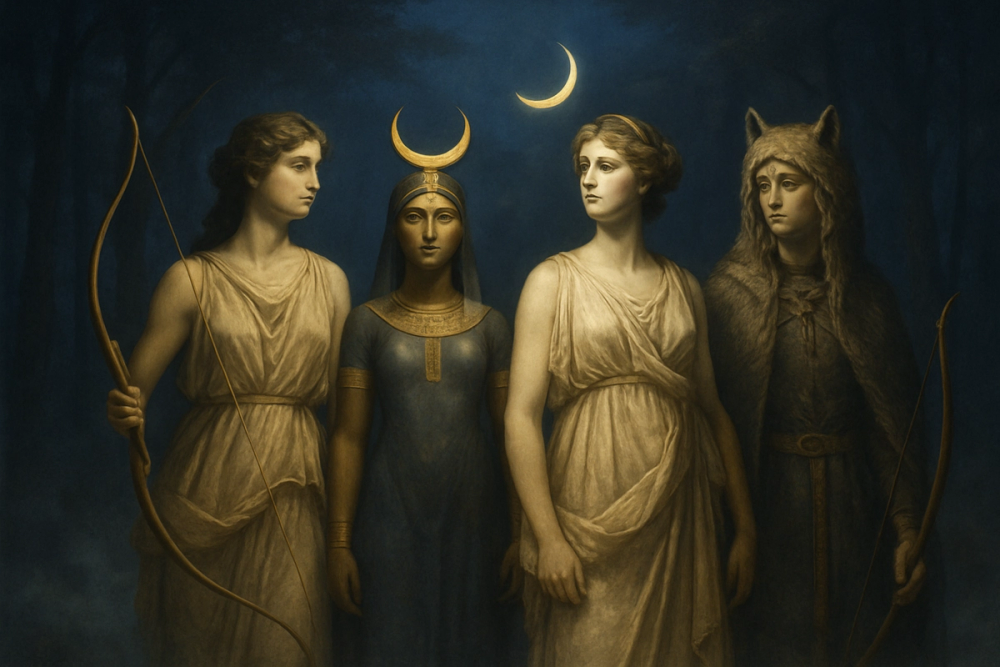
Perhaps the most direct counterpart to Artemis is the Roman goddess Diana. Like Artemis, Diana was venerated as the virgin goddess of the hunt and wild animals. She also held dominion over childbirth and nature, weaving a tapestry of similarities with her Greek counterpart. The reverence and rituals for Diana, especially at her sacred grove in Nemi, mirror the worship of Artemis in many ways.
From the snow-sprinkled landscapes of Scandinavia comes Ullr, a god associated with archery and winter sports. Though male, Ullr's connection with the hunt and his expertise with the bow draw unmistakable parallels with Artemis's characteristics.
Moving towards the Indian subcontinent, we encounter Durga, a fierce goddess who, much like Artemis, is depicted with a weapon — in this case, a trident — and is often shown riding a lion, symbolizing her mastery over the wild. Durga's tales of vanquishing demons and protecting the natural world resonate with Artemis's role as a guardian of the wilderness.
Shifting our gaze to ancient Egypt, Bastet, originally a lioness warrior goddess, underwent a transformation to become the cat goddess, protector of homes. Her duality, both fierce and nurturing, offers an interesting comparison to Artemis's multifaceted nature.
In observing these counterparts, what becomes evident is the universality of certain divine archetypes. Whether it's the fierce protector, the masterful huntress, or the guardian of the wild, these themes find echoes across the ages and continents.
This comparative exploration not only enhances our appreciation for Artemis but also underscores the interconnectedness of human societies. Through the lens of mythology, we witness the shared aspirations, fears, and values that shape civilizations, beautifully manifested in their divine tales and figures.
Because Artemis and her Roman counterpart Diana share so many overlapping traits, a side-by-side comparison makes the similarities and differences easiest to see.
| Aspect | Artemis (Greek) | Diana (Roman) |
|---|---|---|
| Culture | Ancient Greece | Ancient Rome |
| Domain | Hunt, moon, wilderness, childbirth | Hunt, moon, wilderness, childbirth |
| Parents | Zeus and Leto | Jupiter and Latona |
| Sacred Site | Temple of Artemis, Ephesus | Sacred grove at Nemi |
| Symbols | Silver bow, stag, crescent moon | Bow, hounds, crescent moon |
| Status | Eternal virgin goddess | Eternal virgin goddess |
Athena, according to Greek mythology, sprang fully grown and armored from the forehead of her father Zeus. As a deity born in such a unique manner, she was deemed the embodiment of her father's intellect and wisdom, manifesting throughout myths as a mentor, strategist, and even peacemaker.
Artemis is renowned as the goddess of the hunt, wilderness, and wild animals. In myths, she is often depicted hunting deer and other woodland creatures, though her dominion extends beyond mere animals to the vast landscapes of forests and mountains.
Artemis is the twin sister of Apollo and is closely associated with the moon. She took a vow of perpetual virginity and served as protector of young girls until they married. She is also linked to the cypress tree and animals like the deer and the bear.
Artemis holds significant importance in Greek mythology as the goddess of the hunt, wilderness, and childbirth. She symbolizes independence, protection, and strength, and as one of the twelve Olympian deities, she was widely worshipped throughout ancient Greece.
Artemis transformed the Cretan boy Siproites into a girl because he accidentally saw her bathing. This transformation was a response to preserve her vow of virginity and her desire for privacy.
While Artemis is immensely powerful, especially in domains related to hunting, wilderness, and childbirth, the title of "most powerful goddess" is subjective and varies by myth and region. Her vast array of responsibilities and widespread worship, however, showcase her significance and power.
Artemis, unlike many other Greek gods and goddesses, did not have many romantic liaisons, having taken a vow of eternal virginity. There are myths that speak of her close affections for her hunting companions and the nymphs, and one story centers on her deep bond with Orion, although versions vary widely.
Artemis is not considered "evil" in Greek mythology. While she is a protector and nurturer, she can also be fierce and vengeful, especially when her values, such as her vow of virginity, are threatened — her actions are best understood as manifestations of her roles rather than a binary concept of good or evil.
The stag and the deer are most closely tied to Artemis, representing grace, vigilance, and purity. The bear also holds a special place in her cult, symbolizing strength, motherhood, and the transition from girlhood to womanhood.
Moonstone is the crystal most often associated with Artemis, reflecting her lunar domain, intuition, and feminine energy. Silver and deep indigo are her most common associated colors, evoking moonlight and the night forest she rules over.
Artemis is most commonly linked to Sagittarius, thanks to her mastery of the bow and arrow and her independent, freedom-loving nature. Some also connect her to Cancer, given her ties to the moon and protective, nurturing instincts.
For many women today, Artemis represents self-reliance, the right to set firm boundaries, and permission to live life on one's own terms. She's often invoked as a spiritual archetype for reclaiming independence, trusting intuition, and honoring one's own cycles rather than external expectations.
Venture into the stories of Greek gods and goddesses with our brief guide. Learn more by exploring the links below.
Discover Helios, the Greek Titan sun god who drove his blazing chariot across the sky—his myths, symbols, and spiritual meaning ex…
Discover Gaia, the primordial Greek goddess of Earth—her origins, myths, symbolism, dream meaning, and how to honor her energy tod…
Discover Nike, the Greek goddess of victory — her myths, symbols, Roman parallel Victoria, and what she means in dreams and daily …