 Know
Know
Greek Mythology
Eros: The Greek God of Love and Desire
Discover Eros, the Greek god of love and desire—his myths, symbols, spiritual meaning, and how to invoke his passionate energy tod…
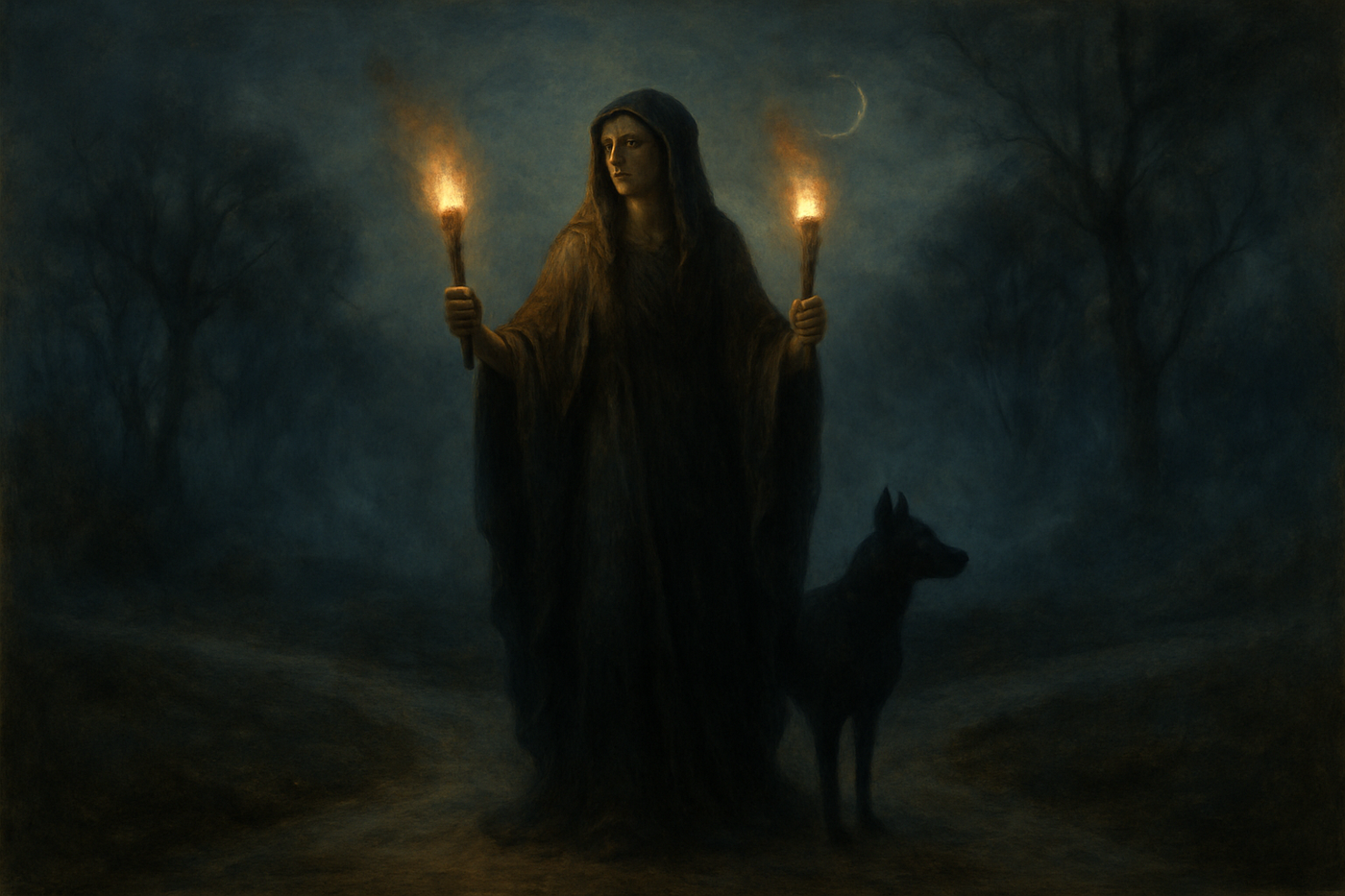
Hecate is the ancient Greek goddess of magic, witchcraft, the night, ghosts, and crossroads, most often depicted holding twin torches and accompanied by dogs. Unlike Olympian deities confined to a single domain, she moves freely between the world of the living, the dead, and the divine, making her the patroness of thresholds, transitions, and hidden knowledge. Ancient Greeks invoked her for protection while traveling, guidance at life's turning points, and connection to the unseen forces of night and moon.
There is something magnetic about standing at a fork in the road at dusk, unsure which path to take. That flicker of uncertainty, the cool air, the sense that something is watching from the shadows — this is Hecate's domain. She does not promise easy answers. She offers a torch and asks you to choose.
For thousands of years, people have left food at crossroads, whispered her name before difficult decisions, and pictured her three-faced form guarding the boundary between what was and what is yet to come. Her story is not one of comfortable certainty, but of power found in liminal, in-between places — the very places most of us try to avoid.
Hecate (also spelled Hekate) predates many of the Olympian gods in Greek religious memory. Hesiod's Theogony, written around the 8th century BCE, treats her with unusual reverence, describing her as a daughter of the Titans Perses and Asteria who retained honor from both earth and sky even after Zeus rose to power. Hesiod claims Zeus valued her so highly that he allowed her to keep her ancient privileges: the power to grant or withhold blessings in war, athletic contests, animal husbandry, and the sea.
This is a striking detail. While goddesses like Hera and Aphrodite are woven tightly into the Olympian family drama, Hecate stands slightly apart — a Titan-born power that even Zeus chose not to diminish. Later traditions increasingly associated her with the underworld, night magic, and the moon, though the moon connection became especially strong in Roman and later esoteric writings rather than the earliest Greek sources.
Hecate's most famous mythological appearance is in the Homeric Hymn to Demeter. When Persephone is abducted by Hades, Hecate is the only witness who hears the girl's cries from her cave. She later joins Demeter in the desperate search, carrying torches through the darkness. When Persephone finally returns from the underworld, Hecate embraces her and becomes her constant companion and guide, moving with her between the world above and the world below each year.
This myth cements Hecate's identity as a psychopomp — a guide of souls across boundaries — and explains her deep, ongoing connection to the underworld, to grief, and to the mysteries of death and renewal.
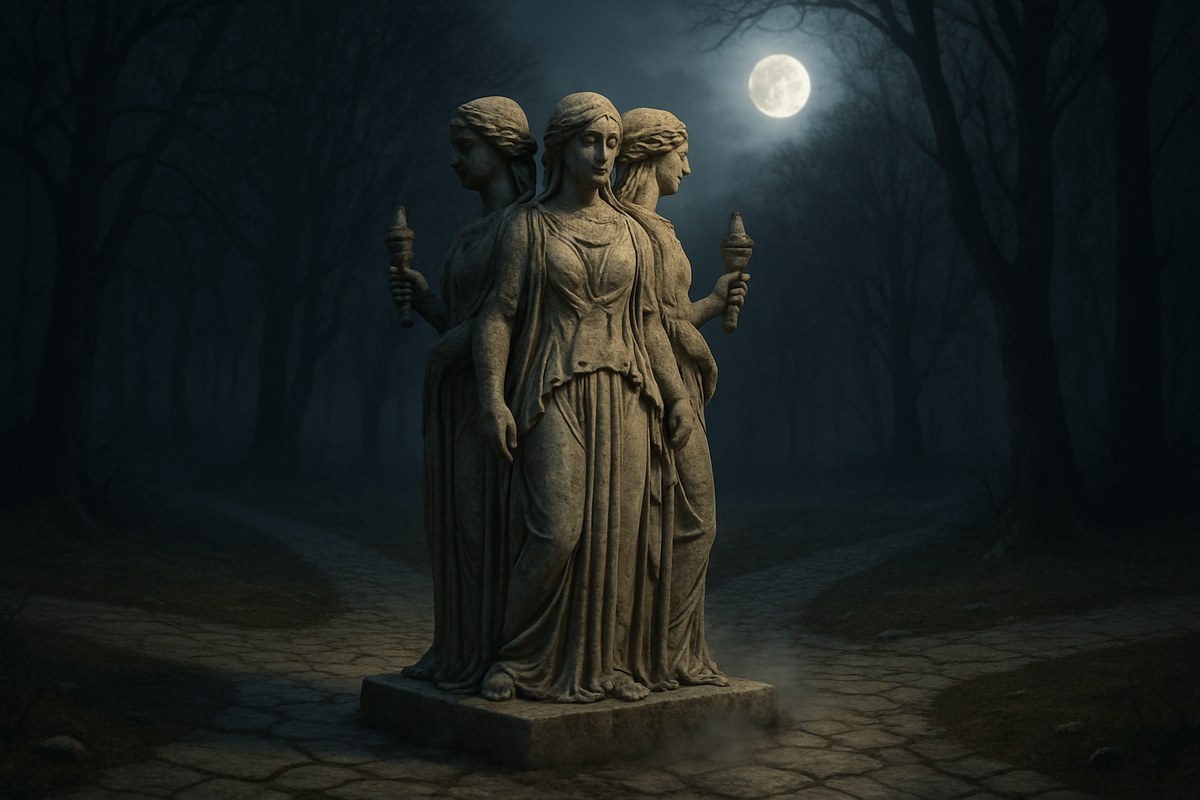
Hecate's iconography is unusually rich and consistent across centuries, which is part of why she remains so recognizable today.
Her triple form — Hecate Triformis — is one of the most enduring images in Western esotericism, often interpreted as representing maiden, mother, and crone, or the three phases of the moon, though this specific triad became popular mainly through later Neopagan reinterpretation rather than classical Greek religion.
| Domain | Meaning | Key Symbol |
|---|---|---|
| Crossroads | Decision-making, transitions, protection while traveling | Triple road statues (Hekataia) |
| Magic & witchcraft | Hidden knowledge, spellcraft, herbalism | Cauldron, keys |
| The moon & night | Intuition, cycles, the unconscious | Crescent moon, torches |
| The underworld | Death, rebirth, guidance of souls | Serpents, black dogs |
| Protection | Guarding homes, doorways, boundaries | Hekataia at thresholds |
In everyday Greek life, Hecate was far from a fringe or purely literary figure. Households commonly placed small shrines or statues to her at doorways and crossroads to ward off evil spirits, and families left offerings — called Hecate's Suppers — at crossroads on the night of the new moon, typically consisting of eggs, fish, or bread, meant for wandering spirits and for the goddess herself.
As Greek religion blended with Roman tradition, Hecate found a close counterpart in Trivia, whose very name means "three ways" and directly echoes the crossroads shrines of the Hekataia. Roman poets sometimes merged her identity with Diana and Proserpina into a single triple goddess, Diana Triformis, ruling the sky, earth, and underworld at once. This three-in-one framework, popularized by writers like Ovid and Virgil, laid much of the groundwork for the triple-goddess imagery so central to modern Wiccan practice today.
By the Hellenistic and Roman periods, Hecate's profile shifted dramatically toward magic and sorcery. The Greek Magical Papyri, a collection of spells and ritual texts from Roman Egypt (2nd century BCE–5th century CE), invoke her extensively as a powerful, sometimes fearsome figure who commands ghosts and cosmic forces. She appears in the works of playwrights like Euripides, where the sorceress Medea calls upon Hecate before performing dark magic — cementing the goddess's later reputation as patroness of witches.
In the 20th and 21st centuries, Hecate experienced a striking revival. Contemporary Wiccans and eclectic pagans frequently honor her as a crone goddess and guardian of witchcraft, often incorporating her triple form into ritual calendars tied to the moon's phases. This modern interpretation blends ancient sources with newer symbolic frameworks, and while it diverges from strict classical scholarship, it reflects a genuine and ongoing spiritual relationship many practitioners feel with her.
Stripped of ritual context, Hecate speaks to something deeply human: the discomfort and power of standing at a threshold. She represents:
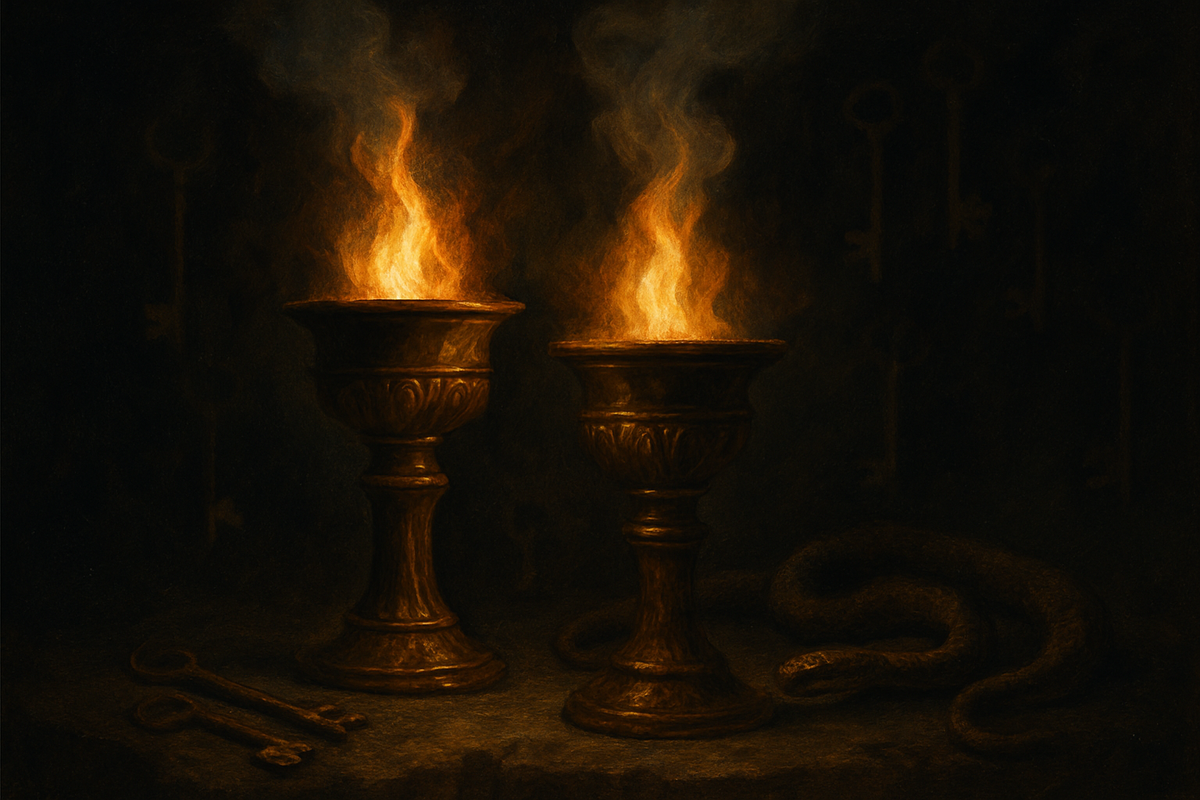
Dreaming of Hecate, crossroads, torches, or dogs at night is often interpreted as a sign that the dreamer is approaching a major decision or life transition. A dream featuring three paths or a figure holding fire in darkness may suggest the psyche is asking for clarity, courage, or trust in one's own inner compass rather than external validation. Some dream analysts also link her appearance to processing grief or unresolved endings, echoing her mythic role guiding Persephone between worlds.
You don't need to be a practicing witch to draw meaning from Hecate's symbolism. Practical ways people connect with her energy include:
Hecate's presence pairs meaningfully with other Greek deities tied to transformation and protection, such as Artemis, another fiercely independent goddess of the wild and moon, or Athena, whose wisdom complements Hecate's intuitive knowledge. Those curious about the wider Greek pantheon can also explore the full list of Greek gods for context on how she fits among Olympians like Apollo and Poseidon.
Hecate is the Greek goddess of magic, witchcraft, crossroads, the night, and the moon. She also serves as a guide for souls moving between the world of the living and the underworld, reflecting her deep ties to transitions and thresholds.
Ancient Greeks believed dogs, especially black ones, could sense her approach and often barked to signal her presence at night. Crossroads were sacred to her because they represented literal choice points, and statues called Hekataia were placed where three roads met to seek her protection.
Hecate is neither purely good nor evil; ancient Greeks saw her as a powerful, protective figure who could grant blessings or wield fearsome magic depending on context. Her later association with witchcraft in works like Euripides' Medea gave her a darker reputation, but original sources like Hesiod's Theogony portray her with great honor and respect.
Dreaming of Hecate, crossroads, or torches in darkness is often interpreted as a sign of an approaching decision or major life transition. It can also suggest the need to trust intuition, confront unresolved grief, or seek clarity before moving forward.
While Artemis and Selene are more purely lunar and celestial figures, Hecate's moon association developed later and is tied specifically to night magic, crossroads, and the underworld rather than the hunt or the sky itself. Hecate's domain is liminal and transitional, making her distinct even within Greece's cluster of moon-linked goddesses.
Discover Eros, the Greek god of love and desire—his myths, symbols, spiritual meaning, and how to invoke his passionate energy tod…
Discover Selene, the Greek Moon goddess — her myths, symbolism, Endymion legend, and spiritual meaning across ancient cultures.
Discover Helios, the Greek Titan sun god who drove his blazing chariot across the sky—his myths, symbols, and spiritual meaning ex…