 Know
Know
Greek Mythology
The Minotaur: Myth of the Labyrinth Explained
Discover the true story of the Minotaur, Crete's bull-headed monster, its Labyrinth, Theseus's quest, and what the myth symbolizes…
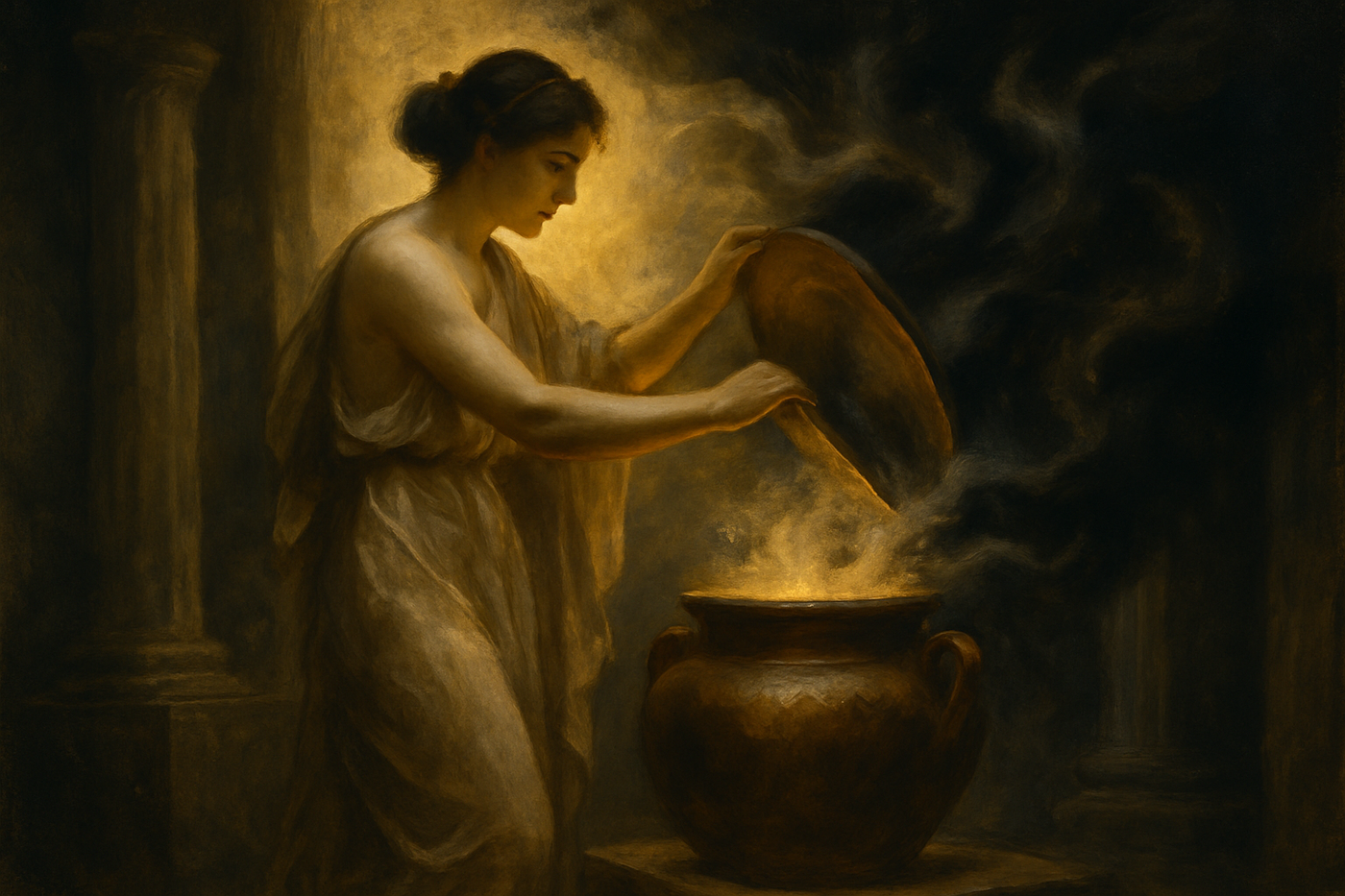
Pandora was the first mortal woman in Greek mythology, molded from clay by the smith-god Hephaestus and given gifts by every Olympian god — beauty, charm, curiosity, and skill. Zeus sent her to earth carrying a sealed pithos, a large ceramic storage jar (not the small "box" of later legend), as punishment against humanity after the Titan Prometheus stole fire. When Pandora lifted its lid, sickness, grief, war, and death escaped into the world, leaving only Hope — Elpis — trapped inside. Her story remains one of the ancient world's most enduring lessons about curiosity, punishment, and the stubborn persistence of hope.
It's a story that has survived nearly three thousand years, whispered through Greek firesides, painted by Renaissance masters, and retold in classrooms everywhere. But most people know only half of it — a mistranslated container, a woman blamed for mankind's suffering, and a hidden layer of meaning about knowledge, blame, and the strange comfort of hope.
To understand Pandora is to understand something ancient and deeply human: our fear of what we don't know, and our need to believe that even in the darkest jar, something good remains.
Pandora appears first in the poet Hesiod's Theogony and Works and Days, both written around the 8th century BCE. She was not born of a mother but crafted by Zeus, king of the gods, as retaliation after Prometheus gave humanity the gift of fire. Zeus commanded Hephaestus to shape a woman from earth and water — beautiful, lifelike, and irresistible. Every Olympian then added a trait, which is how she earned her name, "Pandora," literally "all-gifted" or "the gift of all."
Hesiod describes a divine assembly line of talents bestowed upon her, each one quietly shaping her fate.
| God | Gift Given to Pandora |
|---|---|
| Athena | Skill in weaving and fine craftsmanship |
| Aphrodite | Physical beauty and grace |
| Hermes | Cunning, persuasive speech, and curiosity |
| Apollo | Musical talent |
| Zeus | The sealed jar and command never to open it |
Zeus then sent Pandora to earth as a bride for Epimetheus, Prometheus's foolish brother, despite Prometheus's warning never to accept gifts from the gods. Epimetheus, dazzled by her beauty, welcomed her anyway — and with her came the jar.
Here's a detail most retellings skip: Pandora never opened a "box." Hesiod's original Greek word was pithos, a large ceramic storage jar used across the ancient Mediterranean to hold wine, oil, or grain — sometimes large enough for a person to hide inside, as in the later story of Diogenes the Cynic.
The "box" version comes from the 16th-century Dutch scholar Erasmus of Rotterdam, who mistranslated pithos as pyxis, the Greek word for a small box. Erasmus was likely influenced by the biblical story of Eve, blending the two narratives in the European imagination. The error stuck, and by the time painters like John William Waterhouse depicted Pandora centuries later, she was almost always shown clutching a small, ornate box rather than a heavy clay storage vessel.
According to Hesiod, the jar contained every evil unknown to early humanity, released the moment Pandora lifted its lid:
Only one thing remained inside once the lid closed again: Elpis, usually translated as Hope, though some scholars argue it means "expectation" — the anticipation of both good and bad outcomes. This ambiguity has fueled debate for centuries. Was Hope trapped as a cruel joke, denied to suffering humanity? Or was it kept safe, a gift held in reserve so people would never be left in total despair?
For Hesiod's original audience, Pandora's story explained why life is hard — a mirror to Zeus's punishment of Prometheus for defying divine order. Curiosity here isn't celebrated; it's dangerous, a trait deliberately implanted by the gods to guarantee humanity's downfall. In this reading, Pandora is less a villain and more a tool — an instrument of cosmic justice she never truly controlled.
By the Renaissance, European scholars drew direct parallels between Pandora and Eve from the Book of Genesis — both the "first woman," both blamed for introducing suffering into the world through forbidden curiosity. This comparison, while culturally influential, says as much about the era's attitudes toward women as it does about the original myths. Neither Hesiod nor the Genesis authors intended their stories to be read together, yet the parallel shaped centuries of European art and moral instruction.
Contemporary scholars and writers have pushed back against the "Pandora as sinner" framing. Instead, they highlight her as a symbol of intellectual courage — a being punished not for malice, but for wanting to understand her world. In this light, opening the jar becomes an act of agency rather than a moral failure, echoing the way Athena, goddess of wisdom, represents the value of knowledge even when it's forbidden.
| Era / Culture | Core Message | Pandora's Role |
|---|---|---|
| Archaic Greece (Hesiod, 8th c. BCE) | Suffering is divine punishment for defying the gods | An instrument of Zeus's justice |
| Renaissance Europe (16th–17th c.) | Women's curiosity brings ruin, echoing Eve | A moral warning to women |
| Modern / Feminist scholarship | Curiosity is courage, not sin | A symbol of intellectual agency |
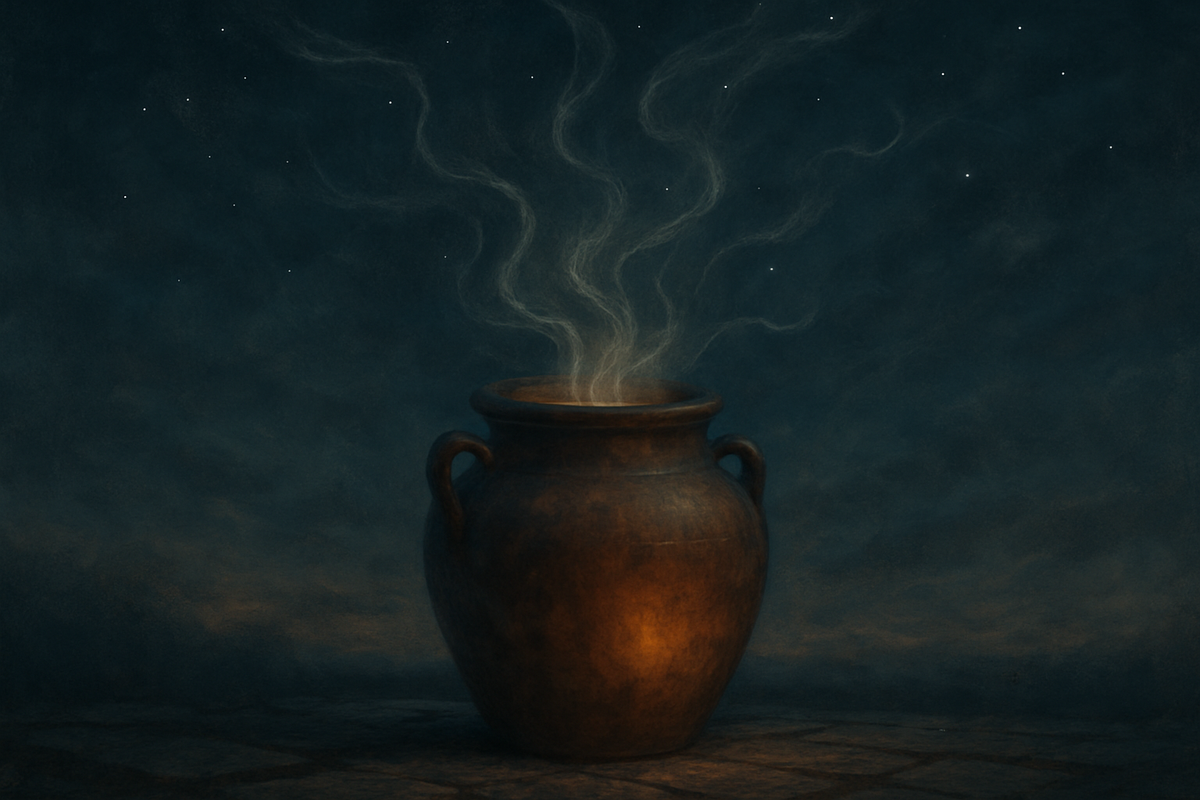
Because Pandora's story has become shorthand for "unleashing something you can't take back," dreaming of a mysterious box or jar often reflects real anxieties about secrets, decisions, or hidden emotions.
Pandora's story endures because it speaks to a universal tension: the pull between caution and curiosity, control and discovery. Here's how to apply her symbolism meaningfully rather than just admire it as ancient trivia:
Whether you see her as a warning, a scapegoat, or a symbol of hard-won wisdom, Pandora's myth — much like the tale of Hera or Aphrodite — reflects how the Greeks used divine women to grapple with very human questions about fate, gender, and knowledge.
No — in Hesiod's original Greek myth, Pandora carried a pithos, a large storage jar. The "box" image comes from a 16th-century mistranslation by Erasmus of Rotterdam, and it has stuck in popular culture ever since.
The jar contained every evil unknown to early humans — sickness, old age, grief, envy, and war. When Pandora opened it, these afflictions escaped into the world, leaving only Hope (Elpis) trapped inside.
They're often compared because both are described as the "first woman" blamed for humanity's suffering through forbidden curiosity, but the two myths developed independently. The comparison became popular during the Renaissance, when European scholars blended Greek and biblical storytelling traditions.
Ancient sources leave this deliberately ambiguous — some interpret it as a mercy, meaning hope remained available to humanity, while others see it as cruelty, with hope withheld from a suffering world. Most modern readings favor the hopeful interpretation: even after every evil is released, hope remains within reach.
Discover the true story of the Minotaur, Crete's bull-headed monster, its Labyrinth, Theseus's quest, and what the myth symbolizes…

Meet Nike, Greek goddess of victory: her parents, siblings, symbols, myths, and Roman name Victoria — explained clearly with facts…

Meet Selene, the Greek Moon goddess: her myths, the Endymion romance, sacred symbols, and spiritual meaning explained.