 Know
Know
Symbols
Caduceus Meaning: History of the Winged Staff Symbol
Discover the caduceus meaning: Hermes' winged staff of two serpents, its Greek origins, medical mix-up with Asclepius, and spiritu…
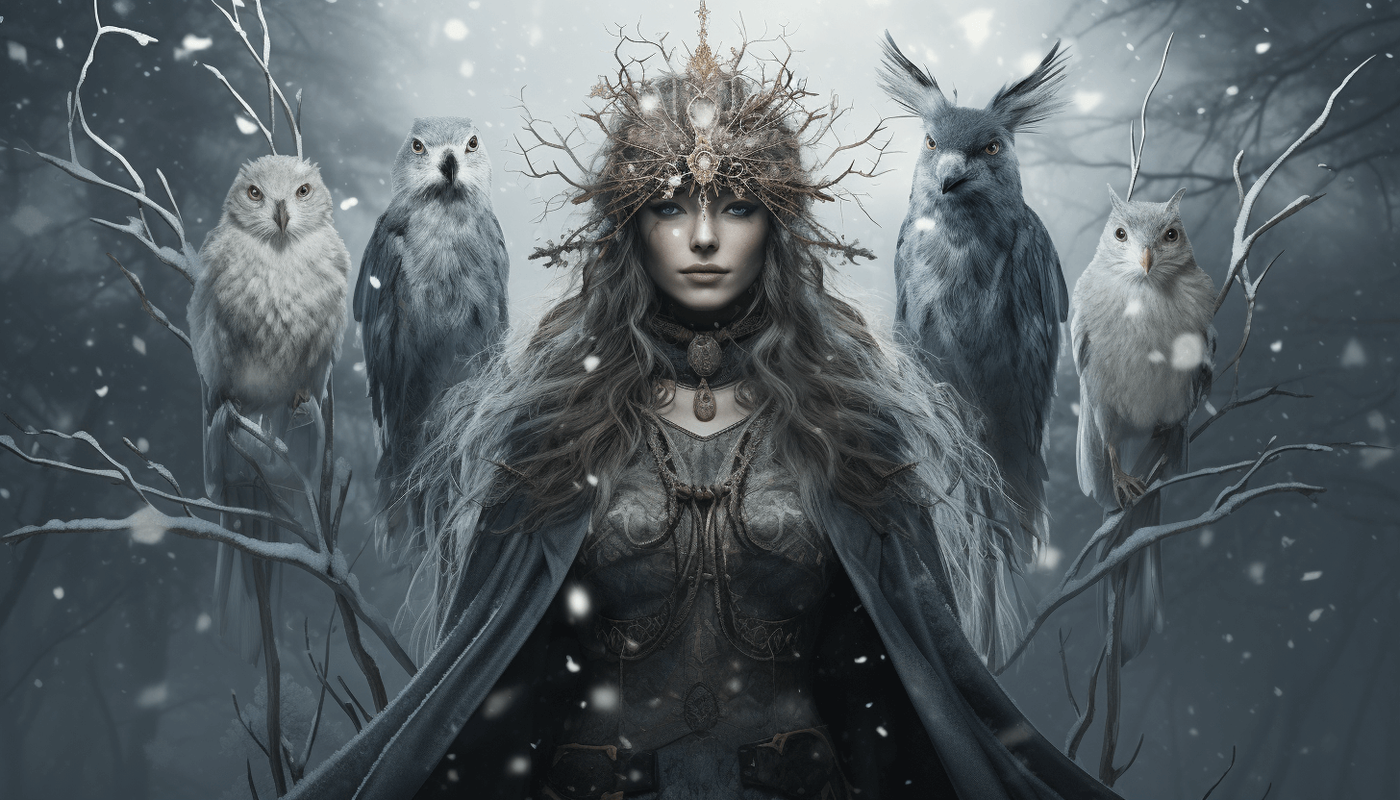
Winter, a season of reflection and wonder, is often best represented by its earliest visitor – the snowflake. But have you ever stopped to ponder what these delicate ice crystals truly symbolize? Let’s delve into the mystical world of snowflakes and their significance.
Every snowflake is a unique masterpiece, intricately designed by nature. The water molecules in snowflakes form crystalline patterns as they freeze, and though the basic hexagonal shape remains consistent, the patterns inside vary infinitely. This singularity mirrors the idea that while there may be shared experiences and similarities in life, each person, each story, and each moment is unparalleled.
Snowflakes, in their fleeting beauty, remind us of life’s ephemerality. Just as a snowflake melts shortly after it lands, moments in life come and go, emphasizing the importance of cherishing every second.
Though two snowflakes can appear identical to the naked eye, under a microscope, they will always have distinct patterns. Much like human fingerprints, no two are exactly alike. Isn’t that a testament to nature’s boundless creativity?
In many cultures, the first snowfall of the season is considered a special event, laden with symbolism and often celebrated. So the next time you watch snowflakes drift down from the sky, take a moment to reflect on their profound symbolism and the mysteries they carry within.
On a chilly winter day, have you ever noticed your breath, visible in the cold air, dissipating like a wisp of smoke? This mesmerizing phenomenon, commonly termed as winter’s breath, holds deeper symbolism than one might initially perceive. Let’s explore the tales and meanings intertwined with these transient clouds of warmth.
Winter’s breath offers a stark contrast between the living warmth of beings and the dormant chill of the environment. As we breathe out, our exhalations offer visible proof of life and vitality, even against the cold backdrop of winter. This contrast symbolizes resilience, perseverance, and the ability to thrive despite adversity.
Just as our breath appears and vanishes within seconds, it serves as a poignant reminder of the transient nature of existence. Everything has its moment – whether it’s as brief as a gust of wind or as long-lasting as winter itself.
Have you ever imagined that every visible exhale is like sending a silent message to the world? In various mythologies, wind and breath are often associated with communication, spoken words, and the spread of ideas. Our visible breath could be symbolic of our innermost thoughts and feelings being shared with the universe.
So, the next time you see your breath form swirling patterns in the cold air, remember – it’s not just a biological reaction. It’s a dance of warmth and cold, existence and ephemerality, deeply rooted in symbolism that has captured human imagination for centuries.
Among the longest nights and the shortest days, we find the magical moment of the Winter Solstice. This celestial event, marking the point when the Northern Hemisphere is tilted farthest from the Sun, has been celebrated and revered across cultures for millennia. But what symbolic meanings and traditions are woven into this moment of deep serenity and stillness?
Though the Winter Solstice signifies the peak of darkness, it paradoxically represents the rebirth of the Sun. From this day forth, daylight gradually increases, promising the eventual return of spring. Many ancient cultures interpreted this as nature’s resilience and the cyclical nature of life and death.
With long nights and the world enveloped in a blanket of snow, the solstice provides a time for inner contemplation. It’s an invitation to look inward, evaluate the past year, and set intentions for the year ahead.
| Culture | Tradition | Symbolic Meaning |
|---|---|---|
| Scandinavian | St. Lucia’s Day | A festival of lights celebrating the return of longer days. |
| Chinese | Dongzhi Festival | A time to celebrate the balance of yin and yang with family gatherings and meals. |
| Pagan | Yule | Rebirth of the Oak King and the waxing sun, emphasizing rebirth and renewal. |
At its core, the Winter Solstice serves as a poignant reminder that even in the depth of the darkest night, there is a promise of brighter days. Its traditions, rich and diverse, encourage gratitude, unity, and the cherishing of fleeting moments of stillness in our bustling lives.

The heavens seem to come alive during winter nights. With clear, crisp air and longer nights, the winter sky offers celestial wonders that have mesmerized humankind for ages. None are perhaps more enchanting than the Northern Lights, or the Aurora Borealis, and the mesmerizing patterns of the stars above.
These ethereal lights dancing across the polar skies are not just a visual delight but carry profound symbolism. How did various cultures interpret this celestial phenomenon?
While science today explains the Northern Lights as particles from the sun colliding with Earth’s atmosphere, the folklore and tales add a layer of mystery and enchantment to this natural spectacle.
Winter nights unveil a celestial tapestry, with constellations narrating stories of gods, heroes, and myths. Let’s explore a few notable ones:
| Constellation | Mythological Association |
|---|---|
| Gemini | The twins, Castor and Pollux, who had different fathers and thus one was mortal and the other divine. |
| Cassiopeia | The vain queen who boasted about her unparalleled beauty, often associated with a ‘W’ shape in the sky. |
In the hush of winter nights, as you tilt your head upwards, you’re not just witnessing twinkling dots but millennia of stories, beliefs, and a universe that promises endless wonders. Whether it’s the surreal dance of the Northern Lights or the age-old constellations, winter’s celestial show is both a feast for the eyes and the soul.
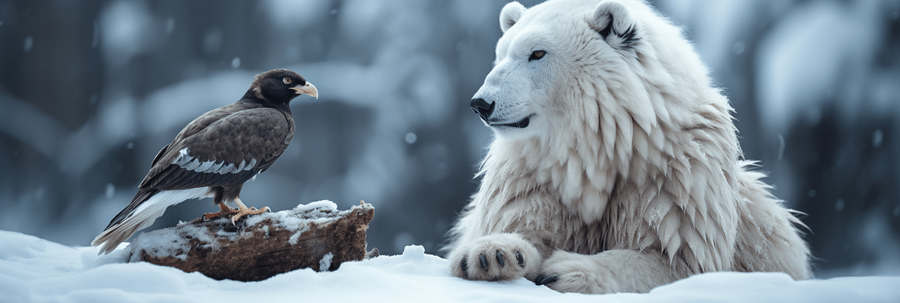
When winter swathes the landscape in its frosty embrace, most creatures seek shelter. Yet, there are those that not only endure the icy climes but thrive in them. These winter animals, with their tenacity and adaptability, have etched themselves into our consciousness, symbolizing strength, perseverance, and survival against all odds.
The polar bear, with its majestic white fur against the backdrop of shimmering ice, is more than just a beautiful sight. It stands as a testament to endurance, symbolizing strength and resilience. In Inuit culture, the polar bear is revered as a powerful spirit animal, a guide, and protector in the challenging Arctic environment.
Another enigmatic creature of the winter is the snow owl. With its pristine feathers and penetrating gaze, it embodies wisdom and mystery. Native American legends regard the owl as a keeper of sacred knowledge, a guardian of the night that sees what others cannot.
The snow owl’s ability to rotate its head nearly 270 degrees helps it spot prey from a distance, an adaptation crucial for survival in vast snowy expanses.
The arctic fox, with its fluffy tail and playful demeanor, might seem delicate. Yet, it’s a survivor, adapting its coat color with seasons – white in winter for camouflage in snow, and brown in summer. Symbolically, it represents adaptability, resourcefulness, and a touch of mischief.
These animals, each with its own unique adaptations and behaviors, not only add to the magic of the winter landscape but also offer us profound lessons. Their ability to survive and even thrive in the harshest conditions teaches us about resilience, adaptation, and the indomitable spirit of life.
As the days grow shorter and the nights longer, cultures across the world have a unique way of brightening up the dark winter season. Festivals of light, with their radiant candles, lanterns, and bonfires, are more than just spectacular visual feasts. They’re emblematic of hope, unity, and the human spirit’s perennial battle against darkness.
Known as the ‘Festival of Lights’, Diwali is one of India’s most celebrated holidays. Homes are adorned with earthen lamps, and the skies light up with fireworks. Rooted in Hindu mythology, Diwali celebrates the return of Lord Rama after defeating the demon king Ravana. Symbolically, it underscores the victory of light over darkness and good over evil.
Hanukkah, celebrated by Jews worldwide, is an eight-day commemoration of the Maccabees’ victory over the Greeks. The central symbol, the Menorah, is lit every night, adding a new candle until all eight (plus the central ‘helper’ candle) are aflame. It’s a celebration of faith, resilience, and the miracle of one day’s worth of oil lasting eight days in the temple’s rededication.
Fun Fact: The Menorah has nine branches, specifically designed for Hanukkah, while other Jewish candle holders have only seven branches and aren’t linked to a particular festival.
In the heart of winter, St. Lucia Day is a ray of warmth in Scandinavian countries. Young girls don white robes and a wreath of candles on their heads, symbolizing the radiant Saint Lucia bringing light in the heart of darkness.
| Festival | Country | Significance |
|---|---|---|
| Yule | Europe | A pagan celebration, marking the winter solstice and rebirth of the sun. |
| Loy Krathong | Thailand | Lanterns are released into the sky or floated on water, symbolizing letting go of grudges and misfortunes. |
| Festival of Lights | Lyons, France | A tribute to the Virgin Mary, with the city illuminated in her honor. |
These festivals, spanning different cultures and continents, beautifully encapsulate humanity’s shared desire to find brightness amidst the bleakness, to foster hope when things seem at their darkest. And while each festival might stem from diverse stories or traditions, their core message is universal — the power of light, both literal and metaphorical, to drive away the shadows.
In cultures worldwide, winter’s biting chill and serene snowscapes have given birth to myriad myths and legends. Central to many of these stories are powerful figures and deities that rule over the frozen realm, weaving tales of magic, mystery, and caution. One such captivating character is the enigmatic Frost Queen. Let’s delve into her icy domain and explore other renowned winter legends.
Originating from Scandinavia, the tale of the Snow Queen is a masterpiece by Hans Christian Andersen. Representing winter’s allure and danger, she is a majestic figure with a heart of ice. Her story revolves around a quest, where young Gerda braves harsh winter to rescue her friend Kai from the Snow Queen’s icy palace.
Many believe that Andersen’s Snow Queen served as an inspiration for the character Elsa in the popular movie ‘Frozen’.
As one of the Anemoi, or wind gods, Boreas was feared for his cold breath that brought winter’s chill. He was often juxtaposed with his warm and gentle brother, Zephyrus, the west wind of spring.
The legends of Japan tell of Yuki-onna, a spectral figure associated with snowstorms. With her ethereal beauty, she roams the snow-clad mountains, her white kimono making her almost invisible. Many tales caution travelers of her icy embrace, which can freeze a person instantly.
These figures, while diverse in origin and narrative, all symbolize the multifaceted nature of winter — its beauty, its danger, its quietude, and its might. They remind us of the age-old human instinct to personify natural forces, attempting to understand and respect the power of the seasons.
Winter’s landscape is a unique blend of hues, each evoking a specific emotion or sensation. This season paints the world in a palette unlike any other, dripping with deep blues, icy whites, and the mellow yellows of sparse sunlight. Let’s explore this magical chromatic spectrum and the symbolism each color holds.
When we think of winter, our minds often drift to vast expanses of snow, painting everything in a pristine white. This color signifies purity, innocence, and serenity. Snow-covered landscapes also evoke feelings of tranquility and reflection, making white a symbolic representation of winter’s silent beauty.
On a clear winter night or in the deep glacial crevices, the icy blues and teals emerge. These shades represent the profound depths of winter’s chill and the mysteries hidden beneath the frozen surface. Additionally, they are a nod to introspection, beckoning us to delve into our thoughts and emotions.
| Color | Associated Feelings | Symbolism in Winter |
|---|---|---|
| Gray | Melancholy, introspection | Often linked to overcast skies and the dormant state of nature, gray symbolizes winter’s dormant phase, a period of waiting and preparation for rebirth. |
| Golden Yellows | Warmth, hope | These hues, often seen in winter sunsets or dappled sunlight on snow, represent the warmth and hope that pierce through the cold, reminding us of life’s persistent glow even in the bleakest moments. |
Colors have the power to evoke emotions and memories. In winter, the colors not only represent the season’s physical aspects but also the emotional journey many of us undergo during these colder months. Understanding the significance behind winter’s palette allows us to better appreciate its nuances, finding beauty and meaning in every snowy expanse and frosty morning.
So, the next time you gaze upon a winter landscape, take a moment to soak in its colors. Feel the emotions they stir and embrace the mood they set. Winter, with its unique blend of shades, has a lot more to tell than just tales of cold!
In historical art and literature, winter colors often symbolized solitude, introspection, and the dormant phase of life. Pale blues and whites in paintings could evoke the chill of winter or represent purity and rebirth. Literature utilized winter’s palette to set a scene, mood, or convey emotions tied to coldness, desolation, or even renewal after a challenging period.
Different cultures have diverse interpretations of winter colors. For instance, in Western cultures, white often represents purity and innocence, associated with snow. In contrast, in some Eastern cultures, white is a color of mourning. Deep blues and grays might evoke feelings of tranquility or melancholy, depending on cultural narratives and personal experiences.
The winter season, characterized by shorter days and longer nights, can lead to Seasonal Affective Disorder (SAD) in some individuals. This is due to reduced exposure to sunlight, which affects melatonin and serotonin levels in the brain. The dominant colors of winter, such as grays and deep blues, can also evoke feelings of introspection, melancholy, or tranquility in some individuals, amplifying the season’s emotional impact.
Colors’ perceptions vary across cultures, and while winter colors generally resonate with calmness and tranquility, there aren’t widespread superstitions regarding unlucky winter colors. However, in certain cultural or religious events within the winter season, specific colors might be avoided or embraced, but this is more event-specific than season-specific.
The winter palette tends to be more subdued, characterized by cooler tones such as icy blues, soft purples, silvers, and whites. This contrasts with the vibrant and warm hues of summer (yellows, bright blues, and greens), the rich tones of autumn (oranges, browns, and golds), and the fresh, blossoming colors of spring (pastels, light greens, and soft pinks).
Animals typically associated with winter symbolism include the polar bear, snow owl, wolf, reindeer, and the Arctic fox. These animals not only survive but thrive during the cold winter months, symbolizing resilience, endurance, and adaptability.
Yes, several festivals globally celebrate winter’s beauty and colors. For instance, the Sapporo Snow Festival in Japan showcases magnificent ice sculptures, the Aurora Borealis festivals in Nordic countries celebrate the colorful Northern Lights, and the Ice and Snow Sculpture Festival in Harbin, China, displays intricate artistry using ice, illuminated in vibrant colors.
Several mythological figures are associated with winter across different cultures. Notable among them are Skadi, the Norse goddess of winter; the Frost Giants of Norse mythology; Ded Moroz, the Slavic winter deity; and the Snow Queen, a fairy tale character who personifies winter’s chill.
The portrayal of winter in art has evolved over the centuries. During the Renaissance, winter was often depicted as a time of hardship, highlighting human struggle against the elements. In Romantic art, winter scenes became more about capturing the beauty and tranquility of snow-covered landscapes. Modern art often uses winter as a metaphor for emotions, change, or societal commentary.
Light festivals are prominent during winter due to the longer nights, providing a canvas for illuminations. Additionally, many cultures and religions have traditions and holidays during this season that celebrate light overcoming darkness, symbolizing hope, renewal, and the continuation of life, such as Hanukkah, Diwali, and Christmas.
Discover the caduceus meaning: Hermes' winged staff of two serpents, its Greek origins, medical mix-up with Asclepius, and spiritu…
Discover what the Om symbol truly means—its Hindu, Buddhist, and Jain roots, dream symbolism, and how to use it in daily life.
Discover what the compass symbolizes across cultures — from spiritual guidance and moral direction to finding your true life purpo…