Know
Know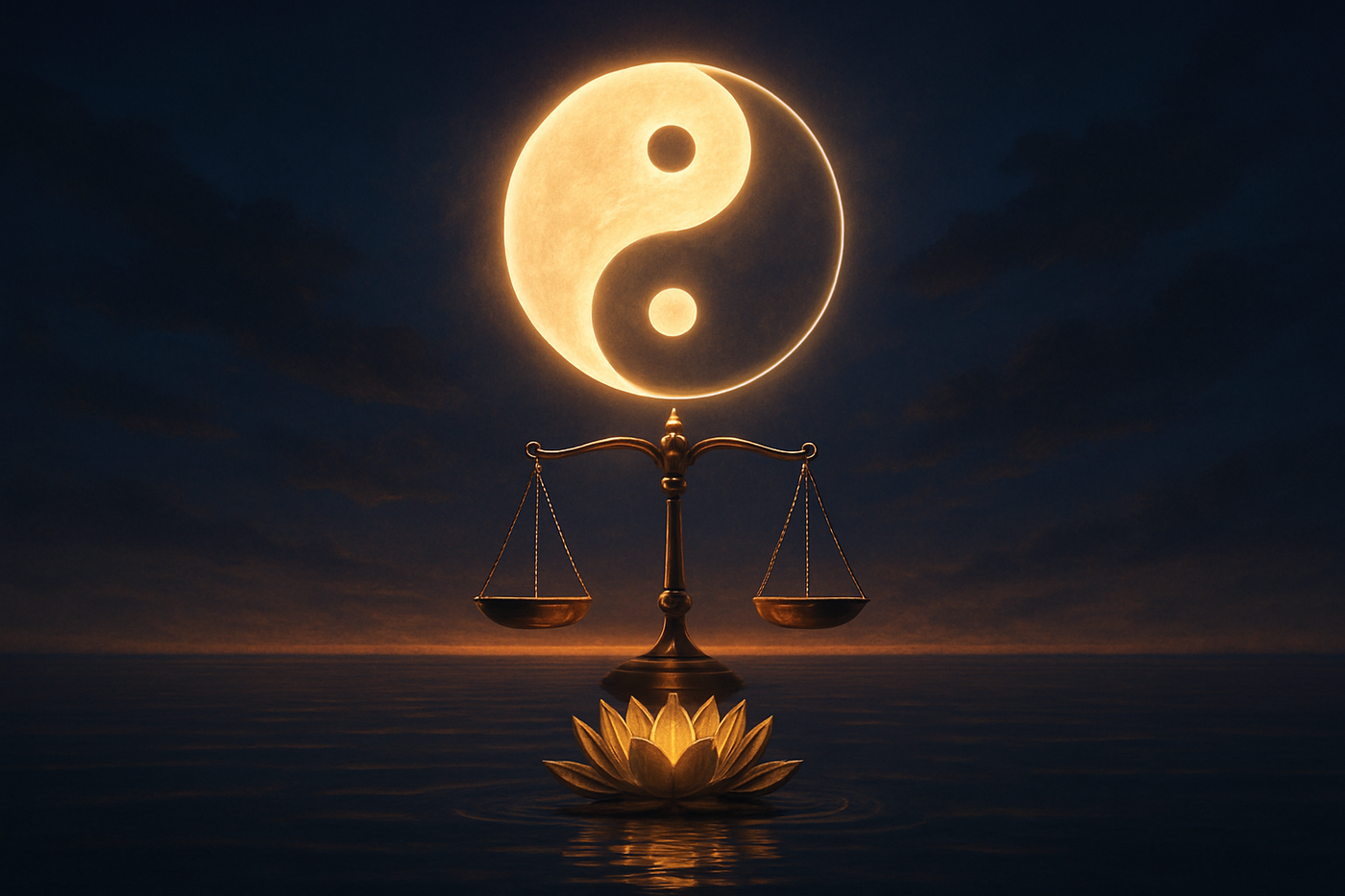
Symbols of balance are visual representations of harmony, equilibrium, and the interplay between opposing forces — concepts found in nearly every culture and spiritual tradition on Earth. A symbol of balance and harmony typically depicts two complementary elements (light and dark, stillness and motion, earth and sky) held in perfect proportion, reminding us that true stability comes from integrating opposites rather than eliminating them. Below, we explore 26 of the most powerful balance symbols — spanning ancient philosophy, nature, geometry, numerology, and mysticism — along with the deeper balance symbol meaning behind each one.
The Yin-Yang symbol epitomizes balance, illustrating the harmonious interaction of opposite forces. It represents life’s cyclical, dynamic nature where opposite elements complement and cannot exist without each other, providing a profound metaphor for balance and harmony in the universe.
Quick Reference: 26 Symbols of Balance at a Glance
Use this table to quickly scan every symbol of balance covered in this guide before diving into the full meanings below.
| Symbol | Category | Core Meaning |
|---|---|---|
| Yin and Yang | Ancient & Universal | Harmony of opposite forces |
| Double Spiral | Ancient & Universal | Dual nature of existence |
| Lotus Flower | Ancient & Universal | Equilibrium between beauty and adversity |
| Scales of Justice | Ancient & Universal | Fairness and impartiality |
| Number 2 | Numerical | Duality and partnership |
| Circle | Numerical & Geometric | Wholeness and infinity |
| Flamingo | Nature | Stability in motion |
| Bonsai | Nature | Harmony between growth and form |
| Trillium | Nature | Symmetry of body, mind, and spirit |
| Lucky Bamboo | Nature | Stability and flexibility |
| Tree of Life | Nature | Connection of above and below |
| Waterfall | Nature | Dynamic equilibrium |
| Koi Fish | Nature | Balanced energy in water |
| Moon | Nature | Balance of night and day |
| Square | Geometric | Stability and solidity |
| Anchor | Geometric & Nature | Grounded stability amid change |
| Triangle | Geometric | Balanced strength |
| Spiral | Geometric | Continuous, evolving balance |
| Hexagon | Geometric | Perfect fit and efficiency |
| Octagon | Geometric | Stability in multiple directions |
| Decagon | Geometric | Integration of many life aspects |
| Peace Sign | Spiritual & Mystical | Harmony and non-violence |
| Infinity Symbol | Spiritual & Mystical | Endless, ongoing balance |
| Cross | Spiritual & Mystical | Intersection of divine and earthly |
| Flower of Life | Spiritual & Mystical | Interconnected balance of creation |
| Pentacle | Spiritual & Mystical | Elemental balance |
| Equilateral Triangle | Spiritual & Mystical | Perfect symmetry |
Ancient and Universal Symbols of Balance and Harmony
-
1. Yin and Yang: The Ultimate Harmony
The Yin and Yang symbol, originating from ancient Chinese philosophy, is a renowned icon signifying balance. It consists of a circle divided into two teardrop-shaped halves—one black and one white. Each half contains a smaller circle of the opposite color, representing the interdependence and coexistence of contrasting forces. Yin, the black side, symbolizes darkness, femininity, and receptivity, while Yang, the white side, stands for light, masculinity, and activity. Together, they depict the harmonious and perpetual flow of life and the universe, where opposites complement and give rise to each other — arguably making Yin-Yang the most complete symbol of balance and harmony in existence.
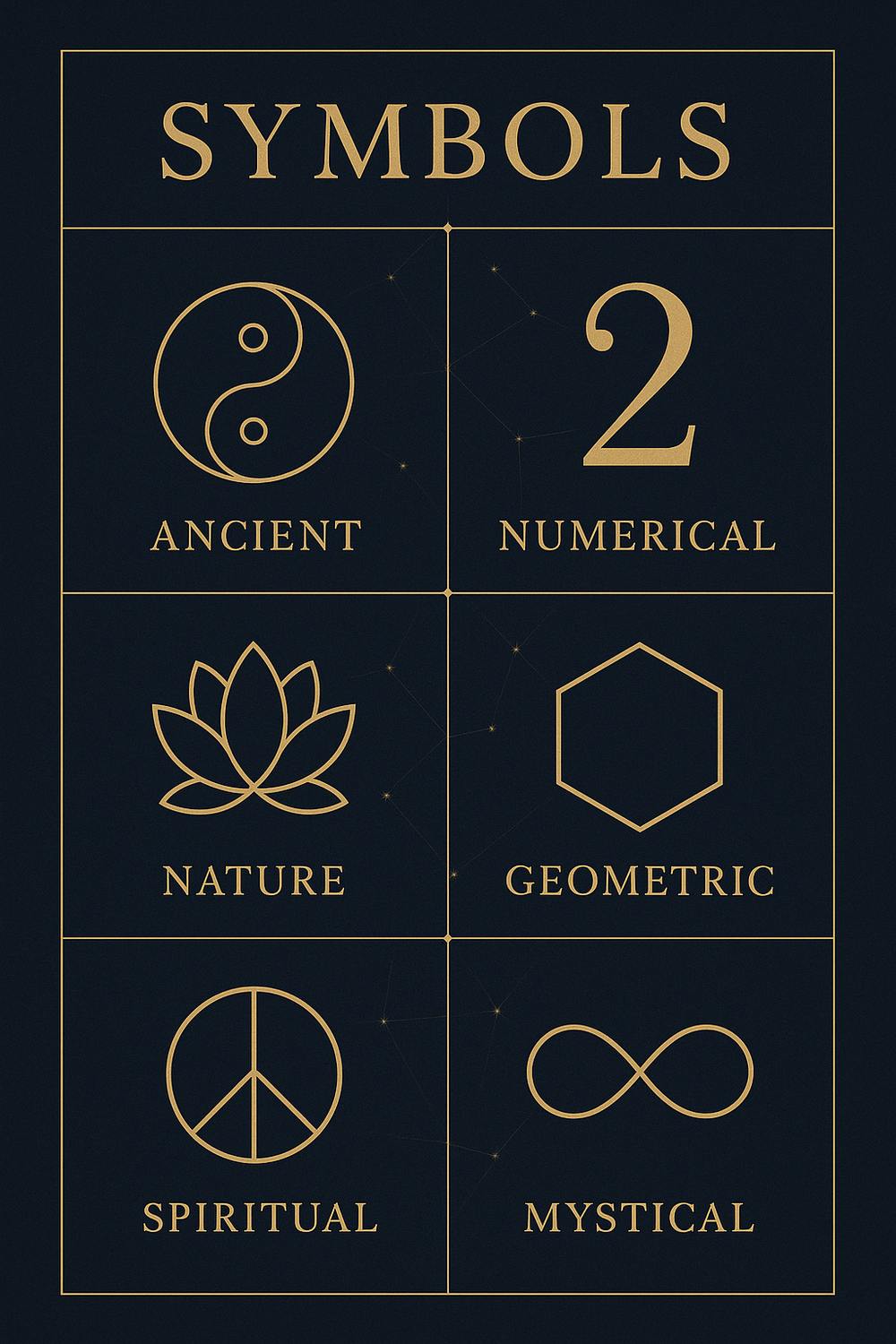
The six realms of balance symbolism, from ancient wisdom to modern spirituality. -
2. Double Spiral: Balance of Opposites
The Double Spiral is another ancient symbol reflecting balance. Spiral motifs, including double and triple forms, appear widely in Celtic art and are also found in ancient Greek artifacts, most famously as the triskelion. The Double Spiral consists of two spirals meeting or originating from a common center, symbolizing the dance between opposing forces. In some archaeoastronomical traditions, spiral carvings such as those at Newgrange and the Chaco Canyon 'Sun Dagger' site are believed to have marked the solstices.
-
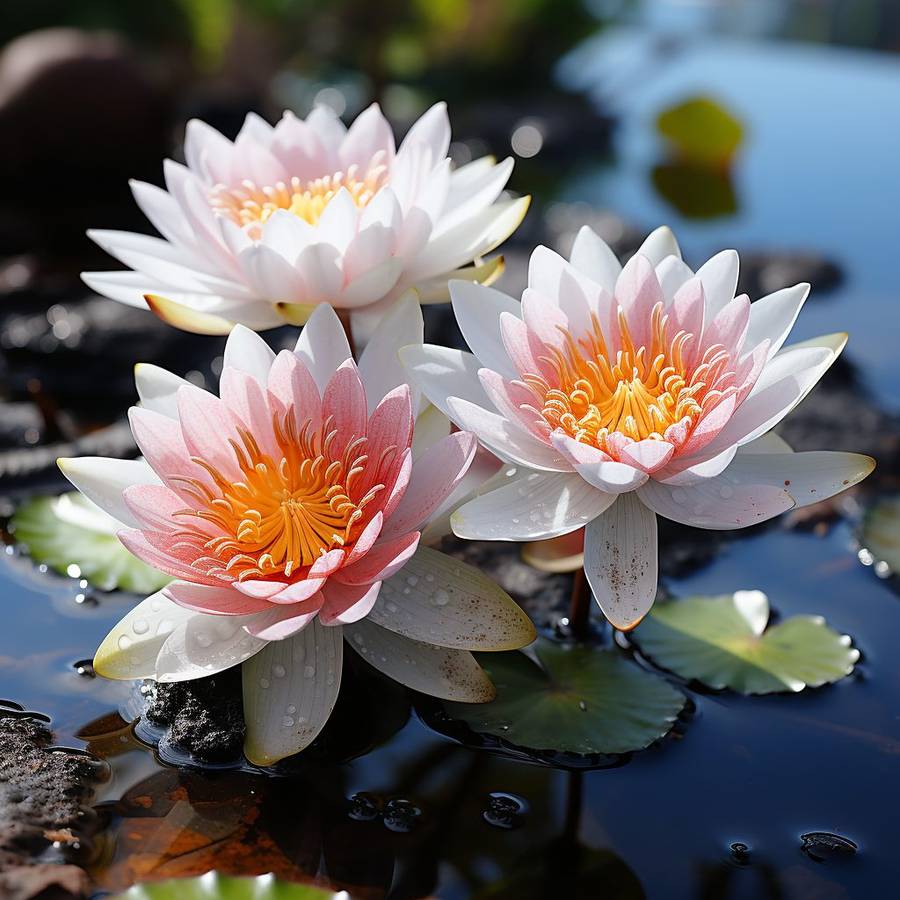
3. Lotus Flowers: Equilibrium in Beauty and Mud
The Lotus Flower is a symbol revered in various cultures, notably in Hinduism and Buddhism, embodying purity, enlightenment, and rebirth. Its unique growth process, where it emerges from the mud to bloom untainted above the water, epitomizes the balance between beauty and adversity. The Lotus serves as a reminder that beauty and goodness can thrive even in challenging conditions, symbolizing spiritual enlightenment and the harmonious balance between earthly struggles and divine purity.
-
4. Scales of Justice: Fairness and Impartiality
The Scales of Justice are a universal symbol of law and justice, representing the equilibrium and fairness sought after in the judicial system. The balanced scales signify the impartial weighing of evidence, where each side is considered fairly, ensuring that justice is served without bias or prejudice. It is a timeless icon of balance, embodying the principles of fairness, equality, and the moral fabric that holds society together.
Numerical Symbols Representing Balance
-
5. The Number 2: Duality and Partnership
The Number 2 is a powerful numerical symbol of balance. It represents duality, partnership, and cooperation. In various cultures and philosophies, the number 2 is associated with complementary pairs, such as male and female, day and night, or yin and yang, highlighting the importance of opposites and the harmonious relationship required for the sustenance of life and the universe. If you're curious how other numbers carry similar symbolic weight, our guide to numerology breaks down the balance symbol meaning behind each digit.
-
6. Circle: Wholeness and Infinity
The Circle is a geometric shape that universally represents wholeness, infinity, and eternity. With no beginning or end, it symbolizes the cyclical nature of life and the universe, embodying perfection and balance. The Circle is often seen as protective and inclusive, encompassing everything within its boundaries and maintaining equilibrium among the elements it contains.
Nature-Inspired Symbols of Balance
-
7. Flamingo: Balance in Motion
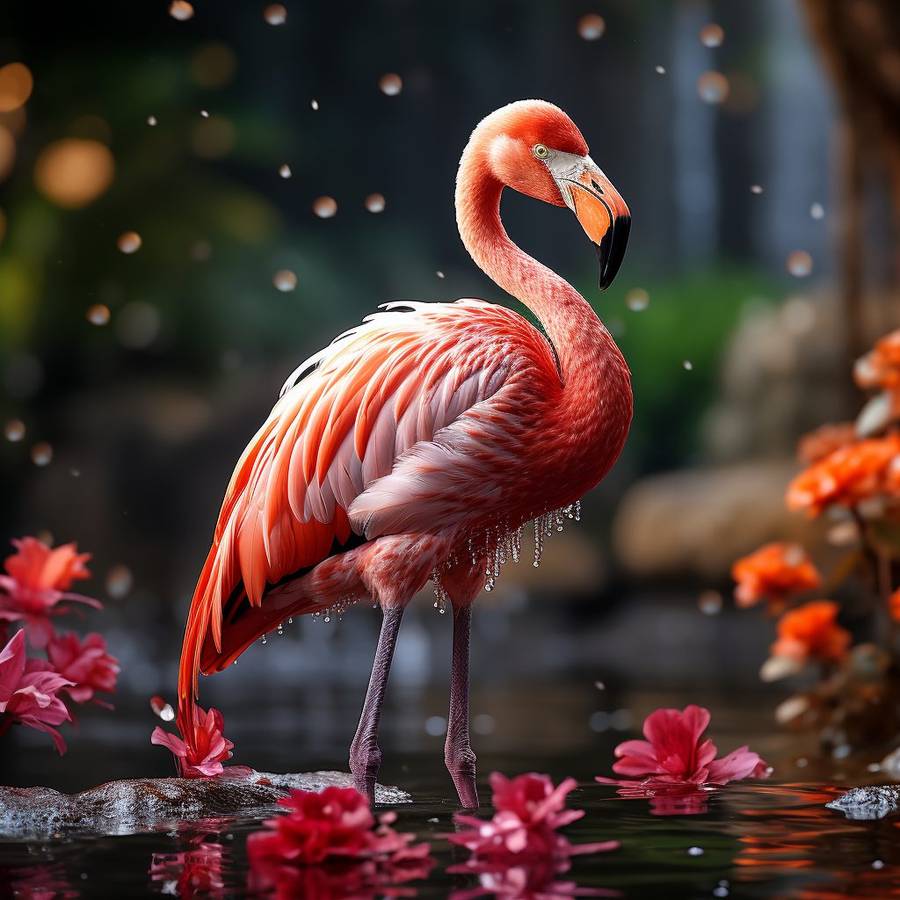
The Flamingo is a captivating symbol of balance in the natural world. With its ability to stand gracefully on one leg while tucking the other beneath its body, the flamingo epitomizes stability and equilibrium in motion. This unique posture reflects the bird’s adaptation to its aquatic environment, symbolizing the harmony and grace that can be found in adapting to life’s various challenges and circumstances.
-
8. Bonsai: Harmony in Growth and Form
Bonsai trees, with their meticulous cultivation and care, represent a harmonious balance between growth and form, nature and nurture. Bonsai cultivation is a contemplative and intentional art, requiring patience and a deep understanding of the tree’s needs. The resulting miniature trees are a testament to the beauty and tranquility that arises from a balanced and harmonious relationship with nature.
-
9. Trillium: Symmetry in the Natural World
The Trillium flower, with its three petals and leaves, is a symbol of symmetry and balance in the natural world. The trillium represents the unity of body, mind, and spirit, often associated with tranquility and stability, reflecting the integral balance necessary for holistic well-being and spiritual alignment. Its symmetrical form visually represents the harmony found in nature and life.
-
10. Lucky Bamboo: Stability and Flexibility
The Lucky Bamboo plant is a renowned symbol of stability and flexibility in various cultures. Its sturdy stalks can grow in various conditions, symbolizing resilience and adaptability, while its vertical growth represents upward movement and prosperity. Often given as a gift, Lucky Bamboo is believed to bring balance, fortune, and positive energy to its surroundings.
-
11. Tree of Life: Connection of Above and Below
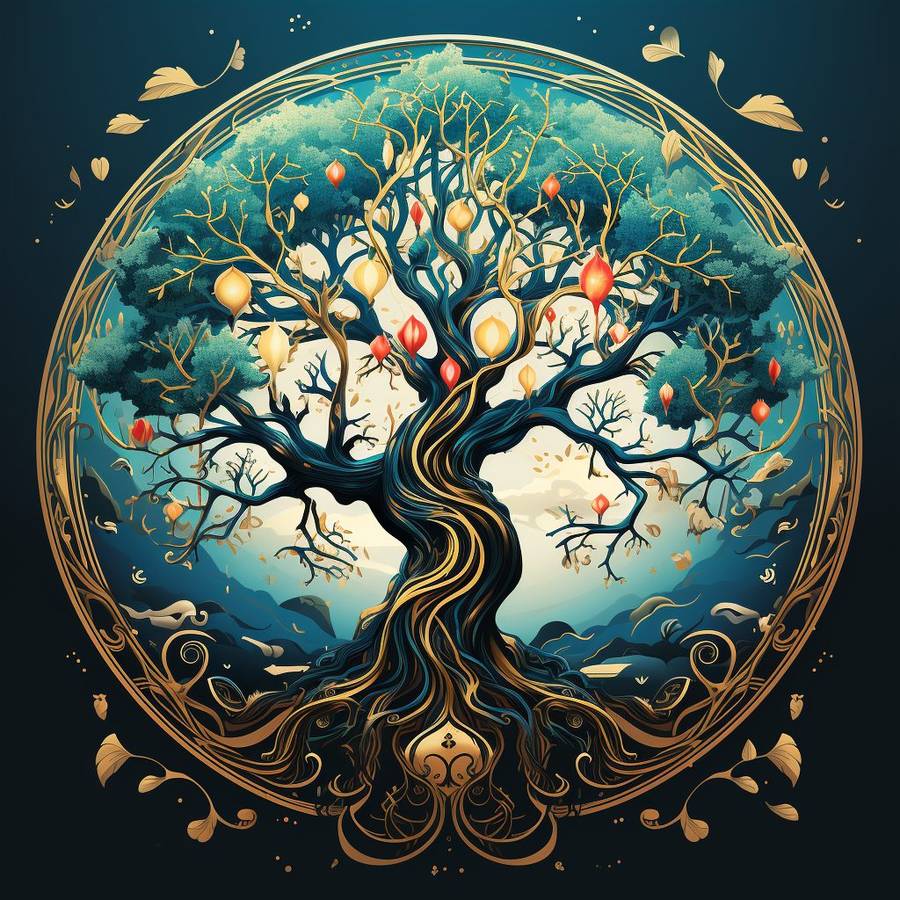
The Tree of Life is a timeless symbol representing the interconnectedness of all life. Its roots deeply embedded in the earth and branches reaching towards the sky symbolize the link between the terrestrial and the divine, the physical and the spiritual. It embodies the balance and harmony that exist within nature and the cosmos, reminding us of the delicate equilibrium we share with the world around us.
-
12. Waterfall: Dynamic Equilibrium
Waterfalls symbolize dynamic equilibrium and the harmonious flow of energy. With water continuously moving and cascading down, they represent the balance between the forces of nature: water’s descent and the rocks’ structure that guide its flow. This powerful natural phenomenon is a reminder of the beauty and strength that arises from balance and harmony in motion.
-
13. Koi Fish: Balancing Energies in Water
The Koi Fish is a symbol of balance and harmony in the water. With their graceful movements and vibrant colors, Koi Fish navigate through water with ease and fluidity, embodying their environment’s harmonious balance of energies. In many cultures, they are seen as auspicious symbols of good fortune and resilience, reflecting the positive outcomes of maintaining balance in life.
-
14. Moon: Balancing Night and Day
The Moon is a celestial body that symbolizes balance between night and day. Its phases represent the cyclical nature of time and life, illuminating the night sky with varying intensity. The Moon is often associated with femininity and intuition, counterbalancing the sun’s masculine and radiant energy. Together, they create a harmonious dance that governs the rhythms of our planet and lives.
Geometric Symbols of Balance
Geometric shapes have long served as visual shorthand for stability. One classic example not always grouped with geometry is the anchor — while technically an object rather than a shape, its grounded form and function make it one of the most recognizable stability and balance symbols in maritime and spiritual traditions alike, representing a steady hold amid life's shifting tides.
-
15. The Square: Stability and Solidity
The Square is a geometric shape that symbolizes stability and solidity. Its four equal sides and angles represent fairness, balance, and firmness. The square is often used in architecture and design for its properties of balance and proportion, providing a sense of security and grounding. It is a symbol that reminds us of the importance of building a solid foundation to maintain balance in our lives.
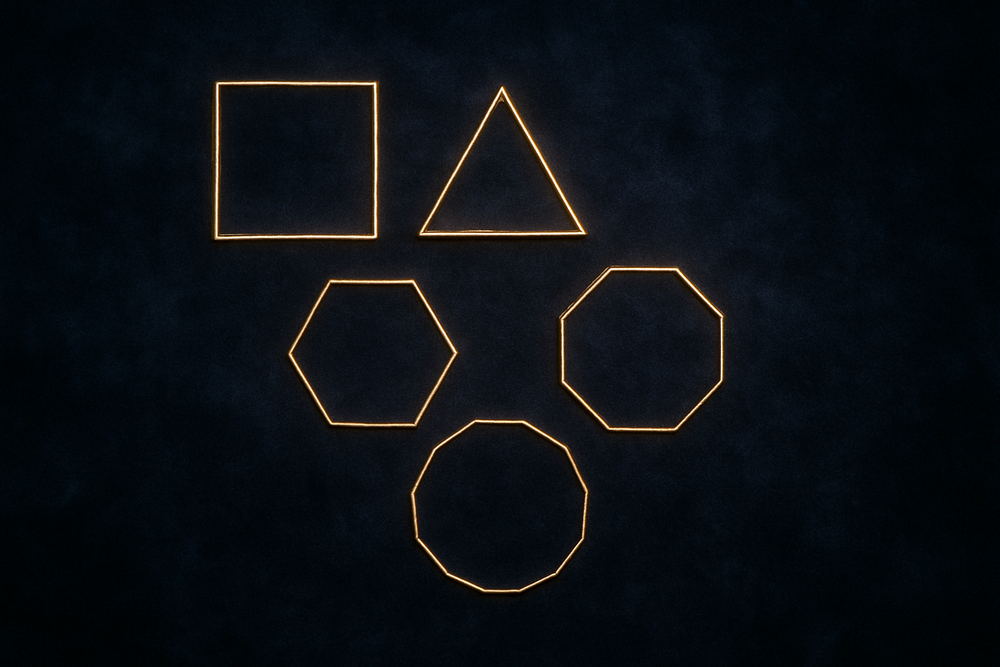
Geometric forms have long served as visual metaphors for equilibrium and order. -
16. The Triangle: Balanced Strength
The Triangle is a powerful symbol of balanced strength. Its three sides and angles represent the harmony of thought, emotion, and action. The triangle is also associated with the number three, which is considered sacred and balanced in various cultures. Whether pointing upwards or downwards, the triangle serves as a reminder of the importance of balance and integration of different aspects of our being.
-
17. The Spiral: Continuous Balance
The Spiral symbolizes continuous balance and progression. It represents the journey of life, where balance is not a fixed state but a dynamic process of adapting and growing. The spiral is often seen in nature, from the shells of snails to the pattern of galaxies, reflecting the universal principle of balance and evolution. It encourages us to embrace the changes and cycles of life while maintaining our center of balance.
-
18. The Hexagon: Perfect Fit and Efficiency
The Hexagon is a symbol of perfect fit and efficiency. With its six sides and angles, it represents harmony and balance in nature and in human creations. The hexagon is often observed in the natural world, such as in the structure of honeycombs, where it is used to create strong and efficient storage spaces. This geometric shape reminds us of the importance of creating balance in our lives that is both strong and efficient, allowing for a harmonious fit with our surroundings.
-
19. The Octagon: Stability in Multiple Directions
The Octagon symbolizes stability in multiple directions. Its eight sides represent a balanced and dynamic energy that can move in various directions while maintaining stability. The octagon is often used in spiritual and religious symbols as it combines the square and the circle, representing the material and spiritual worlds. It serves as a reminder to seek balance in our physical and spiritual lives, acknowledging the multiple directions and paths available to us.
-
20. The Decagon: Many Sides of Balance
The Decagon with its ten sides represents the many facets of balance in life. It symbolizes completeness and the integration of multiple aspects of existence. The decagon invites us to explore the many sides of balance, from emotional and intellectual to physical and spiritual, encouraging a holistic approach to achieving equilibrium in our lives.
Spiritual and Mystical Symbols of Balance and Harmony
-
21. Peace Sign: Harmony and Non-Violence
The Peace Sign is universally recognized as a symbol of harmony and non-violence. Its design, featuring a circle with three lines within, represents the goal of peace and balance among individuals and nations. The lines inside the circle stand for the letters “N” and “D”, which are the initials for nuclear disarmament. However, over time, it has come to embody a broader message of peace, love, and balance in the world, urging humanity to embrace harmony and avoid conflict.
-
22. Infinity Symbol: Endless Balance
The Infinity Symbol, resembling a sideways figure eight, represents endless balance and harmony. It is often associated with the balance between opposites, such as male and female, light and dark, or life and death. The continuous loop of the infinity symbol suggests that balance is an ongoing process, something to be maintained indefinitely for a harmonious existence.
-
23. The Cross: Intersection of Divine and Earthly
The Cross is a profound symbol found in various cultures and religions, often representing the intersection of the divine and the earthly. It symbolizes the balance between spiritual and physical realms, reminding believers of the importance of integrating both aspects into one’s life. In Christianity, the cross symbolizes salvation and God’s eternal love, offering believers hope and guidance. For a deeper look at related iconography, explore our full guide to Catholic symbols and their meanings.
-
24. The Flower of Life: Interconnected Balance
The Flower of Life is a geometric figure made up of multiple evenly-spaced, overlapping circles. This symbol is thought to represent the cycle of creation, encompassing life and consciousness. It is a visual expression of the connections life weaves through all sentient beings, believed to contain a type of Akashic Record of basic information of all living things and is the visual expression of the connections of life that run through all sentient beings.
-
25. The Pentacle: Elemental Balance
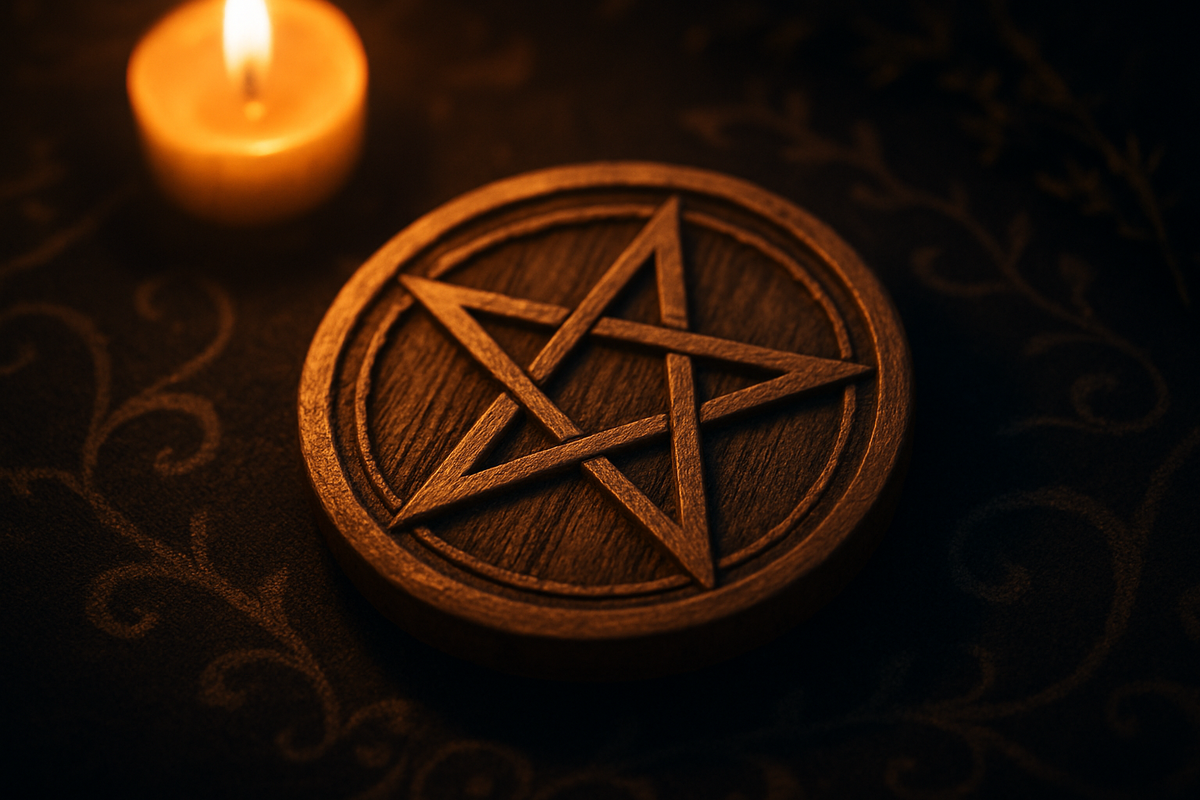
The Pentacle: a symbol of balance among the five elements in pagan and Wiccan traditions. The Pentacle is a star within a circle, and it is a powerful symbol of balance used in pagan and Wiccan traditions. Each of the star’s five points represents one of the five elements — earth, air, fire, water, and spirit. The circle that contains the star symbolizes the connection and reciprocal relationship between them all. It is a symbol of protection and balance, as it also represents the harmony of the five elements.
-
26. Equilateral Triangle: Perfect Symmetry
The Equilateral Triangle is a symbol of divine symmetry and balance. All three sides are equal, it represents fairness and equality from all angles. In various cultures, it is seen as a symbol of strength and foundation, with the three sides often representing the past, present, and future or the earth, heavens, and underworld, providing a sense of balanced perspective and stability.
Conclusion
In the tapestry of life, balance is essential, and the symbols that represent it are as diverse and dynamic as life itself. From ancient signs like the Yin and Yang to modern representations like the Peace Sign, each symbol tells a story of balance and harmony crucial in today’s fast-paced world. Understanding and incorporating these symbols into our daily lives can serve as constant reminders to strive for balance, promoting a life of peace, stability, and contentment.
FAQ
What is the most powerful symbol of balance?
Most scholars and spiritual traditions point to Yin and Yang as the most powerful and widely recognized symbol of balance. It visually and philosophically captures how opposing forces — light and dark, active and passive — depend on one another to create harmony, making it the archetypal balance symbol meaning across cultures.
What animal symbolizes balance?
The flamingo is one of the most cited animal symbols of balance, thanks to its ability to stand steadily on a single leg for long periods. The koi fish is another common answer, representing balanced energy and graceful movement through water.
What color represents balance?
Green is most commonly associated with balance, since it sits at the midpoint of the color spectrum and is linked to nature, growth, and calm equilibrium. Some traditions also point to a blend of black and white — echoing Yin-Yang — as the purest color representation of balance.
Is Yin-Yang a symbol of balance or duality?
Yin-Yang is technically both — it depicts duality (two opposing forces) in order to express balance (their harmonious coexistence). Rather than treating opposites as conflicting, the symbol shows that balance is achieved precisely because each force contains a seed of the other.
What is the spiritual symbol for balance and peace?
The Peace Sign and the Pentacle are two of the most common spiritual symbols associated with balance and peace, though the Cross and Tree of Life also carry strong associations for those seeking a symbol of balance and harmony rooted in faith traditions.
What number represents balance?
The number 2 is the primary numerical symbol of balance, representing duality, partnership, and complementary pairs. In numerology, it's considered the number of cooperation and equilibrium between opposing energies.
What flower symbolizes balance?
The lotus flower and the trillium are the two flowers most associated with balance. The lotus represents equilibrium between beauty and adversity, while the trillium's three-part symmetry reflects harmony between body, mind, and spirit.